Wikimedia Commons
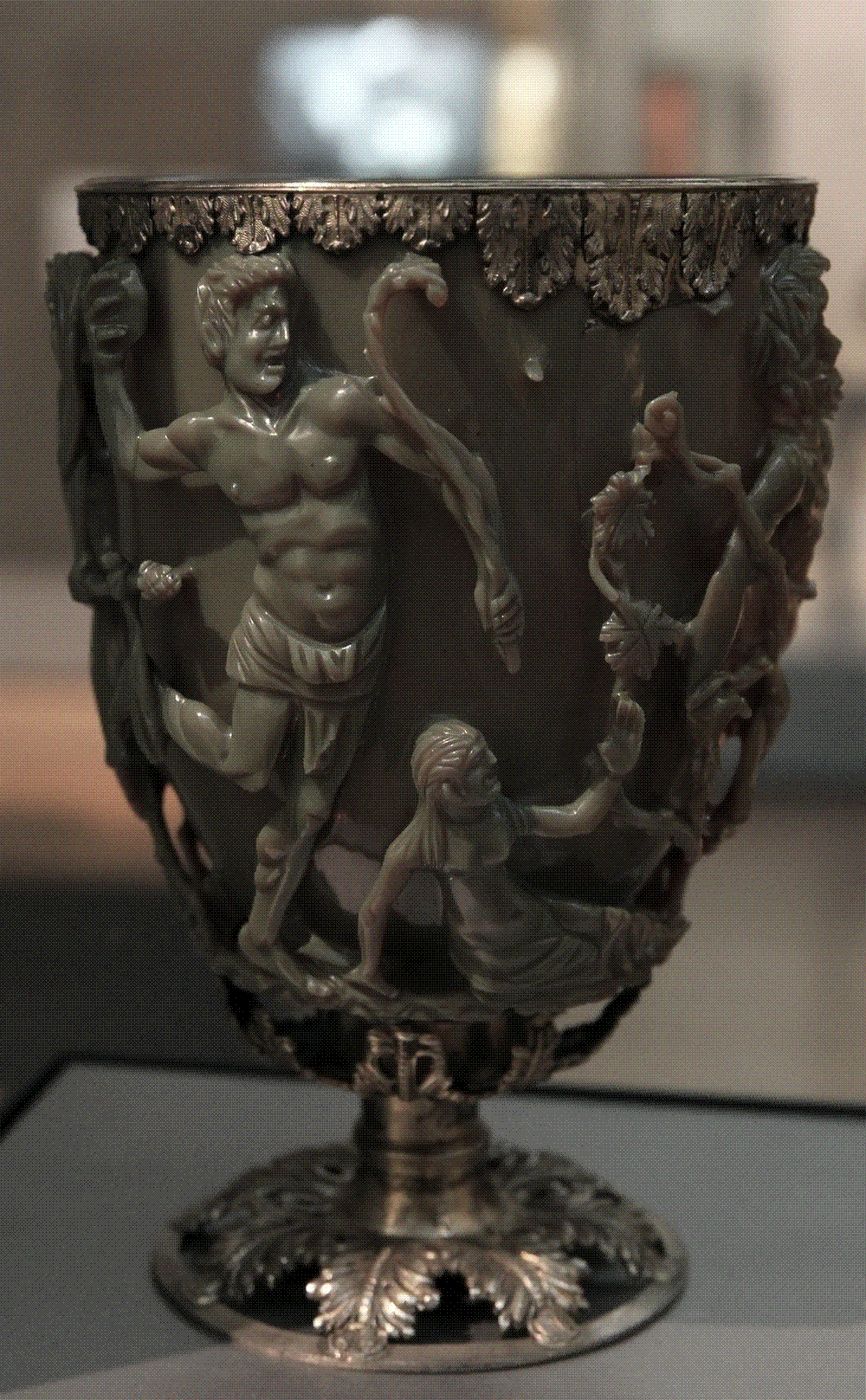
Apple asks a federal judge to bar OpenAI and two former Apple employees from using its trade secrets Apple filed for a preliminary injunction in the US District Court for the Northern District of California, together with a motion for expedited discovery and depositions of former employees Chang Liu and Tang Yew Tan, who now work for OpenAI. The suit alleges the pair took confidential material to help OpenAI's push into consumer hardware. OpenAI said the request is "based on false information and completely unnecessary because we do not have, nor want, any of their trade secrets." Analogies Tiberius destroys the workshop of the man who made glass that would not break In the reign of Tiberius, it is said, a combination was devised which produced a flexible glass; but the manufactory of the artist was totally destroyed, we are told, in order to prevent the value of copper, silver, and gold, from becoming depreciated.
Pliny the Elder, Naturalis Historia (Natural History), c. AD 77, Book 36, chapter 66 ("The various kinds of glass, and the mode of making it"), translated by John Bostock and H. T. Riley, London: Taylor and Francis, 1855; hosted by the Perseus Digital Library, Tufts University. → Hamilton proposes that the United States pay bounties to men who carry in other nations' secrets The usual means of that encouragement are pecuniary rewards, and for a time exclusive privileges. The first must be employed according to the occasion and the utility of the invention or discovery. For the last, so far as respects "authors and inventors," provision has been made by law. But it is desirable in regard to improvements and secrets of extraordinary value to be able to extend the same benefit to introducers as well as authors and inventors; a policy which has been practiced with advantage in other countries.
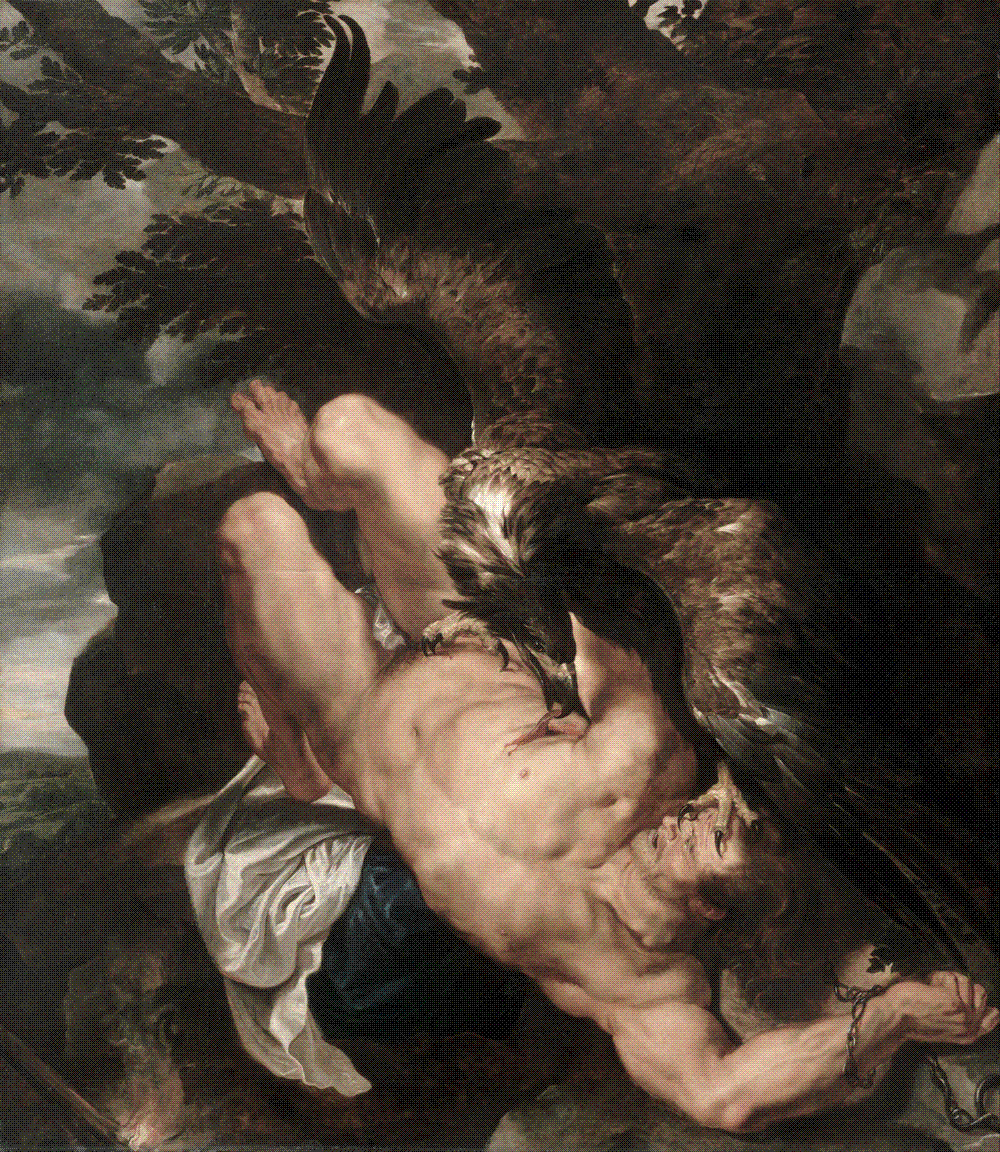
Alexander Hamilton, Report on the Subject of Manufactures, transmitted to the U.S. House of Representatives, 5 December 1791, section 8 ("The Encouragement of New Inventions and Discoveries at Home and of the Introduction Into the United States of Such as May Have Been Made in Other Countries, Particularly Those Which Relate to Machinery"); full text transcribed at English Wikisource. The same report notes that "It is customary with manufacturing nations to prohibit, under severe penalties, the exportation of implements and machines which they have either invented or improved." → Prometheus itemizes every art he carried across to the other side Enough about these arts. Now as to the benefits to men that lay concealed beneath the earth—bronze, iron, silver, and gold—who would claim to have discovered them before me? No one, I know full well, unless he likes to babble idly. Hear the sum of the whole matter in the compass of one brief word—every art possessed by man comes from Prometheus.
Aeschylus, Prometheus Bound, lines 500–506, translated by Herbert Weir Smyth, Loeb Classical Library (Cambridge, MA: Harvard University Press, 1926); hosted by the Perseus Digital Library, Tufts University. → Griffin will not publish, because his professor is a thief of ideas And all that I knew and had in mind a year after I left London—six years ago. But I kept it to myself. I had to do my work under frightful disadvantages. Oliver, my professor, was a scientific bounder, a journalist by instinct, a thief of ideas—he was always prying! And you know the knavish system of the scientific world. I simply would not publish, and let him share my credit. I went on working; I got nearer and nearer making my formula into an experiment, a reality. I told no living soul, because I meant to flash my work upon the world with crushing effect and become famous at a blow.
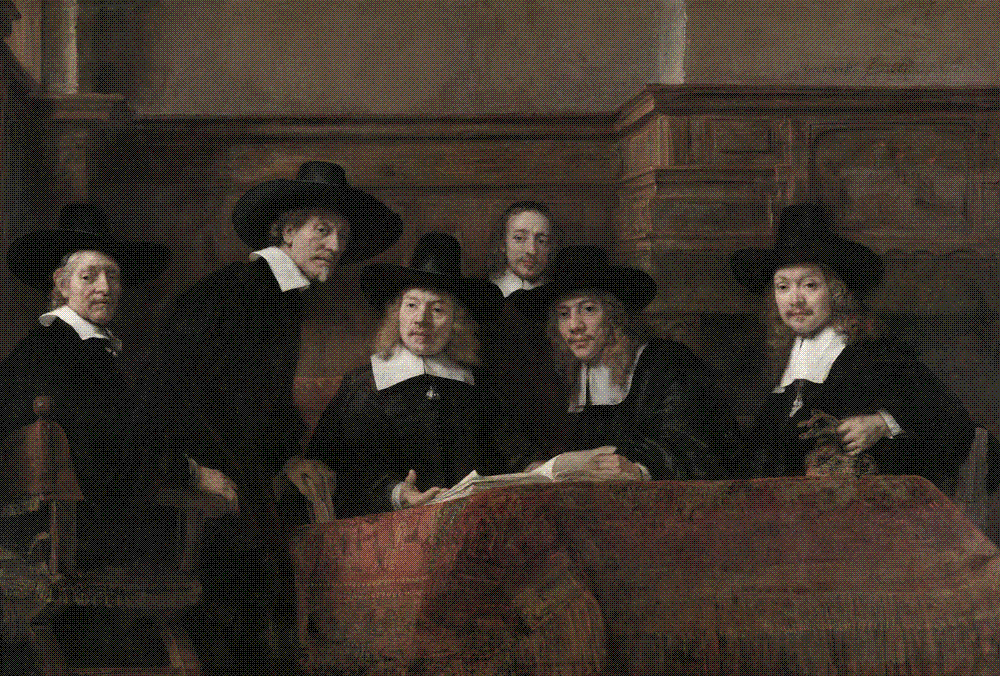
H. G. Wells, The Invisible Man: A Grotesque Romance (London: C. Arthur Pearson, 1897), chapter 19, "Certain First Principles"; Project Gutenberg ebook no. 5230. → The guild's sampling officials look up from the book Five wardens of the Amsterdam drapers' guild sit behind a table spread with a worn Persian carpet, an account book open between them, and every one of them has just raised his eyes to the door. These were the staalmeesters, the men empowered to test each bale of dyed cloth and stamp it — or refuse it — on the guild's authority; a bareheaded servant stands at their backs. Rembrandt paints the exact instant of interruption: the craft's gatekeepers turning to see who has walked in.
Rembrandt van Rijn, The Sampling Officials of the Amsterdam Drapers' Guild, known as 'The Syndics' (De Staalmeesters), 1662, oil on canvas, Rijksmuseum, Amsterdam, object no. SK-C-6 (on loan from the City of Amsterdam); object page at the Rijksmuseum, image via Wikimedia Commons (Google Art Project). → Allegri's Miserere, which the Vatican forbade anyone to copy out of the chapel Tibi soli peccavi, et malum coram te feci; ut justificeris in sermonibus tuis, et vincas cum judicaris. Ecce enim in iniquitatibus conceptus sum, et in peccatis concepit me mater mea. Ecce enim veritatem dilexisti; incerta et occulta sapientiæ tuæ manifestasti mihi.
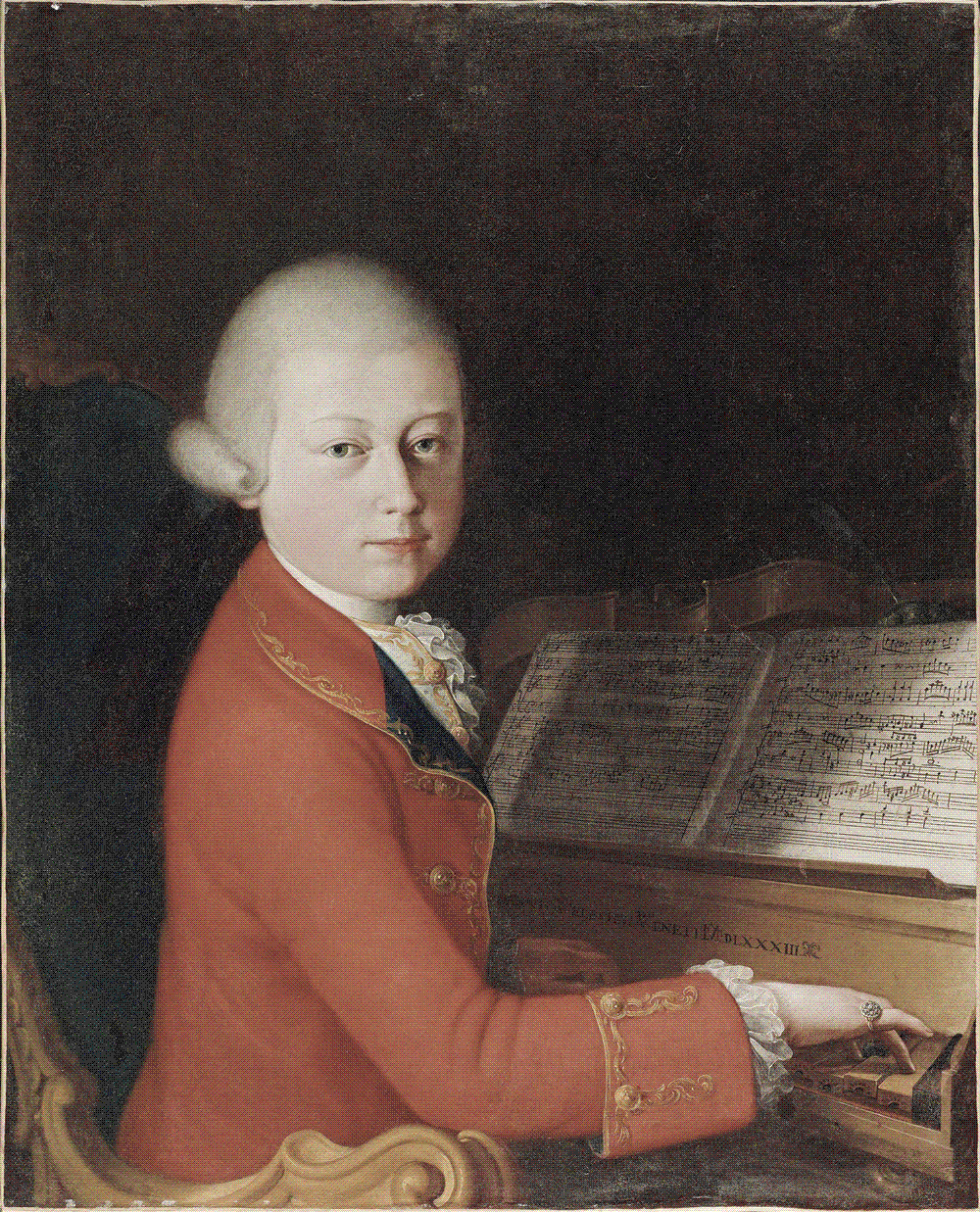
Gregorio Allegri, Miserere mei, Deus, for two choirs (SSATB and SSAB), composed c. 1638 for the Cappella Sistina; the Vatican reserved the setting to its own chapel and long forbade its transcription, and it reached print only around 1771, after the fourteen-year-old Mozart heard it in Holy Week 1770 and wrote it out from memory. Scores, manuscripts and early editions (Burney 1809, Giussani c. 1795, Cappella Sistina MS 206) at IMSLP / the Petrucci Music Library. Sung text: Psalm 50 (51), verses 6–8, Clementine Vulgate, verified at Latin Wikisource (https://la.wikisource.org/wiki/Vulgata_Clementina/Liber_Psalmorum) — "the uncertain and hidden things of thy wisdom thou hast made manifest to me." →