AP
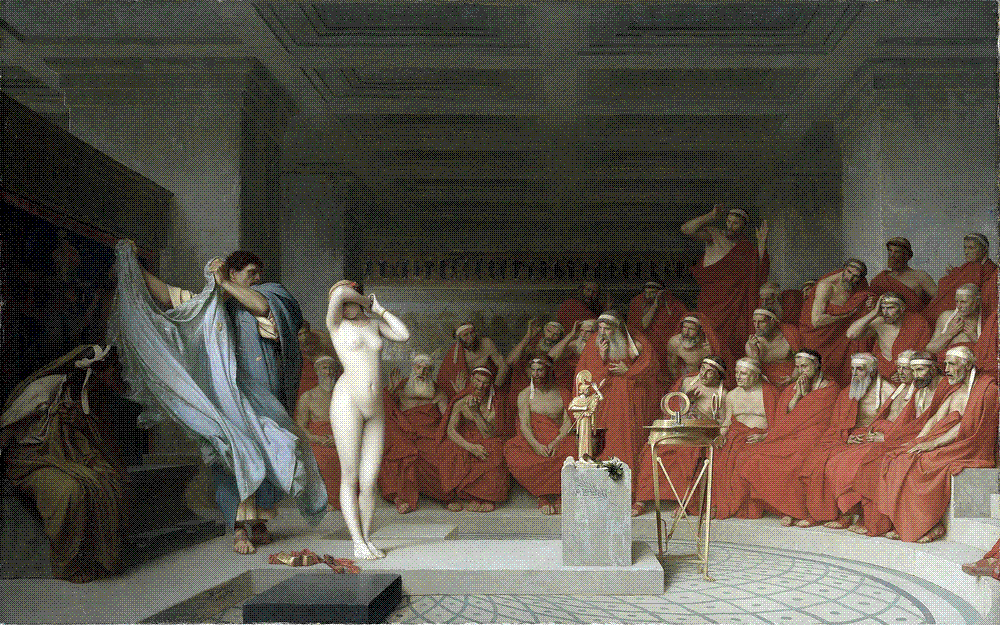
Culture AP · BBC · Aug 4, 2026 Ariana Grande withdraws from a 2027 London staging of 'Sunday in the Park With George' and will step back from public life Empire Street Productions said the singer will no longer appear at the Barbican alongside her "Wicked" co-star Jonathan Bailey in the Stephen Sondheim musical. A representative said the 33-year-old will take "a step back from visibility" after finishing the Eternal Sunshine Tour, citing "endless, ongoing public scrutiny". The withdrawal follows her split from Ethan Slater and last week's album release, amid heavy online speculation about her health and appearance. Analogies Phryne is stripped before the Areopagus, c. 350 BC But Hyperides, when pleading Phryne's cause, as he did not succeed at all, but it was plain that the judges were about to condemn her, brought her forth into the middle of the court, and, tearing open her tunic and displaying her naked bosom, employed all the end of his speech, with the highest oratorical art, to excite the pity of her judges by the sight of her beauty, and inspired the judges with a superstitious fear, so that they were so moved by pity as not to be able to stand the idea of condemning to death “a prophetess and priestess of Venus.”
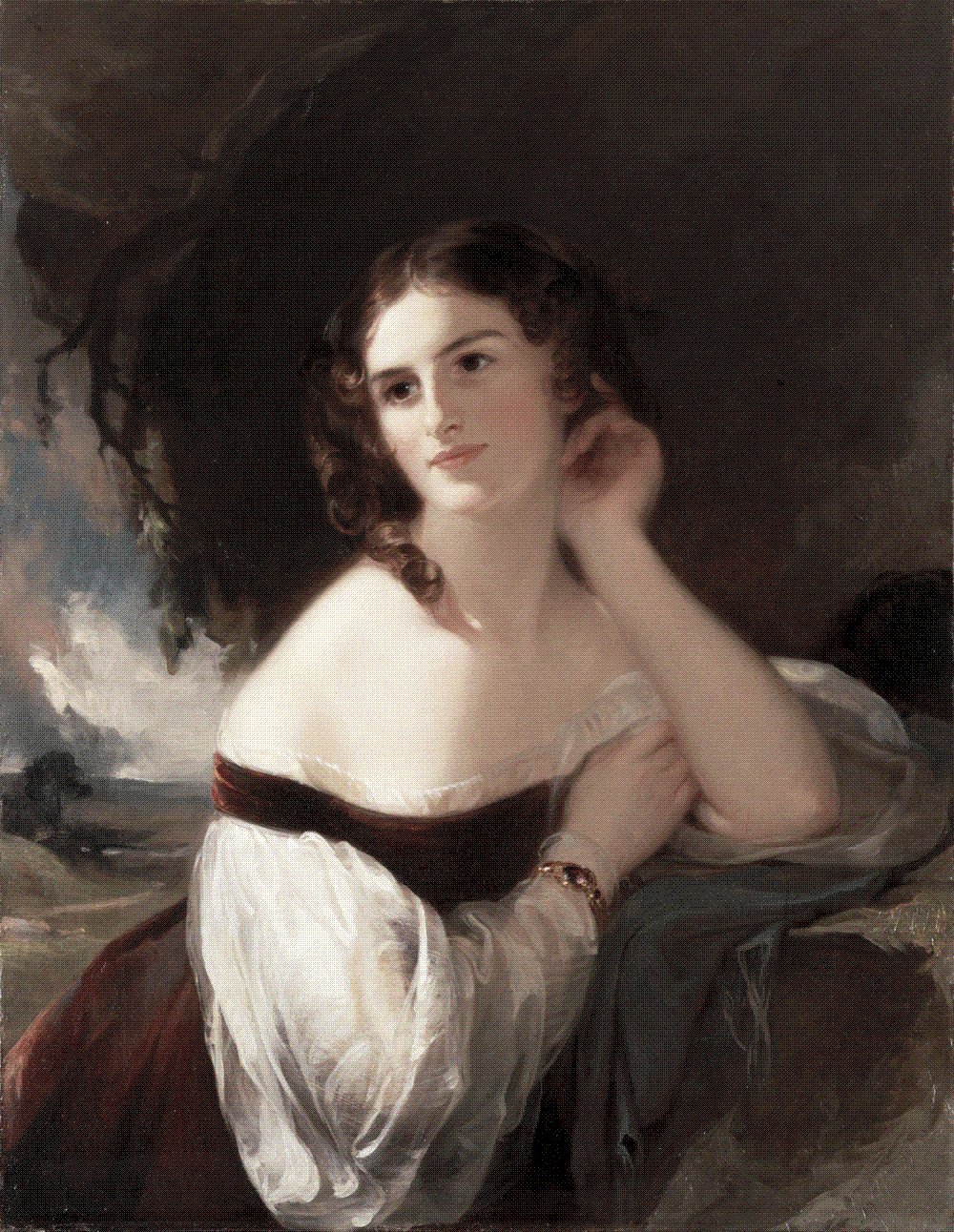
Athenaeus of Naucratis, The Deipnosophists, Book XIII, ch. 59 (c. AD 200), trans. C. D. Yonge, London: Henry G. Bohn, 1854, p. 942; hosted by the Perseus Digital Library, Tufts University → Fanny Kemble, the most famous actress of her day, writes home about wanting to leave the stage It is very well that our audiences should look at us as mere puppets, for could they sometimes see the real feelings of those for whose false miseries their sympathies are excited, I believe sufficiently in their humanity to think they would kindly give us leave to leave off and go home. Ours is a very strange trade, and I am sorry to say that every day increases my distaste for it.... For many years—ever since I entered upon my first girlhood, indeed—a quiet, lonely life upon a small independence has been the aim of my desires and my notion of happiness.
Frances Anne (Fanny) Kemble, letter to Harriet St. Leger, Philadelphia, October 22, 1832, printed in Records of a Girlhood (New York: Henry Holt & Co., 1879); Project Gutenberg ebook no. 16478 → Charlotte Brontë watches an audience feed on an actress in 'Villette' Swordsmen thrust through, and dying in their blood on the arena sand; bulls goring horses disembowelled, made a meeker vision for the public—a milder condiment for a people’s palate—than Vashti torn by seven devils: devils which cried sore and rent the tenement they haunted, but still refused to be exorcised. Suffering had struck that stage empress; and she stood before her audience neither yielding to, nor enduring, nor, in finite measure, resenting it: she stood locked in struggle, rigid in resistance.
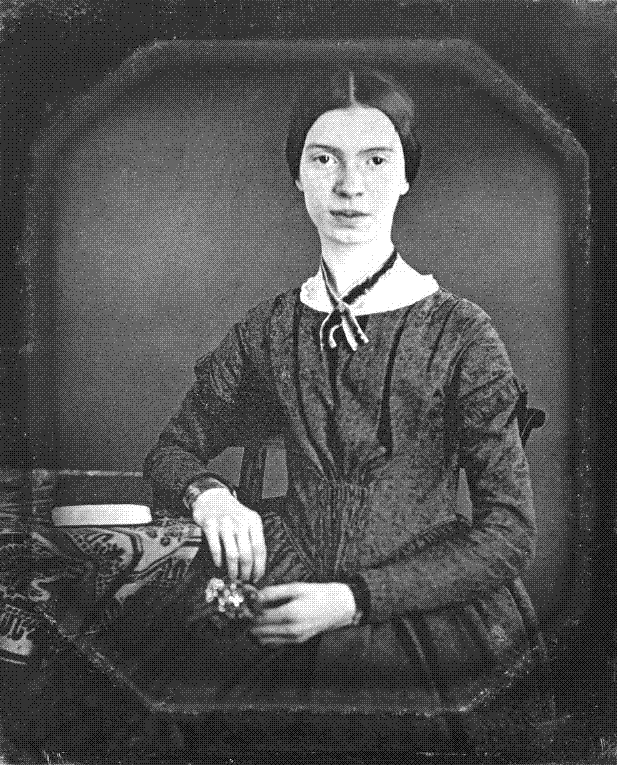
Charlotte Brontë, Villette (London: Smith, Elder & Co., 1853), Chapter XXIII, “Vashti”; Project Gutenberg ebook no. 9182 → Emily Dickinson on the dreariness of being somebody I'm nobody! Who are you?
Are you nobody, too?
Then there's a pair of us—don't tell!
They'd banish us, you know.
How dreary to be somebody!
How public, like a frog
To tell your name the livelong day
To an admiring bog!
Emily Dickinson, “I'm nobody! Who are you?”, in Poems by Emily Dickinson: Second Series, ed. T. W. Higginson and Mabel Loomis Todd (Boston: Roberts Brothers, 1891), Part I: Life, poem I; transcribed at Wikisource → Seurat's 'A Sunday on La Grande Jatte' — the crowd the musical is built from Seurat spent two years assembling a riverbank of Parisians out of millions of separate dots of colour: stiff, frontal, hieratic figures who almost never look at one another. A woman with a monkey on a leash stands under a parasol at the right edge, sealed inside her own silhouette; a lone rower reclines in the grass; a small girl in white stares straight out of the picture at us. It is a painting of a public holiday in which nobody visibly appears to be having one — a whole crowd, and inside it, absolute solitude.
Georges Seurat, A Sunday on La Grande Jatte — 1884, oil on canvas, 1884–86 (border added 1888–89), 207.5 × 308.1 cm, Art Institute of Chicago, Helen Birch Bartlett Memorial Collection, accession no. 1926.224; digital file hosted on Wikimedia Commons → Hugo Wolf sets Mörike's 'Verborgenheit': leave me, O world, leave me be Laß, o Welt, o laß mich seyn!
Locket nicht mit Liebesgaben!
Laßt dies Herz alleine haben
Seine Wonne, seine Pein!
Was ich traure weiß ich nicht,
Es ist unbekanntes Wehe;
Immerdar durch Thränen sehe
Ich der Sonne liebes Licht.
Oft bin ich mir kaum bewußt,
Und die helle Freude zücket
Durch die Schwere, so mich drücket
Wonniglich in meiner Brust.
Laß, o Welt, o laß mich seyn!
Locket nicht mit Liebesgaben!
Laßt dies Herz alleine haben
Seine Wonne, seine Pein!
Hugo Wolf, “Verborgenheit” (Seclusion), no. 12 of Gedichte von Eduard Mörike für eine Singstimme und Klavier, composed 1888, published Vienna 1889; scores at IMSLP / Petrucci Music Library. Poem text quoted from the first edition: Eduard Mörike, Gedichte (Stuttgart and Tübingen: Cotta, 1838), p. 143, digitised by the Deutsches Textarchiv →