Wikimedia Commons
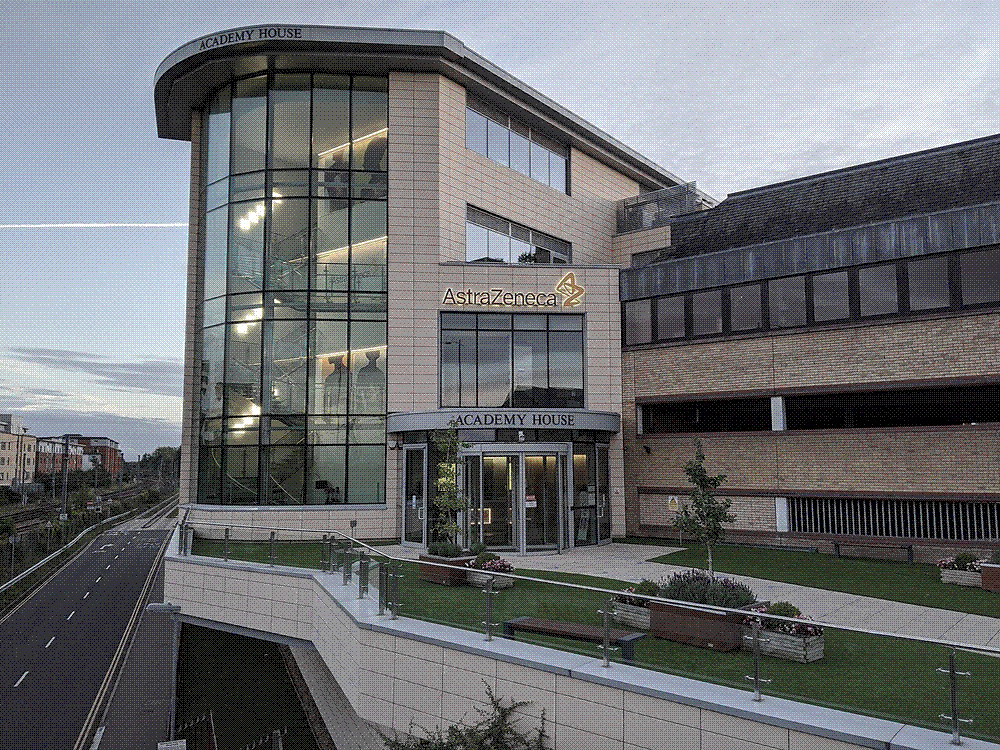
AstraZeneca shares fall about 7%, the biggest drop on the FTSE 100, after reports it held early talks with Bristol Myers Squibb on a possible merger worth around $400 billion AstraZeneca's London-listed shares slid roughly 7%, the steepest fall on the FTSE 100, after the Financial Times reported the drugmaker had held preliminary talks with US rival Bristol Myers Squibb about a tie-up. A person familiar with the matter told Reuters the two had held discussions; neither company confirmed the report. A combination would rank among the largest pharmaceutical mergers ever, at a valuation near $400 billion, but investors questioned the strategic rationale. Analogies Rome's credit crash of A.D. 33 Hence followed a scarcity of money, a great shock being given to all credit, the current coin too, in consequence of the conviction of so many persons and the sale of their property, being locked up in the imperial treasury or the public exchequer. To meet this, the Senate had directed that every creditor should have two-thirds of his capital secured on estates in Italy. Creditors however were suing for payment in full, and it was not respectable for persons when sued to break faith. So, at first, there were clamorous meetings and importunate entreaties; then noisy applications to the prætor's court. And the very device intended as a remedy, the sale and purchase of estates, proved the contrary, as the usurers had hoarded up all their money for buying land. The facilities for selling were followed by a fall of prices, and the deeper a man was in debt, the more reluctantly did he part with his property, and many were utterly ruined.
Tacitus, The Annals, Book VI, ch. 17, trans. Alfred John Church & William Jackson Brodribb; Perseus Digital Library, Tufts University. → The South Sea Bubble of 1720 In the mean time, innumerable joint-stock companies started up every where. They soon received the name of Bubbles, the most appropriate that imagination could devise. The populace are often most happy in the nicknames they employ. None could be more apt than that of Bubbles. Some of them lasted for a week or a fortnight, and were no more heard of, while others could not even live out that short span of existence. … There were nearly a hundred different projects, each more extravagant and deceptive than the other, To use the words of the Political State, they were “set on foot and promoted by crafty knaves, then pursued by multitudes of covetous fools, and at last appeared to be, in effect, what their vulgar appellation denoted them to be—bubbles and mere cheats.”
Charles Mackay, Memoirs of Extraordinary Popular Delusions and the Madness of Crowds (1841), vol. I, "The South-Sea Bubble"; Project Gutenberg. → "If we can float the shares, the money'll come in" "Where's the money to come from?"
"Money to come from, sir? Where do you suppose the money comes from in all these undertakings? If we can float the shares, the money'll come in quick enough. We hold three million dollars of the stock ourselves."
"Six hundred thousand pounds!" said Montague.
"We take them at par, of course,—and as we sell we shall pay for them. But of course we shall only sell at a premium. If we can run them up even to 110, there would be three hundred thousand dollars."
Anthony Trollope, The Way We Live Now (1875), ch. IX, "The Great Railway to Vera Cruz"; Project Gutenberg. → The flood-tide roar of speculation The steps and peristyle of the Bourse were quite black with swarming frock-coats; and from among the coulissiers, already installed under the clock and hard at work, there arose the clamour of bull and bear, the flood-tide roar of speculation dominating all the rumbling hubbub of the city. Passers-by turned their heads, curious and fearful as to what might be going on there—all those mysterious financial operations which few French brains can penetrate, all that sudden ruin and fortune brought about—how, none could understand—amid gesticulation and savage cries.
Émile Zola, Money (L'Argent) (1891), trans. Ernest A. Vizetelly; Project Gutenberg. → Hogarth's "The South Sea Scheme" Hogarth's earliest satirical print skewers the mania around the South Sea Company: at its centre a giant merry-go-round spins investors of every rank while a demon hacks the body of Fortune into pieces and tosses them to the crowd. Devils, whores and a broken figure of Honesty on the wheel turn a stock craze into a moral carnival—an image of speculation running far ahead of any underlying worth, much like a $400bn deal investors struggle to justify.
William Hogarth, Emblematical Print on the South Sea Scheme ("The South Sea Scheme"), engraving, 1721. Public domain via Wikimedia Commons. → Brueghel's "Satire on Tulip Mania" Jan Brueghel the Younger paints the Dutch tulip frenzy as a troop of monkeys in merchants' dress: they weigh bulbs, count coins, toast their paper profits, and haul contracts about, while one relieves himself on the discarded flowers and another is carried off to the grave once the market collapses. The apes' solemn dealing over a worthless commodity mocks investors who chase a grand valuation until the rationale evaporates.
Jan Brueghel the Younger, Satire on Tulip Mania, oil on panel, c. 1640, Frans Hals Museum, Haarlem. Public domain via Wikimedia Commons. →