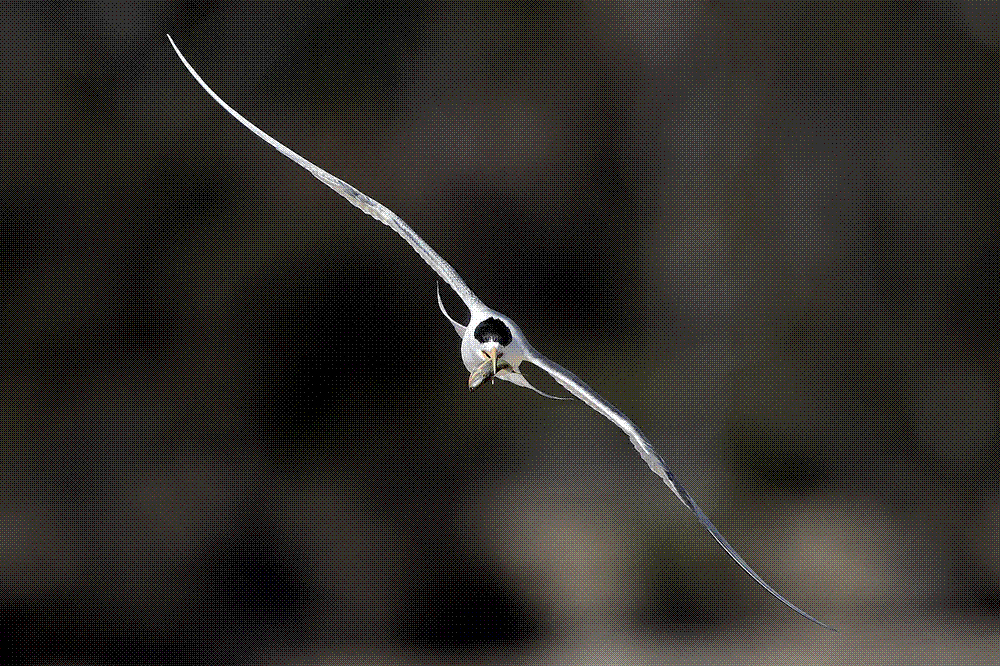
Wikimedia Commons
Australia confirms its first mass die-off of seabirds from H5N1 bird flu, with about 50 greater crested terns found dead on the South Australian coast Testing confirmed H5N1 avian influenza in a colony of greater crested terns off Cape Jaffa, about 250 km south of Adelaide, where some 49 dead and 35 sick birds were spotted from the air, officials said. It is Australia's first confirmed mass-mortality event from the virus, which was first detected in the country in June. The agriculture minister warned Australians should expect further spread among wildlife. Analogies The murrain of Egypt: a plague upon the beasts Behold, the hand of the LORD is upon thy cattle which is in the field, upon the horses, upon the asses, upon the camels, upon the oxen, and upon the sheep: there shall be a very grievous murrain. . . . And the LORD did that thing on the morrow, and all the cattle of Egypt died: but of the cattle of the children of Israel died not one.
The Holy Bible, King James Version (1769 Oxford edition), Exodus 9:3-6. Wikisource. → The last of the great auks, hunted from the seas In like manner the fact is incontestable that its breeding-stations in the western part of the Atlantic were for three centuries regularly visited and devastated with the combined objects of furnishing food or bait to the fishermen from very early days, and its final extinction . . . was owing to “the ruthless trade in its eggs and skin.” . . . yet on this rock (Eldey = fire-island) they were “specially hunted down” whenever opportunity offered, until the stock there was wholly extirpated in 1844.
“Gare-fowl” (the Great Auk, Alca impennis), Encyclopædia Britannica, 11th edition (1911). Wikisource. → Lucretius: when the very birds fell sick and died And though corpse on corpse lay piled
Unburied on ground, the race of birds and beasts
Would or spring back, scurrying to escape
The virulent stench, or, if they'd tasted there,
Would languish in approaching death. But yet
Hardly at all during those many suns
Appeared a fowl, nor from the woods went forth
The sullen generations of wild beasts--
They languished with disease and died and died.
Lucretius, De Rerum Natura (On the Nature of Things), Book VI — the Plague of Athens, trans. William Ellery Leonard. Project Gutenberg. → The slain seabird and the crew struck dead “God save thee, ancient Mariner!
From the fiends, that plague thee thus!--
Why look'st thou so?”--With my cross-bow
I shot the ALBATROSS.
. . .
Four times fifty living men,
(And I heard nor sigh nor groan)
With heavy thump, a lifeless lump,
They dropped down one by one.
Samuel Taylor Coleridge, “The Rime of the Ancient Mariner” (1798). Project Gutenberg. → Audubon's crested tern on the shore Audubon's aquatint portrays a Cayenne Tern — a crested tern of the same genus (Thalasseus) as the greater crested terns now dying on South Australian beaches — alert and immaculate on the tideline, the living bird at the height of its spring plumage. Set against a grey sea and lowering sky, the image is a naturalist's celebration of a species in full vigour, which lends a quiet elegy to news of the same kind of bird washing up dead by the dozen.
Robert Havell after John James Audubon, Cayenne Tern (Sterna cayana), Plate 273 from The Birds of America (1835). National Gallery of Art, via Wikimedia Commons. → A still life of dead birds Dupuis heaps the spoils of the hunt on a cold stone ledge: a great pheasant with its wing flung open, ducks and small songbirds tumbled limp and lifeless, their eyes shut, beside bright oranges and a cut lemon. It is a memento mori in feathers — the beauty of plumage turned to inert weight — that answers grimly to a beach strewn with dead terns.
Pierre Dupuis (1610–1682), Still Life with Dead Birds (1666), oil on canvas. Wikimedia Commons. →