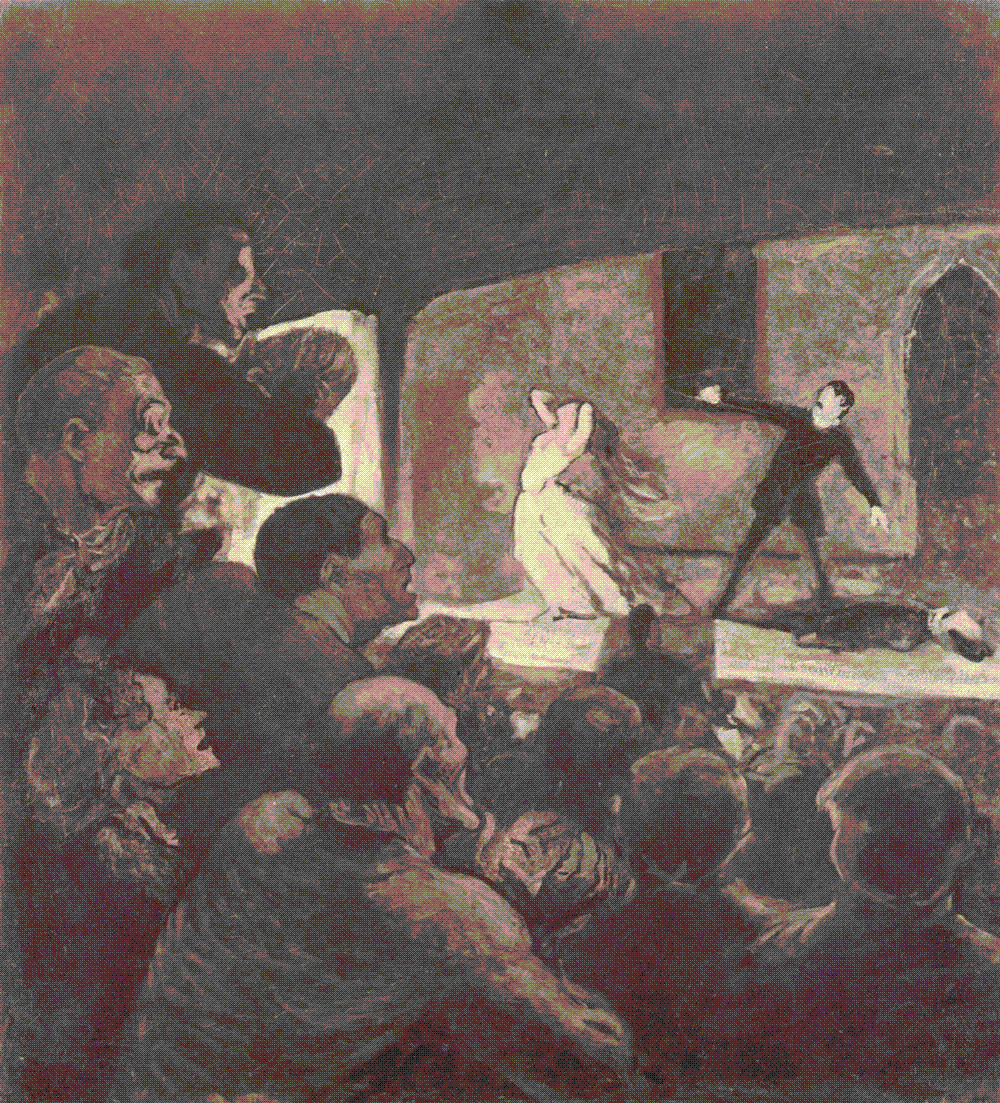
Exterior of the Bayreuth Festspielhaus, Richard Wagner's festival theatre on the Green Hill above Bayreuth, seen from the front.

Bayreuth Festspielhaus (2016). Photo by El Grafo, CC BY-SA 4.0, via Wikimedia Commons.

CultureAP · WRBLAug 2, 2026

An AI-assisted staging draws sustained boos at Germany's Bayreuth Festival of Richard Wagner's operas

A new production at Germany's Bayreuth Festival that used artificial-intelligence-assisted staging and imagery drew loud boos from the audience at its premiere, in the latest clash over AI's place in the arts. The festival, devoted to the operas of Richard Wagner and held at the composer's purpose-built theatre, is one of classical music's most tradition-bound institutions. Directors and critics were divided over whether the technology enriched or cheapened the work.
Analogies

The Battle of Hernani (1830)

On the night of 25 February 1830, Victor Hugo's Hernani turned the Comedie-Francaise into a battlefield. Long-haired young Romantics, packed into the pit with tickets Hugo himself had handed out, roared their approval while the powdered partisans of classical tragedy hissed and jeered from the boxes. The uproar over Hugo's rule-breaking verse raged on through the run, and the 'Battle of Hernani' became the founding legend of a new artistic generation storming an old order.
Battle of Hernani, Wikipedia

The Riot at The Rite of Spring (1913)

When Stravinsky's The Rite of Spring erupted at the Theatre des Champs-Elysees on 29 May 1913, its pounding rhythms and Nijinsky's jolting choreography split the audience into warring camps. Catcalls and laughter swelled into a near-riot of shouting and scuffles, so loud that the dancers could barely hear the orchestra and dozens of the rowdiest spectators were reportedly ejected. What scandalized Paris that night has since become one of the pillars of modern music.
The Rite of Spring, Wikipedia

Richard Wagner, The Art-Work of the Future (1849)

The great United Art-work, which must gather up each branch of art to use it as a mean, and in some sense to undo it for the common aim of all, for the unconditioned, absolute portrayal of perfected human nature, this great United Art-work he cannot picture as depending on the arbitrary purpose of some human unit, but can only conceive it as the instinctive and associate product of the Manhood of the Future.
Richard Wagner, 'The Art-Work of the Future', in Richard Wagner's Prose Works, Vol. I, trans. William Ashton Ellis (London: Kegan Paul, Trench, Trubner, 1895)

Samuel Butler, Erewhon: The Book of the Machines (1872)

But who can say that the vapour engine has not a kind of consciousness? Where does consciousness begin, and where end? Who can draw the line? Who can draw any line? Is not everything interwoven with everything?
Samuel Butler, Erewhon; Or, Over the Range (1872), Chapter XXIII, 'The Book of the Machines', via Project Gutenberg
Impressionist oil portrait of an elderly Richard Wagner, head and shoulders, against a soft blue-grey background.

Pierre-Auguste Renoir, Richard Wagner (1882)

Renoir painted this portrait of Richard Wagner in Palermo in January 1882, working from a single sitting of barely thirty-five minutes. The Impressionist's loose, rapid brushwork fixes the ageing composer at the height of his fame, only a year before his death. The encounter brought face to face two very different revolutionaries of nineteenth-century art.
Pierre-Auguste Renoir, 'Richard Wagner' (1882), Musee d'Orsay, Paris, via Wikimedia Commons
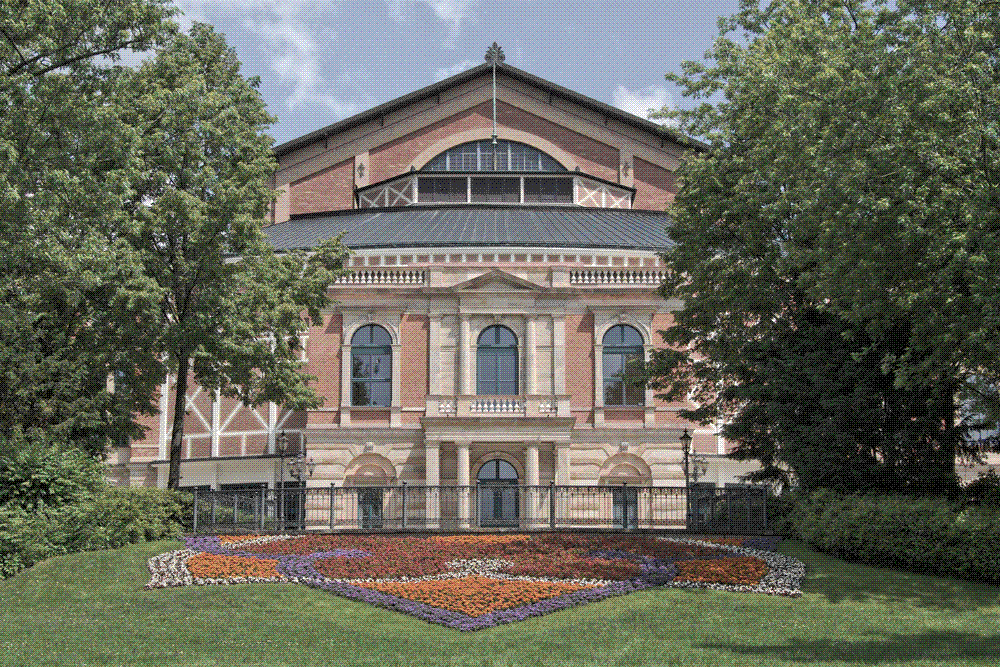
Painting of a darkened theatre audience, pale faces lit from below by stage light, watching an unseen stage.

Honore Daumier, The Melodrama (c. 1860)

Instead of the stage, Honore Daumier turned his brush on the audience itself. In 'The Melodrama' the spectators lean forward out of the shadows, their upturned faces caught in the glare of the footlights, rapt and anxious before a drama we never see. Painted around 1860, it is among the first works to make the reacting crowd, rather than the performance, its true subject.
Honore Daumier, 'The Melodrama' (Das Drama), c. 1860, Neue Pinakothek, Munich; Melodrama (Daumier), Wikipedia