Wikimedia Commons
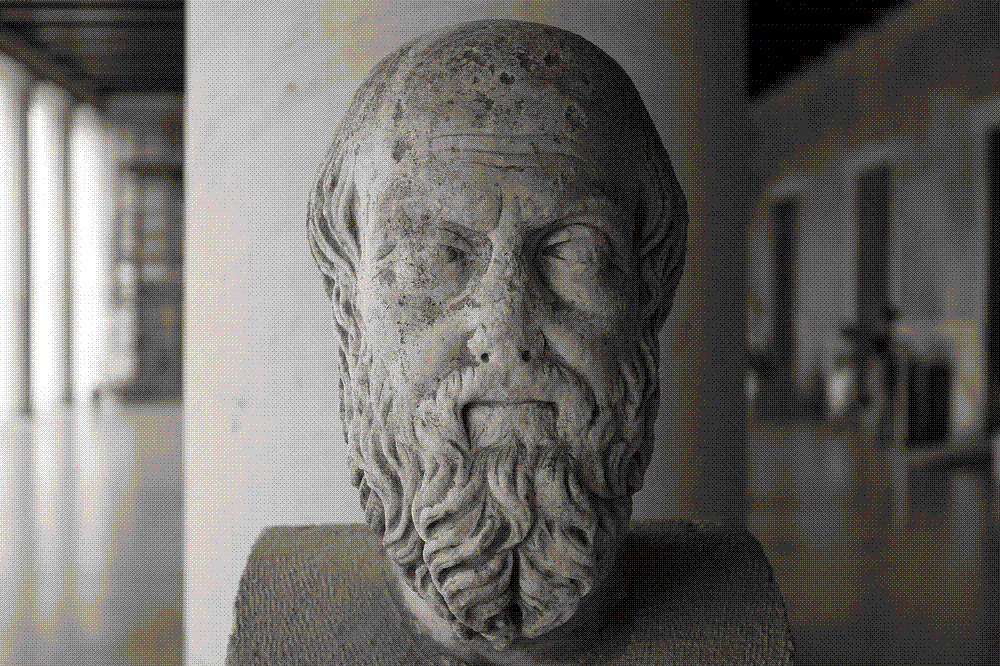
The United States revokes the visa of Brazil's ambassador, Maria Luiza Ribeiro Viotti, in a widening dispute with Lula's government The State Department called the move reciprocal, after Brazil denied visas last month to two American diplomats and stalled on approving President Trump's nominee for ambassador in Brasilia. Viotti is not being expelled, and officials said she could resume her duties if Brazil accepts Danny Perez, the former Florida House speaker, as US ambassador. The step had been delayed several times to give President Lula room to back down, which he did not. Analogies Athens and Sparta murdered the heralds Darius sent to demand earth and water, about 491 BC, and Herodotus reads the sacrilege as a debt still owed a generation later. To Athens and Sparta Xerxes sent no heralds to demand earth, and this he did for the following reason. When Darius had previously sent men with this same purpose, those who made the request were cast at the one city into the Pit and at the other into a well, and bidden to obtain their earth and water for the king from these locations. What calamity befell the Athenians for dealing in this way with the heralds I cannot say, save that their land and their city were laid waste. I think, however, that there was another reason for this, and not the aforesaid.
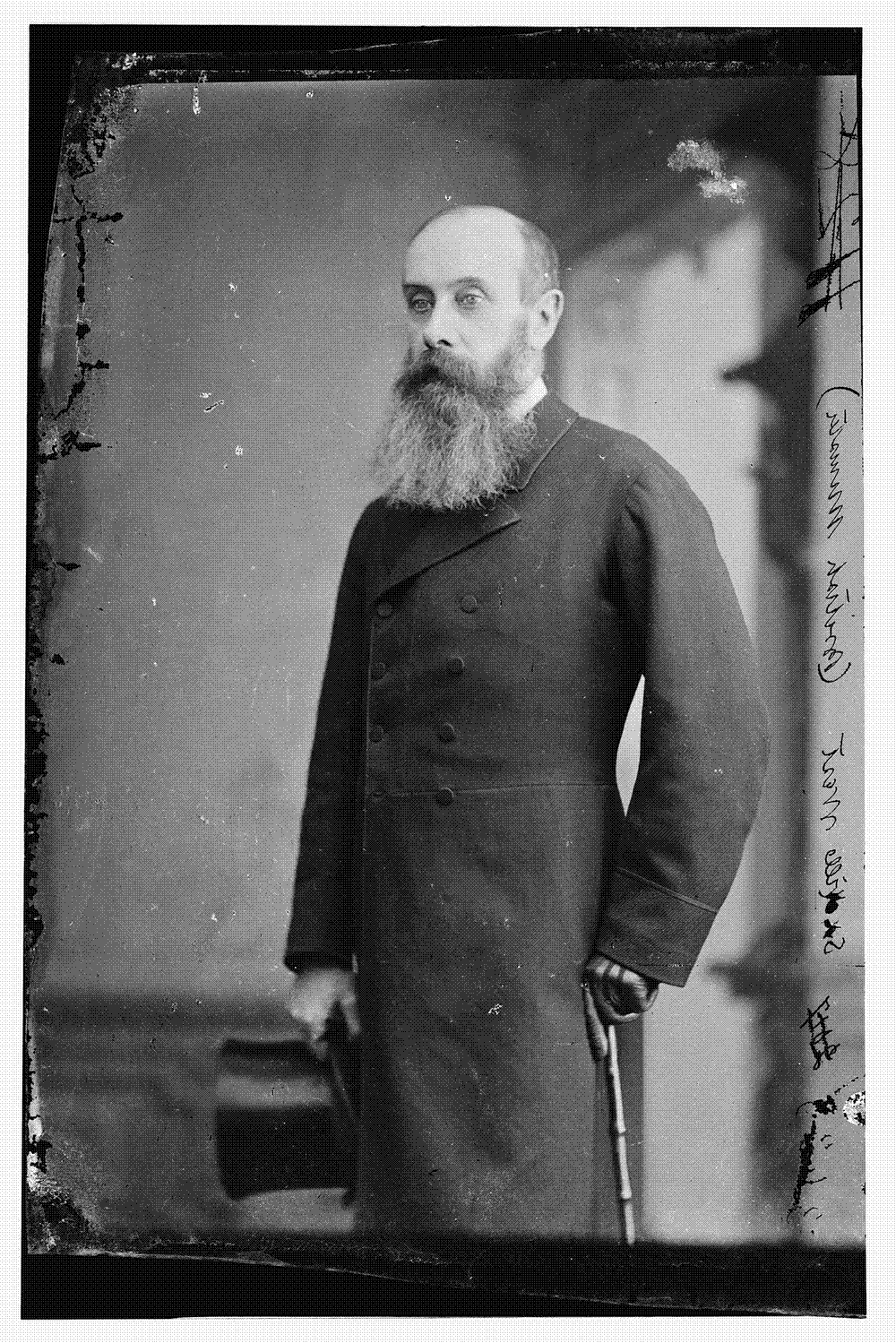
Herodotus, The Histories, Book 7, chapter 133, with an English translation by A. D. Godley (Cambridge, MA: Harvard University Press, 1920); Perseus Digital Library, Tufts University. → On 30 October 1888 the United States declared the British minister in Washington, Lord Sackville, no longer acceptable and issued him a passport to leave; Britain left the legation without a minister in reply. By direction of the President, I have to-day informed Lord Sackville, the British minister at this capital, that for causes heretofore made known through you to Her Majesty’s Government, pursuant to my dispatch of the 25th instant, his continuance in his present official position in the United States is no longer acceptable to this Government, and would consequently be detrimental to the relations between the two countries. It becomes, therefore, necessary that another channel of intercourse between the two Governments should be opened. A passport, to facilitate his withdrawal, has been issued to Lord Sackville. You will inform Her Majesty’s Government of this determination.
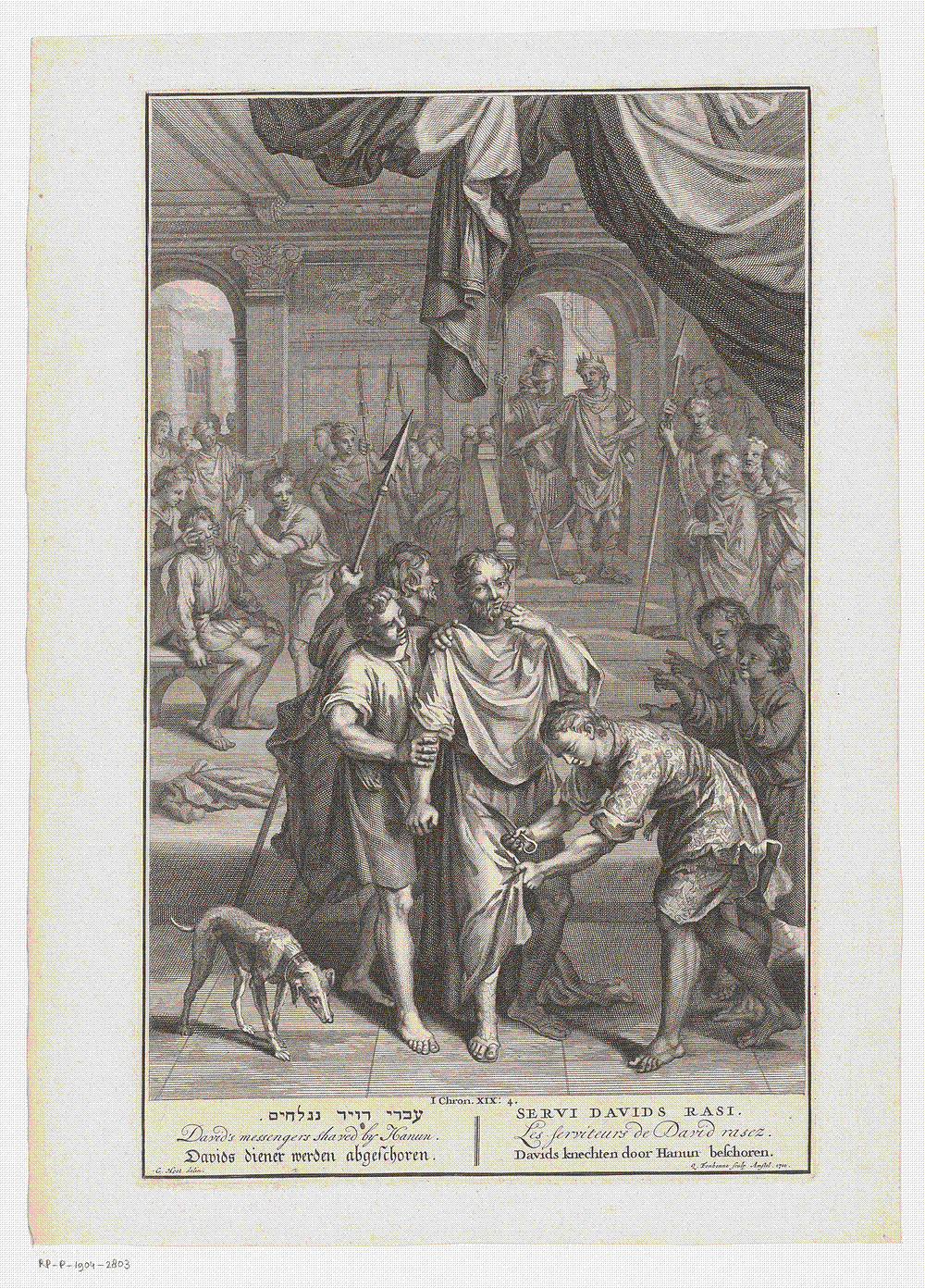
No. 7, Mr. Bayard to Mr. Phelps, telegram, Department of State, Washington, October 30, 1888, in Papers Relating to the Foreign Relations of the United States, Transmitted to Congress, With the Annual Message of the President, December 3, 1888, Part II, Document 430; Office of the Historian, U.S. Department of State. → In 2 Samuel 10 the Ammonite king Hanun, told that David's envoys are really spies, shaves off half their beards and cuts away their garments, and the humiliation of the messengers becomes a war. And the princes of the children of Ammon said unto Hanun their lord, Thinkest thou that David doth honour thy father, that he hath sent comforters unto thee? hath not David rather sent his servants unto thee, to search the city, and to spy it out, and to overthrow it? Wherefore Hanun took David's servants, and shaved off the one half of their beards, and cut off their garments in the middle, even to their buttocks, and sent them away. When they told it unto David, he sent to meet them, because the men were greatly ashamed: and the king said, Tarry at Jericho until your beards be grown, and then return.
The Holy Bible, King James Version (1611), 2 Samuel 10:3-5; Wikisource, Bible (King James)/2 Samuel. → In Shakespeare's Antony and Cleopatra, Antony has Caesar's envoy Thidias whipped and sends him back with an invitation to whip one of Antony's own men in return. Get thee back to Caesar; Tell him thy entertainment. Look thou say He makes me angry with him; for he seems Proud and disdainful, harping on what I am, Not what he knew I was. He makes me angry, And at this time most easy ’tis to do’t, When my good stars that were my former guides Have empty left their orbs and shot their fires Into th’ abysm of hell. If he mislike My speech and what is done, tell him he has Hipparchus, my enfranched bondman, whom He may at pleasure whip, or hang, or torture, As he shall like, to quit me. Urge it thou. Hence with thy stripes, be gone.
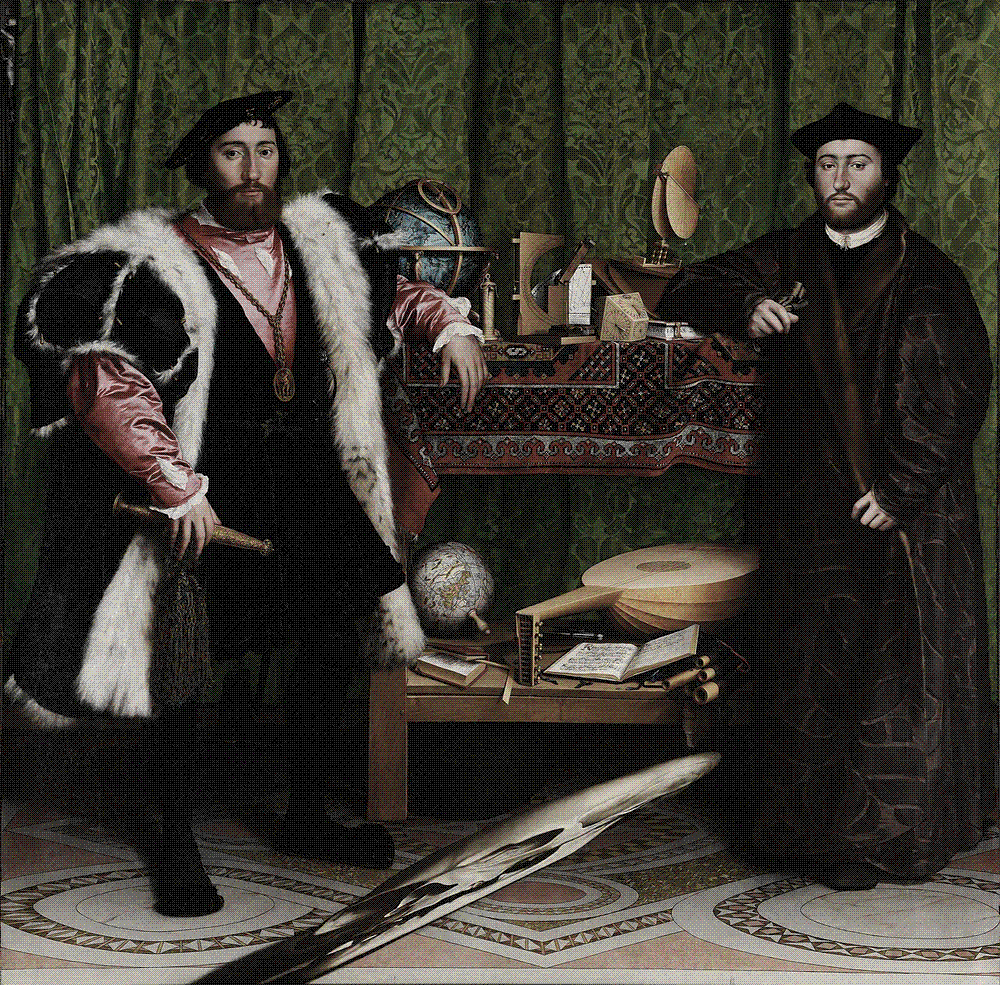
William Shakespeare, Antony and Cleopatra, Act III, Scene 13 (Antony to Thidias, after the whipping); Project Gutenberg eBook #1534, prepared by the PG Shakespeare Team. → Hans Holbein the Younger's double portrait of two French envoys in London, painted in 1533 as Europe split apart, hides a death's head at the ambassadors' feet. Two young Frenchmen on mission in London stand at either side of a shelved table loaded with the instruments of worldly competence: globes, sundials, a Lutheran hymn book, an arithmetic book wedged open at the page on division. Jean de Dinteville, Francis I's ambassador, is a study in fur and confidence; his friend Georges de Selve, a bishop, is grave beside him. But the lute has a broken string, one flute is missing from its case, and a long grey smear across the floor resolves, when seen from the side, into a human skull. Holbein painted the picture in the year Henry VIII married Anne Boleyn and England broke with Rome, and the embassy in it is already standing over its own ruin.
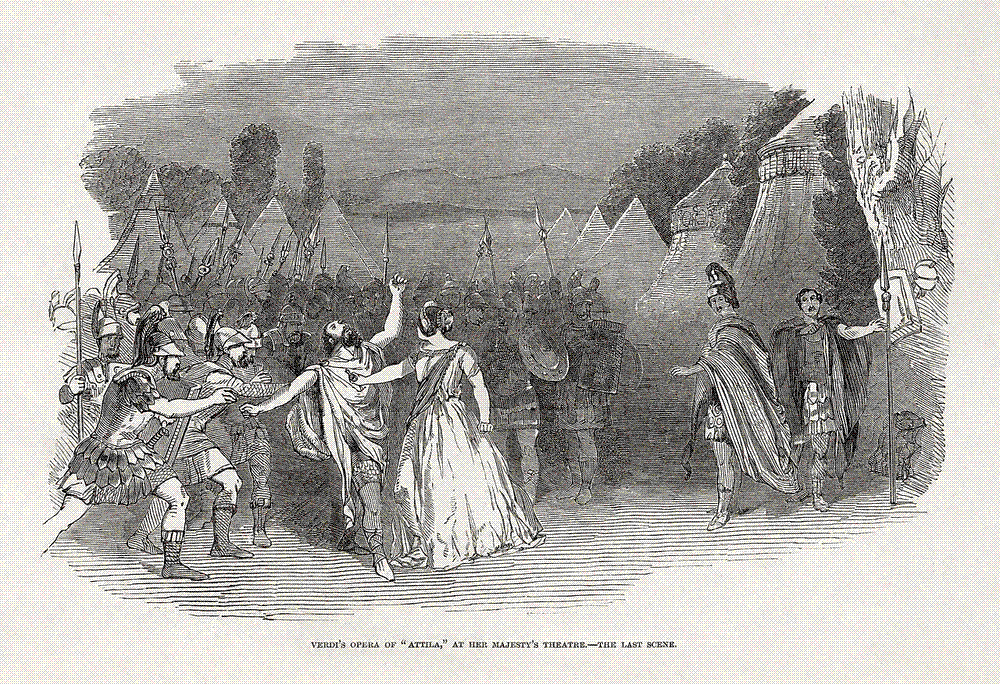
Hans Holbein the Younger, Jean de Dinteville and Georges de Selve ('The Ambassadors'), 1533, oil on wood (Baltic/Polish oak), 207 x 209.5 cm, inventory number NG1314; The National Gallery, London. → Verdi's opera Attila, premiered in Venice in 1846, opens with the Roman envoy Ezio bargaining privately with the enemy he was sent to face. Verdi's dramma lirico, on a libretto by Temistocle Solera, turns an embassy into the hinge of a war. The Roman general Ezio arrives in Attila's camp as the emperor's envoy and, in the great baritone-bass confrontation of the Prologue, offers to divide the world with the invader if Italy is left to him. Attila answers with contempt, the mission collapses, and the envoy goes back to his own court under suspicion from both sides. Italian audiences of 1846 heard the scene as a coded quarrel about who was selling their country, and the opera's proposals across the negotiating table are all backed by the armies waiting outside the tent.
Giuseppe Verdi, Attila, dramma lirico in a prologue and three acts, libretto by Temistocle Solera after Zacharias Werner's Attila, Konig der Hunnen (1809); first performed at the Teatro La Fenice, Venice, 17 March 1846; full scores, vocal scores and libretto at IMSLP / Petrucci Music Library. →