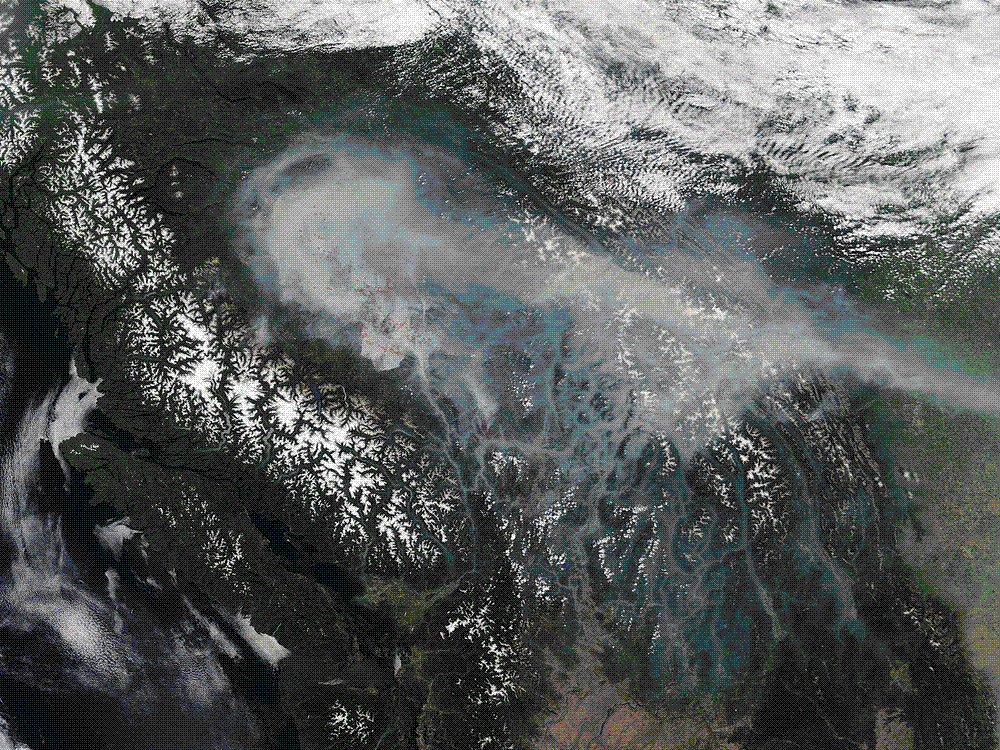
Satellite image of British Columbia with plumes of wildfire smoke streaming across forested mountains

NASA MODIS / Wikimedia Commons

ClimateBBC · Associated Press · ReutersAug 12, 2026

British Columbia's wildfires kill one and displace more than 20,000 as Canada puts its military on standby

The fire that opened the week destroying some 230 homes in a western Canadian Indigenous community did not stop there. By the 9th, fast-moving blazes — led by the out-of-control Bald Range fire, which doubled in size overnight — had pushed British Columbia to declare a provincial state of emergency, with more than 20,000 residents forced from their homes. By week's end the province had its first death, an octogenarian who could not escape, and Canada had placed its military on standby while federal assistance mobilized. Evacuees described fires that 'came so fast' there was time only to leave. Around the emergency ran the now-ritual argument over cause: climate scientists said global warming built the conditions for a fire season of this scale, while the US president blamed forest mismanagement. South of the border, the fires near Spokane wound down and residents returned — to drone footage of neighborhoods reduced to ash.
Analogies

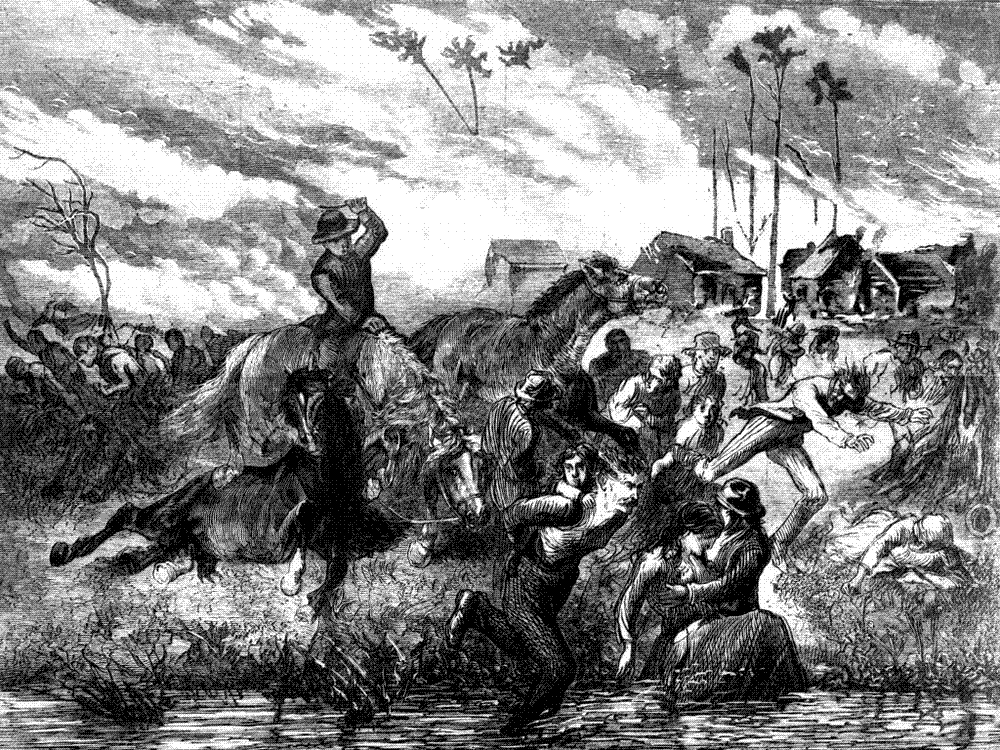
1871 wood engraving of Peshtigo residents fleeing into the Peshtigo River as the firestorm consumes the town around them

The Peshtigo Fire, 1871

A thousand discordant deafening noises rose on the air together. The neighing of horses, falling of chimneys, crashing of uprooted trees, roaring and whistling of the wind, crackling of fire as it ran with lightning-like rapidity from house to house—all sounds were there save that of the human voice. People seemed stricken dumb by terror. They jostled each other without exchanging look, word, or counsel. The silence of the tomb reigned among the living; nature alone lifted up its voice and spoke.
Rev. Peter Pernin, "The Great Peshtigo Fire: An Eyewitness Account" (1874; repr. Wisconsin Magazine of History, 1971)
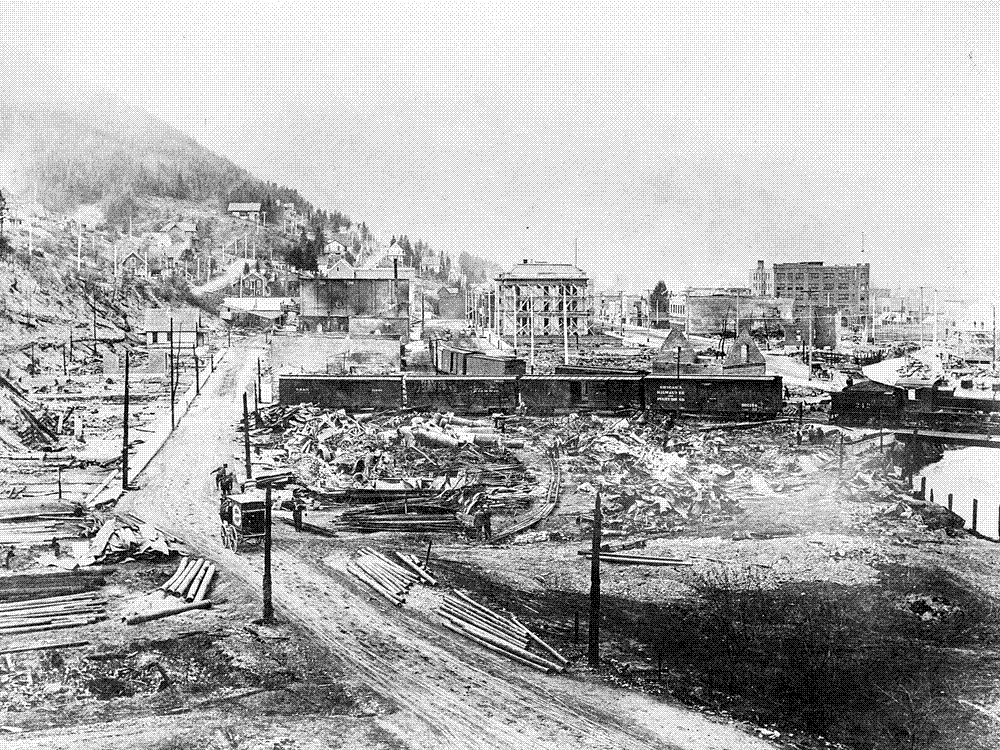
Ruins of Wallace, Idaho, after the town partly burned in the Great Fire of 1910

The Big Burn, 1910

On August 20 a terrific hurricane broke over the mountains. It picked up the fires and carried them for miles. The wind was so strong that it almost lifted men out of their saddles, and the canyons seemed to act as chimneys, through which the wind and fires swept with the roar of a thousand freight trains. The smoke and heat became so intense that it was difficult to breathe.
Edward C. Pulaski, "Surrounded by Forest Fires: My Most Exciting Experience as a Forest Ranger," American Forestry, 1923

Young Men and Fire

Maclean spent his final years reconstructing the 1949 Mann Gulch blowup, in which thirteen young smokejumpers died racing a wall of flame up a Montana slope while their foreman survived inside the ashes of an escape fire he lit and could not persuade them to enter. The book is at once forensic inquest and elegy — an old man asking whether catastrophe can be given a shape, and who is owed an explanation when institutions send the young into fire. The decades of official blame and counter-blame that followed the tragedy remade how America trains people to face flame.
Norman Maclean (University of Chicago Press, 1992)
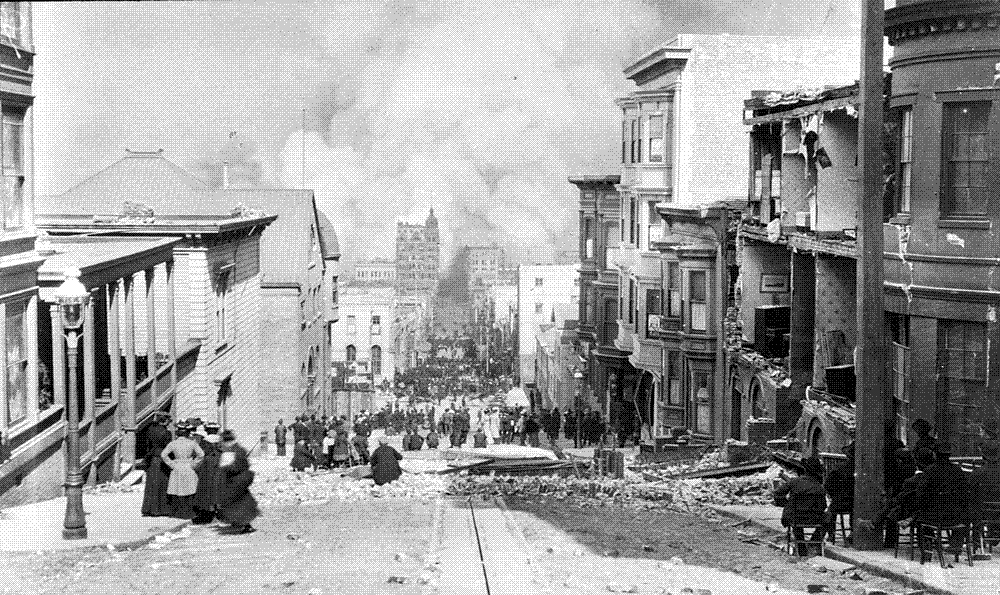
Arnold Genthe's photograph looking down Sacramento Street as residents watch San Francisco burn, April 18, 1906

The Story of an Eyewitness

San Francisco is gone. Nothing remains of it but memories and a fringe of dwelling-houses on its outskirts. Its industrial section is wiped out. Its business section is wiped out. Its social and residential section is wiped out. The factories and warehouses, the great stores and newspaper buildings, the hotels and the palaces of the nabobs, are all gone.
Jack London, Collier's, May 5, 1906
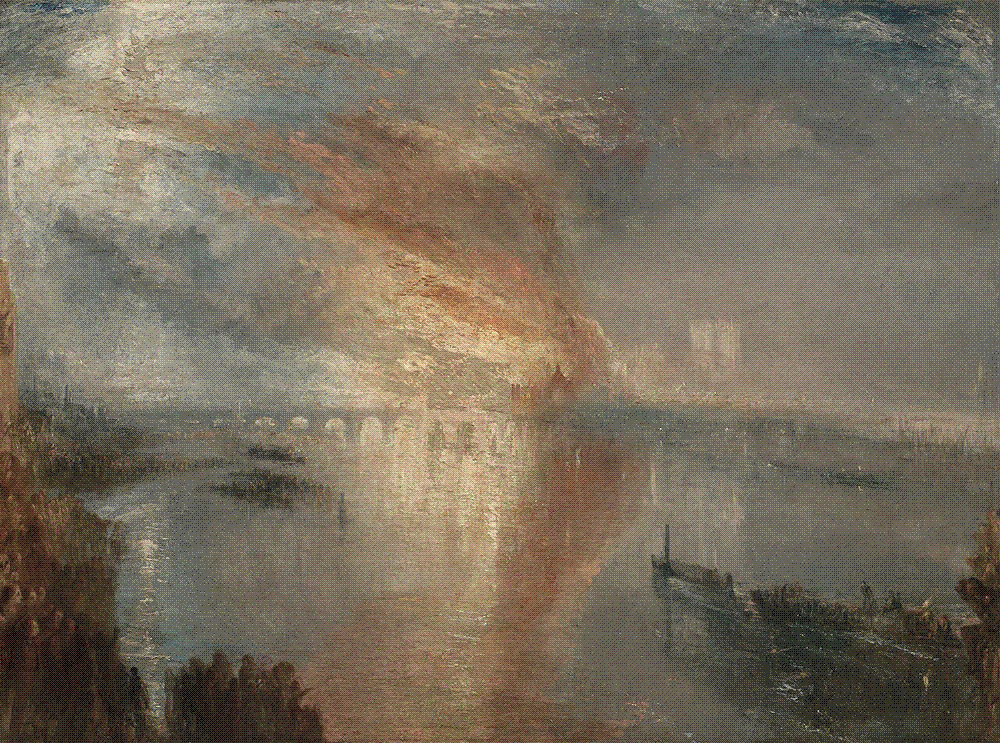
Turner's painting of the Houses of Parliament engulfed in a tower of orange flame reflected in the Thames, with crowds watching from the riverbank

The Burning of the Houses of Lords and Commons

Turner watched Parliament burn from the banks of the Thames on the night of October 16, 1834, sketching as the seat of British government dissolved into flame, then worked the spectacle into a vortex of gold and vermilion that dwarfs the crowds gathered to watch. In his canvas the fire is the true sovereign of the scene, the state's most venerable institution reduced to weather. Britain rebuilt — the new Palace of Westminster rose from the ashes — but Turner fixed the moment a nation watched its own permanence prove flammable.
J. M. W. Turner, oil on canvas, 1835 — Cleveland Museum of Art
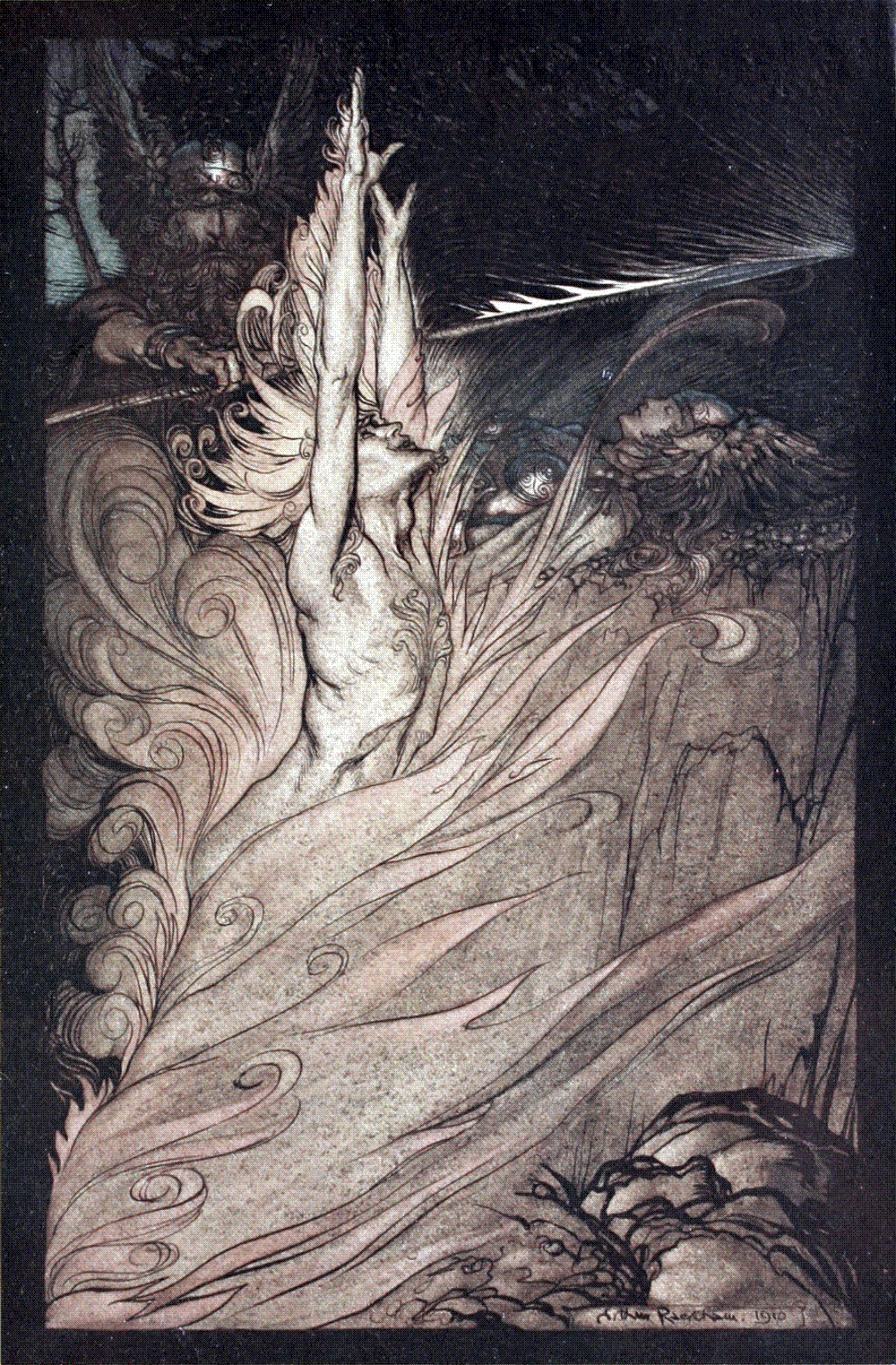
Arthur Rackham's 1910 illustration of Loge's magic fire encircling Brünnhilde's rock at Wotan's command

Magic Fire Music from Die Walküre

At the close of Die Walküre, Wotan strips his disobedient daughter of her godhood, kisses her to sleep on a mountaintop, and summons Loge, god of fire, to ring her rock with flame that only a fearless hero may cross. The Magic Fire Music turns the orchestra itself into combustion — harps, winds, and shimmering strings flickering over the sleeping Brünnhilde's motif. Wagner's fire is punishment, protection, and prophecy at once: the same flames that guard her will, by the cycle's end, take Valhalla and the gods with it.
Richard Wagner, Die Walküre, WWV 86B (1856)