BBC
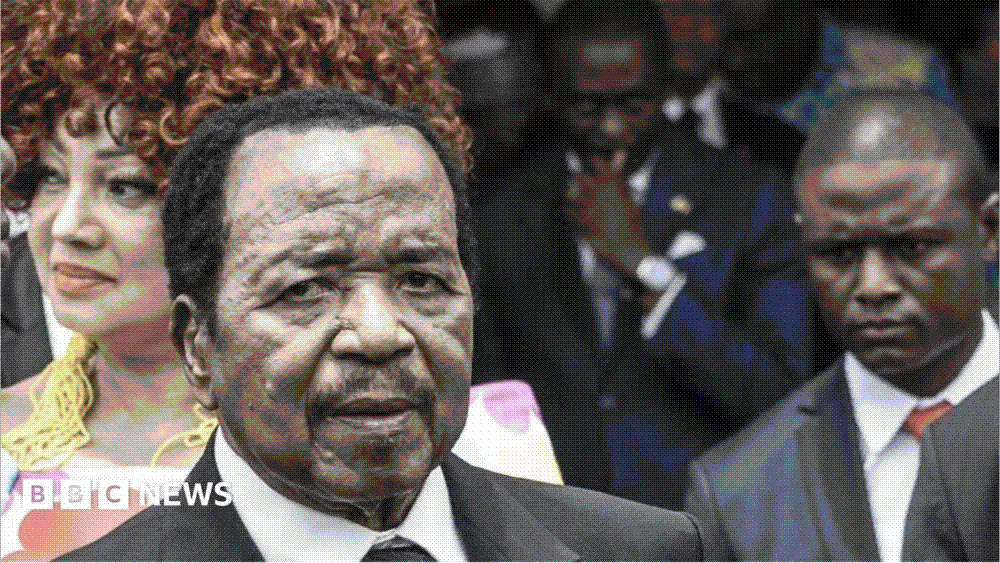
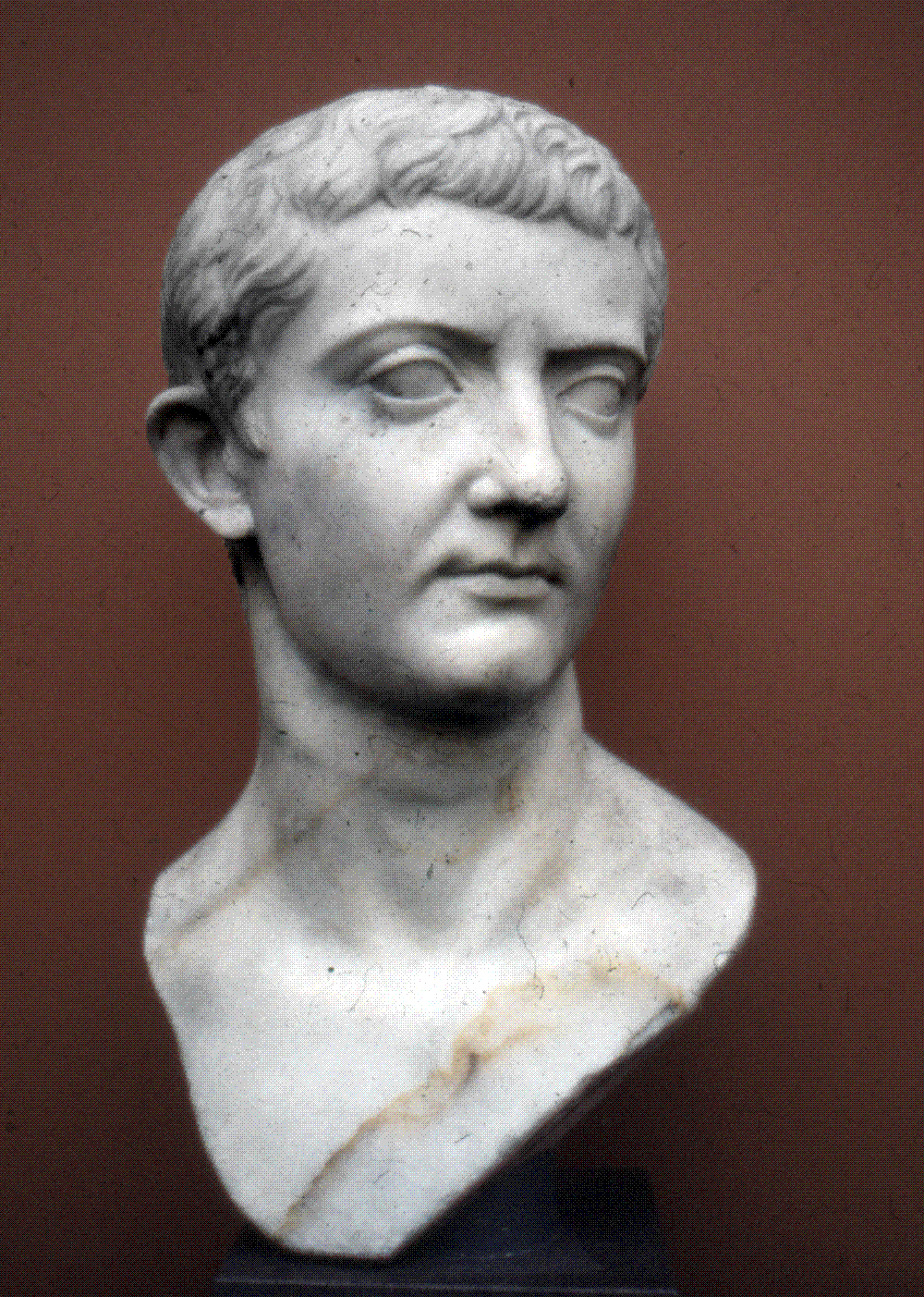
Cameroon's Paul Biya, 93 and unseen in public for nearly two months, reshuffles the military high command from abroad The world's oldest serving head of state has been out of the country for close to 60 days while his officials deny rumours about his health. The reshuffle of the armed forces' senior ranks was announced while he remained absent, deepening unease in Yaounde over the succession. Biya was last seen publicly in Cameroon during Pope Leo XIV's visit in April. Analogies In AD 26 the emperor Tiberius left Rome for the island of Capri and ruled for eleven years by letter, while Sejanus controlled every approach to him. That he might not impair his influence by closing his doors on the throngs of his many visitors or strengthen the hands of accusers by admitting them, he made it his aim to induce Tiberius to live in some charming spot at a distance from Rome. In this he foresaw several advantages. Access to the emperor would be under his own control, and letters, for the most part being conveyed by soldiers, would pass through his hands. Cæsar too, who was already in the decline of life, would soon, when enervated by retirement, more readily transfer to him the functions of empire; envy towards himself would be lessened when there was an end to his crowded levées and the reality of power would be increased by the removal of its empty show.
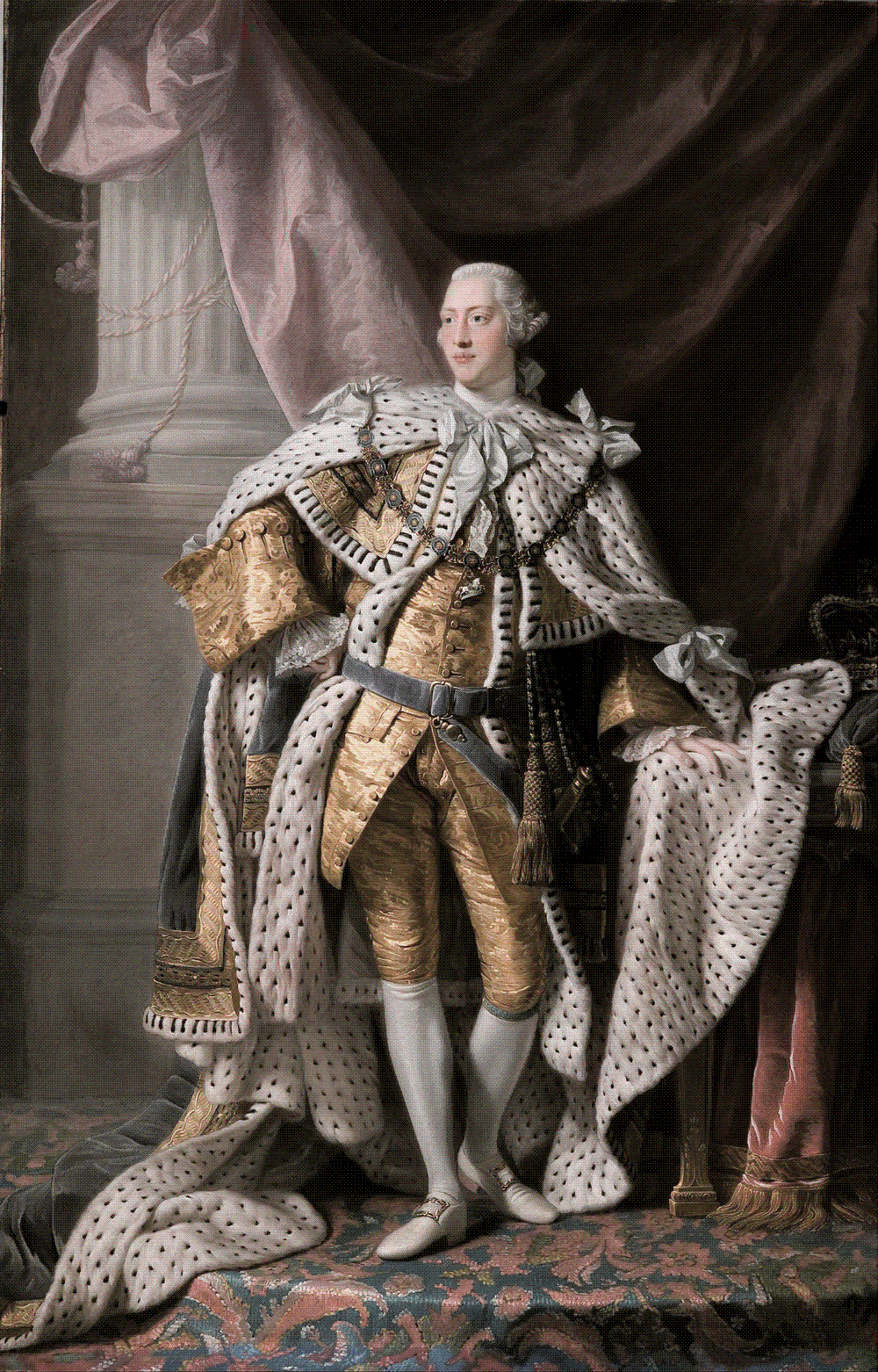
Tacitus, The Annals, Book IV, chapter 41, in Complete Works of Tacitus, trans. Alfred John Church and William Jackson Brodribb, ed. Sara Bryant (New York: Random House, 1942); Perseus Digital Library, Tufts University. → The Regency Crisis of November 1788 to February 1789, when George III was kept in seclusion at Kew and his household was forbidden to utter the word 'regency'. I saw she had a secret hope she might come and sit with me now and then in this confinement. It would have been my greatest possible solace in this dreary abode: but I hastened to acquaint her of the absolute seclusion, and even to beg she would not send her servant to the house - for I found it was much desired to keep off all who might carry away any intelligence.
She is ever most reasonable, and never thenceforward hinted upon the subject. But she wrote continually long letters, and filled with news and anecdotes of much interest, relating to anything she could gather of "out-house proceedings," which now became very important--the length of the malady threatening a regency!--a Word which I have not yet been able to articulate.
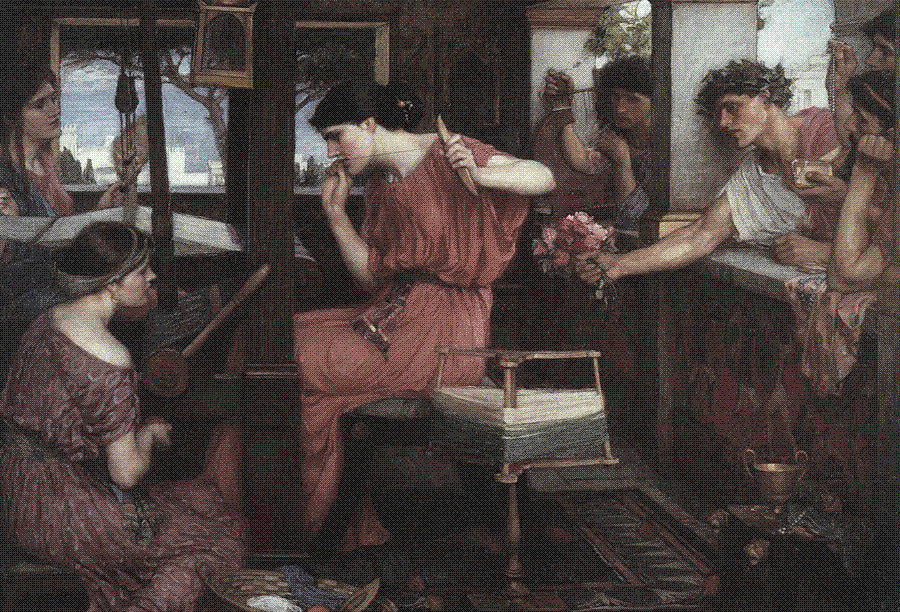
Frances Burney (Madame d'Arblay), Diary and Letters of Madame d'Arblay, Vol. 2 (1787-1792), entry of Sunday, 30 November 1788, section 'A Regency Hinted At'; with notes by W. C. Ward and Lord Macaulay's essay (London: Vizetelly & Co., 1891); Project Gutenberg eBook #6042. → Homer's Odyssey, in which Telemachus describes a kingdom whose ruler has been made simply invisible, leaving no body, no tomb and no news. Stranger, since indeed thou dost ask and question me of this, our house once bade fair to be rich and honorable, so long as that man was still among his people. But now the gods have willed otherwise in their evil devising, seeing that they have caused him to pass from sight as they have no other man. For I should not so grieve for his death, if he had been slain among his comrades in the land of the Trojans, or had died in the arms of his friends, when he had wound up the skein of war. Then would the whole host of the Achaeans have made him a tomb, and for his son, too, he would have won great glory in days to come. But as it is, the spirits of the storm have swept him away and left no tidings: he is gone out of sight, out of hearing, and for me he has left anguish and weeping.
Homer, Odyssey, Book I, lines 230-243, trans. A. T. Murray, Loeb Classical Library (Cambridge, MA: Harvard University Press; London: William Heinemann, 1919); Perseus Digital Library, Tufts University. → Shakespeare's Measure for Measure (c. 1604), in which Vienna is governed by a deputy in the Duke's name while rumour invents his whereabouts. LUCIO.
Some say he is with the Emperor of Russia; other some, he is in Rome. But where is he, think you?
DUKE.
I know not where, but wheresoever, I wish him well.
LUCIO.
It was a mad fantastical trick of him to steal from the state and usurp the beggary he was never born to. Lord Angelo dukes it well in his absence. He puts transgression to't.
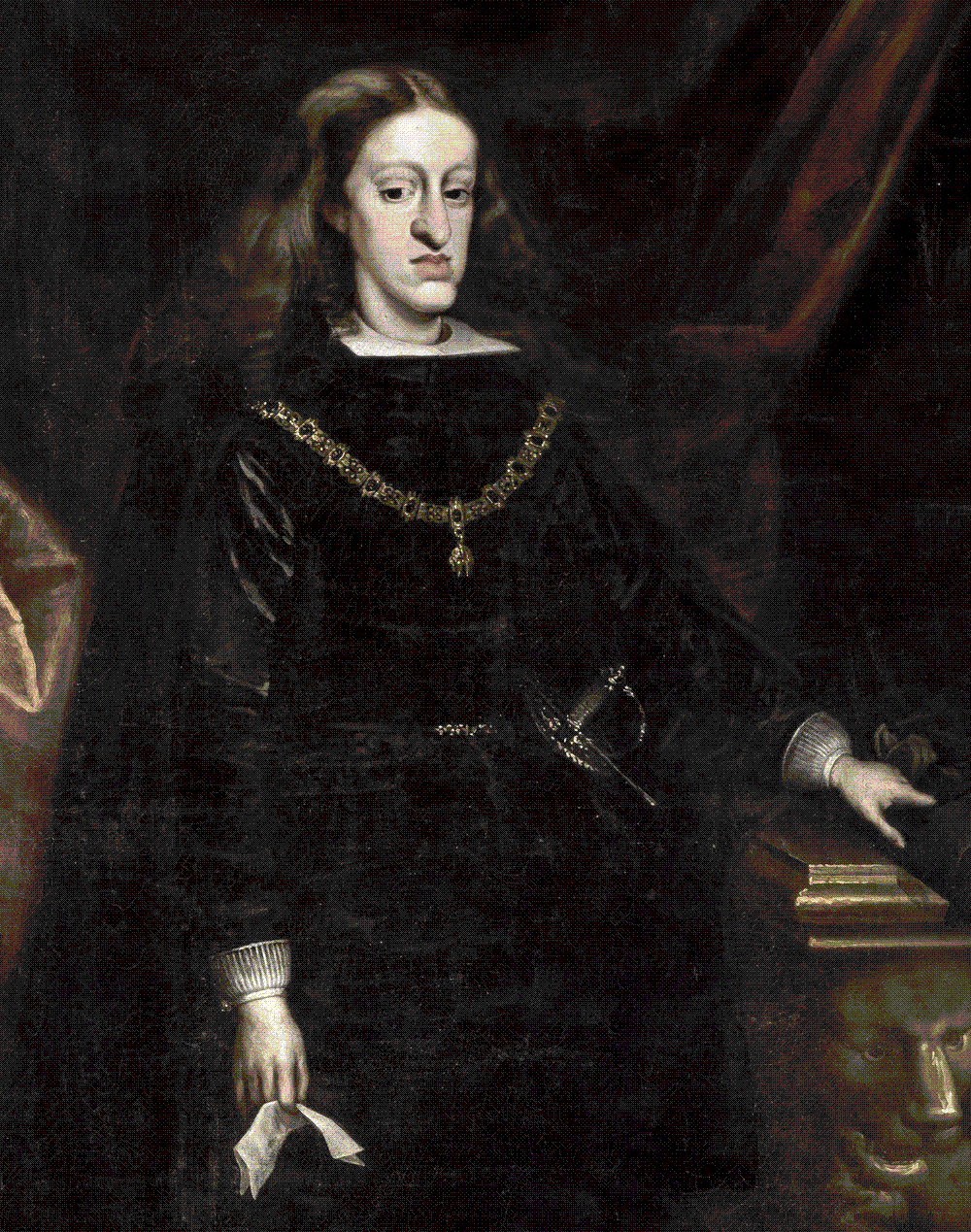
William Shakespeare, Measure for Measure, Act III, Scene ii (Lucio in conversation with the disguised Duke Vincentio); Project Gutenberg eBook #1530, prepared by the Project Gutenberg Shakespeare Team. → Juan Carreño de Miranda's portrait of Charles II of Spain, painted about 1685, of a monarch whose succession all Europe was planning and no courtier could mention. Carreño shows the last Spanish Habsburg in unrelieved black against a dull red curtain, the collar of the Golden Fleece the only brightness on him. The long fair hair falls past a pale, narrow face with its heavy jaw and half-open mouth; one gloved hand steadies him on a gilt console table while the other holds a folded paper, as if the business of the monarchy had shrunk to a single document. Painted in the years when the chanceries of Europe were already drafting treaties to partition his empire, it is the portrait of a reign that everyone knew was ending and no one at court was permitted to say so.
Juan Carreño de Miranda (1614 Avilés – 1685 Madrid), König Karl II. von Spanien (1661–1700), oil on canvas, c. 1685, 145 × 105 cm (cut down), Kunsthistorisches Museum, Vienna, Gemäldegalerie, inv. GG 1714. → Wagner's Parsifal (Bayreuth, 1882), whose aged king Titurel is never seen: his voice comes from a vault beneath the hall and still commands the rite. And when the hymns were ended, and the knights
Had taken their set places at the board,
Then there was silence. And from far away,
As if from some deep cavern of a tomb,
Behind the couch where King Amfortas lay
The muffled voice of agèd Titurel
Spake with long silences between the words:
"My son Amfortas, art thou at thy post?...
Wilt thou unveil the Grail and bid me live?...
Or must I die, denied the saving vision?"
Richard Wagner, Parsifal, Act I (the voice of Titurel from the vault), in Parsifal: A Mystical Drama by Richard Wagner, Retold in the Spirit of the Bayreuth Interpretation by Oliver Huckel (New York: Thomas Y. Crowell & Co., 1903); Project Gutenberg eBook #11633. →