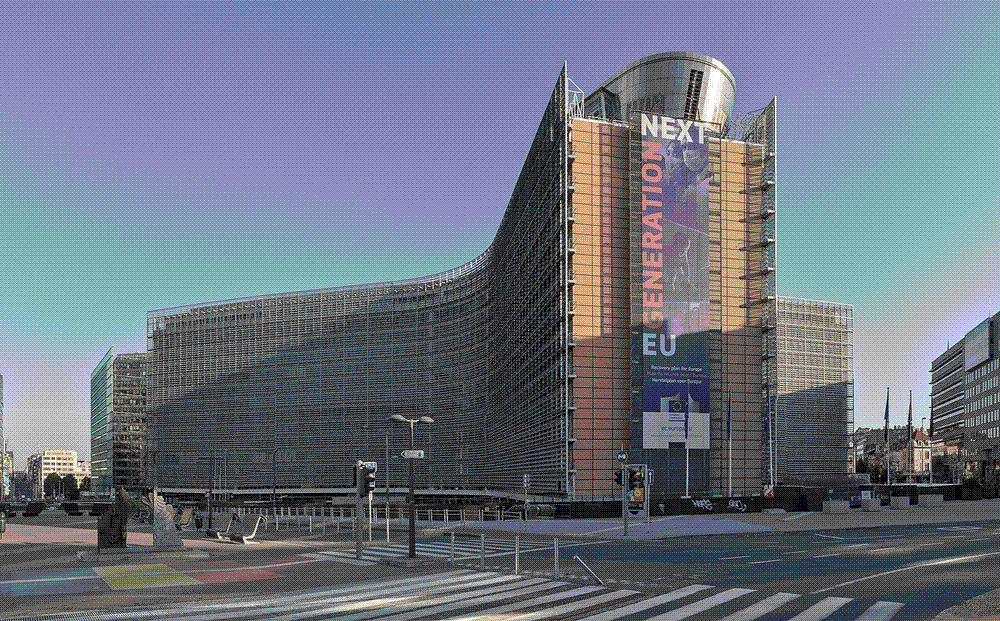
The Berlaymont building in Brussels, headquarters of the European Commission, its curved glass wings seen from the street.

Trougnouf (Benoit Brummer) / Wikimedia Commons, CC BY 4.0

PoliticsBBC · AP · ReutersSep 24, 2026

France backs Canada as the EU's first 'associate member' as Carney turns toward Europe

Ursula von der Leyen's proposal to make Canada the European Union's first 'associate member' was welcomed by Prime Minister Mark Carney, who called for an alliance of democracies, but it drew warnings from Donald Trump and scepticism about whether it could be made to work. In Canada the idea set people imagining living and working in Europe under a plan the BBC described as a long shot, with warm words from Brussels but no guarantees. On 20 September Carney met Emmanuel Macron at an Atlantic island meeting, where the two leaders pledged closer ties amid strains with Washington and France backed the associate-membership proposal. A Canadian minister told the BBC that the UK should 'team up' with Canada in the new European alliance.
Analogies

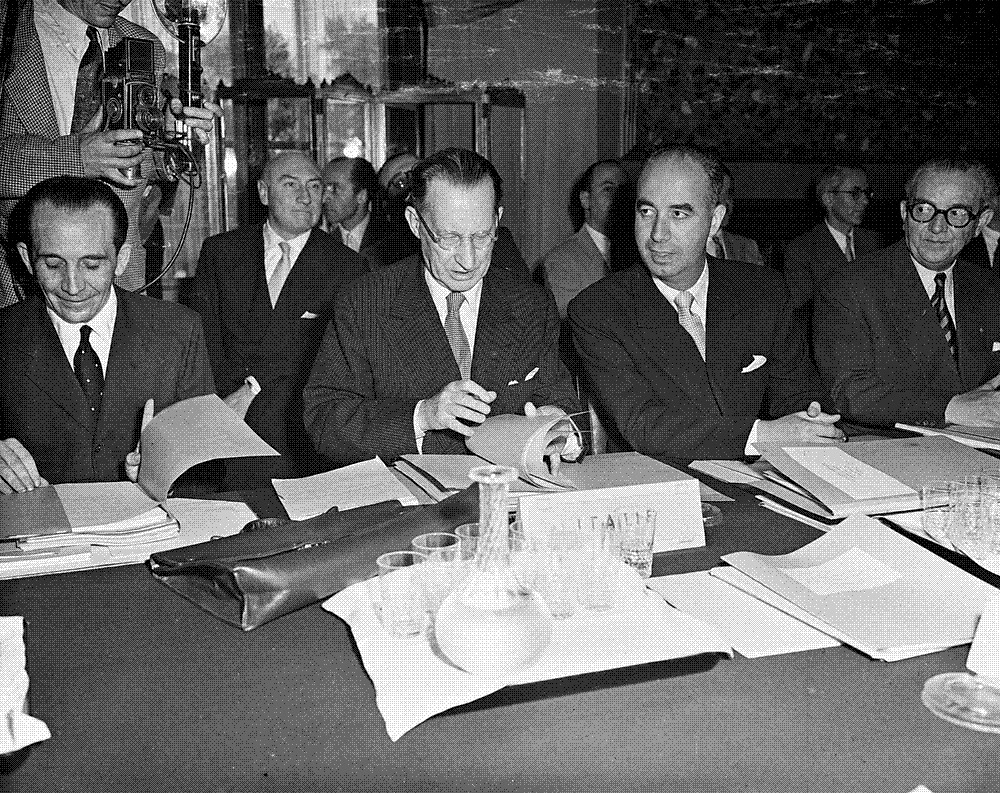
Delegates seated around a long conference table at a meeting on the Schuman Plan in the early 1950s

Robert Schuman's declaration of 9 May 1950, the founding text of European integration, promises a Europe built by concrete steps rather than a single plan

Europe will not be made all at once, or according to a single plan. It will be built through concrete achievements which first create a de facto solidarity. The coming together of the nations of Europe requires the elimination of the age-old opposition of France and Germany. Any action taken must in the first place concern these two countries.
Robert Schuman, Declaration of 9 May 1950; text published by the European Union. →
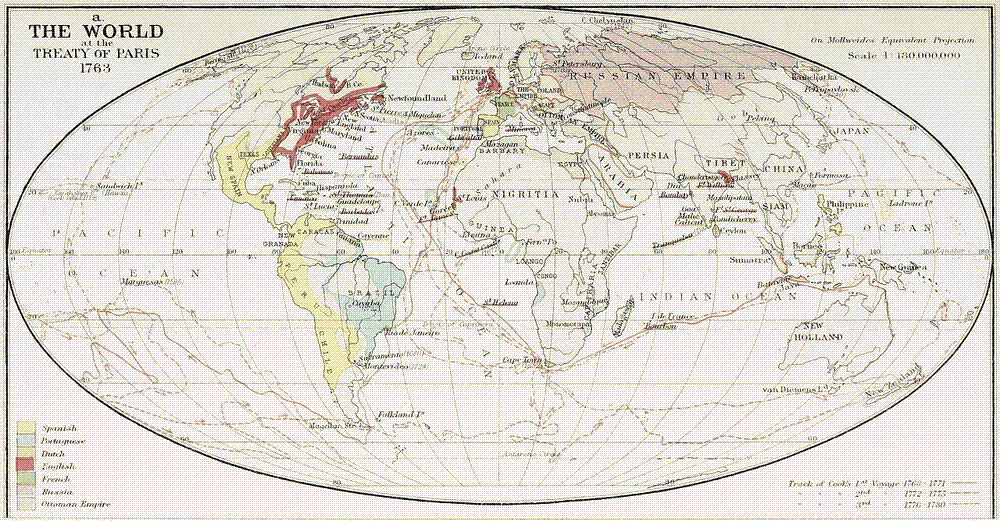
Historical atlas map of the world at the Treaty of Paris in 1763, colouring British, French and Spanish possessions

In the Treaty of Paris of 10 February 1763, France cedes Canada to Britain — the last time Canada's European connection was redrawn by treaty

His Most Christian Majesty renounces all pretensions which he has heretofore formed or might have formed to Nova Scotia or Acadia in all its parts, and guaranties the whole of it, and with all its dependencies, to the King of Great Britain: Moreover, his Most Christian Majesty cedes and guaranties to his said Britannick Majesty, in full right, Canada, with all its dependencies, as well as the island of Cape Breton
Treaty of Paris, 10 February 1763, Article IV; text at the Avalon Project, Yale Law School. →
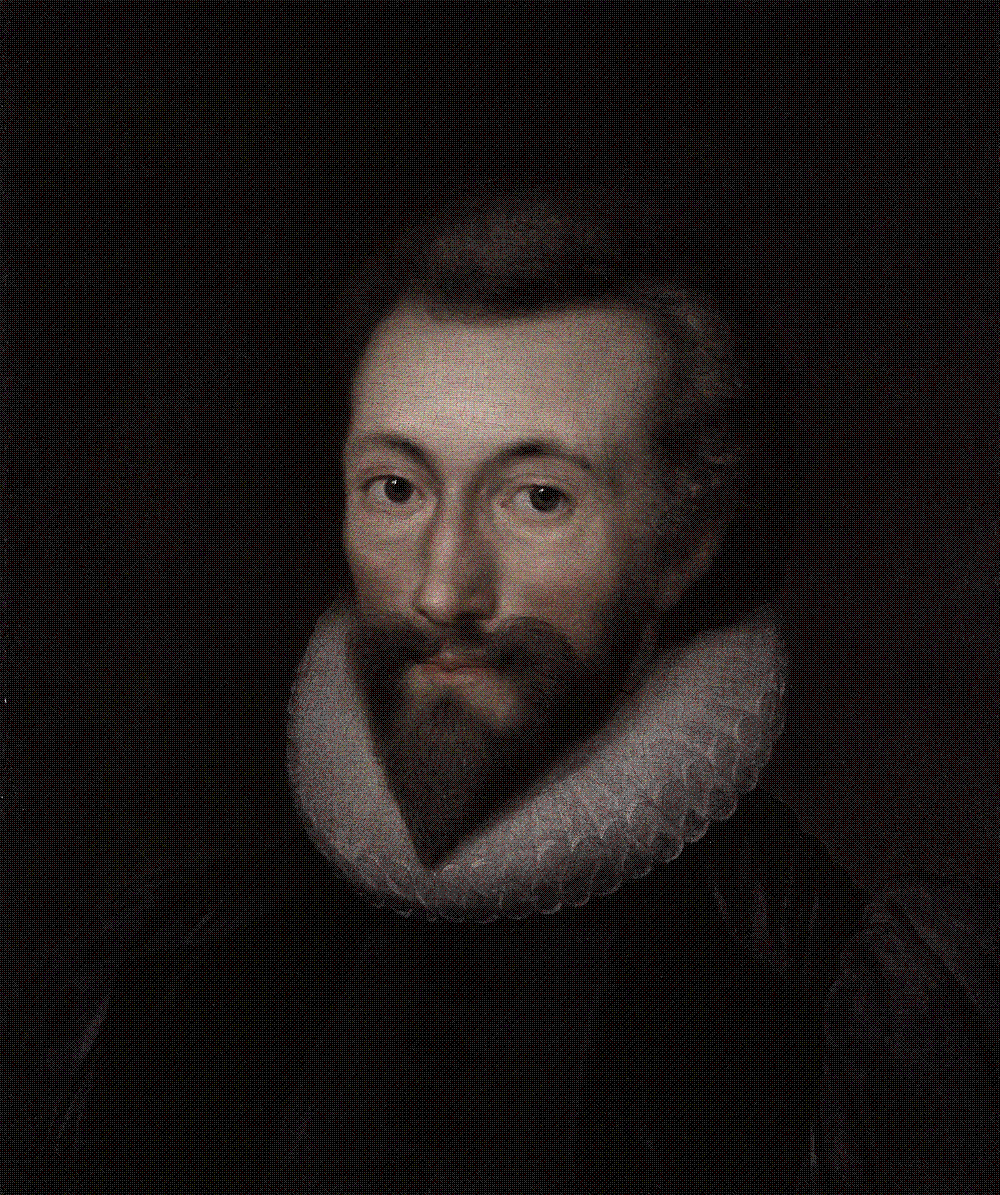
Miniature portrait of John Donne after Isaac Oliver, with a pointed beard and a wide white collar

John Donne, Meditation XVII (1624): no man is an island — and a Europe that loses a piece of itself is the less

No man is an island, entire of itself; every man is a piece of the continent, a part of the main. If a clod be washed away by the sea, Europe is the less, as well as if a promontory were, as well as if a manor of thy friend's or of thine own were: any man's death diminishes me, because I am involved in mankind
John Donne, Devotions upon Emergent Occasions, Meditation XVII (London, 1624); Project Gutenberg ebook 23772. →
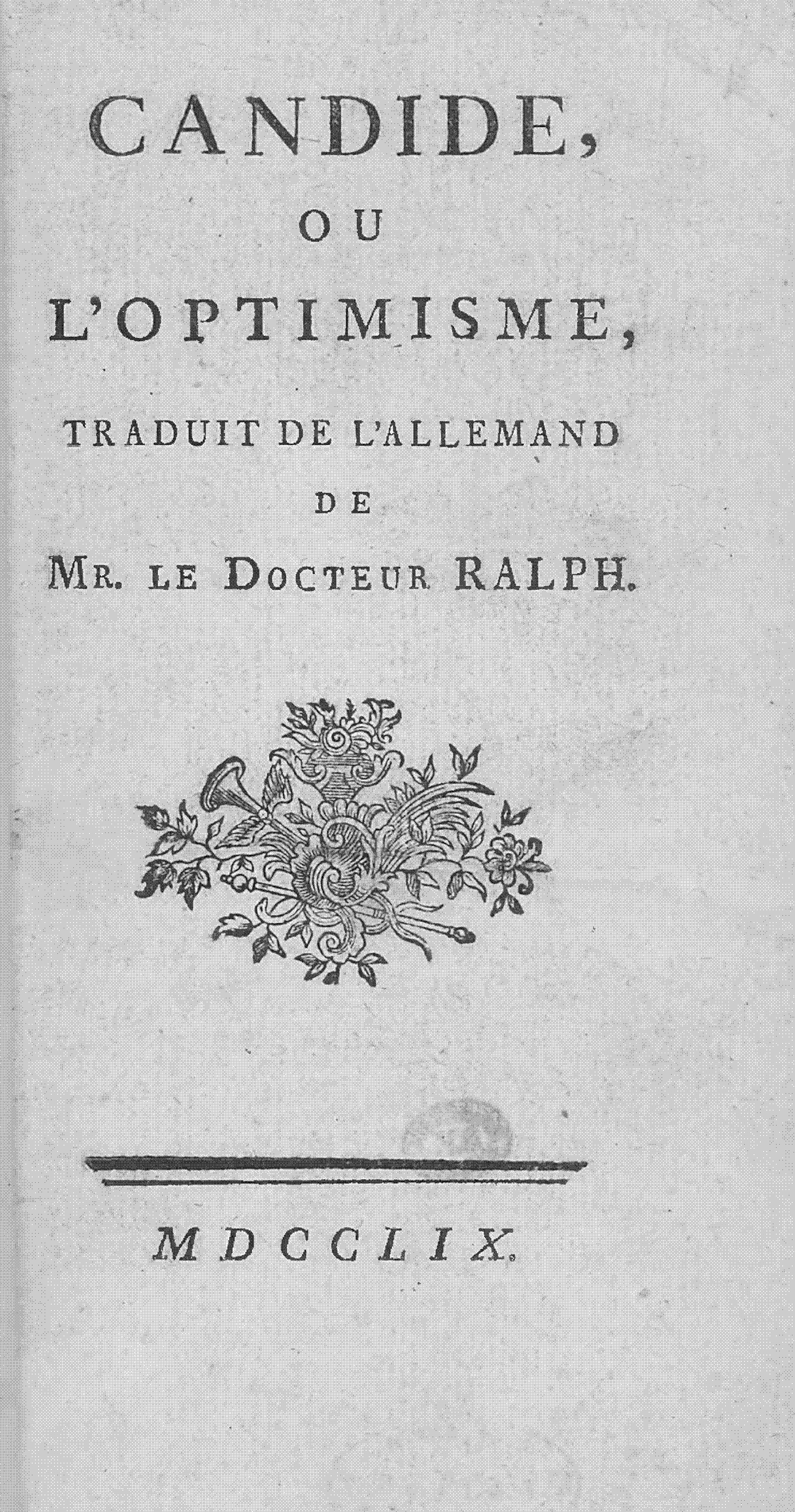
Title page of the 1759 first edition of Voltaire's Candide, ou l'Optimisme

In Voltaire's 'Candide' (1759), written during the Seven Years' War, England and France are fighting over 'a few acres of snow'

You know that these two nations are at war for a few acres of snow in Canada, and that they spend over this beautiful war much more than Canada is worth.
Voltaire, Candide, ou l'Optimisme (1759), ch. 23, anonymous English translation; Project Gutenberg ebook 19942. →
Benjamin West's painting of General Wolfe dying in the arms of his officers on the battlefield at Quebec, with an Indigenous warrior seated in the foreground

Benjamin West's 'The Death of General Wolfe' (1770), painted a decade after the battle that took Canada from France

General James Wolfe lies dying on the Plains of Abraham outside Quebec in September 1759, supported by his officers under a smoke-darkened sky, while a messenger runs up with news of victory and an Indigenous warrior sits in contemplation in the foreground. West dressed his figures in contemporary uniform rather than classical robes, a choice that caused a sensation in London in 1771. The battle it depicts decided that Canada would pass from France to Britain — the first rearrangement of its European ties.
Benjamin West, The Death of General Wolfe, 1770, oil on canvas, 152.6 × 214.5 cm; National Gallery of Canada, Ottawa, gift of the 2nd Duke of Westminster, 1918. →
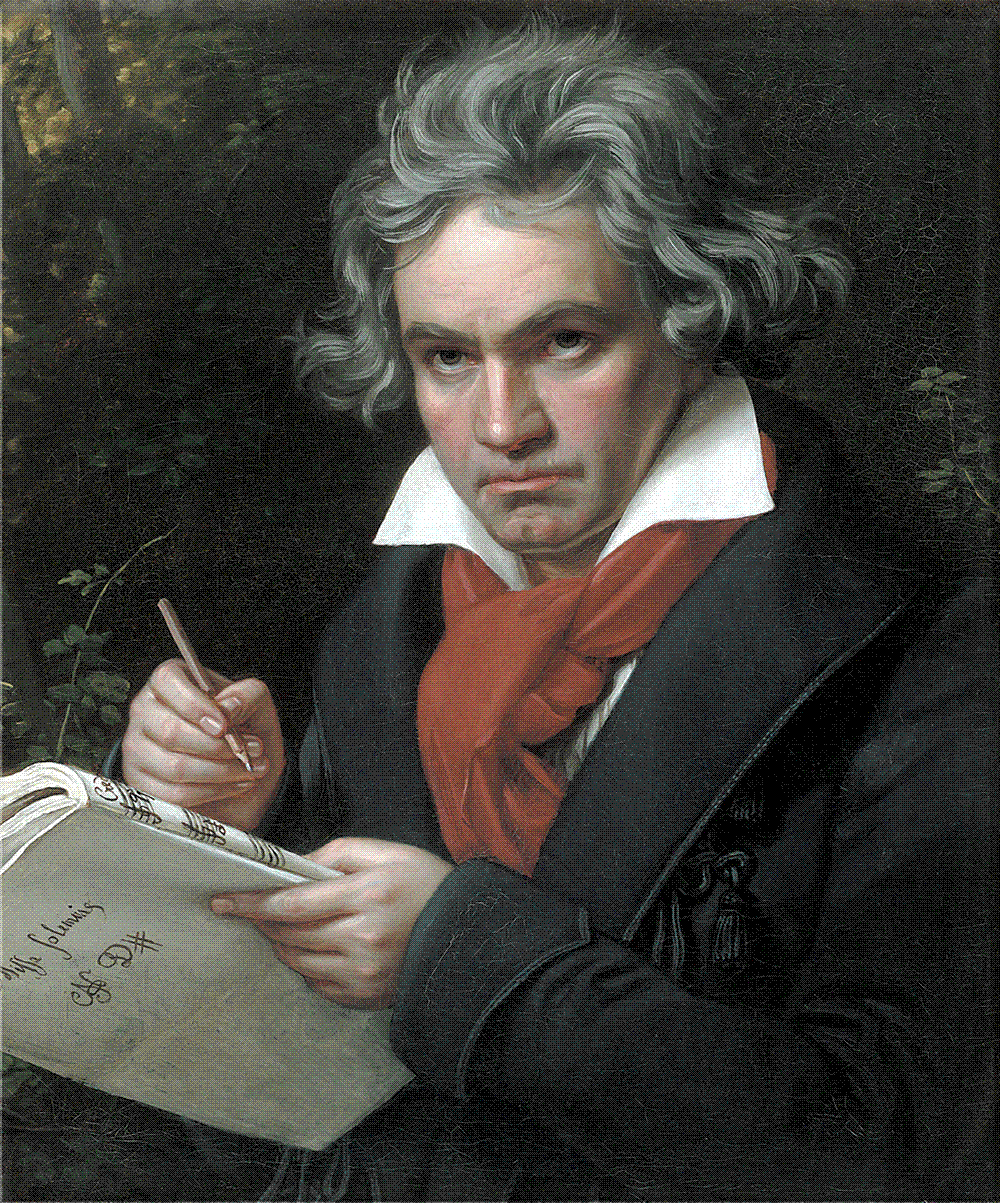
Joseph Karl Stieler's 1820 portrait of Beethoven, with wild grey hair and a red scarf, holding a manuscript

The 'Ode to Joy' from Beethoven's Ninth Symphony (1824), now the anthem of the European Union

The finale of Beethoven's Ninth Symphony, first performed in Vienna in May 1824, sets Schiller's 'Ode to Joy' for soloists and chorus: 'all men become brothers'. Its melody was adopted as the anthem of the Council of Europe in 1972 and of the European Union in 1985, played without words so that it belongs to no single language. It is the tune a Canadian associate member would stand for.
Ludwig van Beethoven, Symphony No. 9 in D minor, Op. 125, finale on Schiller's 'An die Freude', first performed Vienna, 7 May 1824; adopted as the European anthem by the Council of Europe (1972) and the European Union (1985); score at IMSLP. →