A single lit menorah candle glowing softly in a dark synagogue window at dusk, a quiet empty street outside reflecting the light, solemn and respectful mood, no people, no text, no lettering, no signage.

AI-generated

ConflictAP News · ReutersSep 23, 2026

A gunman opened fire outside an Ontario synagogue on Yom Kippur, and later died of his wounds

On the holiest day of the Jewish calendar, a gunman opened fire outside a synagogue in Ontario, firing as many as 30 shots and critically wounding a man along with a police officer who responded. Prime Minister Mark Carney condemned the attack as it happened. Two days later, authorities confirmed the suspect had died of injuries sustained during the incident, closing the case without a trial and leaving unresolved questions about motive that a courtroom might otherwise have aired. The attack was the latest in a string of incidents targeting synagogues and Jewish communities across North America and Europe this year, part of a broader rise in antisemitic violence that has accompanied the wars in the Middle East, and it prompted renewed debate in Canada over security at religious sites during high-holiday services.
Analogies

The Halle Synagogue Shooting

Kill as many anti-Whites as possible, Jews preferred.
Manifesto of Stephan Balliet, who attempted to storm a synagogue on Yom Kippur, Halle, Germany, 9 October 2019 →
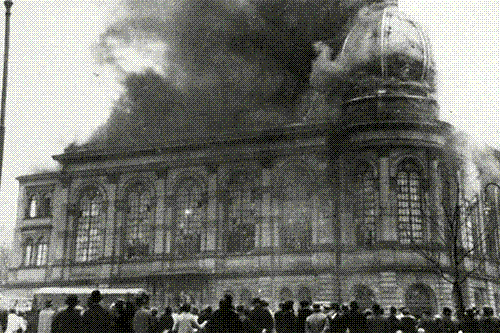
The Börnerplatz synagogue in Frankfurt burning during Kristallnacht, 10 November 1938

Kristallnacht

Mob law ruled in Berlin throughout the afternoon and evening and hordes of hooligans indulged in an orgy of destruction ... Racial hatred and hysteria seemed to have taken hold of otherwise decent people.
Hugh Greene, Berlin correspondent, The Daily Telegraph, dispatch on the pogrom of 9–10 November 1938 →
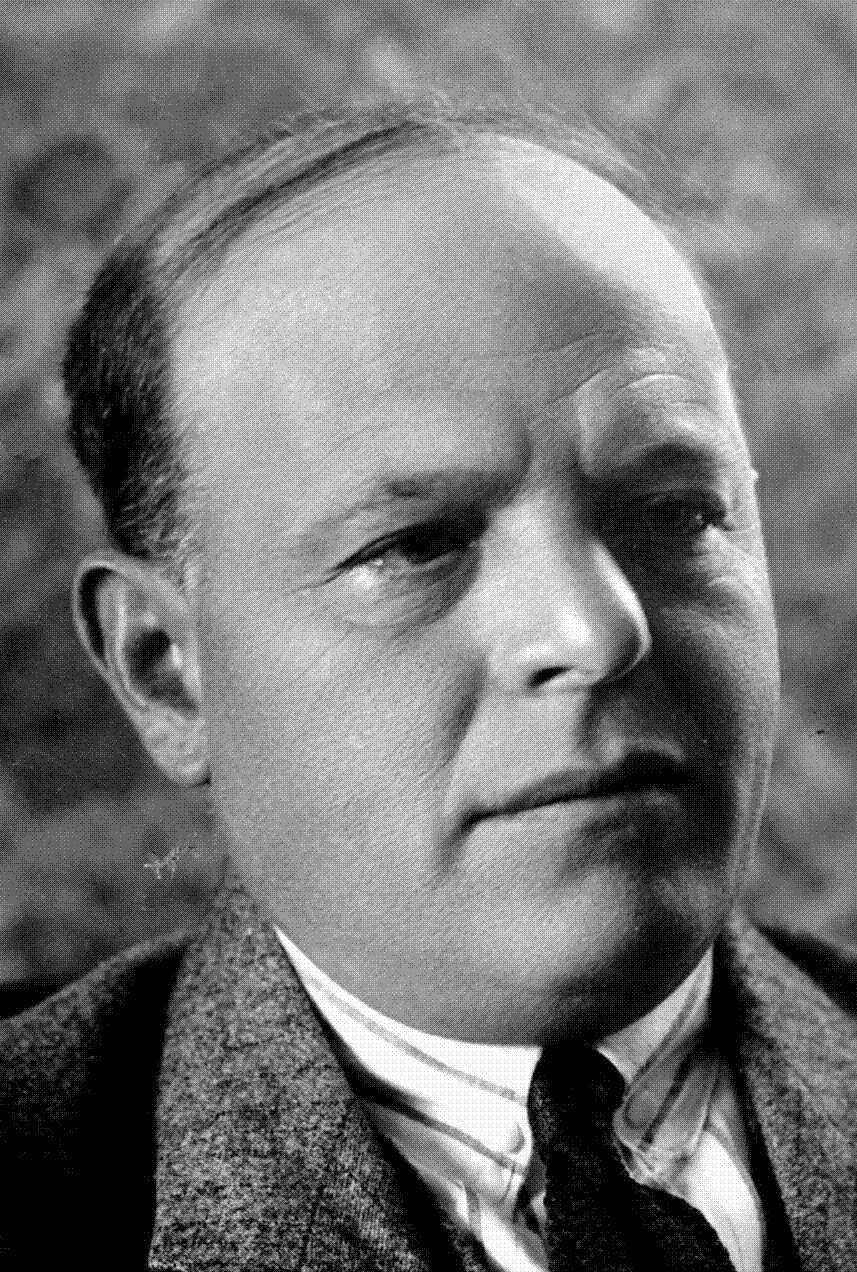
Photograph of the poet Hayim Nahman Bialik, 1923

In the City of Slaughter

Arise and go now to the city of slaughter; Into its courtyard wind thy way;
Hayim Nahman Bialik, "In the City of Slaughter" (1904), written after the 1903 Kishinev pogrom →

The Day of Atonement

And this shall be a statute for ever unto you: that in the seventh month, on the tenth day of the month, ye shall afflict your souls, and do no work at all ... For on that day shall the priest make an atonement for you, to cleanse you, that ye may be clean from all your sins before the Lord.
Leviticus 16:29–31 (KJV) →
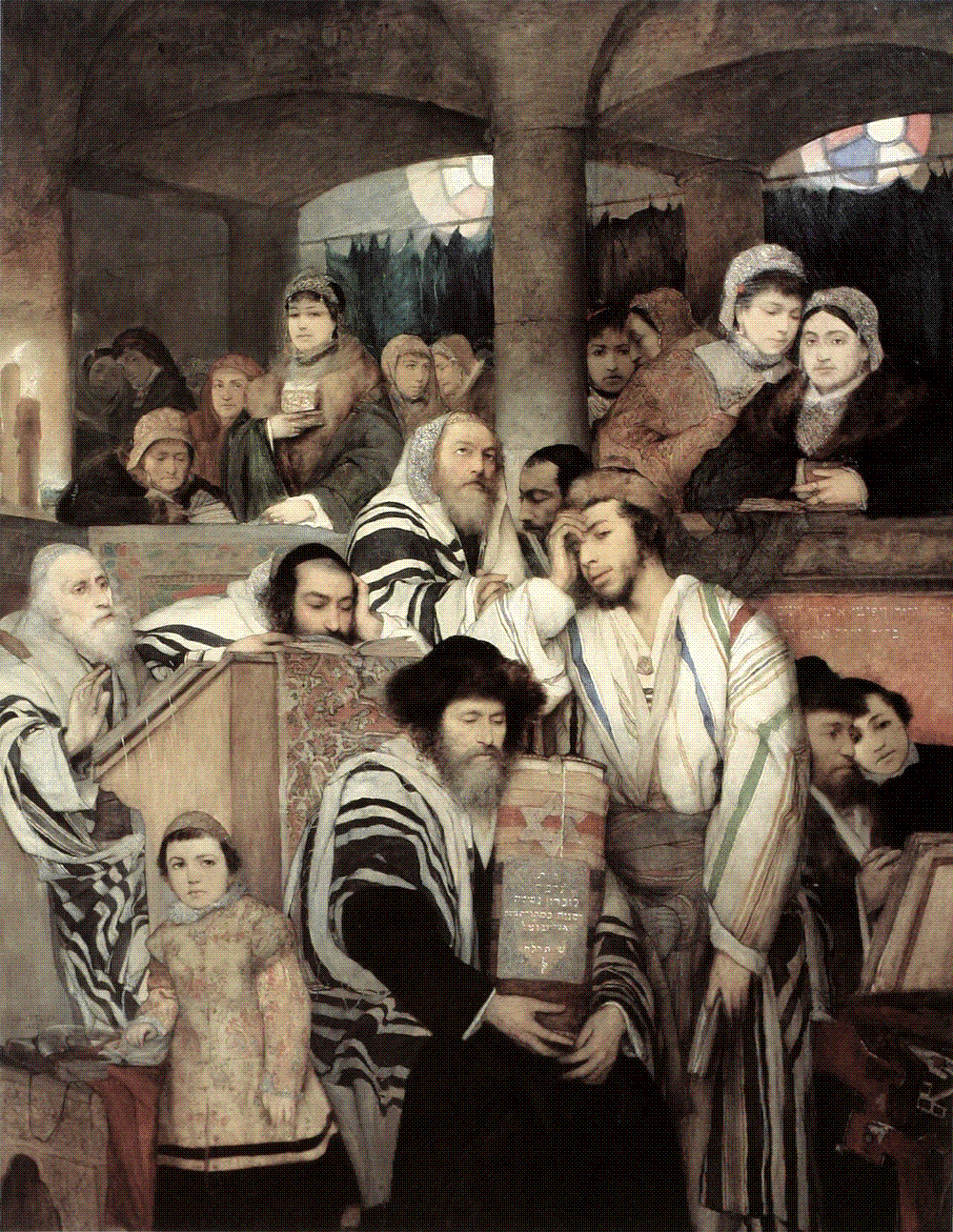
Maurycy Gottlieb, Jews Praying in the Synagogue on Yom Kippur, 1878

Jews Praying in the Synagogue on Yom Kippur

All vows, obligations, oaths, and anathemas ... which we may vow, or swear, or pledge, or whereby we may be bound, from this Day of Atonement until the next ... we do repent. May they be deemed absolved, forgiven, annulled, and void.
The Kol Nidre prayer, recited at the opening of the Yom Kippur evening service Maurycy Gottlieb painted in 1878 →

Kol Nidrei

Even though I am a Protestant, as an artist I deeply felt the outstanding beauty of these melodies and therefore I gladly spread them through my arrangement.
Max Bruch, on composing Kol Nidrei, Op. 47 (1881), an Adagio for cello and orchestra on the Kol Nidre melody →