A small, unlit open fishing boat drifting alone on dark open ocean water at dusk, the distant silhouette of a naval vessel far on the horizon, heavy storm clouds gathering, moody blue-grey tones, no people, no text, no logos.

AI-generated

ConflictBBC · AP NewsSep 21, 2026

The UN says US strikes on Caribbean drug boats may be crimes against humanity

Over the past several months the US military has carried out a growing campaign of strikes against vessels it suspects of smuggling narcotics through the Caribbean and Pacific, a policy Washington has defended as a necessary escalation against drug-trafficking networks. This week a strike on an alleged smuggling boat killed four people, the latest in a campaign that a United Nations investigation found had, by its count, reached at least 68 such strikes — the great majority of which, UN investigators concluded, were not conducted in self-defense and could amount to crimes against humanity. The finding sharpens a question that has trailed the campaign since it began: whether killing suspected traffickers without capture, trial, or clear evidence of an imminent threat is a lawful use of force or an extrajudicial policy dressed as a war on drugs. The administration has continued to defend the strikes as effective and necessary, even as scrutiny of their legal basis — and of who, exactly, is being killed — grows both at the UN and in US courts.
Analogies

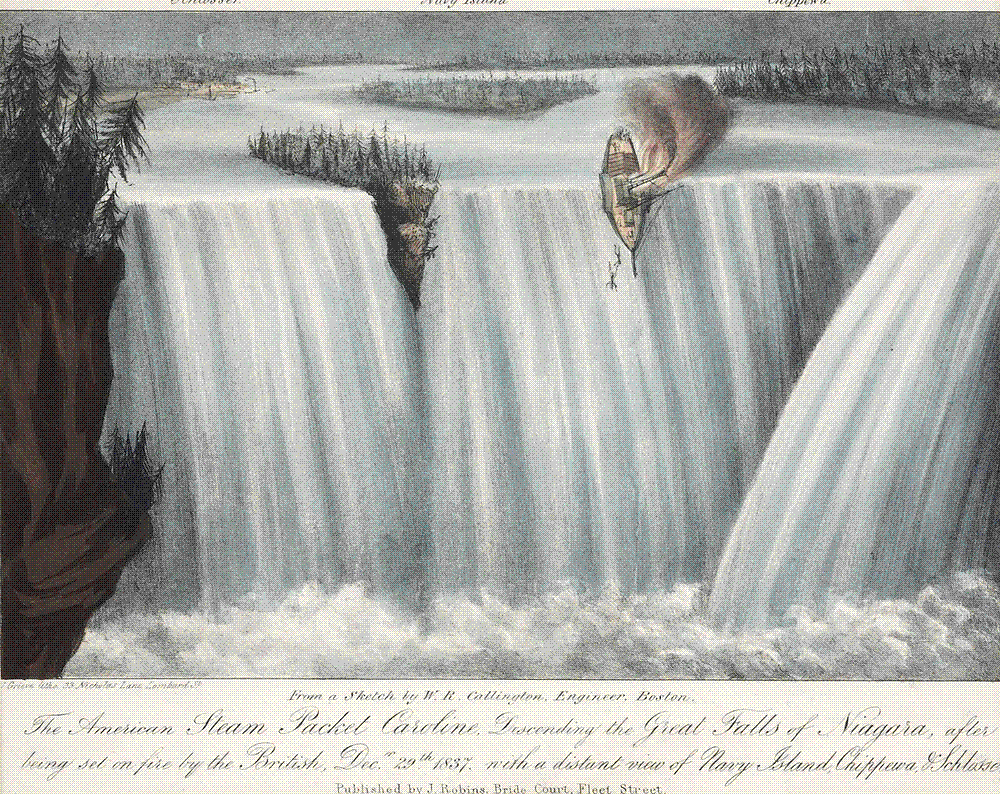
19th-century print of the burning steamboat Caroline going over Niagara Falls, 1837

The Caroline Test

a necessity of self defence, instant, overwhelming, leaving no choice of means, and no moment for deliberation
Daniel Webster, letter to Lord Ashburton (enclosing his 1841 note to British Minister Henry Fox), on the 1837 Caroline affair →
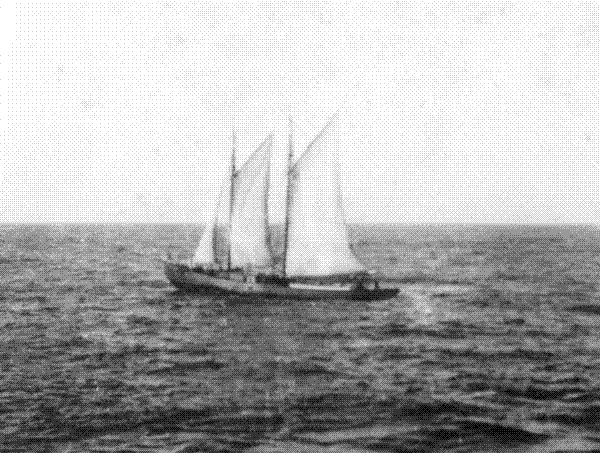
The Canadian rum-running schooner I'm Alone, sunk by a US Coast Guard cutter in 1929

The Sinking of the I'm Alone

By their interim report the Commissioners found that the sinking of the vessel was not justified by anything in the Convention. The Commissioners now add that it could not be justified by any principle of international law.
S.S. "I'm Alone" (Canada v. United States), Joint Final Report of the Commissioners, 5 January 1935, Reports of International Arbitral Awards, Vol. III →
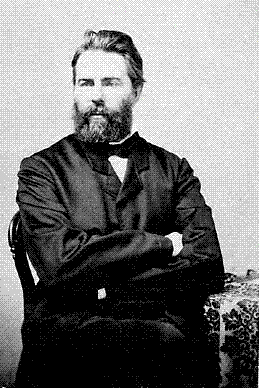
Portrait photograph of Herman Melville, c. 1860

Billy Budd, Sailor

With mankind, forms, measured forms, are everything; and that is the import couched in the story of Orpheus with his lyre spellbinding the wild denizens of the wood.
Herman Melville, Billy Budd, Sailor (An Inside Narrative), written 1886–91, published posthumously 1924 →

Cities of Refuge

Then ye shall appoint you cities to be cities of refuge for you; that the slayer may flee thither, which killeth any person at unawares. And they shall be unto you cities for refuge from the avenger; that the manslayer die not, until he stand before the congregation in judgment.
Numbers 35:11–12 (KJV) →
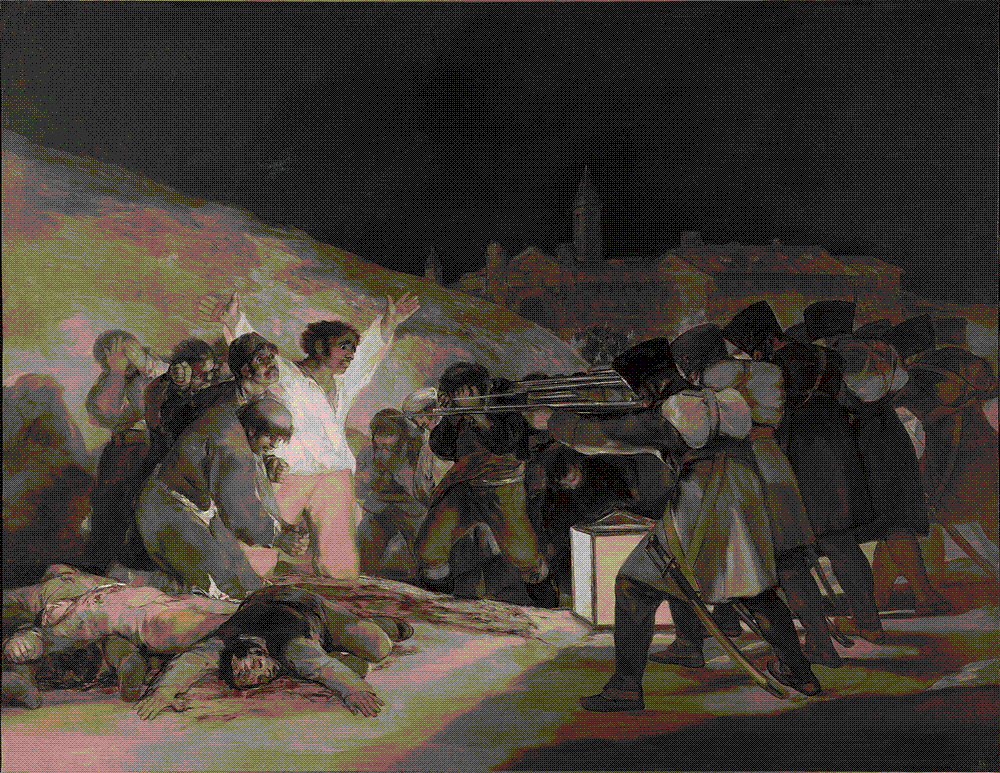
Goya, The Third of May 1808, depicting the summary execution of Spanish civilians by a French firing squad

The Third of May 1808

All those arrested in the uprising, arms in hand, will be shot.
Marshal Joachim Murat's proclamation, Madrid, 2 May 1808 — the order behind the summary executions Francisco Goya painted six years later in The Third of May 1808 (1814) →
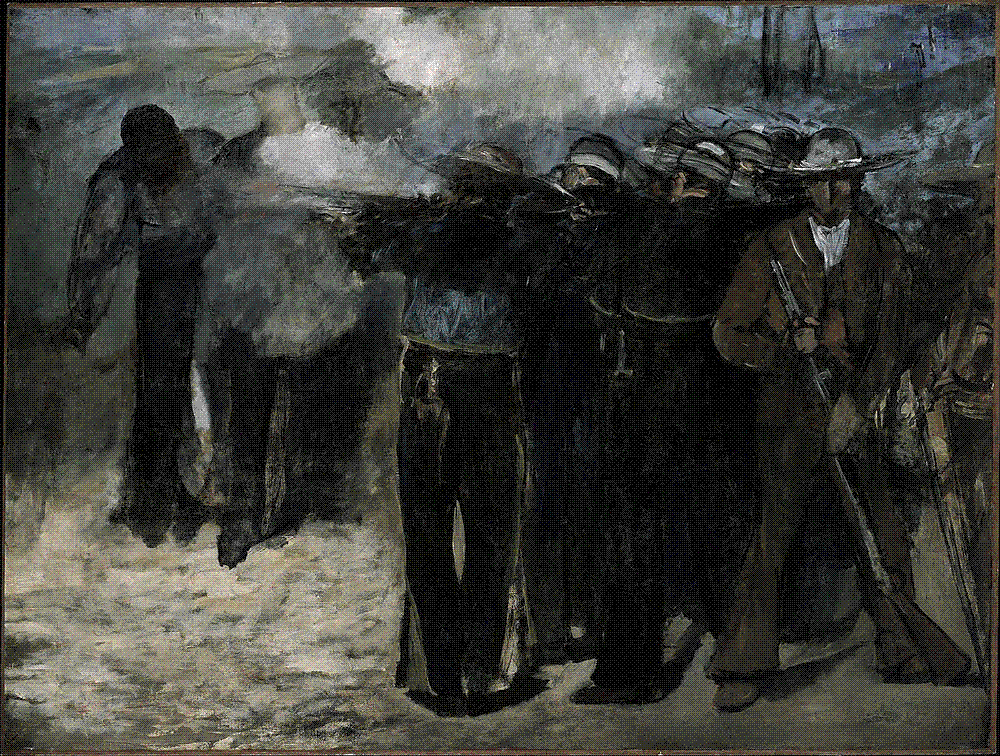
Édouard Manet, The Execution of Emperor Maximilian, 1867–68

The Execution of Emperor Maximilian

I forgive everyone, and I ask everyone to forgive me. May my blood which is about to be spilled end the bloodshed which has been experienced in my new motherland. Long live Mexico! Long live its independence!
Maximilian I of Mexico, last words before his execution by firing squad at Querétaro, 19 June 1867 — the event Édouard Manet painted repeatedly in 1867–69 →