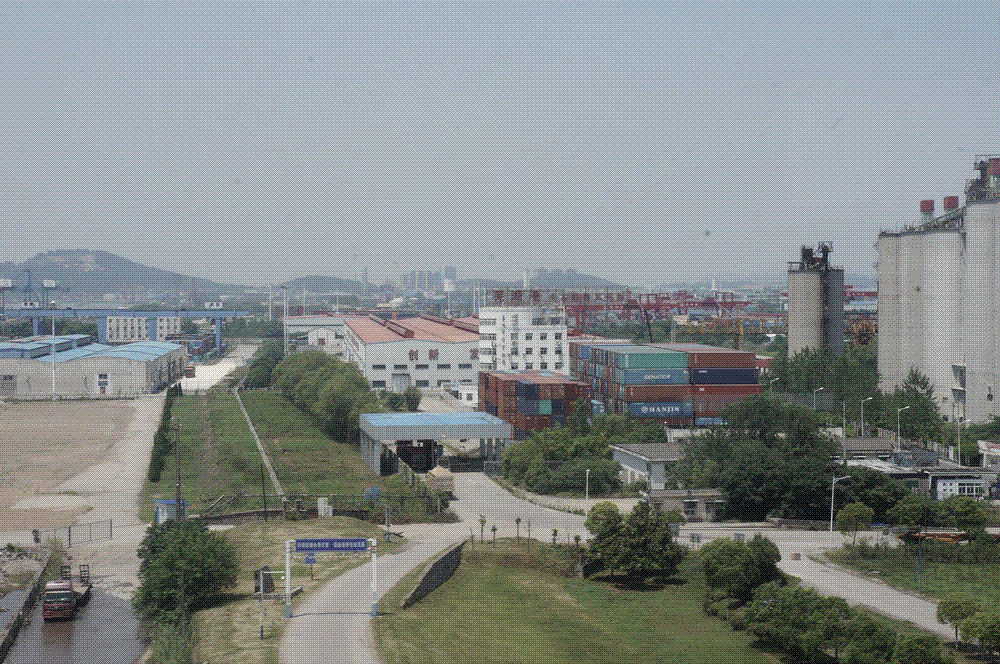
Rows of stacked shipping containers and gantry cranes at Wuhu Port on the Yangtze River in Anhui province, China.

Wuhu Port, Anhui, China (2017). Photo by MNXANL, CC BY-SA 4.0, via Wikimedia Commons.

EconomyReuters · DevdiscourseAug 2, 2026

China draws 'red lines' around its state-led economic model ahead of trade talks with the EU and US

China has signalled 'red lines' it will not cross in defending its state-led economic model as it heads into fresh trade negotiations with the European Union and the United States, according to a Reuters analysis. Beijing is resisting Western demands to curb industrial subsidies and rein in export-driven overcapacity, framing them as attempts to contain its development. The stance sets up difficult talks over tariffs, market access and green-technology exports.
Analogies

Popilius Laenas draws a circle around Antiochus IV (168 BC)

Popilius, stern and imperious as ever, drew a circle round the king with the stick he was carrying and said, "Before you step out of that circle give me a reply to lay before the senate." For a few moments he hesitated, astounded at such a peremptory order, and at last replied, "I will do what the senate thinks right."
Livy, History of Rome, Book 45, ch. 12 (Rev. Canon Roberts translation), Perseus Digital Library

The Qianlong Emperor's edict to King George III (1793)

As your Ambassador can see for himself, we possess all things. I set no value on objects strange or ingenious, and have no use for your country's manufactures.
Qianlong Emperor, Letter to George III (1793), Internet Modern History Sourcebook, Fordham University

Proverbs 22:28 - the ancient landmark

Remove not the ancient landmark, which thy fathers have set.
The Book of Proverbs 22:28, King James Version, via Christian Classics Ethereal Library (CCEL)

Robert Frost, "Mending Wall" (1914)

He will not go behind his father's saying, And he likes having thought of it so well He says again, "Good fences make good neighbours."
Robert Frost, "Mending Wall," North of Boston (1914), Project Gutenberg
Eighteenth-century engraving of the Great Wall of China climbing across mountainous terrain, lined with watchtowers.

The Great Wall of China, engraving from Du Halde's Description de la Chine (1735)

An early European engraving of the Great Wall snaking over steep ridges, its watchtowers and battlements marking the frontier the Qing empire kept between itself and the outside world. Published in Jean-Baptiste Du Halde's monumental survey of China, it fixed for Western readers the image of a state that walled its economy and its subjects off from foreign contact.
Jean-Baptiste Du Halde, Description de la Chine (1735), via Wikimedia Commons
Nineteenth-century watercolour of the fortress and gate at Jiayuguan on the western terminus of the Great Wall of China.

The Great Wall at the Fort of Jiayuguan (1875)

A watercolour view of the fortress at Jiayuguan, the great gate that closed the western end of the Ming wall and the traditional limit of the empire. Painted during a Russian expedition, it shows the massive rammed-earth ramparts and towers where China drew the line between the ordered world within and the frontier beyond.
Adolf Nikolay Boyarsky, view of Jiayuguan (1875), World Digital Library, via Wikimedia Commons