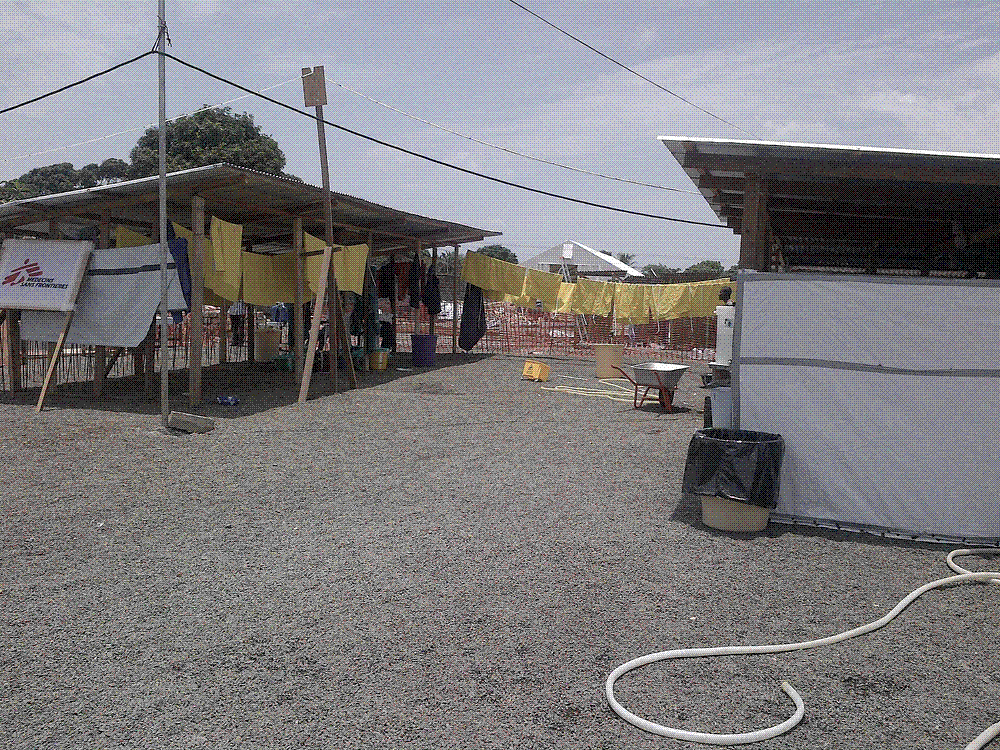
An Ebola treatment unit, its wards laid out under tarpaulins behind orange plastic fencing.

CDC Global via Wikimedia Commons

ScienceAP · STATAug 4, 2026

Ebola has killed 1,707 people in eastern Congo in the fastest-growing outbreak of the disease, with 3,802 cases and no first patient identified

Ituri province accounts for almost 90% of cases, according to the latest government update. Jean Kaseya, director-general of the Africa CDC, said nearly 80% of new cases are surfacing through community spread rather than contact tracing. The response is hampered by a funding gap, attacks on health centres, the continuing conflict in the east and mistrust among local communities.
Analogies

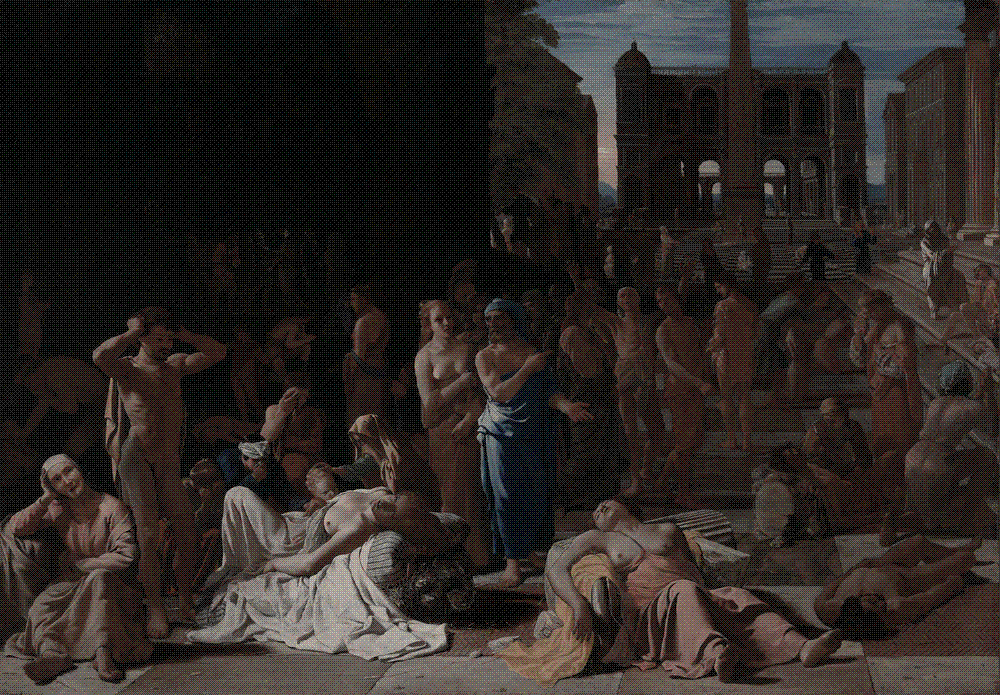
Michael Sweerts, Plague in an Ancient City, oil on canvas, about 1652-54, Los Angeles County Museum of Art: corpses and dying figures spread across the steps and streets of a classical city, a scene usually associated with Thucydides' plague of Athens.

The plague that struck Athens in 430 BC, in the second year of the Peloponnesian War, killed the doctors who treated it and could never be traced to its origin

Not many days after their arrival in Attica the plague first began to show itself among the Athenians. It was said that it had broken out in many places previously in the neighbourhood of Lemnos and elsewhere; but a pestilence of such extent and mortality was nowhere remembered. Neither were the physicians at first of any service, ignorant as they were of the proper way to treat it, but they died themselves the most thickly, as they visited the sick most often; nor did any human art succeed any better. Supplications in the temples, divinations, and so forth were found equally futile, till the overwhelming nature of the disaster at last put a stop to them altogether.
Thucydides, History of the Peloponnesian War, Book 2, chapter 47, translated by Richard Crawley (London, 1874); text hosted by Wikisource.
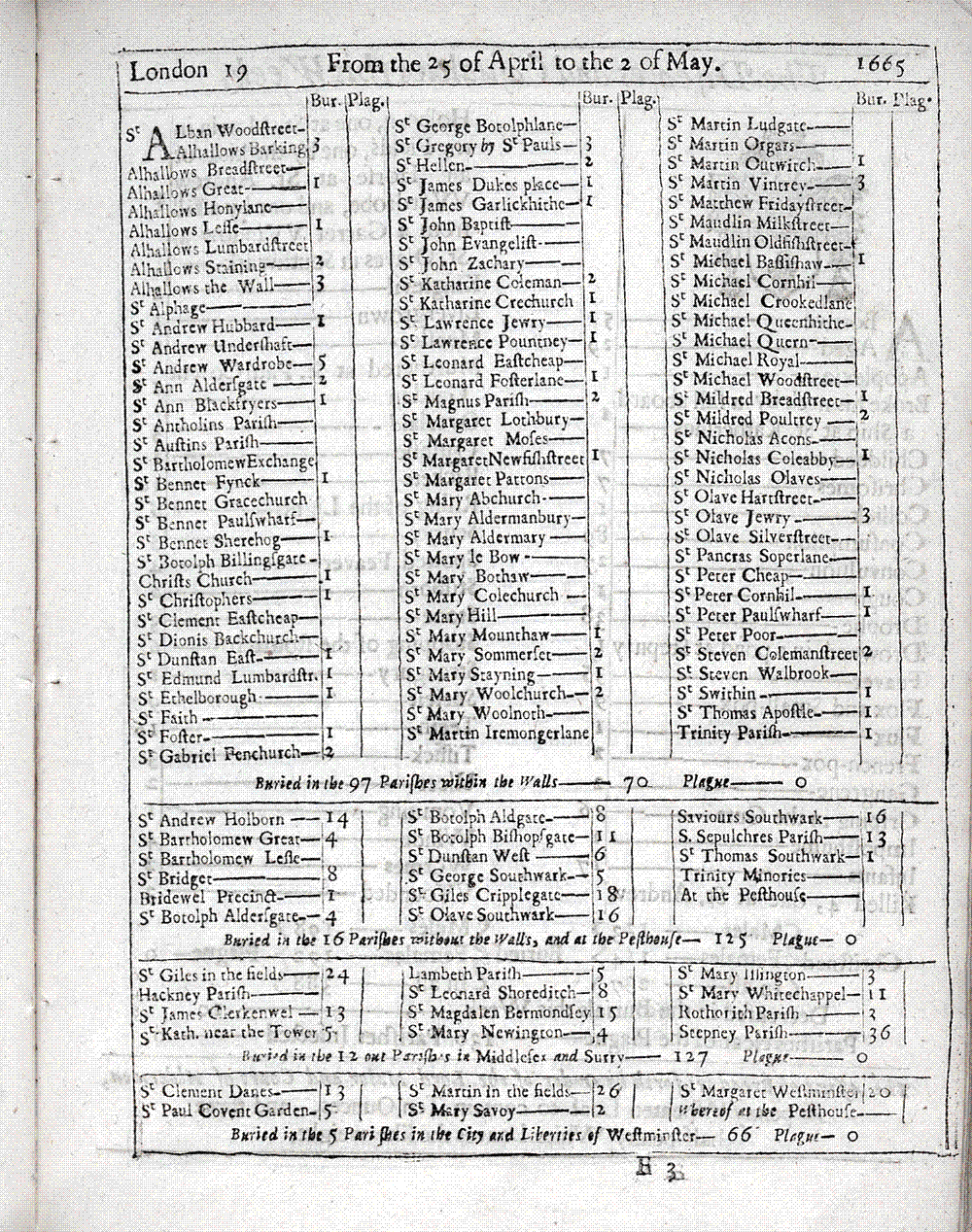
A printed London Bill of Mortality for the week of 25 April to 2 May 1665, listing parish by parish the causes of death and the number buried, from the Wellcome Collection.

Samuel Pepys records on 31 August 1665 that London's official plague count was thousands of deaths short of the true toll

Thus this month ends with great sadness upon the publick, through the greatness of the plague every where through the kingdom almost. Every day sadder and sadder news of its encrease. In the City died this week 7,496 and of them 6,102 of the plague. But it is feared that the true number of the dead, this week is near 10,000; partly from the poor that cannot be taken notice of, through the greatness of the number, and partly from the Quakers and others that will not have any bell ring for them.
Samuel Pepys, Diary, entry for 31 August 1665, in Diary of Samuel Pepys - Volume 37: August 1665, transcribed by Mynors Bright and edited by Lord Braybrooke and Henry B. Wheatley; Project Gutenberg ebook no. 4158.

In Sophocles' Oedipus the King (about 429 BC) a plague-stricken Thebes hunts for the untraceable source of its infection, and the search ends inside the palace

OEDIPUS: Where are they? Where in the wide world to find / The far, faint traces of a bygone crime? CREON: In this land, said the god; “who seeks shall find; / Who sits with folded hands or sleeps is blind.” OEDIPUS: Was he within his palace, or afield, / Or traveling, when Laius met his fate? CREON: Abroad; he started, so he told us, bound / For Delphi, but he never thence returned. OEDIPUS: Came there no news, no fellow-traveler / To give some clue that might be followed up? CREON: But one escape, who flying for dear life, / Could tell of all he saw but one thing sure. OEDIPUS: And what was that? One clue might lead us far, / With but a spark of hope to guide our quest. CREON: Robbers, he told us, not one bandit but / A troop of knaves, attacked and murdered him. OEDIPUS: Did any bandit dare so bold a stroke, / Unless indeed he were suborned from Thebes? CREON: So ’twas surmised, but none was found to avenge / His murder mid the trouble that ensued. OEDIPUS: What trouble can have hindered a full quest, / When royalty had fallen thus miserably? CREON: The riddling Sphinx compelled us to let slide / The dim past and attend to instant needs.
Sophocles, Oedipus the King, prologue (the exchange between Oedipus and Creon), translated by F. Storr, Loeb Classical Library edition (Harvard University Press and William Heinemann, 1912); Project Gutenberg ebook no. 31, Plays of Sophocles: Oedipus the King; Oedipus at Colonus; Antigone.
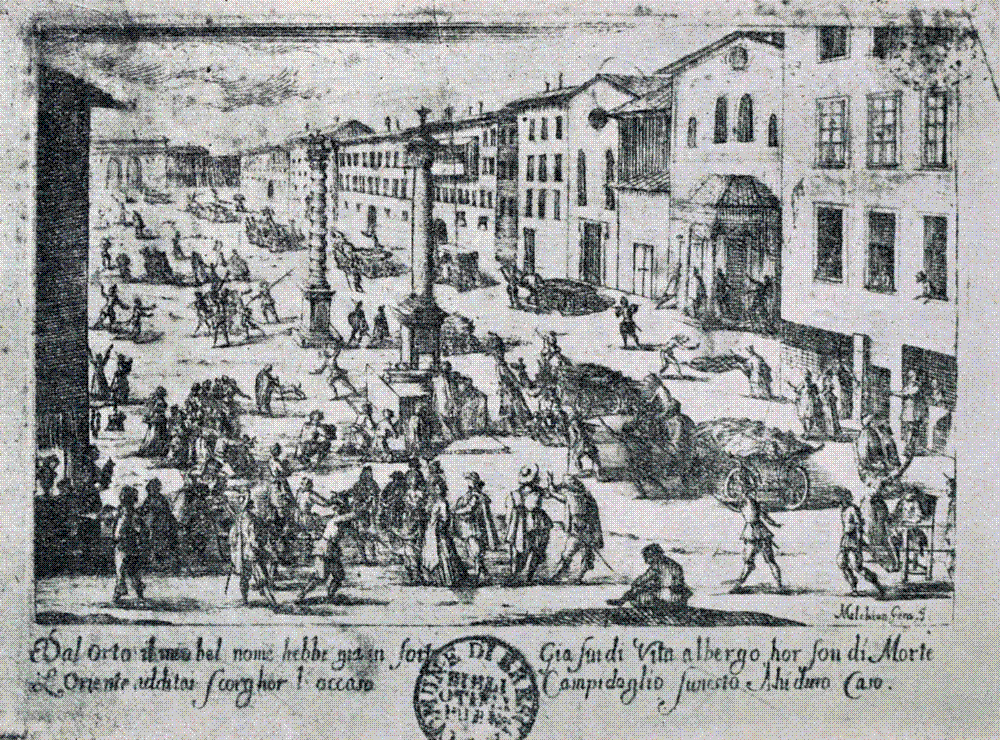
Melchiorre Gherardini, Piazza di S. Babila during the plague of 1630 in Milan: carts and monatti carrying away the dead through an emptied city square.

Alessandro Manzoni's The Betrothed reconstructs the 1630 plague of Milan, carried in by soldiers, in which strangers were stoned as deliberate spreaders of the disease

These things were not confined to the city; the frenzy was propagated equally with the contagion. The traveller encountered off the high road, the stranger whose habits or appearance were in any respect singular, were judged to be poisoners. At the first intelligence of a new comer, at the cry even of a child, the alarm bell was rung; and the unfortunate persons were assailed with showers of stones, or seized and conducted to prison. And thus the prison itself was, during a certain period, a place of safety.
Alessandro Manzoni, The Betrothed (I promessi sposi), chapter 31, anonymous English translation (London: Richard Bentley, 1834); Project Gutenberg ebook no. 35155.
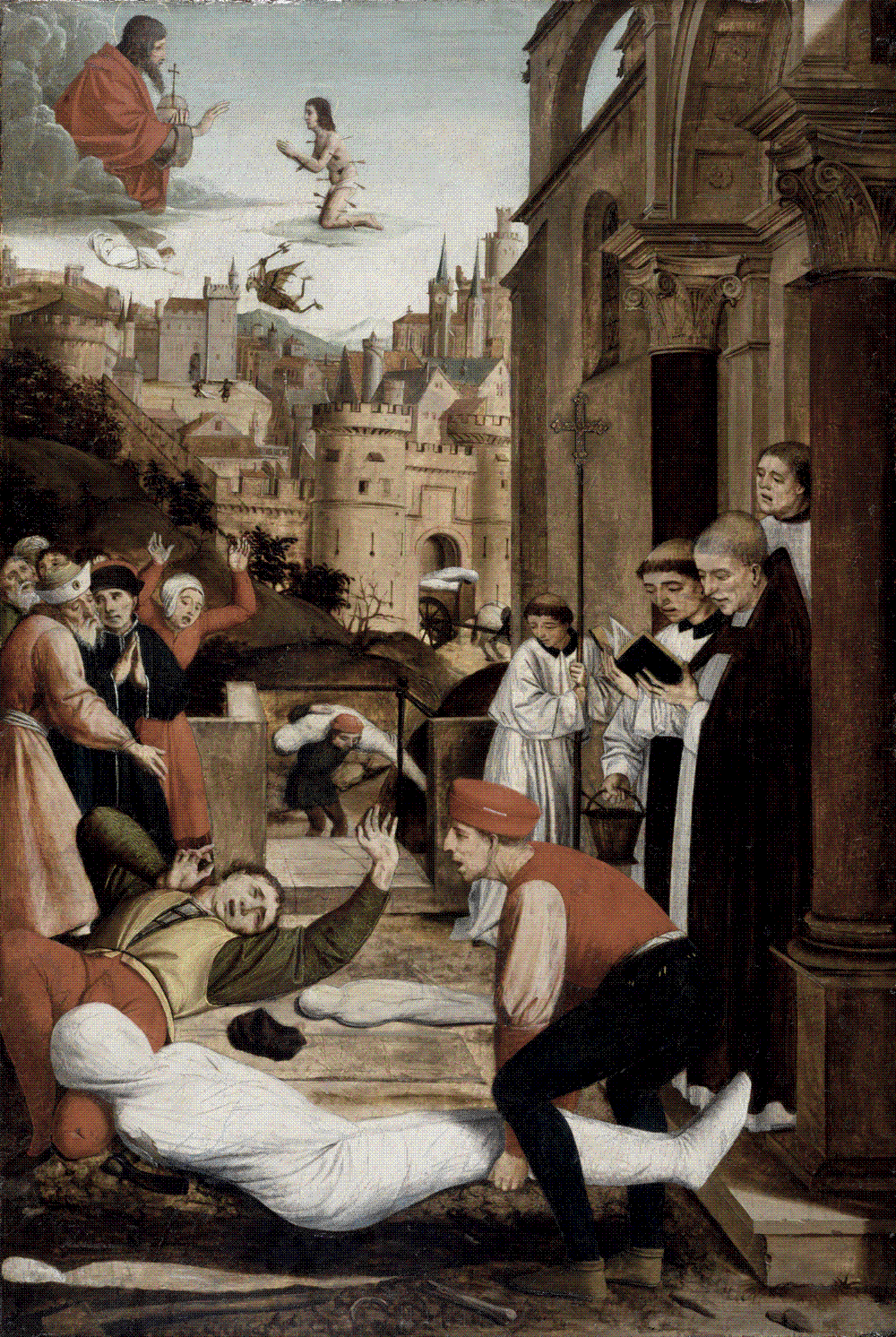
Josse Lieferinxe, Saint Sebastian Interceding for the Plague Stricken (1497-99), Walters Art Museum: a gravedigger falls sick beside an open grave as a shrouded plague victim is buried, with an angel and a demon battling in the sky above the city.

Josse Lieferinxe's altarpiece panel of 1497-99 shows a plague city in which the men burying the dead are dying at the graveside

Painted in Marseille for the Confraternity of St Sebastian, the panel shows a legendary seventh-century outbreak at Pavia. In the foreground a gravedigger collapses over the shrouded corpse he is lowering into the ground while priests read the burial service and mourners recoil; overhead an angel and a demon fight for the city, and Sebastian kneels before God to plead for it. It is one of the earliest European paintings to put the burial workers, rather than the saints, at the centre of an epidemic.
Josse Lieferinxe, Saint Sebastian Interceding for the Plague Stricken, 1497-1499, oil on panel, The Walters Art Museum, Baltimore, accession no. 37.1995.
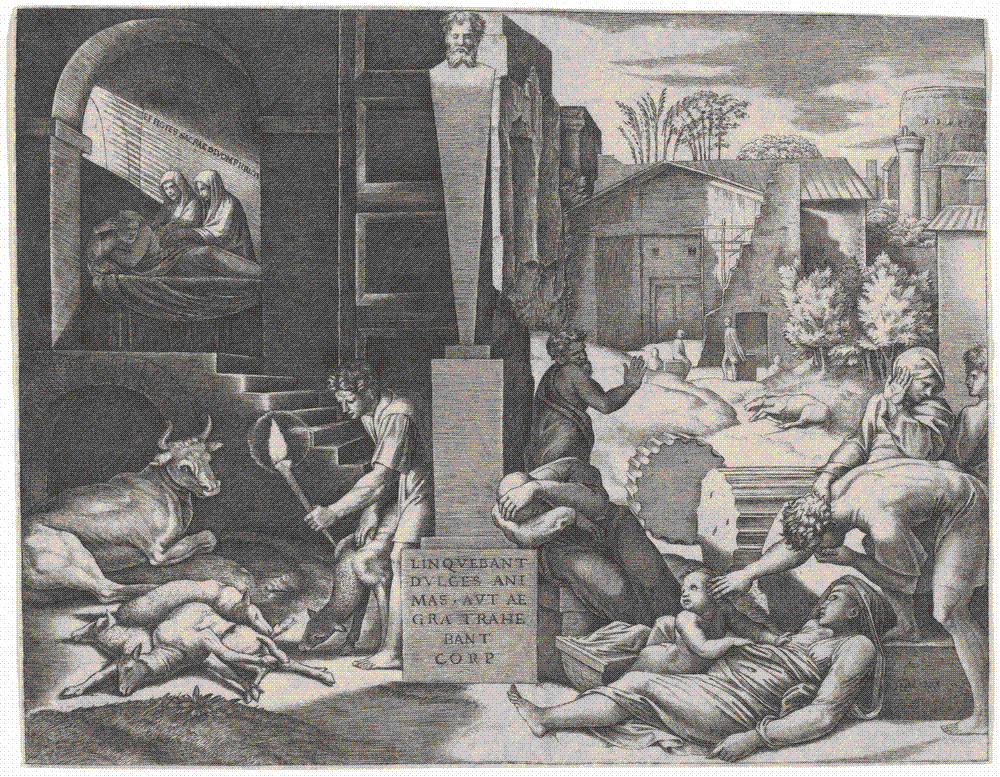
Il Morbetto, engraving by Marcantonio Raimondi after Raphael, about 1515-16: dying figures and dead animals in a shadowed street, with a torchbearer at left and the sleeping Aeneas receiving a vision.

Marcantonio Raimondi's engraving Il Morbetto, after Raphael, about 1515-16, pictures Virgil's plague as a disaster whose cause has to be read out of a dream

The print illustrates the pestilence in Book 3 of the Aeneid, which falls on the Trojans after they misread the oracle of Apollo and settle on Crete. On the right, men and beasts die together in the dark of a colonnaded street, a mother slumped beside her child; on the left a torchbearer lights the scene while Aeneas, asleep, is told in a vision what the true origin of the sickness was. The inscription on the pedestal, linquebant dulces animas, aut aegra trahebant corpora, marks the moment when the dying outnumber those who can explain them.
Marcantonio Raimondi (Italian, ca. 1480-before 1534), after Raphael, Il Morbetto (The Plague of Phrygia), engraving, ca. 1515-16, The Metropolitan Museum of Art, New York, accession no. 17.37.156, Gift of Henry Walters, 1917. Image: the impression in the National Gallery of Art, Washington (NGA 654).