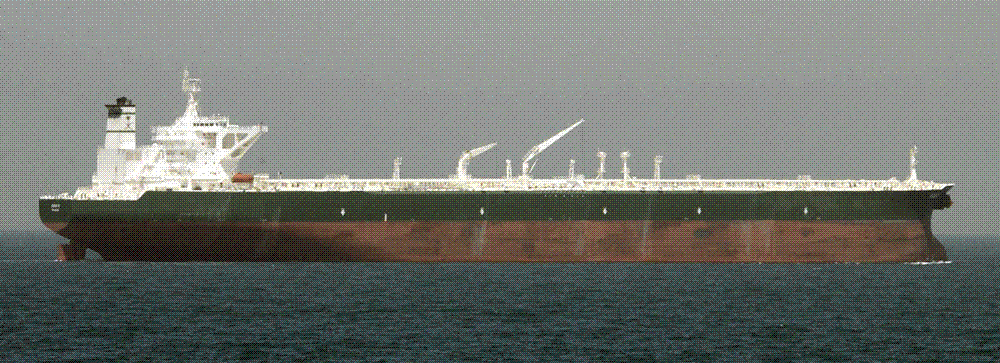
A laden crude-oil supertanker, the AbQaiq, riding low and alone across open sea.

Photo: U.S. Navy (Journalist 1st Class Robert Benson), public domain, via Wikimedia Commons

PoliticsReuters · The Kyiv IndependentAug 2, 2026

An Italian-led EU naval force boards a sanctioned tanker from Russia's 'shadow fleet' in the Mediterranean

An Italian-led European Union naval force boarded and inspected a sanctioned oil tanker linked to Russia's 'shadow fleet' in the Mediterranean Sea, officials said, in a rare enforcement action against the ageing vessels Moscow uses to evade Western oil sanctions. The Italian navy said personnel checked the ship's documents and cargo. The operation reflects a growing European effort to police the covert tanker fleet that sustains Russian crude exports.
Analogies

Pompey's campaign against the Cilician pirates (67 BC)

In 67 BC the Roman Republic, its grain lanes strangled by raiders based in Cilicia, handed Pompey a sweeping mandate to sweep the Mediterranean clean. He carved the sea into sectors and drove a wall of ships eastward, cornering the pirate fleets and their coastal strongholds. Within a single season an ungovernable maritime menace had been brought under the reach of Roman law.
Pompey's campaign against the pirates, Wikipedia

The Royal Navy's West Africa Squadron (19th century)

From 1808 the Royal Navy stationed a squadron off West Africa to hunt the ships that carried on the outlawed slave trade. Its officers exercised a contested right of visit and search, running down suspect vessels and boarding them to look for the tell-tale evidence of chained decks and human cargo. Over half a century the patrols stopped some sixteen hundred ships and freed more than a hundred thousand captives, turning naval force into the blunt instrument of an international ban.
West Africa Squadron, Wikipedia

Psalm 107 (King James Version)

They that go down to the sea in ships, that do business in great waters; These see the works of the LORD, and his wonders in the deep. For he commandeth, and raiseth the stormy wind, which lifteth up the waves thereof. They mount up to the heaven, they go down again to the depths: their soul is melted because of trouble. They reel to and fro, and stagger like a drunken man, and are at their wit’s end.
The Bible, King James Version, Psalm 107:23–27

Herman Melville, Moby-Dick; or, The Whale (“The Chase—Third Day”)

“Give way!” cried Ahab to the oarsmen, and the boats darted forward to the attack; but maddened by yesterday’s fresh irons that corroded in him, Moby Dick seemed combinedly possessed by all the angels that fell from heaven.
Herman Melville, Moby-Dick; or, The Whale (1851), Project Gutenberg
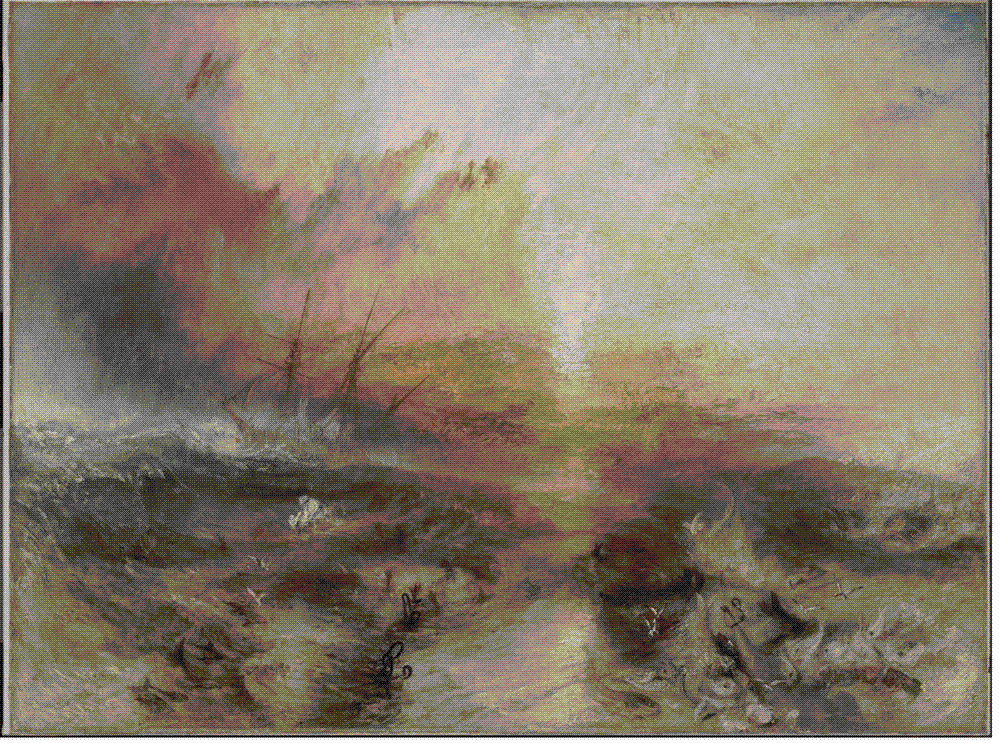
A sailing ship in a fiery red-and-gold sea under a coming storm, with human figures and chains sinking in the foreground waves.

J. M. W. Turner, The Slave Ship (1840)

Turner drowns a slave vessel in a burning sea of orange and blood-red, its masts leaning into an oncoming typhoon while manacled figures slip beneath the churning water. Painted as abolitionist campaigns pressed across the Atlantic, it turns a maritime crime into a scene of cosmic reckoning. The ship flees, but the sea itself has become the enforcer.
The Slave Ship, Wikipedia
A single sailing ship heeling among high, glowing storm waves under a dark sky.

Ivan Aivazovsky, Ship in the Stormy Sea (1887)

Aivazovsky sets a lone vessel against towering, luminous swells, its hull pitched sideways as the sea rears up to meet it. Light breaks through the spray as if the storm itself were passing judgement on the little ship. It is the enduring image of a craft at the mercy of forces far larger than itself.
File:Ivan Aivazovsky - Ship in the Stormy Sea.jpg, Wikimedia Commons