Dezeen
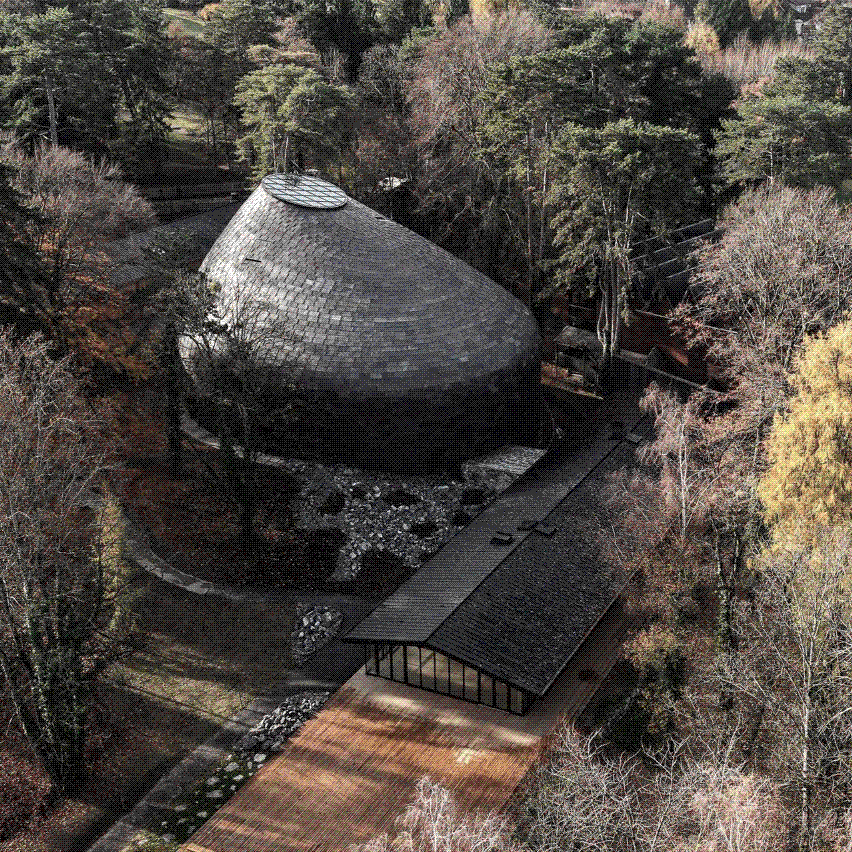
French studio PCA-Stream completes La Source Vive, a domed, copper-clad chamber-music hall above Lake Geneva in Evian The French studio PCA-Stream has completed La Source Vive, a 490-seat chamber-music hall in Evian, France, designed 'as a musical instrument' with its form shaped by acoustics. Clad in copper shingles and set into a sloping woodland site overlooking Lake Geneva, it sits beside Patrick Bouchain's 1993 timber concert hall La Grange au Lac. The dome and curved timber interior were tuned to carry sound for intimate classical performances. Analogies The ancient theatre of Epidaurus Cut into the slope of Mount Kynortion in the 4th century BC and credited to Polykleitos the Younger, the theatre of Epidaurus seated some 14,000 spectators and is renowned for acoustics so exact that a coin dropped or a voice raised on the orchestra floor carries clearly to the topmost tier. Modern researchers trace the effect to the corrugated limestone seating, which acts as an acoustic filter, damping low-frequency crowd murmur while letting the performers' higher voices through. More than two millennia before the science of acoustics existed, its builders had shaped raked stone into an instrument for the human voice.
Theatre of Epidaurus (Wikipedia) → Boston Symphony Hall, tuned by physics When Symphony Hall opened in 1900, it became the first auditorium in the world designed according to quantifiable acoustic principles, after the young Harvard physicist Wallace Clement Sabine worked out the founding equations of reverberation for its architects. Its narrow 'shoebox' proportions, coffered ceiling and statue-filled niches were dimensioned to sustain and diffuse sound rather than merely to shelter an audience. The result is still counted among the finest concert halls ever built, the moment architecture was first calculated as an instrument.
Symphony Hall, Boston (Wikipedia) → Goethe: architecture as frozen music A noble philosopher spoke of architecture as frozen music; and it was inevitable that many people should shake their heads over his remark. We believe that no better repetition of this fine thought can be given than by calling architecture a speechless music.
Johann Wolfgang von Goethe, The Maxims and Reflections of Goethe (trans. Bailey Saunders), no. 493 (Project Gutenberg) → Vitruvius on siting a theatre for the voice All this having been settled with the greatest pains and skill, we must see to it, with still greater care, that a site has been selected where the voice has a gentle fall, and is not driven back with a recoil so as to convey an indistinct meaning to the ear.
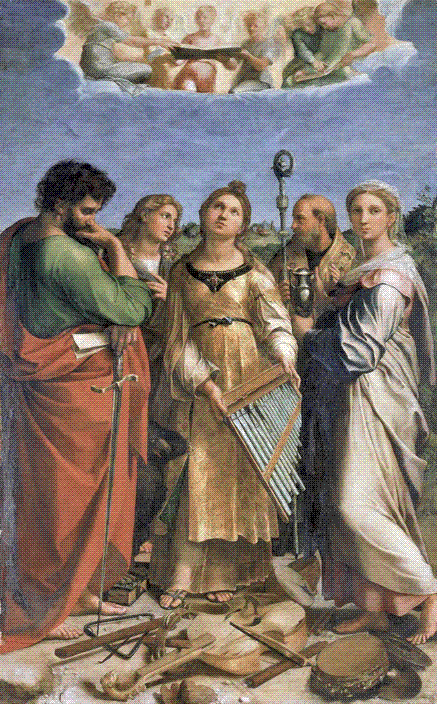
Vitruvius, The Ten Books on Architecture, Book V, Chapter VIII (trans. Morris Hicky Morgan; Project Gutenberg) → Raphael, The Ecstasy of Saint Cecilia The Saint Cecilia Altarpiece is an oil painting by the Italian High Renaissance master Raphael. Completed in his later years, in around 1516–1517, the painting depicts Saint Cecilia, the patron saint of musicians and Church music, listening to a choir of angels in the company of Saints Paul, John the Evangelist, Augustine and Mary Magdalene.
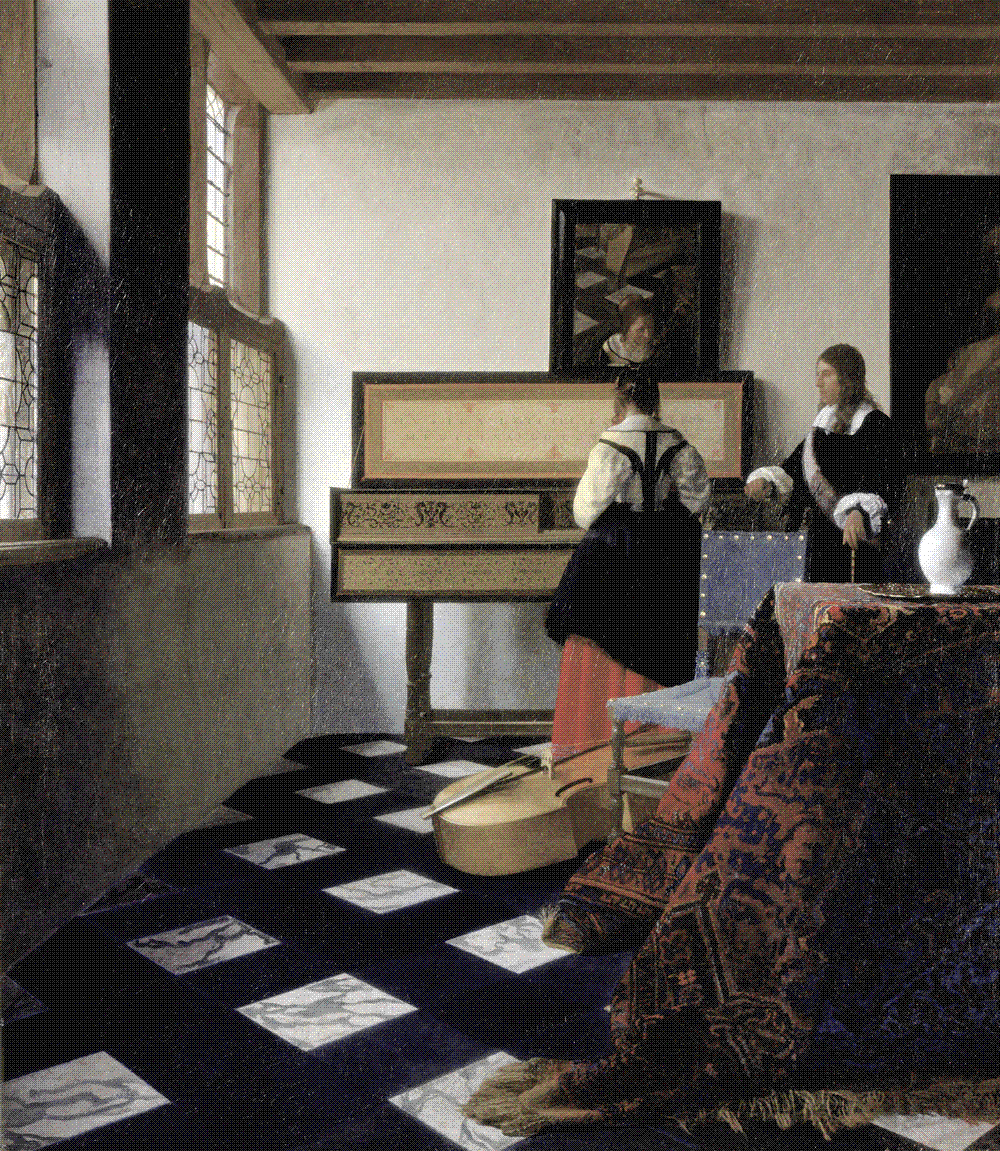
The Ecstasy of Saint Cecilia (Wikipedia) → Vermeer, The Music Lesson The Music Lesson, Woman Seated at a Virginal or A Lady at the Virginals with a Gentleman by Johannes Vermeer is a painting of a young female pupil playing a virginal during a music lesson with a male teacher.
The Music Lesson (Wikipedia) →