Wikimedia Commons
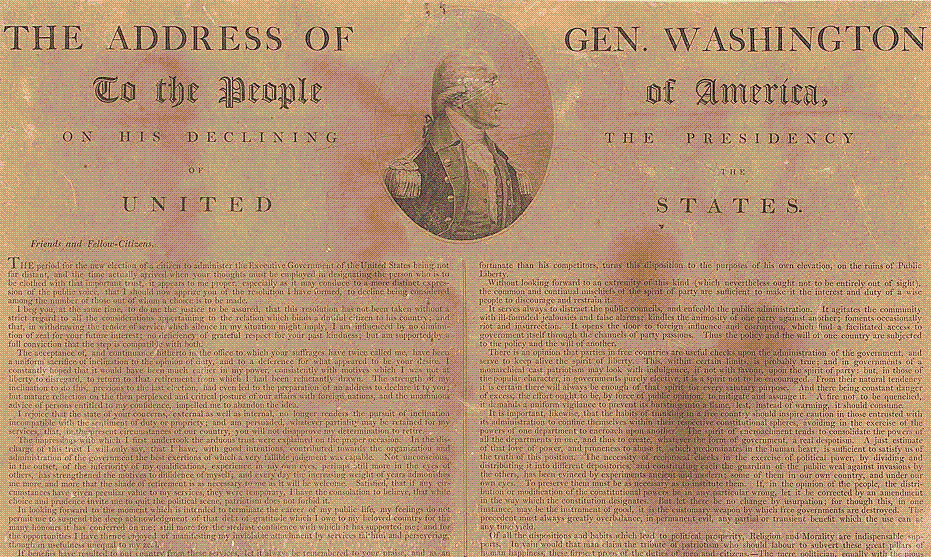
Clinton, Bush and Obama publish essays on the presidency that never say 'Trump' Three former presidents — Bill Clinton, George W. Bush and Barack Obama — published essays this week reflecting on the American presidency, and the most discussed word in the collection is the one that never appears. None of the essays names Donald Trump; all of them, in their themes — restraint, the weight of the office, what the presidency owes the republic rather than the man who holds it — are unmistakably shaped by his tenure. The form has a long lineage: the presidential valediction that warns without naming, from Washington's caution against faction onward. What made this week's entry notable is its multiplication — three presidents of two parties choosing the same silence at the same moment, an implicit claim that the office itself, not any occupant, needed defending. Whether omission reads as dignity or evasion is precisely the argument the essays started. Analogies George Washington's Farewell Address The disorders and miseries, which result, gradually incline the minds of men to seek security and repose in the absolute power of an individual; and sooner or later the chief of some prevailing faction, more able or more fortunate than his competitors, turns this disposition to the purposes of his own elevation, on the ruins of Public Liberty.
Address to the People of the United States, September 19, 1796 (Wikisource) → Eisenhower's Farewell Address In the councils of government, we must guard against the acquisition of unwarranted influence, whether sought or unsought, by the military-industrial complex. The potential for the disastrous rise of misplaced power exists and will persist.
Televised address, January 17, 1961 — U.S. National Archives, Milestone Documents → Meditations: 'Take care that thou art not made into a Caesar' Take care that thou art not made into a Caesar, that thou art not dyed with this dye; for such things happen. Keep thyself then simple, good, pure, serious, free from affectation, a friend of justice, a worshipper of the gods, kind, affectionate, strenuous in all proper acts. Strive to continue to be such as philosophy wished to make thee. Reverence the gods, and help men. Short is life.
Marcus Aurelius, Meditations VI.30, trans. George Long — Project Gutenberg → Prospero Abjures His Rough Magic But this rough magic
I here abjure; and, when I have requir’d
Some heavenly music,—which even now I do,—
To work mine end upon their senses that
This airy charm is for, I’ll break my staff,
Bury it certain fathoms in the earth,
And deeper than did ever plummet sound
I’ll drown my book.
William Shakespeare, The Tempest, Act V, Scene 1 — Project Gutenberg → The Lansdowne Portrait of George Washington Painted in the very year of the Farewell Address, Stuart shows the president not in a general's uniform but in the plain black velvet of a citizen, his sword sheathed and his arm extended as if yielding the floor. Every prop around him — the papers of state, the classical columns, the storm clearing into a rainbow behind the window — belongs to the office rather than the man. It is power composing its own likeness at the moment of letting go, a portrait of the presidency that any occupant merely passes through.
Gilbert Stuart, oil on canvas, 1796 — National Portrait Gallery, Smithsonian Institution (NPG.2001.13) → Lincoln Portrait A narrator speaks a dead president's own plain sentences while the orchestra repeatedly falls silent to let them land, so that Lincoln's words — not the composer's — do all the accusing. Written in wartime 1942, the piece never mentions any living leader, yet every era that performs it hears its own politics indicted by comparison. It is the office's language outliving the man, set against orchestral silence and pointed at whoever now holds the chair.
Aaron Copland, 1942 — RCA Victor recording, 1946: Boston Symphony Orchestra, Serge Koussevitzky, narrated by Melvyn Douglas (Internet Archive) → 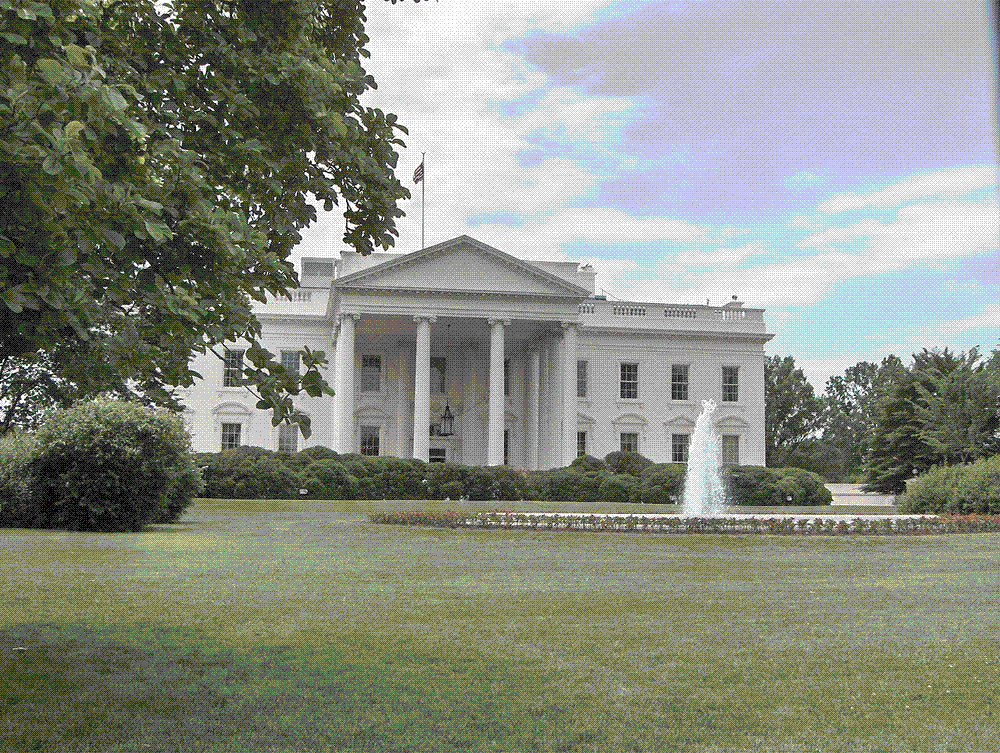
.jpg)