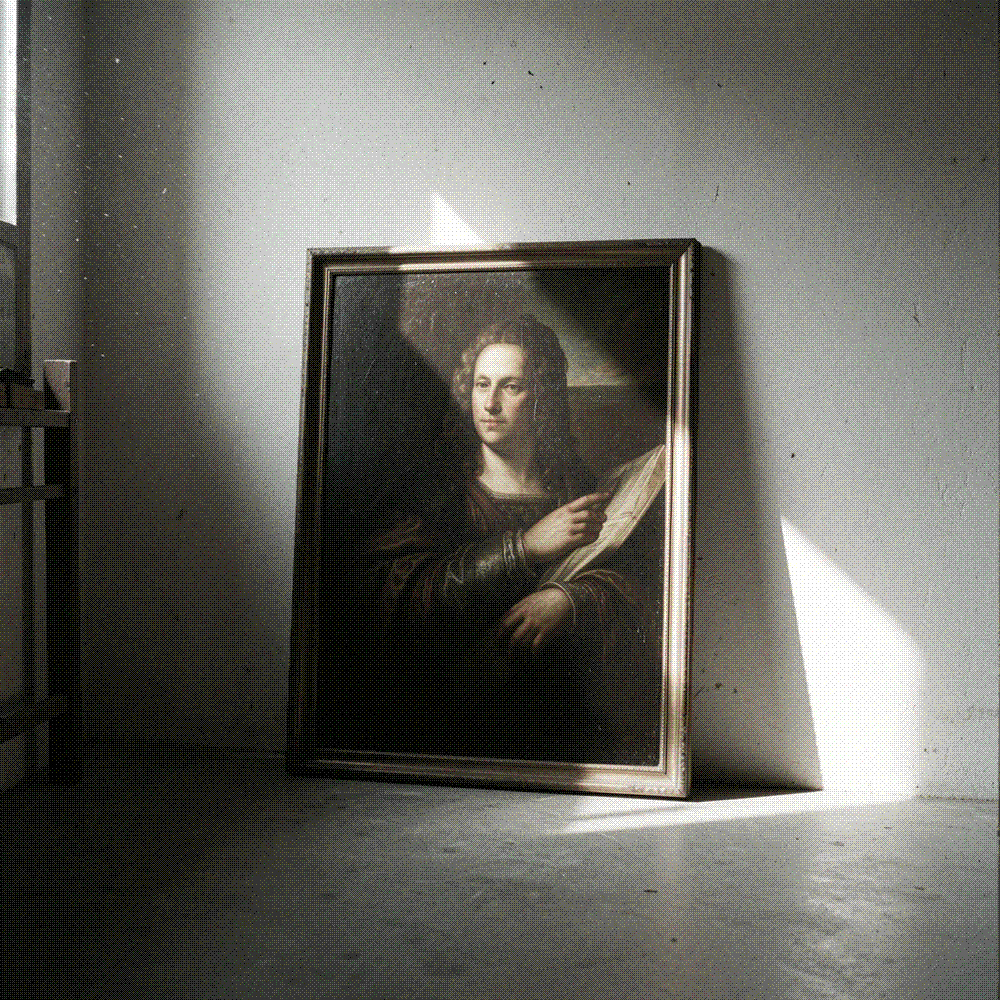
An unframed old-master canvas propped against a bare storeroom wall in a shaft of raking light, dust hanging in the air

AI-generated

ArtArtforumSep 24, 2026

The Getty buys a rediscovered Velázquez, the first to enter a West Coast collection

The J. Paul Getty Museum announced on Thursday that it had acquired a newly discovered painting by Diego Velázquez — the museum's first work by the Spanish master, and the first Velázquez to enter any museum collection on the West Coast of the United States. The acquisition closes a gap that had become conspicuous: a museum with the resources to buy almost anything, in a country whose great eastern collections have held Velázquez for more than a century, without a single one. It also adds a painting to a body of work whose edges have never been settled. Velázquez painted slowly and held a court appointment that consumed his time; the number of surviving pictures accepted as his has moved between roughly ninety and several hundred depending on the century and the scholar, which is why a rediscovery is both an event and an argument. The Getty has made the strongest possible statement of confidence by buying it.
Analogies

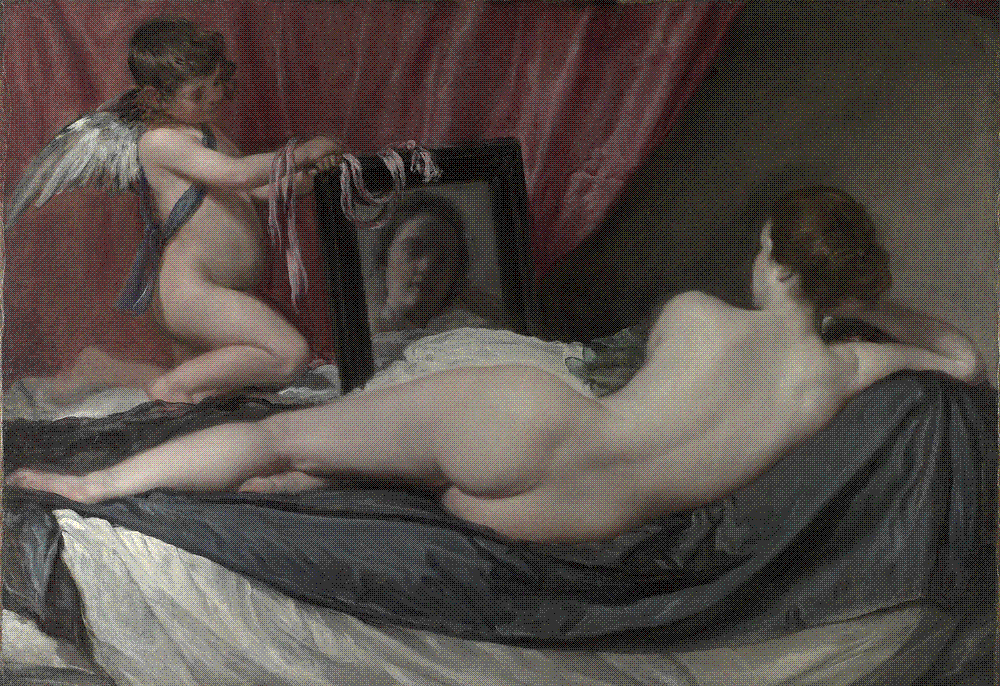
Velázquez's Rokeby Venus: a reclining nude seen from behind, her face blurred in a mirror held by Cupid

1651: the picture we now call the Rokeby Venus is listed in an inventory as 'a nude woman', with no painter's name attached

It does seem to be the painting listed in a household inventory of 1651 of the Spanish painter and art dealer Domingo Guerra Coronel, where it is not said to be by Velázquez and is described simply as 'a nude woman'
The National Gallery, London, catalogue entry for Diego Velázquez, The Toilet of Venus ('The Rokeby Venus'), 1647–51, NG2057. →

1911: two scholars count the surviving Velázquezes and arrive at 274 and 90

Of the 274 works attributed to Velazquez by Mr Curtis, 121 are in the United Kingdom, while France has but 13, Austria-Hungary 12, Russia 7, and Germany about the same number. Beruete, who only allows 90 known pictures to be genuine works of Velazquez
'Velazquez, Diego Rodriguez de Silva y', Encyclopædia Britannica, 11th edition, vol. 27 (Cambridge University Press, 1911). →
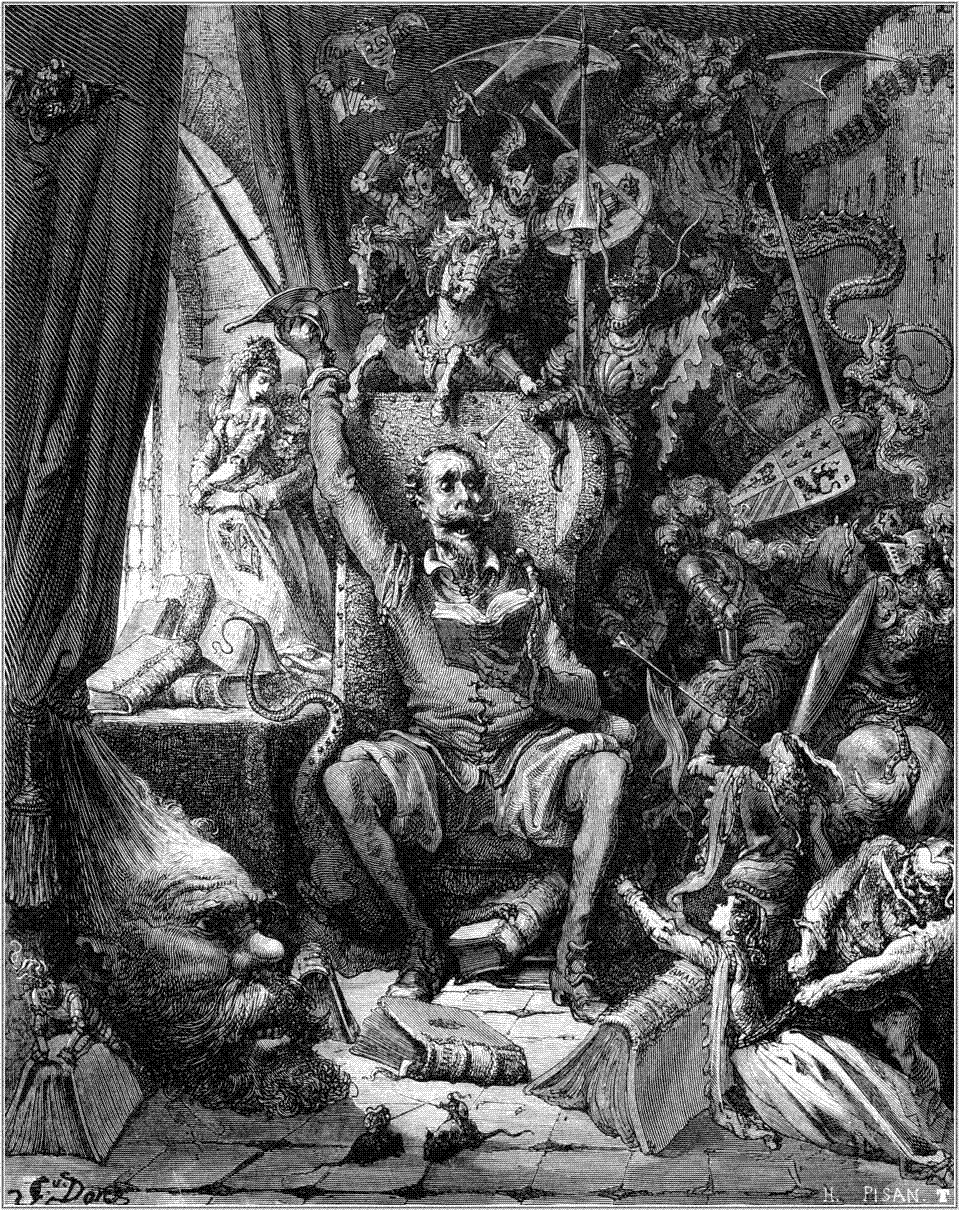
An illustration of Don Quixote among his books

Cervantes invents the painter whose work has to be labelled because nobody can tell what it is

this painter is like Orbaneja, a painter there was at Úbeda, who when they asked him what he was painting, used to say, 'Whatever it may turn out;
Miguel de Cervantes, Don Quixote, part II, ch. LXXI, trans. John Ormsby (London: Smith, Elder & Co., 1885); Project Gutenberg ebook 996. →
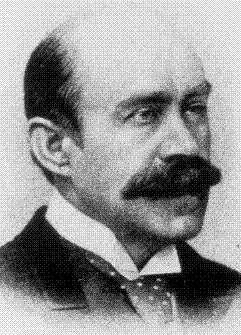
A portrait of the critic Walter Pater, moustached, in a dark coat

Pater, in 1873, writes the passage that turned a painting into a reputation

She is older than the rocks among which she sits; like the vampire, she has been dead many times, and learned the secrets of the grave
Walter Pater, The Renaissance: Studies in Art and Poetry, 'Leonardo da Vinci' (London: Macmillan, 1873); Project Gutenberg ebook 2398. →
Velázquez's Las Meninas: the young Infanta with her attendants, the painter at his canvas, and a mirror at the back of the room

'Las Meninas' (1656) makes the act of looking at a painting part of the painting

The Infanta Margarita stands in the middle of a room in the Alcázar with her maids of honour, a dwarf, a dog and a chaperone; behind them a courtier pauses in a lit doorway; on the left Velázquez himself stands at a canvas whose face we never see. In a mirror at the back, dimly, are the king and queen — who occupy the position the viewer is standing in. It is the most analysed picture in Western art precisely because it refuses to say who is being looked at.
Diego Velázquez, Las Meninas, 1656, oil on canvas, 318 × 276 cm; Museo Nacional del Prado, Madrid. →
Velázquez's portrait of Juan de Pareja, a man in a dark cloak with a white collar, looking directly out

The portrait of Juan de Pareja (1650), painted of an enslaved man in Velázquez's own workshop

Velázquez painted his assistant in Rome as a warm-up for the portrait of Innocent X, and exhibited it at the Pantheon to general astonishment. Pareja was at the time enslaved in Velázquez's household; he was freed four years later and became a painter himself, with work now in the Prado. In 1970 the picture sold at Christie's for a record price and went to the Metropolitan Museum — the most expensive painting in the world for a moment, of a man who had been someone's property when it was made.
Diego Velázquez, Juan de Pareja, 1650, oil on canvas, 81.3 × 69.9 cm; Metropolitan Museum of Art, New York. →