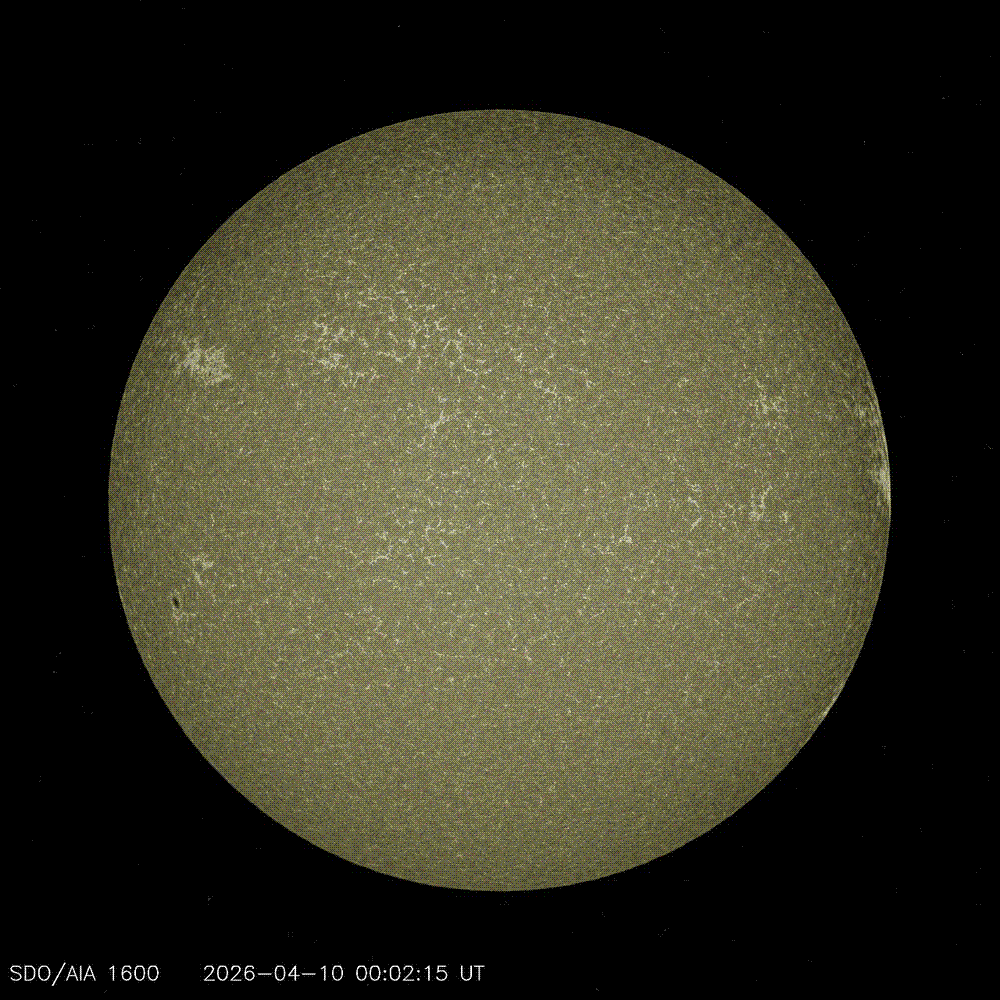
The Sun imaged in extreme ultraviolet by NASA's Solar Dynamics Observatory, its surface roiling with bright active regions

NASA SDO / Wikimedia Commons

ClimateAssociated Press · Associated Press · ReutersAug 12, 2026

Western Europe sets temperature records and the US logs its hottest month as heat strains grids and harvests

The heat stopped being weather this week and became infrastructure. Early in the week Italian cities went to red alert, Austria set a national heat record and South Korea's president ordered an 'all-out' response; by 11 August Western Europe had set new temperature records outright and NOAA confirmed the contiguous United States had just recorded its hottest month ever measured. The strain showed wherever systems touch the climate: the Danube fell to record lows, forcing Hungary to curb power use and Romania to fight to keep a nuclear reactor running; French nuclear output dropped — one plant shut three reactors after jellyfish swarmed its intakes — while German wind faltered and European power prices jumped; Italian winemakers harvested at night to save the grapes. One bank projected the summer could erase the EU's economic growth for the year. The records will stand until they don't; the systems built for a cooler continent are the story.
Analogies

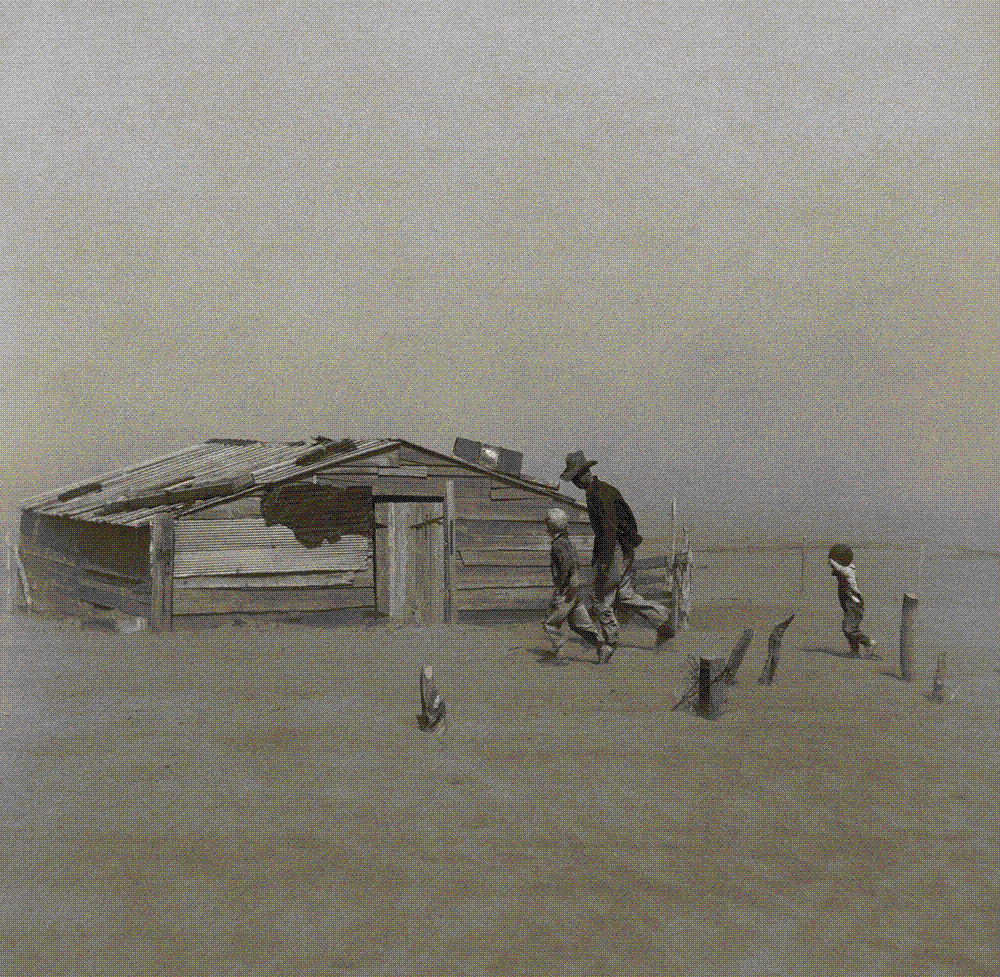
A farmer and his two sons walk through a dust storm toward a half-buried outbuilding in Cimarron County, Oklahoma, 1936.

The Dust Bowl: heat unmakes an economy

I shall never forget the fields of wheat so blasted by heat that they cannot be harvested. I Shall never forget field after field of corn stunted, earless and stripped of leaves, for what the sun left the grasshoppers took. I saw brown pastures which would not keep a cow on fifty acres.
Franklin D. Roosevelt, Fireside Chat on drought conditions, September 6, 1936 (Wikisource)
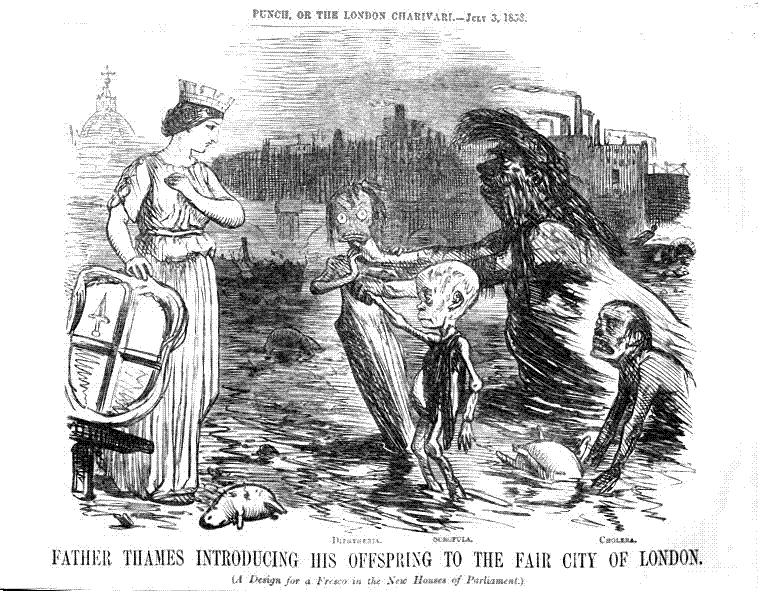
An 1858 Punch cartoon in which a filthy Father Thames rises from the polluted river to introduce his offspring — Diphtheria, Scrofula and Cholera — to the fair city of London.

The Great Stink: a hot summer builds the sewers of London

That noble river, so long the pride and joy of Englishmen, which has hitherto been associated with the noblest feats of our commerce and the most beautiful passages of our poetry, has really become a Stygian pool, reeking with ineffable and intolerable horrors.
Benjamin Disraeli, Chancellor of the Exchequer, House of Commons, 15 July 1858 (Hansard)

The City of Dreadful Night

The dense wet heat that hung over the face of land, like a blanket, prevented all hope of sleep in the first instance. The cicalas helped the heat; and the yelling jackals the cicalas. It was impossible to sit still in the dark, empty, echoing house and watch the punkah beat the dead air.
Rudyard Kipling, Life's Handicap (1891), Project Gutenberg
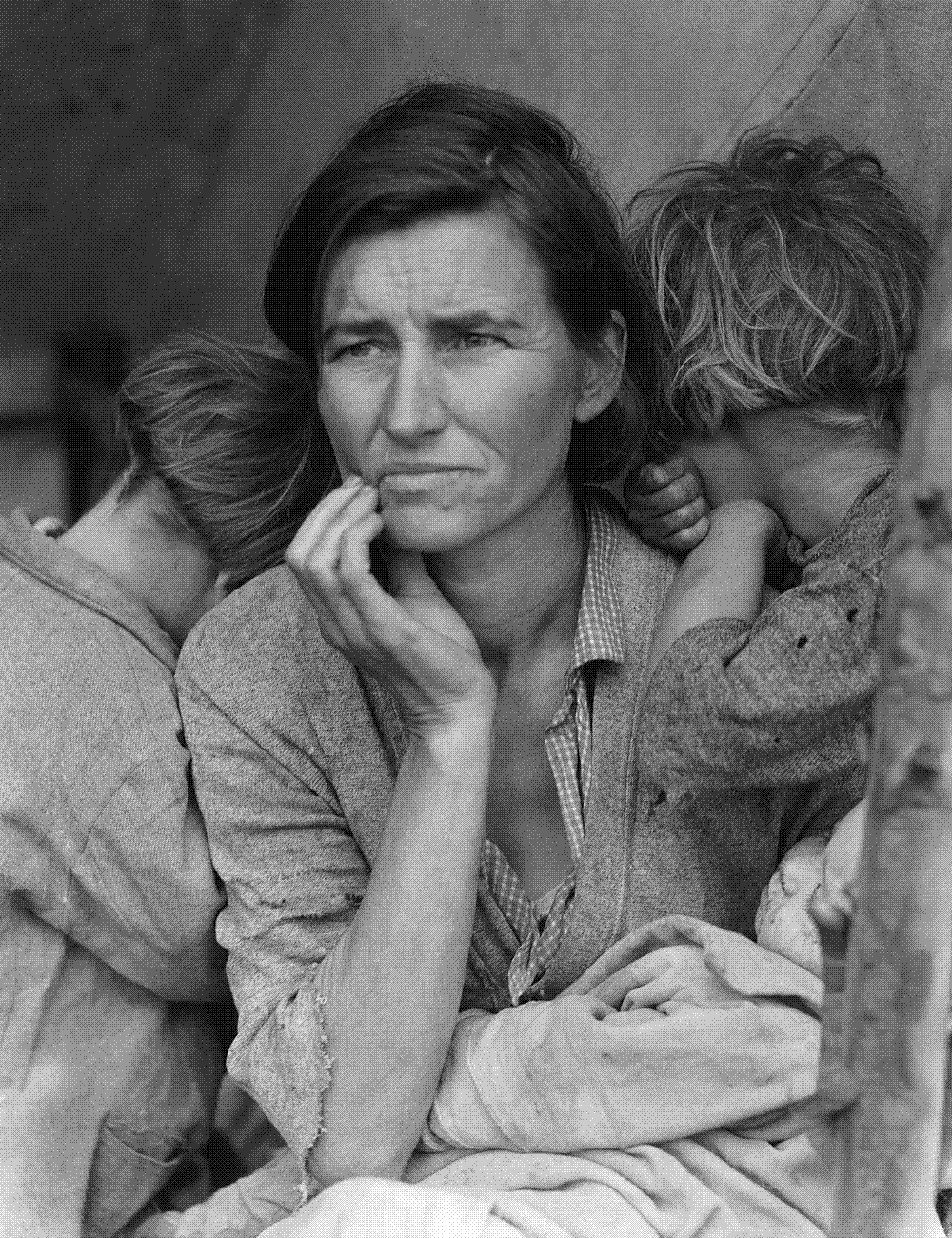
Dorothea Lange's Migrant Mother: Florence Owens Thompson, a drought refugee and pea picker in Nipomo, California, 1936, with two children leaning on her shoulders.

The Grapes of Wrath

Steinbeck opens his novel not with people but with weather: chapter one is a slow aerial shot of Oklahoma as the rains fail, the sun hardens the earth day after day, and the corn fades while the dust lifts into the sky and settles over everything like a verdict. Families watch the fields from their doorways, doing arithmetic in silence, because everyone understands that when the land stops working, the mortgages, the labor, and the towns built on that land stop working too. The heat is the novel's first character — the force that will push the Joads, and hundreds of thousands like them, onto the road west.
John Steinbeck, The Grapes of Wrath (1939), Internet Archive (1939 edition)
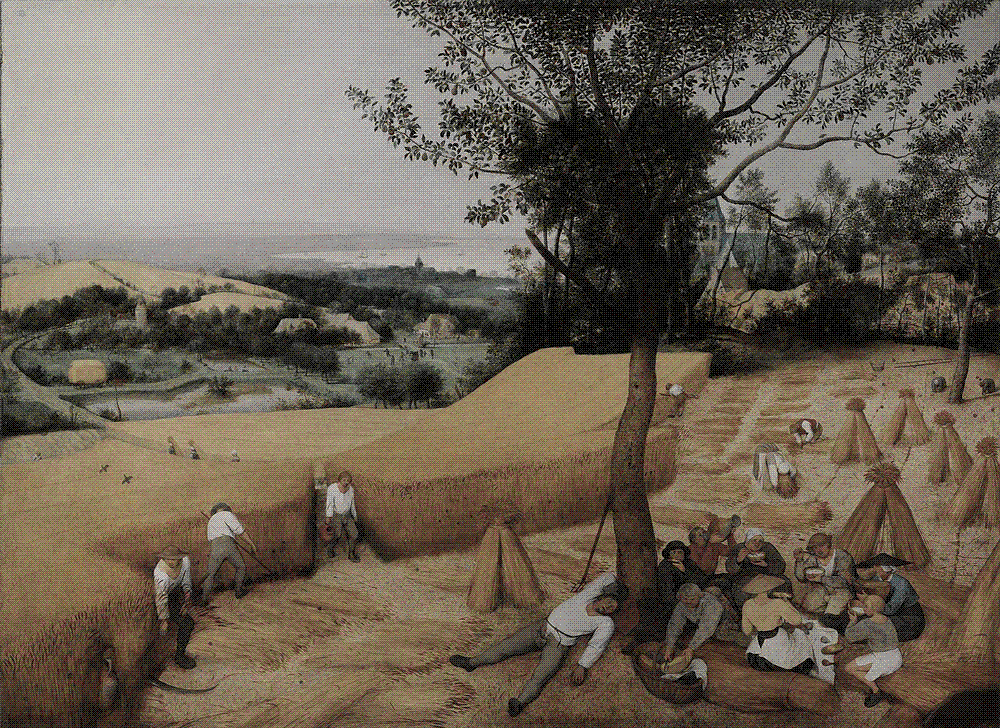
Pieter Bruegel the Elder's The Harvesters (1565): peasants scythe a golden wheat field while others eat and sleep beneath a tree under a hazy high-summer sky.

The Harvesters

Bruegel's high-summer panel is one of the first Western paintings to treat heat itself as the subject: the wheat stands waist-high and bleached gold, the air is visibly thick, and the whole composition is organized around labor's negotiation with temperature. Some peasants scythe and bundle while others collapse under a pear tree with bread, porridge and drink — rest built into the workday because the sun allows nothing else. It is a portrait of an entire economy arranged around the season: what the heat ripens, the village must cut, carry and eat on the heat's schedule.
Pieter Bruegel the Elder, The Harvesters (1565), The Metropolitan Museum of Art

Summer (L'estate) from The Four Seasons

Vivaldi's Summer is program music about heat as an oppressive governing force: the first movement opens under the marking 'Languideza per il caldo' — languor from the heat — with the orchestra sagging in broken, exhausted fragments, as if the music itself cannot stand up under the sun. Man and flock droop, the cuckoo and turtledove call through the stillness, and anxiety builds as the shepherd senses what the heat is brewing. The finale, the 'Tempo impettuoso d'Estate,' delivers it: the storm the whole concerto has been dreading arrives in torrents of scales and hail that flatten the ripened grain — the season's violence written straight into the score.
Antonio Vivaldi, Violin Concerto in G minor, RV 315 (1723), IMSLP