BBC
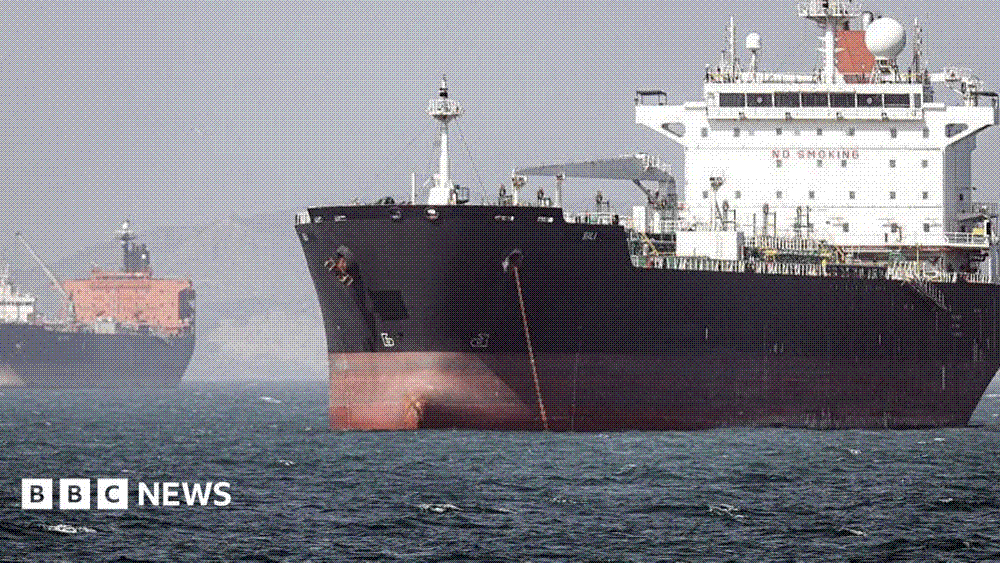
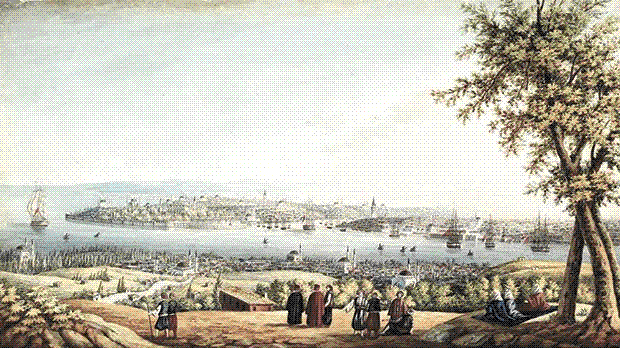
Conflict BBC · AP · Aug 4, 2026 Rubio and Bessent say a deal to reopen the Strait of Hormuz is close, and Brent crude falls almost 5% to a three-week low US Secretary of State Marco Rubio and Treasury Secretary Scott Bessent each said talks with Iran had progressed far enough that shipments through the strait could resume as soon as this week. Brent crude fell by almost 5% to under $80 a barrel and West Texas Intermediate dropped to $76, both their lowest since 13 July. Reuters reported that Iran is demanding control of inbound traffic through the waterway and oversight of what passes out. Analogies Athens fortifies Chrysopolis on the Bosporus in 410 BC and levies a ten per cent toll on every ship sailing out of the Black Sea From there they proceeded to Chrysopolis, in Calchedonia, and fortified it, established a custom house in the city, and proceeded to collect the tithe-duty from vessels sailing out of the Pontus; they also left there as a garrison thirty ships and two of the generals, Theramenes and Eumachus, to have charge of the fort, to attend to the outgoing ships, and to harm the enemy in any other way they could. The other generals returned to the Hellespont.
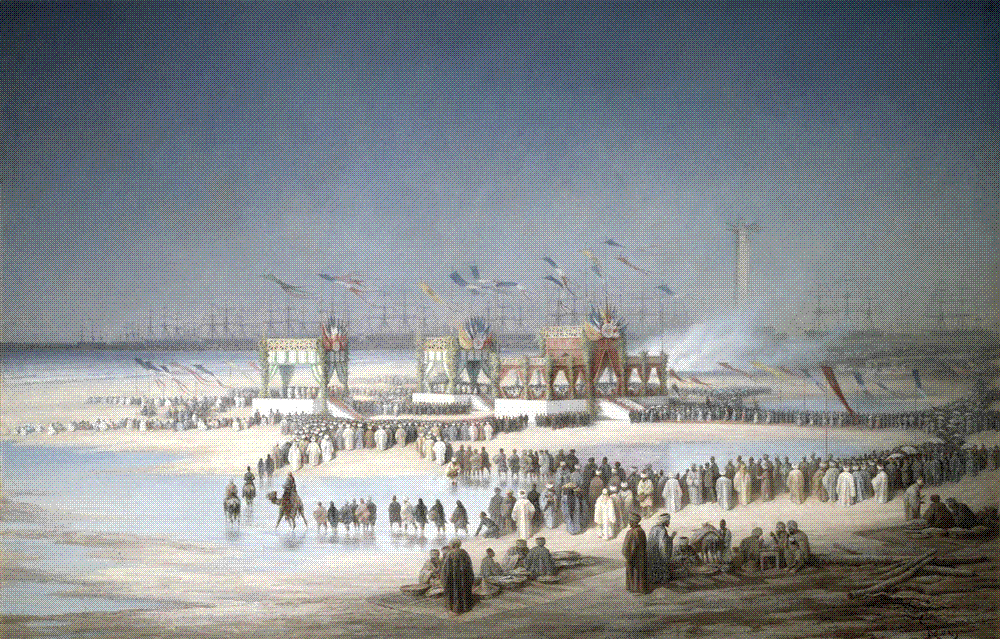
Xenophon, Hellenica 1.1.22, in Xenophon in Seven Volumes, vols. 1-2, trans. Carleton L. Brownson (Cambridge, MA: Harvard University Press; London: William Heinemann, 1918-21); Perseus Digital Library, Tufts University. The editor's note glosses the tithe-duty as ‘a tax of ten per cent. on all goods passing out through the Bosporus.’ → The great powers sign the Convention of Constantinople on 29 October 1888, binding themselves to keep the Suez Canal open to every flag and never to blockade it The Suez Maritime Canal shall always be free and open, in time of war as in time of peace, to every vessel of commerce or of war, without distinction of flag. Consequently, the High Contracting Parties agree not in any way to interfere with the free use of the Canal, in time of war as in time of peace. The Canal shall never be subjected to the exercise of the right of blockade.
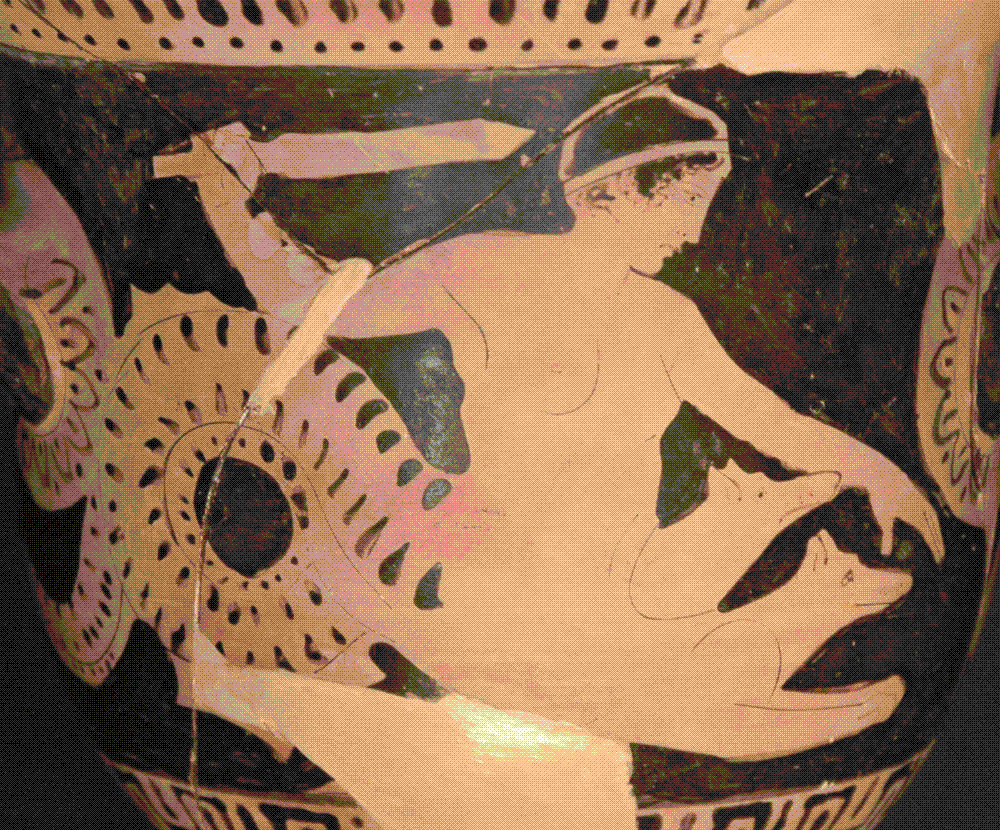
Convention between Great Britain, Germany, Austria-Hungary, Spain, France, Italy, the Netherlands, Russia and Turkey, respecting the Free Navigation of the Suez Maritime Canal, signed at Constantinople 29 October 1888, ratifications deposited 22 December 1888, Article I; transcribed text at Wikisource. → Circe names the toll for passing the strait - six men, one for each of Scylla's heads - in Book 12 of Homer's Odyssey By her no sailors yet may boast that they have fled unscathed in their ship, for with each head she carries off a man, snatching him from the dark-prowed ship. But the other cliff, thou wilt note, Odysseus, is lower—they are close to each other; thou couldst even shoot an arrow across—and on it is a great fig tree with rich foliage, but beneath this divine Charybdis sucks down the black water. Thrice a day she belches it forth, and thrice she sucks it down terribly. Mayest thou not be there when she sucks it down, for no one could save thee from ruin, no, not the Earth-shaker. Nay, draw very close to Scylla's cliff, and drive thy ship past quickly; for it is better far to mourn six comrades in thy ship than all together.
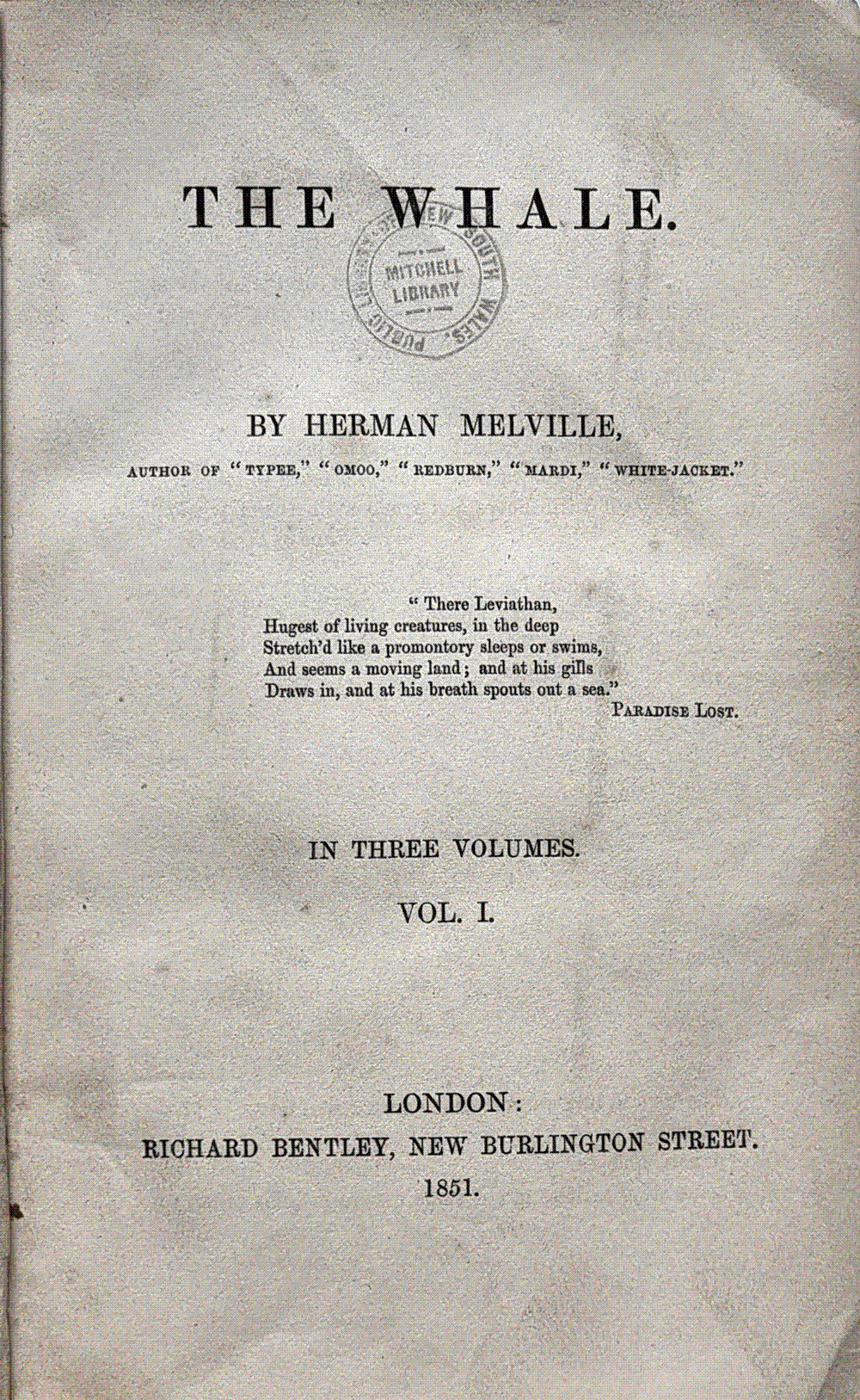
Homer, Odyssey 12.98-110, trans. A. T. Murray, Homer: The Odyssey with an English Translation in Two Volumes (Cambridge, MA: Harvard University Press; London: William Heinemann, 1919); Perseus Digital Library, Tufts University. → Melville's Pequod runs for the Straits of Sunda, where those who hold the gateway waive the ceremony of lowered topsails but never their claim to ‘more solid tribute’, in Moby-Dick (1851) The shores of the Straits of Sunda are unsupplied with those domineering fortresses which guard the entrances to the Mediterranean, the Baltic, and the Propontis. Unlike the Danes, these Orientals do not demand the obsequious homage of lowered top-sails from the endless procession of ships before the wind, which for centuries past, by night and by day, have passed between the islands of Sumatra and Java, freighted with the costliest cargoes of the east. But while they freely waive a ceremonial like this, they do by no means renounce their claim to more solid tribute. Time out of mind the piratical proas of the Malays, lurking among the low shaded coves and islets of Sumatra, have sallied out upon the vessels sailing through the straits, fiercely demanding tribute at the point of their spears.
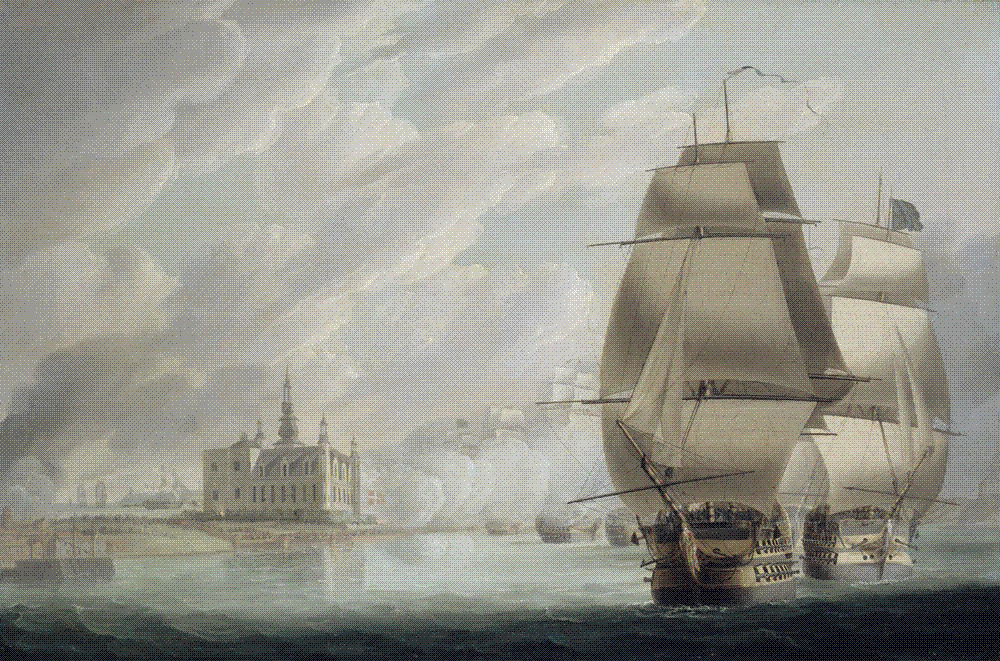
Herman Melville, Moby-Dick; or, The Whale (New York: Harper & Brothers, 1851), chapter 87, ‘The Grand Armada’; Project Gutenberg ebook no. 2701. → Robert Dodd paints the morning a fleet refused to pay the toll: ‘Nelson Forcing the Passage of the Sound, 30 March 1801’ Dodd's canvas shows the narrowest water in northern Europe on the morning it stopped being negotiable. A British line of battle crowds through the two-mile gap between Denmark and Sweden under full sail, hugging the far shore to stay out of range, while the guns of Kronborg Castle throw smoke across the Danish side of the channel. For four centuries every merchantman in that channel had struck her topsails and paid the Sound Dues to the Danish crown for the right to enter the Baltic; Dodd gives the chokepoint its portrait at the moment force replaced the tariff. The dues themselves outlived the battle by another fifty-six years, and were finally bought out for cash rather than shot.
Robert Dodd (1748-1815), Nelson Forcing the Passage of the Sound, 30 March 1801, prior to the Battle of Copenhagen, oil on canvas, 1801-1815; National Maritime Museum, Greenwich, accession no. BHC0522 (Royal Museums Greenwich). → Mendelssohn's concert overture ‘Meeresstille und glückliche Fahrt’, Op. 27 (1828, revised 1834), turns a dead calm into a reopened trade route The overture opens with the sea shut. Mendelssohn spaces his string chords so slowly and so widely that the music seems to stop breathing altogether: a becalmed hull going nowhere, and a cargo going nowhere with it. Then a flute lets the wind back in, the tempo doubles, and the full orchestra runs before it in a long open-water crescendo. It ends in trumpet fanfares as the ship makes harbour - the sound of a sea lane coming back to life, written for the moment the waiting stops.
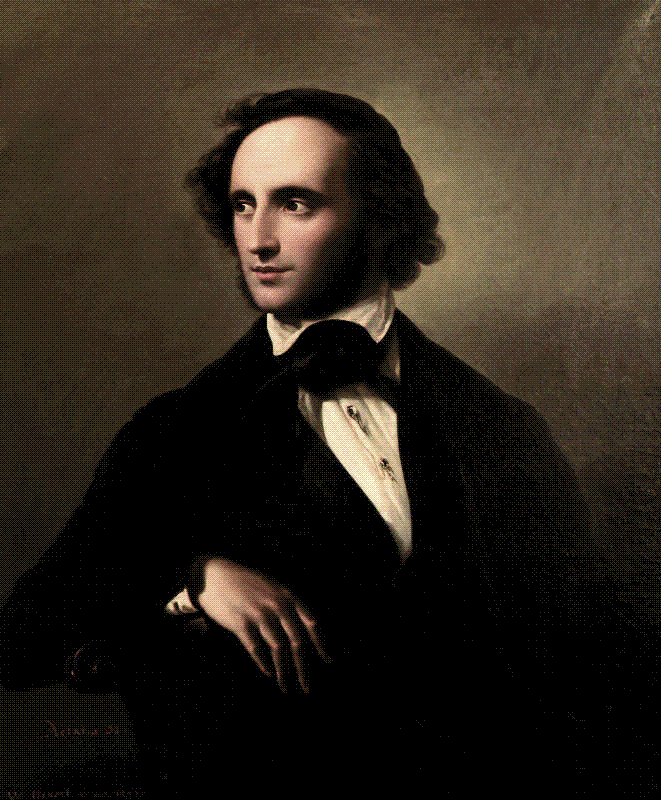
Felix Mendelssohn Bartholdy, Meeresstille und glückliche Fahrt (Calm Sea and Prosperous Voyage), concert overture, Op. 27, MWV P 5, after the paired poems of Goethe; composed 1828, revised 1834, full score published Leipzig: Breitkopf & Härtel, 1835. Scores, parts and manuscript facsimile at the International Music Score Library Project (IMSLP / Petrucci Music Library). →