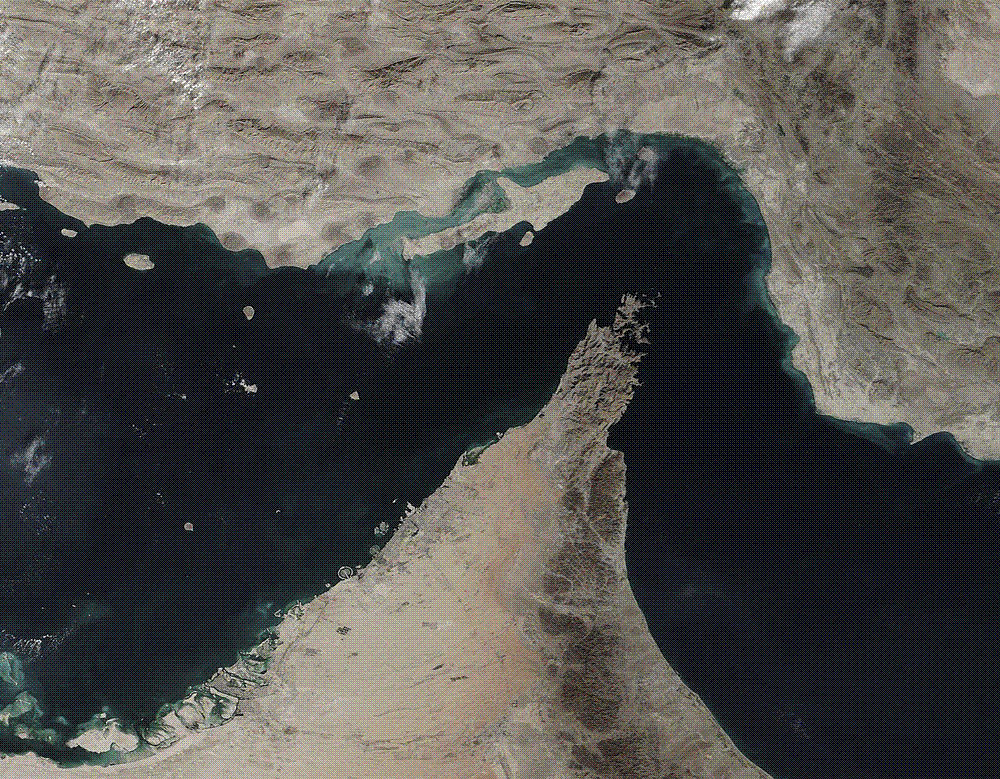
Satellite view of the Strait of Hormuz between the Musandam Peninsula and the Iranian coast, dark blue water between tan desert landmasses

NASA MODIS / Wikimedia Commons

PoliticsBBC · Reuters · ReutersAug 12, 2026

Talks to reopen the Strait of Hormuz stay 'in final stages' all week without closing

The week opened with oil markets waiting on a breakthrough and closed with them still waiting. Iran and Oman spent the days negotiating safe passage through the Strait of Hormuz, repeatedly describing the talks as in their 'final stages' — on the 7th, again on the 9th, again on the 12th — while the substance moved sideways. Iran tied any reopening to American concessions and warned Gulf states to press Washington; its Revolutionary Guard said reopening did not depend on the Oman track at all; the UAE accused Iran of striking an ADNOC vessel. The US hardened in parallel, with a helicopter strike disabling a ship attempting to run the blockade, and Tehran elevated hardliner Mohsen Rezaei to its top security post. Shipping sources called the proposed arrangements impractical; oil prices swung on each headline. A waterway that carries a fifth of the world's oil has become the negotiation itself — closed, priced daily, and always almost open.
Analogies

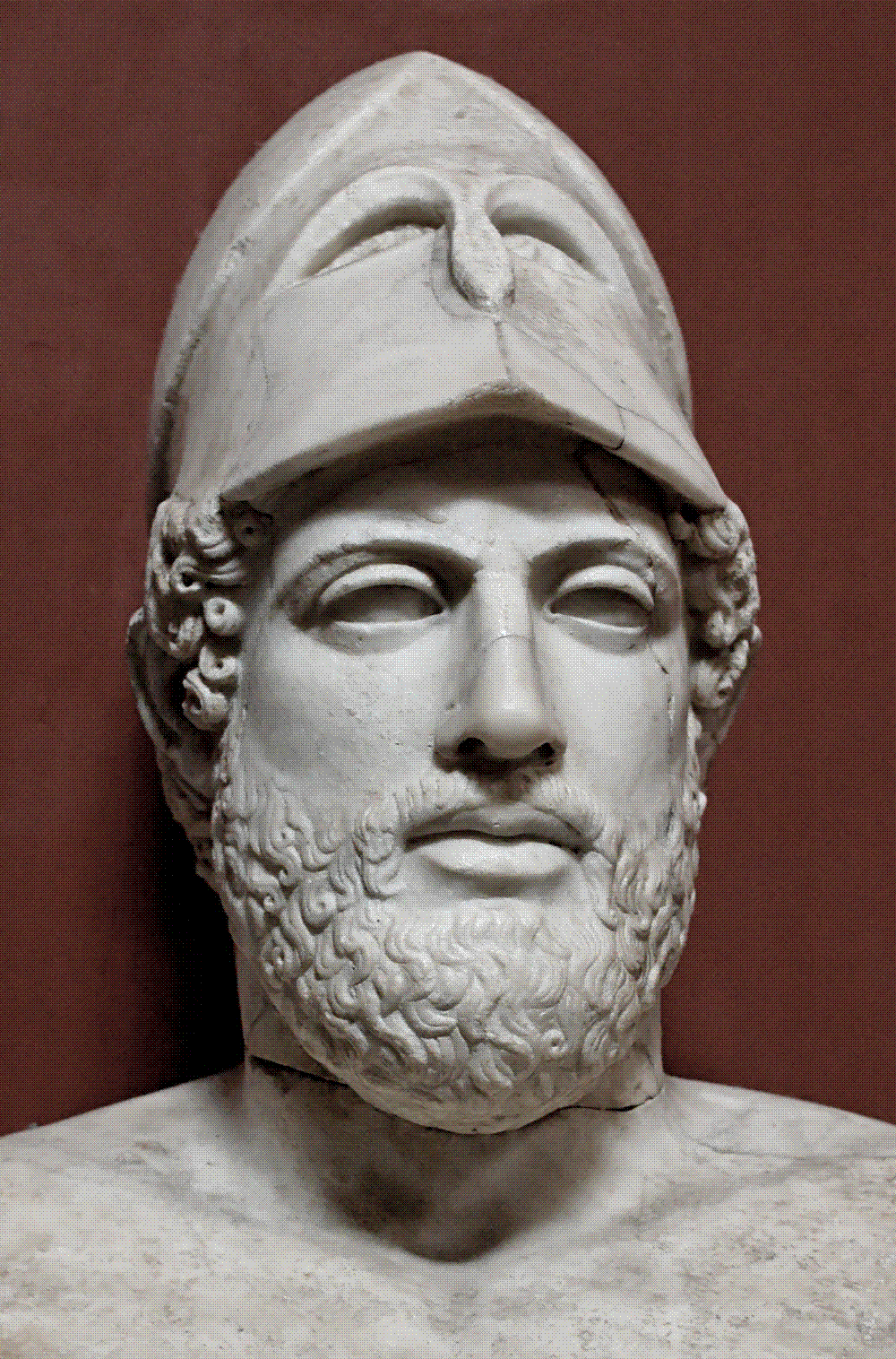
Marble bust of Pericles wearing a Corinthian helmet, Roman copy of a Greek original of c. 430 BC, Vatican Museums

The Megarian Decree: Strangling a Neighbor Before the War

There were many who came forward and made their several accusations; among them the Megarians, in a long list of grievances, called special attention to the fact of their exclusion from the ports of the Athenian empire and the market of Athens, in defiance of the treaty.
Thucydides, History of the Peloponnesian War, Book 1 (trans. Richard Crawley)

The Berlin Decree: A Blockade Signed at a Desk

We have consequently decreed and do decree that which follows: 1. The British Isles are declared to be in a state of blockade. 2. All commerce and all correspondence with the British Isles are forbidden. Consequently letters or packages directed to England or to an Englishman or written in the English language shall not pass through the mails and shall be seized.
Napoleon Bonaparte, Berlin Decree, 21 November 1806 (Wikisource)

Argosies Not in One Bottom Trusted

Believe me, no. I thank my fortune for it, My ventures are not in one bottom trusted, Nor to one place; nor is my whole estate Upon the fortune of this present year. Therefore my merchandise makes me not sad.
William Shakespeare, The Merchant of Venice, Act I, Scene 1 (Project Gutenberg)
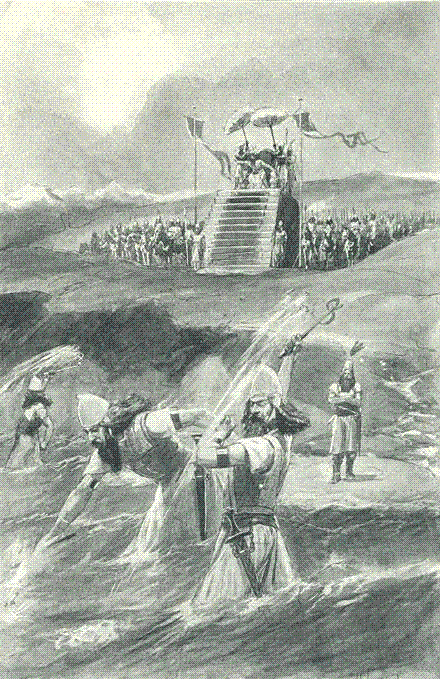
1909 illustration depicting Xerxes ordering the Hellespont scourged with three hundred lashes after a storm destroyed his bridges

Xerxes Lashes the Hellespont

So when Xerxes heard of it he was full of wrath, and straightway gave orders that the Hellespont should receive three hundred lashes, and that a pair of fetters should be cast into it. Nay, I have even heard it said that he bade the branders take their irons and therewith brand the Hellespont. It is certain that he commanded those who scourged the waters to utter, as they lashed them, these barbarian and wicked words: "Thou bitter water, thy lord lays on thee this punishment because thou hast wronged him without a cause, having suffered no evil at his hands. Verily King Xerxes will cross thee, whether thou wilt or no. Well dost thou deserve that no man should honour thee with sacrifice; for thou art of a truth a treacherous and unsavoury river."
Herodotus, Histories, Book 7, chapter 35 (trans. George Rawlinson)
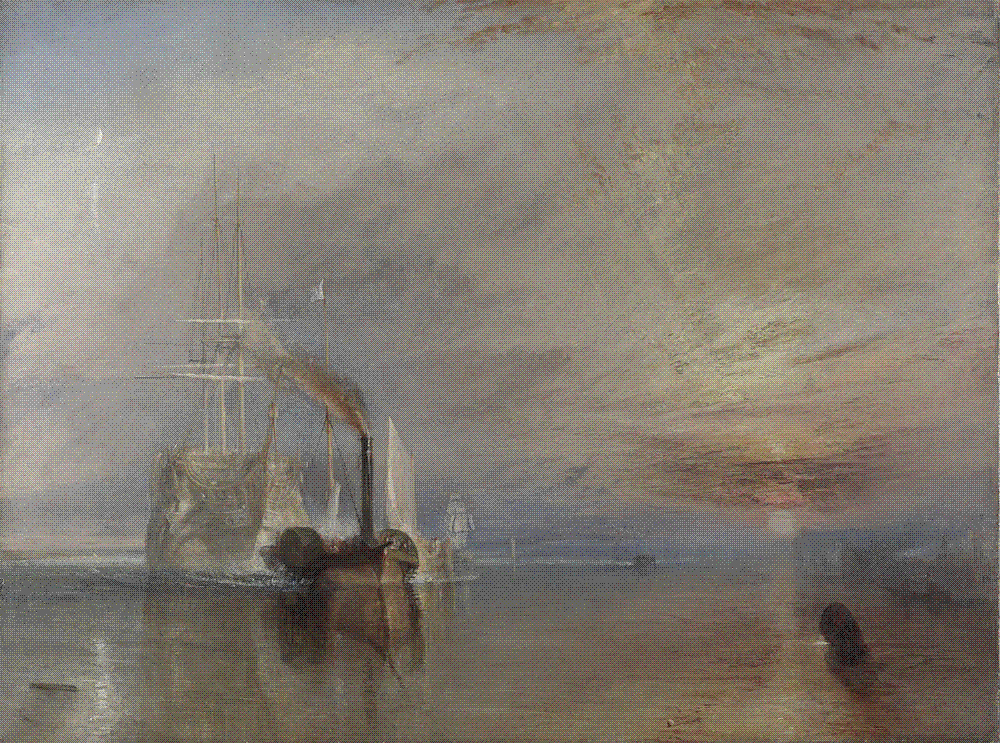
Turner's painting of the pale warship Temeraire towed up the Thames by a dark steam tug beneath a blazing sunset

The Fighting Temeraire

A ghost-pale ship of the line, veteran of Trafalgar, is hauled up the Thames by a squat black steam tug, its funnel spitting fire while the sun goes down in molten gold behind them. Turner painted the moment command of the sea-lanes changed hands: the vessel that once guaranteed Britain's trade routes is now inert cargo, towed to the breakers by the engine that replaced her. Whoever owns the new source of power writes the terms of passage for everyone else.
J. M. W. Turner, The Fighting Temeraire tugged to her last Berth to be broken up, 1839, National Gallery, London (NG524)

La Mer: Dialogue of the Wind and the Sea

Debussy's three symphonic sketches treat the sea as a power that negotiates rather than resolves: swells gather toward a climax, then withdraw it, leaving the listener suspended on the next headline of sound. The finale, Dialogue du vent et de la mer, stages an argument between wind and water in which each side answers, feints, and escalates without ever concluding—a parley that is itself the storm. It is music of a market held hostage: every lull is provisional, and the terms are always about to change.
Claude Debussy, La mer, CD 111 (1903–05, rev. 1908), IMSLP