AI-generated
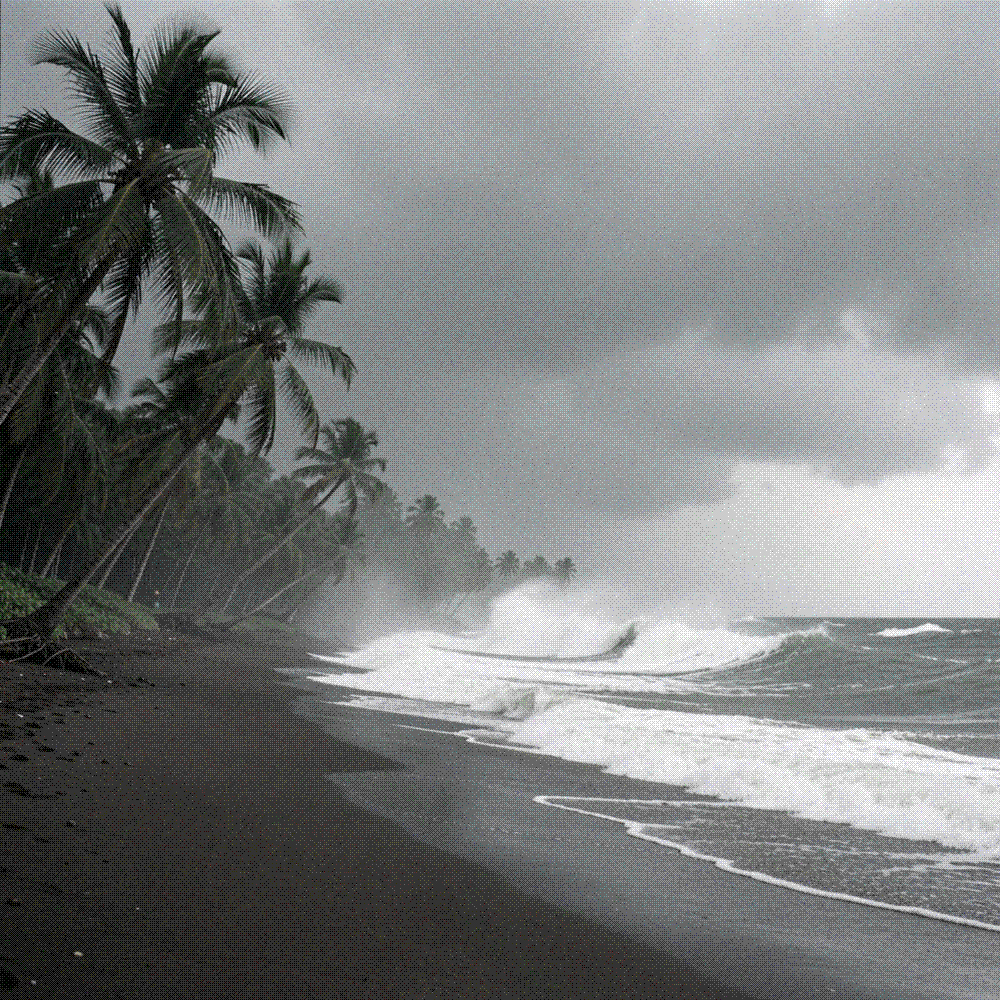
Hurricane Polo becomes one of the strongest storms ever recorded off Mexico's Pacific coast Polo intensified with the speed that now characterises these storms. By Wednesday forecasters were describing it as among the most powerful ever recorded off Mexico's Pacific coast, issuing warnings for the coastal communities of the southwest as the system churned offshore. Meteorologists attributed the rapid intensification to the record El Niño confirmed earlier in the month, which has warmed the eastern Pacific to a state that turns ordinary tropical systems into major hurricanes within a day or two. Landslide warnings followed for the mountainous stretches behind the coast, while a second storm, Nolo, tracked towards Hawaii. By Friday Polo was dragging heavy rain across the Mexican coast rather than making a direct landfall, and forecasters were pointing out the more uncomfortable fact underneath the week's warnings: the Pacific hurricane season has already been unusually intense, and it still has months to run. Analogies Defoe assembles eyewitness accounts of the Great Storm of 1703, the first catastrophe reported as data being resolv'd to use so much Caution in this Relation as to transmit nothing to Posterity without authentick Vouchers, and such Testimony as no reasonable Man will dispute
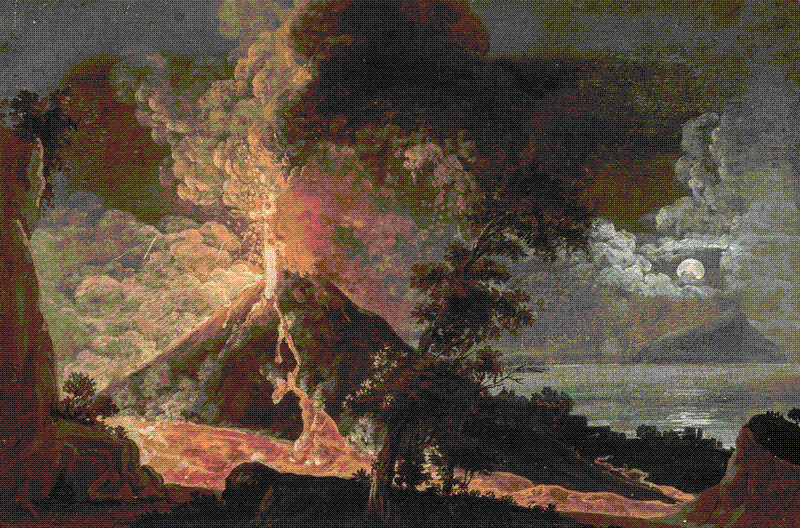
Daniel Defoe, The Storm: or, a Collection of the most Remarkable Casualties and Disasters which happen'd in the Late Dreadful Tempest, both by Sea and Land (London, 1704); Project Gutenberg ebook 42234. → Pliny the Younger, writing to Tacitus, reaches for the only shape he can find to describe what he saw A cloud, from which mountain was uncertain, at this distance (but it was found afterwards to come from Mount Vesuvius), was ascending, the appearance of which I cannot give you a more exact description of than by likening it to that of a pine tree
Pliny the Younger, Letters, book VI, letter 16, to Tacitus, on the eruption of Vesuvius in AD 79, trans. William Melmoth, rev. F. C. T. Bosanquet; Project Gutenberg ebook 2811. → Conrad's Captain MacWhirr meets a storm his instruments can measure and his imagination cannot He had never been given a glimpse of immeasurable strength and of immoderate wrath, the wrath that passes exhausted but never appeased
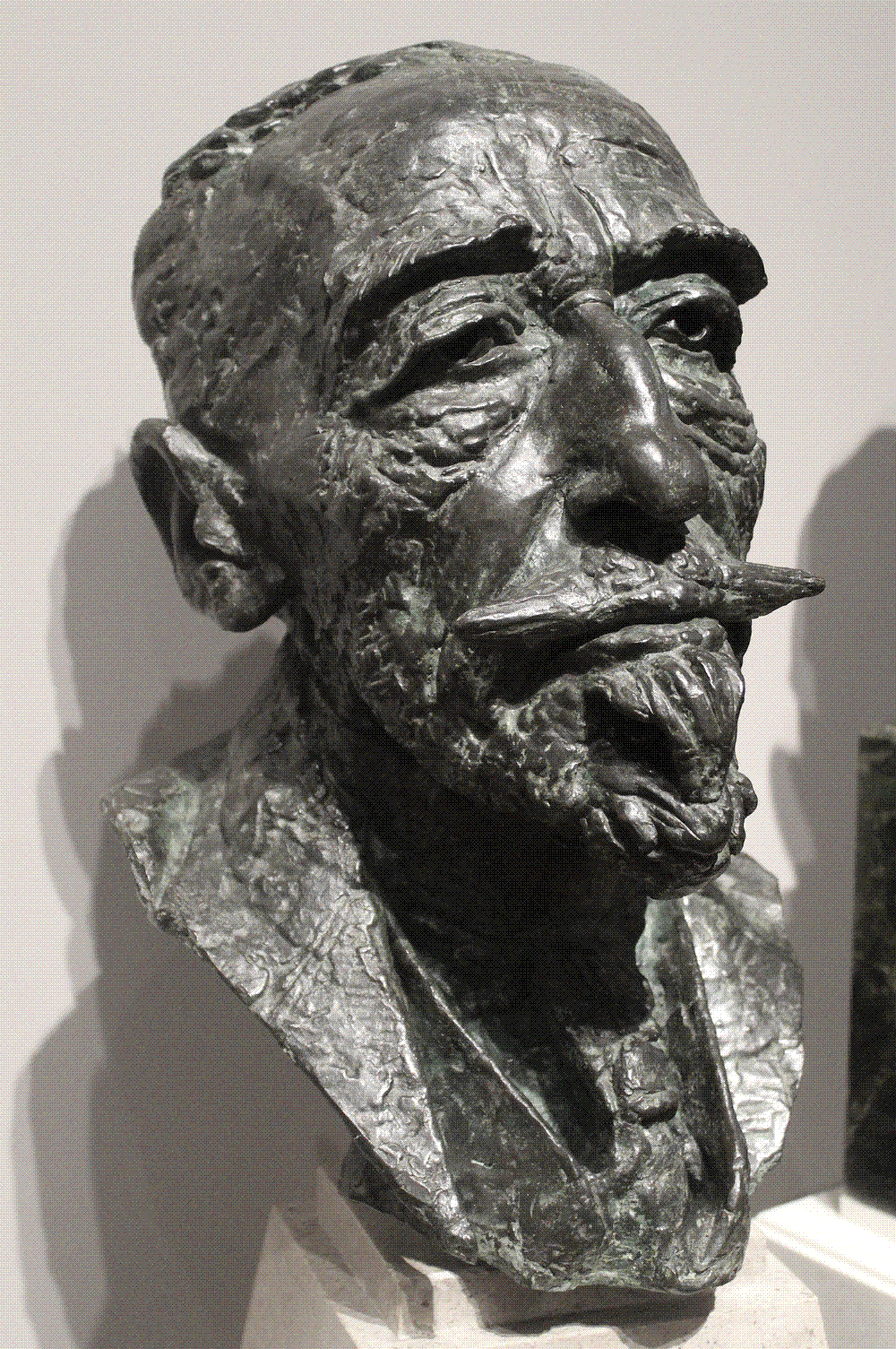
Joseph Conrad, Typhoon, ch. II (New York: G. P. Putnam's Sons, 1902); Project Gutenberg ebook 1142. → Miranda watches the shipwreck from the shore, and the play begins with pity rather than magic O, I have suffer'd / With those that I saw suffer! a brave vessel, / Who had, no doubt, some noble creature in her, / Dash'd all to pieces.
William Shakespeare, The Tempest, Act I, scene 1 (first printed in the First Folio, 1623); Project Gutenberg ebook 23042. → Hokusai's 'Great Wave' (c. 1831) is a picture of a coastline's relationship with the sea, not of a single storm Three fast boats carrying fish to Edo are caught under a wave whose crest has broken into claws. Fuji sits small and still at the centre of the composition, so that the mountain — the fixed thing, the sacred thing — is dwarfed by a wave that will have vanished in a second. Hokusai printed it in his seventies, from an economy that sent boats out into that water every day because there was no alternative, and the men in the boats are bent flat along the hulls, riding it.
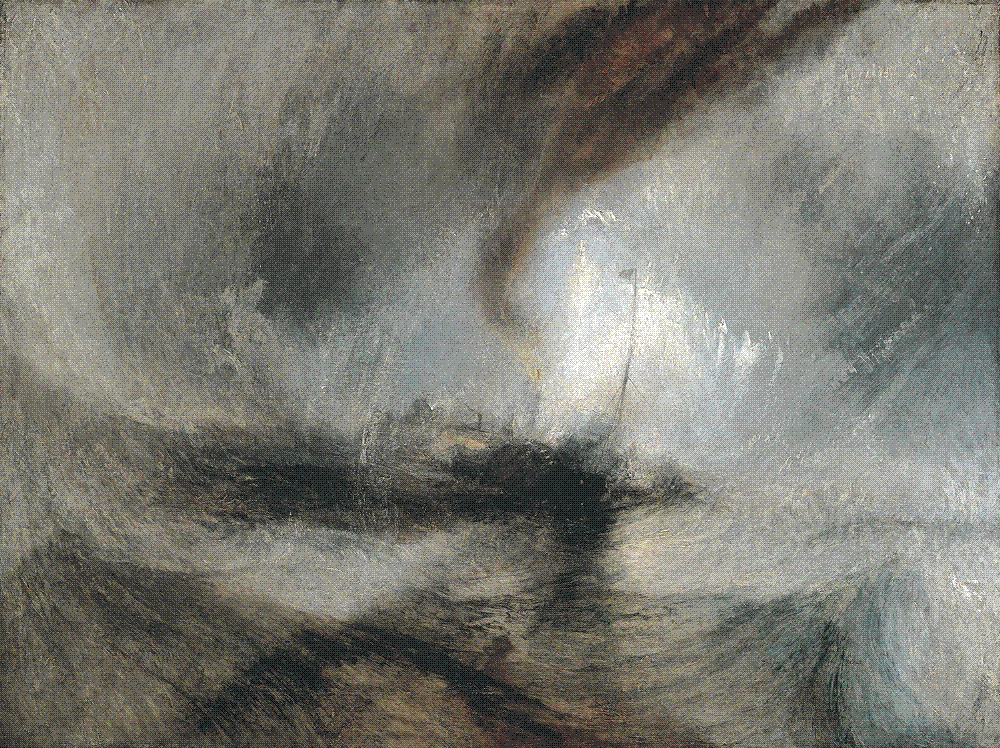
Katsushika Hokusai, Kanagawa-oki nami-ura (Under the Wave off Kanagawa), from Thirty-six Views of Mount Fuji, colour woodblock print, c. 1831. → Turner's 'Snow Storm' (1842) claims to be painted from inside the weather Turner exhibited the picture with a title that reads like a log entry and a claim that he had been lashed to the mast of a steamer for four hours to see it. The paint is a vortex: no horizon, no separation of sea and sky, a smear of steam and snow with the vessel's mast and paddle box barely legible at the centre. Critics complained it was 'soapsuds and whitewash'. It is the first picture in which the weather is not the setting of the subject but the subject itself.
J. M. W. Turner, Snow Storm — Steam-Boat off a Harbour's Mouth making Signals in Shallow Water, and going by the Lead, exhibited 1842, oil on canvas; Tate, London, N00530. →