BBC
India's Gen Z 'Cockroach' movement says it will not contest elections after its protests forced out the education minister The Cockroach Janta Party grew out of street protests over repeated entrance-exam paper leaks and a shortage of jobs, among the largest youth demonstrations India has seen in years, and helped force Dharmendra Pradhan's resignation as education minister last month. Its organisers say they will stay outside electoral politics rather than become a conventional party. Prime Minister Narendra Modi has announced fast-track courts for those accused in the leaks and appointed the technology billionaire Nandan Nilekani to lead an examination-reform effort. Analogies In January 532 the Nika insurrection in Constantinople forced the Emperor Justinian to dismiss two hated ministers, and the regime survived anyway Now as long as the people were waging this war with each other in behalf of the names of the colours, no attention was paid to the offences of these men against the constitution; but when the factions came to a mutual understanding, as has been said, and so began the sedition, then openly throughout the whole city they began to abuse the two and went about seeking them to kill. Accordingly the emperor, wishing to win the people to his side, instantly dismissed both these men from office. And Phocas, a patrician, he appointed praetorian prefect, a man of the greatest discretion and fitted by nature to be a guardian of justice; Basilides he commanded to fill the office of quaestor, a man known among the patricians for his agreeable qualities and a notable besides. However, the insurrection continued no less violently under them.
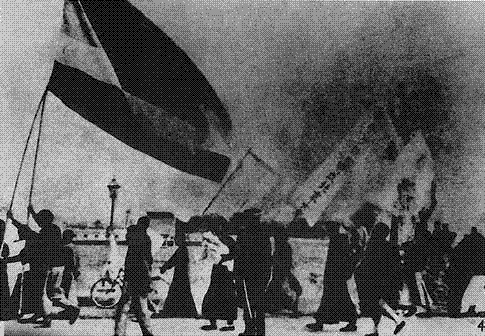
Procopius, History of the Wars, Book I, chapter xxiv (the Nika insurrection at Constantinople, January 532), with an English translation by H. B. Dewing, Loeb Classical Library (London: William Heinemann; Cambridge, Mass.: Harvard University Press; first printed 1914), Project Gutenberg ebook no. 16764. → In 1919 the May Fourth student movement in China brought down three ministers, and the strikes stopped the moment their resignations were confirmed The specific demands of the leaders of the Chinese national movement at the time were the dismissal of Tsao Ju-lin, Lu Cheng-yu, and Chang Chung-hsiang, the three officials who were directly instrumental in making the recent disadvantageous agreements with Japan. When the acceptance of the resignations of these men had been verified through telegrams from the British, French, and American Legations to their Consulates at Shanghai, the active movement there came to an end and the strike was called off both at Shanghai and elsewhere. The boycott of Japanese goods, however, continues.
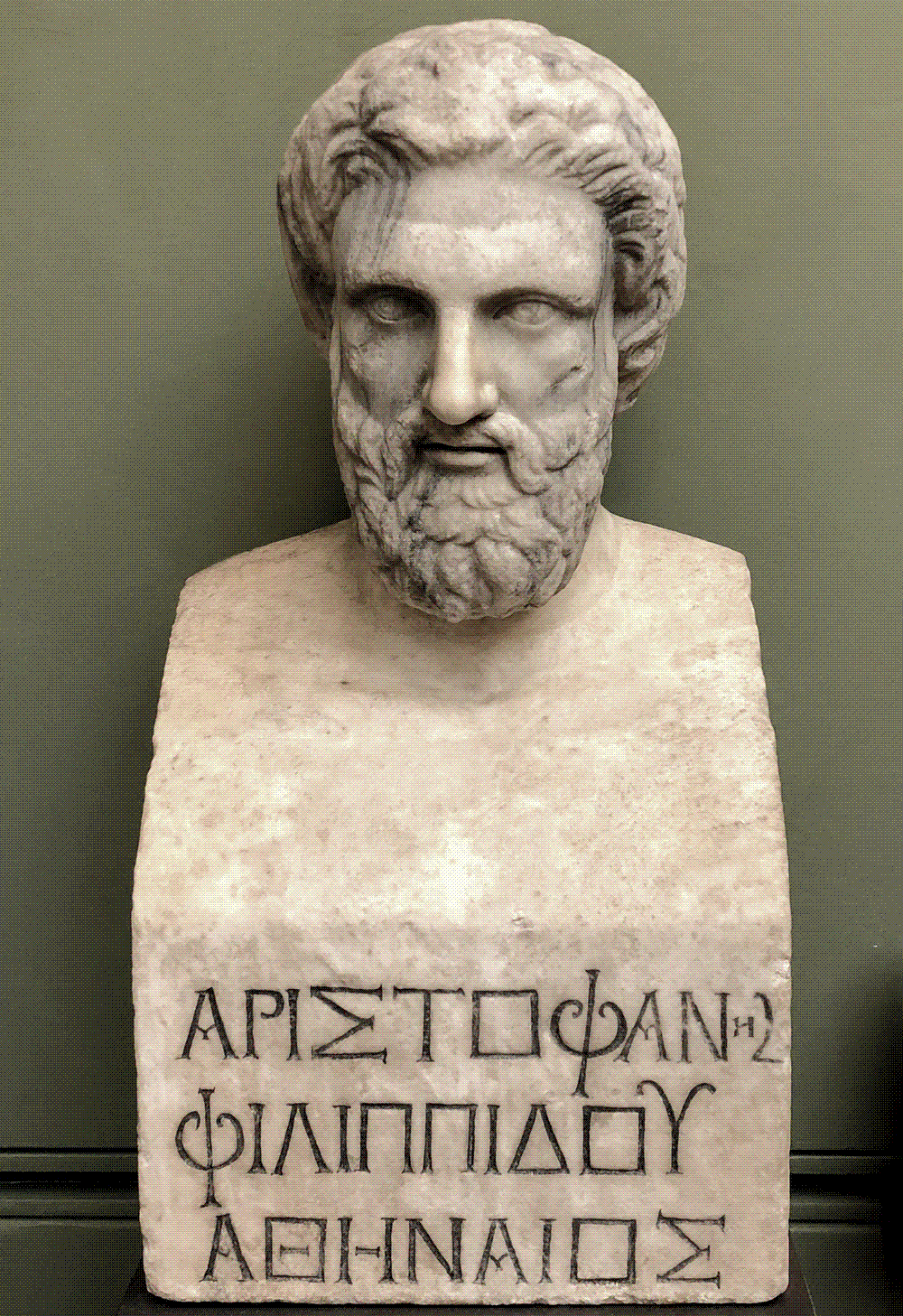
Paul S. Reinsch, American Minister in China, to the Acting Secretary of State, despatch no. 2837, Peking, 24 June 1919, in Papers Relating to the Foreign Relations of the United States, 1919, vol. I, document 710; U.S. Department of State, Office of the Historian. → Aristophanes' comedy The Wasps (422 BC) gives the chorus of old Athenian jurors the body of a stinging insect, which they wear as a badge of pride Should any among you spectators look upon me with wonder, because of this wasp waist, or not know the meaning of this sting, I will soon dispel his ignorance. We, who wear this appendage, are the true Attic men, who alone are noble and native to the soil, the bravest of all people. We are the ones who, weapon in hand, did so much for the country, when the barbarian shed torrents of fire and smoke over our city in his relentless desire to seize our nests by force.
Aristophanes, Wasps, lines 1071–1080 (parabasis of the chorus of jurors), in The Complete Greek Drama, vol. 2, translated by Eugene O'Neill, Jr. (New York: Random House, 1938); Perseus Digital Library, Tufts University. → Pu Songling's tale 'Smelling Essays', written in seventeenth-century China, ends with a blind priest telling a failed candidate that the examiners have no noses The Yü-hang scholar was much abashed at this, and went away; but in a few days the list came out and his name was among the successful ones, while Wang’s was not. He at once hurried off to tell the old priest, who, when he heard the news, sighed and said, “I may be blind with my eyes but I am not so with my nose, which I fear is the case with the examiners. Besides,” added he, “I was talking to you about composition: I said nothing about destiny.”
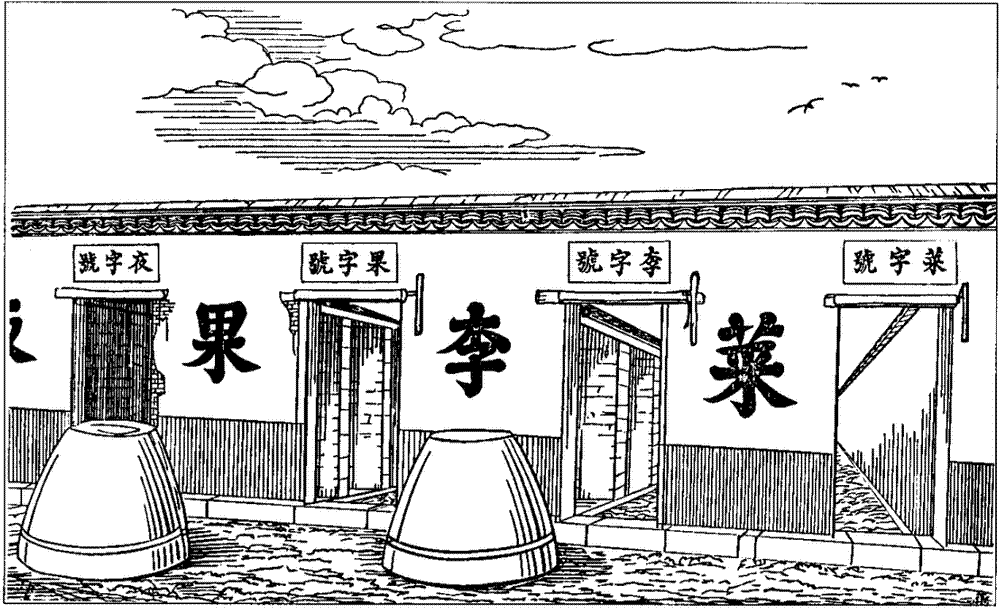
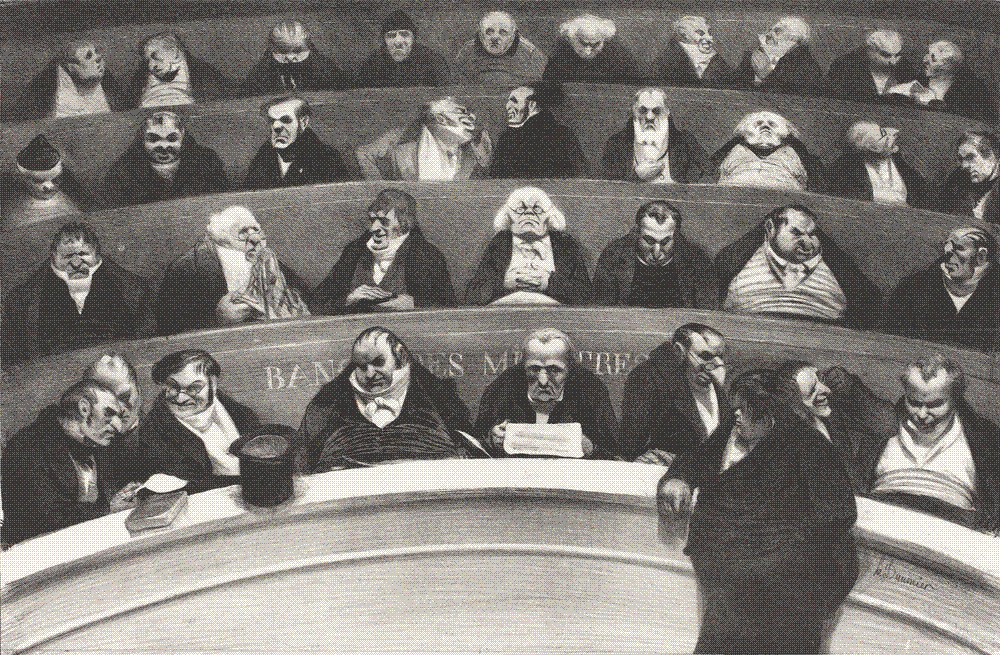
P‘u Sung-ling (Pu Songling), ‘Smelling Essays’ (司文郎), story XCII in Strange Stories from a Chinese Studio, translated and annotated by Herbert A. Giles, 2 vols. (London: Thos. de la Rue & Co., 1880), vol. II, p. 139; Project Gutenberg ebook no. 43629. → Honoré Daumier's lithograph 'Le ventre législatif' (1834) drew the ministerial benches of the French Chamber as tiers of bloated, dozing men Daumier ranges the deputies of Louis-Philippe's Chamber on curved tiers of benches like specimens in a case, each one individually recognisable and collectively interchangeable: paunches spilling over waistcoats, hands folded on stomachs, chins sunk into collars, several of them frankly asleep. The lighting is that of a courtroom or a dissecting theatre, and the caption calls it the aspect of the ministerial benches of the 'improstituted' chamber of 1834. It is an image made by a man who was jailed for insulting the king, and it argues, without a word of text, that the room itself is the problem — that entering it would not clean it.
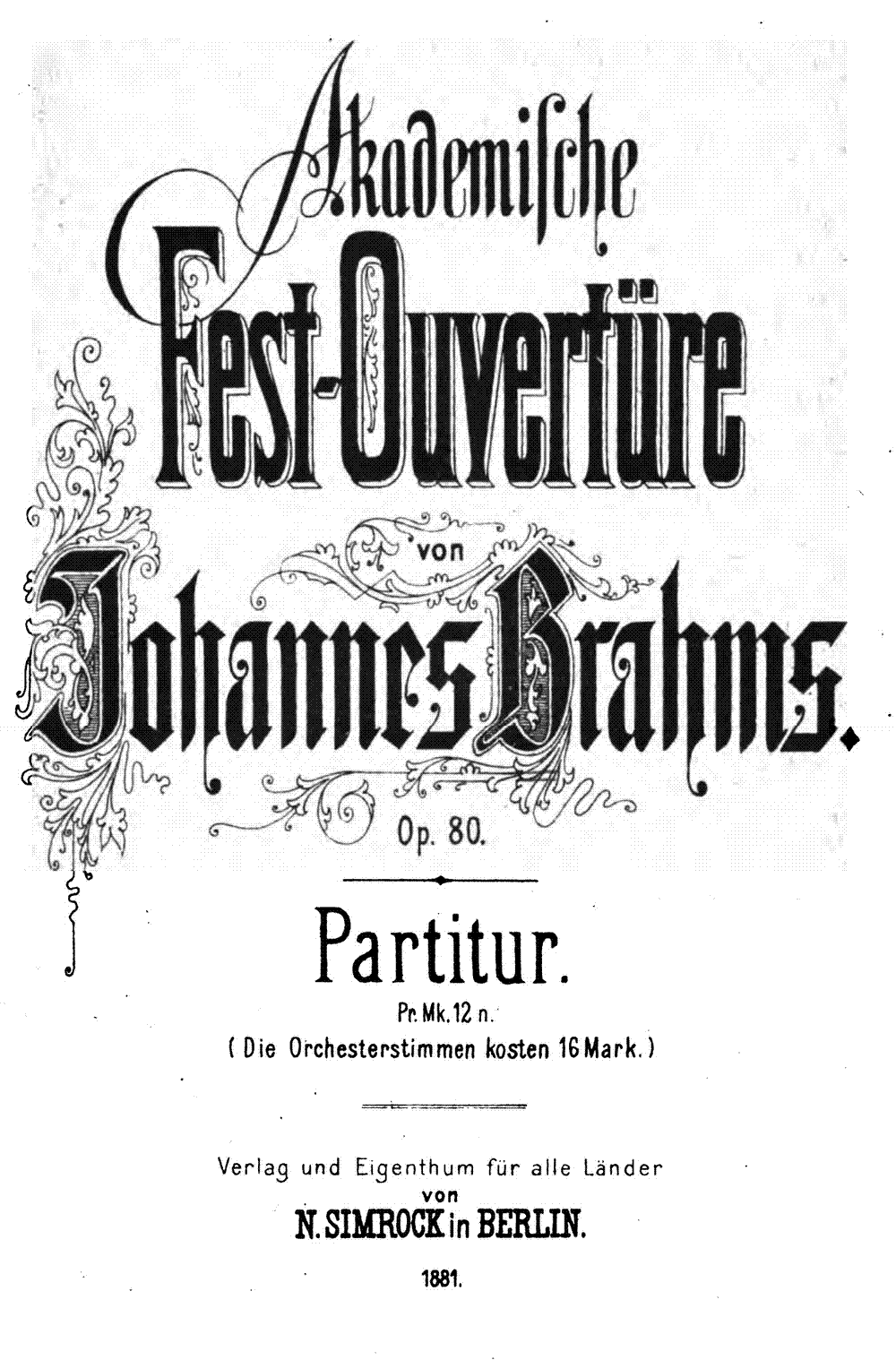
Honoré Daumier, The Legislative Belly (Le ventre législatif: Aspect des bancs ministériels de la chambre improstituée de 1834), lithograph, 1834, published as plate 18 of L'Association mensuelle pour la liberté de la presse, supplement to La Caricature; The Cleveland Museum of Art, Charles W. Harkness Endowment Fund, accession no. 1923.206. → Brahms's Academic Festival Overture, Op. 80 (1880), stitched the songs of Germany's outlawed student fraternities into a piece of university ceremony Brahms wrote the overture to thank the University of Breslau for an honorary doctorate, and paid it in the currency of student rowdiness: four beer-hall songs, orchestrated with trumpets and cymbals. The first to appear, at bar 64, is 'Wir hatten gebauet ein stattliches Haus', the anthem of the Burschenschaften — the nationalist student societies that were banned across the German states after the Carlsbad Decrees of 1819, so that a generation sang it as a lament for a house pulled down. By the closing bars the rebellion has become 'Gaudeamus igitur' in full academic dress, which is exactly the fate a movement forfeits nothing by refusing.
Johannes Brahms, Akademische Festouvertüre (Academic Festival Overture), Op. 80, composed 1880; first published Berlin: N. Simrock, 1881, plate 8187; full score and parts, International Music Score Library Project (IMSLP / Petrucci Music Library). →