BBC
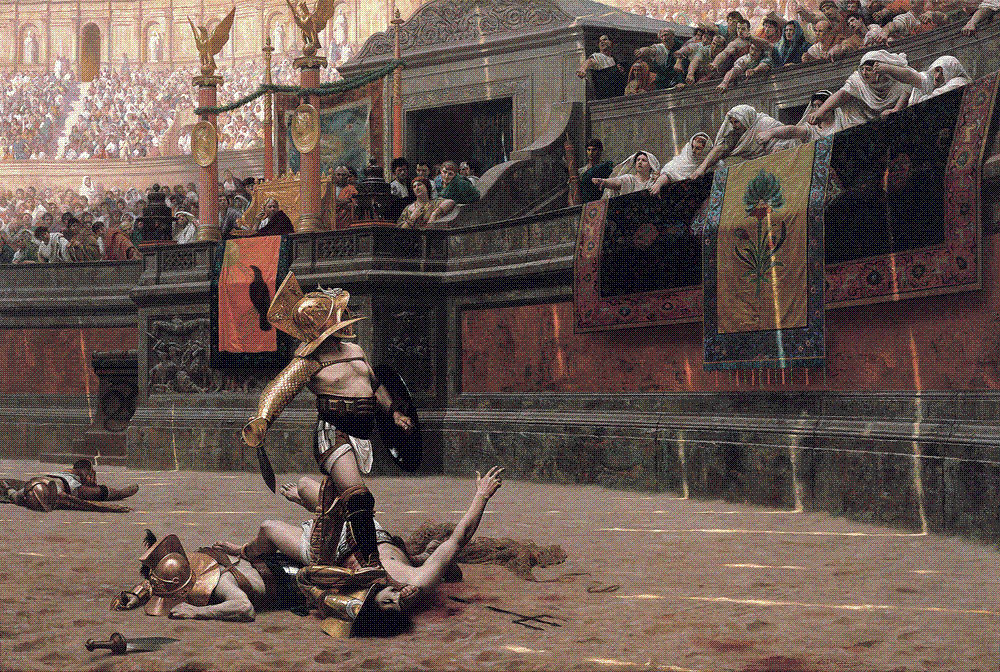
Ukraine calls a Russian drone attack on a Kherson vegetable seller a war crime after video shows the drone chasing him down the street Video released by Ukrainian officials shows a drone hovering over a street vendor in the Kherson region, following him as he runs around a white van, then swooping down and exploding on impact. The man survived with multiple shrapnel wounds, concussion and trauma, a doctor said. Ukrainian officials describe a pattern of what they call 'human safari' drone attacks on civilians in the region. Analogies Seneca describes the midday killings in the Roman arena, where unarmed men were butchered in the open for the entertainment of spectators, around AD 64 What is the need of defensive armour, or of skill? All these mean delaying death. In the morning they throw men to the lions and the bears; at noon, they throw them to the spectators. The spectators demand that the slayer shall face the man who is to slay him in his turn; and they always reserve the latest conqueror for another butchering. The outcome of every fight is death, and the means are fire and sword.
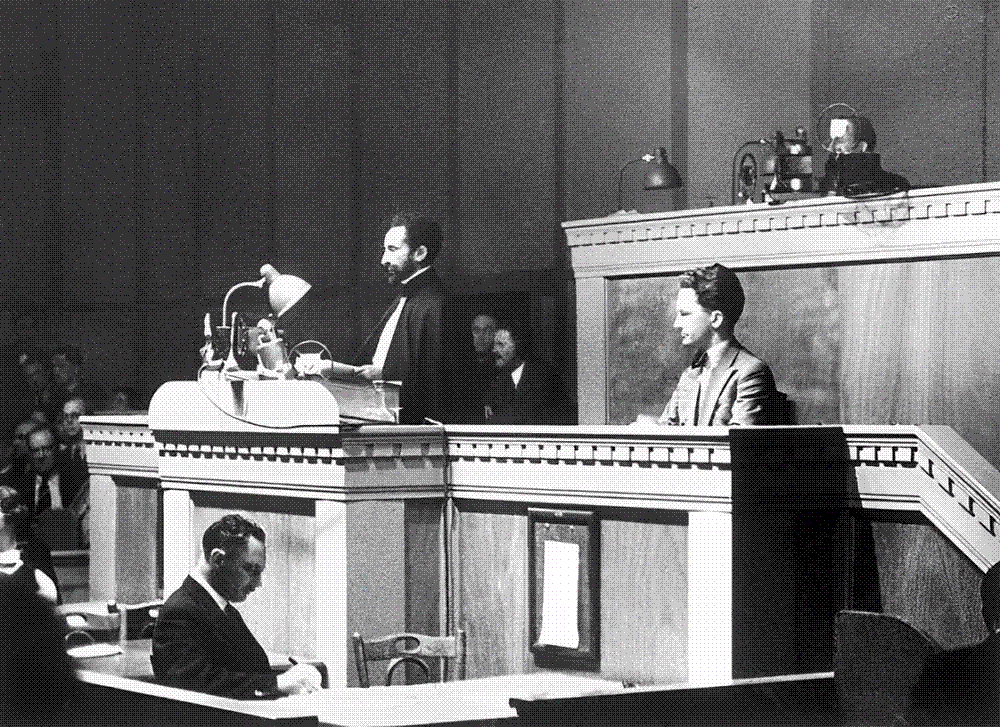
Seneca, Epistulae Morales ad Lucilium, Letter 7 ("On Crowds"), sections 3-5, translated by Richard Mott Gummere, Loeb Classical Library, Ad Lucilium Epistulae Morales, vol. 1 (London: Heinemann; New York: Putnam, 1917); transcribed at Wikisource. → Emperor Haile Selassie tells the League of Nations on 30 June 1936 how Italian aircraft sprayed poison gas repeatedly over Ethiopian civilians in the open Special sprayers were installed on board aircraft so that they could vaporize, over vast areas of territory, a fine, death-dealing rain. Groups of nine, fifteen, eighteen aircraft followed one another so that the fog issuing from them formed a continuous sheet. It was thus that, as from the end of January, 1936, soldiers, women, children, cattle, rivers, lakes and pastures were drenched continually with this deadly rain. In order to kill off systematically all living creatures, in order to more surely to poison waters and pastures, the Italian command made its aircraft pass over and over again. That was its chief method of warfare.
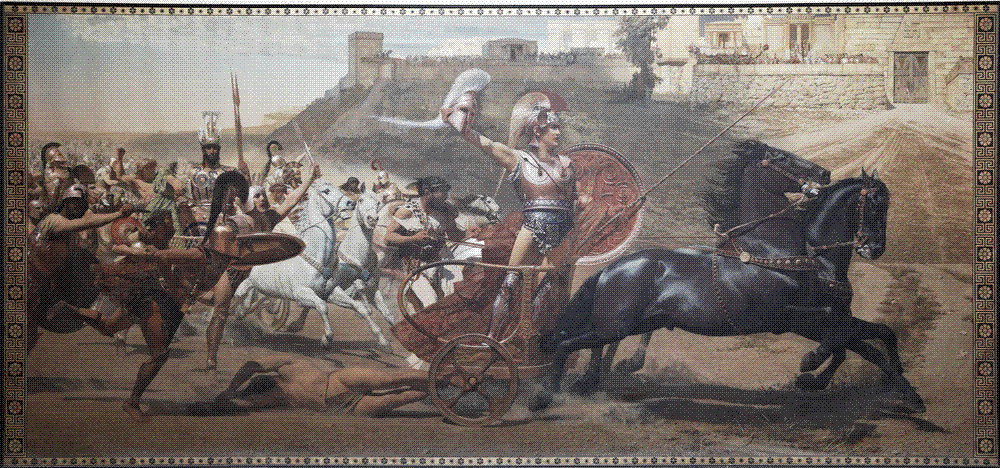
Haile Selassie I, "Appeal to The League of Nations," address to the Assembly of the League of Nations, Geneva, 30 June 1936, opening section and section "Ravage and Terror"; Haile Selassie I Press translation, transcribed at Wikisource. → Homer's Iliad, Book 22: Achilles hunts the fleeing Hector beneath the walls of Troy like a falcon stooping on a dove But trembling gat hold of Hector when he was ware of him, neither dared he any more abide where he was, but left the gates behind him, and fled in fear; and the son of Peleus rushed after him, trusting in his fleetness of foot. As a falcon in the mountains, swiftest of winged things, swoopeth lightly after a trembling dove: she fleeth before him, and he hard at hand darteth ever at her with shrill cries, and his heart biddeth him seize her; even so Achilles in his fury sped straight on, and Hector fled beneath the wall of the Trojans, and plied his limbs swiftly.
Homer, Iliad 22.136-144, translated by A. T. Murray, Loeb Classical Library, The Iliad with an English Translation in two volumes (Cambridge, MA: Harvard University Press; London: Heinemann, 1924); Perseus Digital Library, Tufts University. → Richard Connell's 1924 story "The Most Dangerous Game," in which General Zaroff explains why he has taken to hunting human beings for sport “I wanted the ideal animal to hunt,” explained the general. “So I said, ‘What are the attributes of an ideal quarry?’ And the answer was, of course, ‘It must have courage, cunning, and, above all, it must be able to reason.’” “But no animal can reason,” objected Rainsford. “My dear fellow,” said the general, “there is one that can.” “But you can’t mean——” gasped Rainsford.
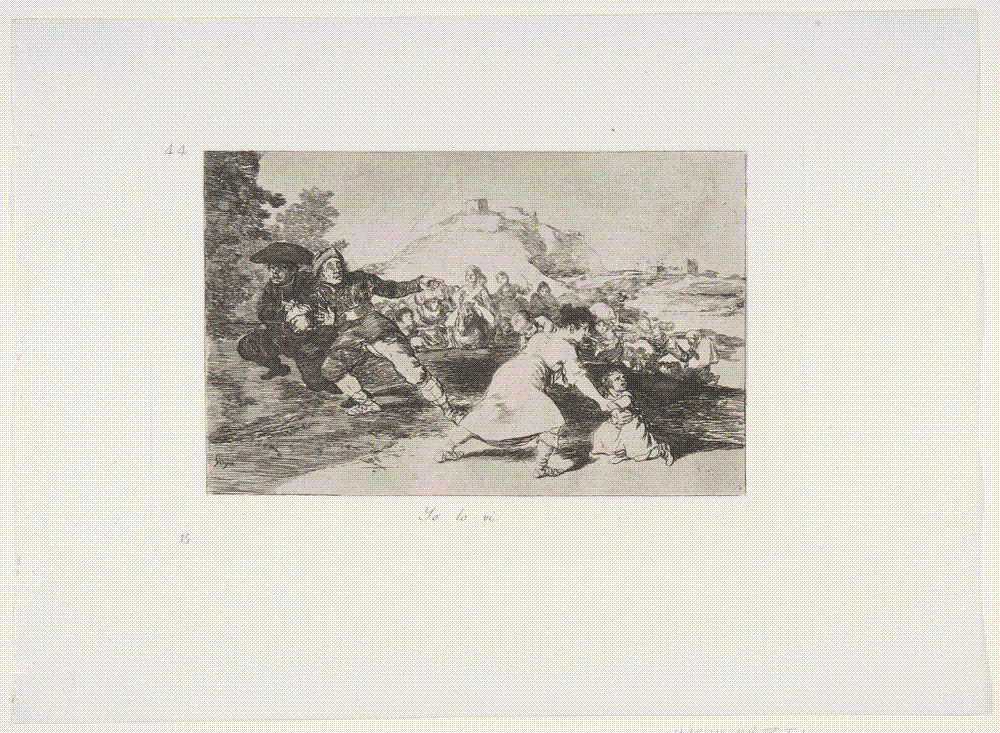
Richard Connell, "The Most Dangerous Game," first published in Collier's, 19 January 1924; reprinted in O. Henry Memorial Award Prize Stories of 1924, edited by Blanche Colton Williams (Garden City, NY: Doubleday, Page & Co., 1925); transcribed at Wikisource. → Goya's etching "Yo lo vi" (I saw it), Plate 44 of The Disasters of War, about 1810 Goya's plate shows villagers streaming across bare open ground away from something the viewer never sees: a woman drags a child by the wrist, another child crawls on all fours, a friar clutches his bundle and runs. In the foreground one man twists back and points behind him with an outstretched arm, the gesture of a witness identifying what is coming. The title Goya scratched beneath the image, "Yo lo vi" - I saw it - makes the print an act of testimony rather than a composition, the nineteenth-century equivalent of releasing the footage.
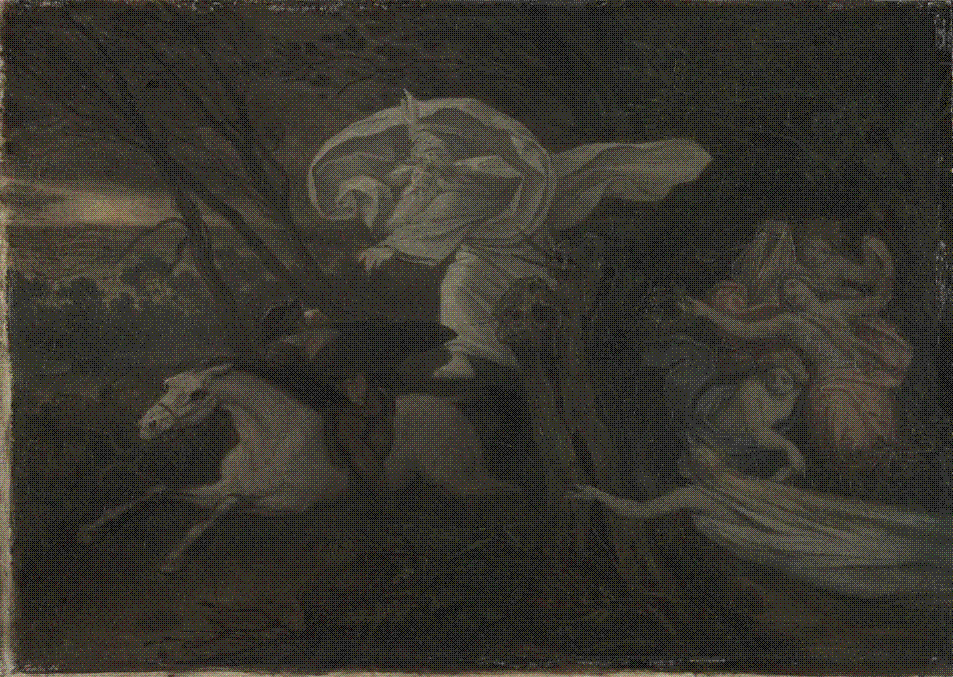
Francisco de Goya y Lucientes, Plate 44 from Los Desastres de la Guerra (The Disasters of War): "Yo lo vi" (I saw it), etching, drypoint and burin, c. 1810, published posthumously 1863; The Metropolitan Museum of Art, New York, accession no. 51.530.2(44), Gift of Mrs. Grafton H. Pyne, 1951. → Schubert's song Erlkonig, D.328 (1815), in which a pursuing figure overtakes a fleeing child Schubert sets Goethe's ballad over a piano part of hammered triplet octaves that never lets up, the sound of a horse ridden flat out and of a heart that cannot slow down. Above it a single singer must play all four voices at once: the narrator, the frightened child whose cries climb higher by a step with each appearance, the father who insists there is nothing there, and the Erlking, who addresses the child in soft, sweetly harmonised phrases while closing in. When the galloping finally stops the music drops to bare recitative for the last line, and the pursuit is revealed to have ended in a death that the father, carrying the boy, only discovers on arrival.
Franz Schubert, Erlkonig, D.328 (Op.1), Lied for voice and piano on the ballad by Johann Wolfgang von Goethe, composed 1815, first published Vienna: Cappi & Diabelli, 1821; scores and manuscript facsimiles at the International Music Score Library Project (Petrucci Music Library). →