BBC
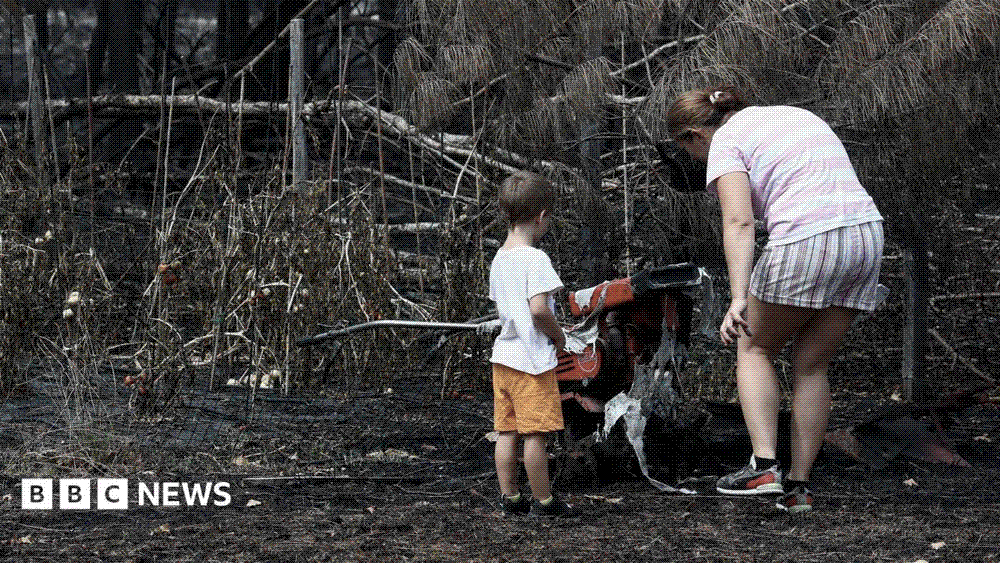
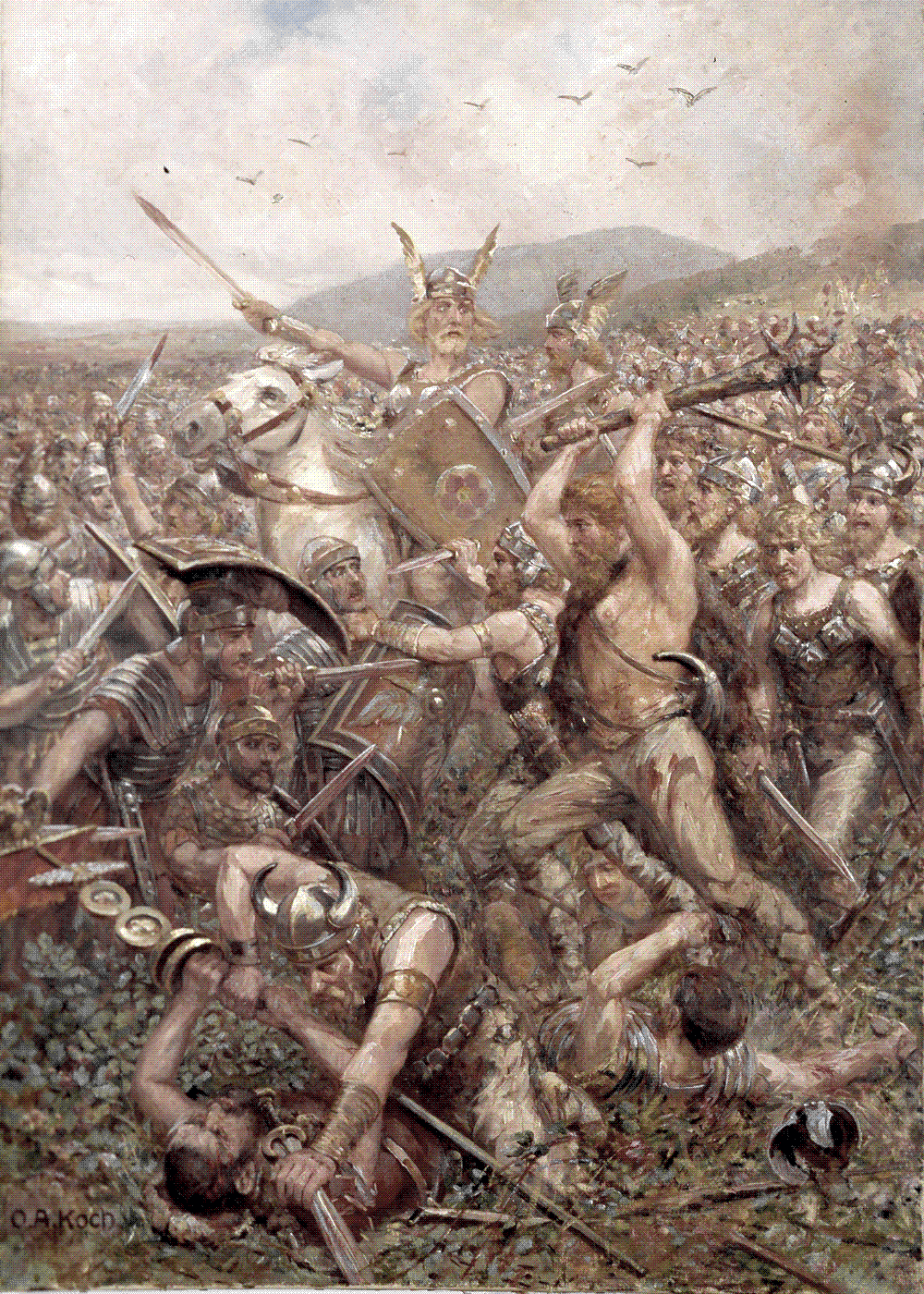
Wildfires in Gironde uncover a cache of about 400 buried World War Two shells in the French village of Le Porge More than 100 explosions heard on the second night of the fire, first taken for gas cylinders, are now believed to have been German and French mortar and anti-tank shells set off by the heat. "There were ammunition depots buried in land within our municipality, but we didn't know it, and they exploded," Mayor Martial Zaninetti said, likening the noise to "the sound of war". More than 180 houses in the village burned; demining has allowed most residents home, though some areas remain sealed off. Analogies Germanicus walks the Teutoburg Forest, AD 15: a battlefield six years buried gives up its bones and broken weapons In the centre of the field were the whitening bones of men, as they had fled, or stood their ground, strewn everywhere or piled in heaps. Near, lay fragments of weapons and limbs of horses, and also human heads, prominently nailed to trunks of trees. In the adjacent groves were the barbarous altars, on which they had immolated tribunes and first-rank centurions.
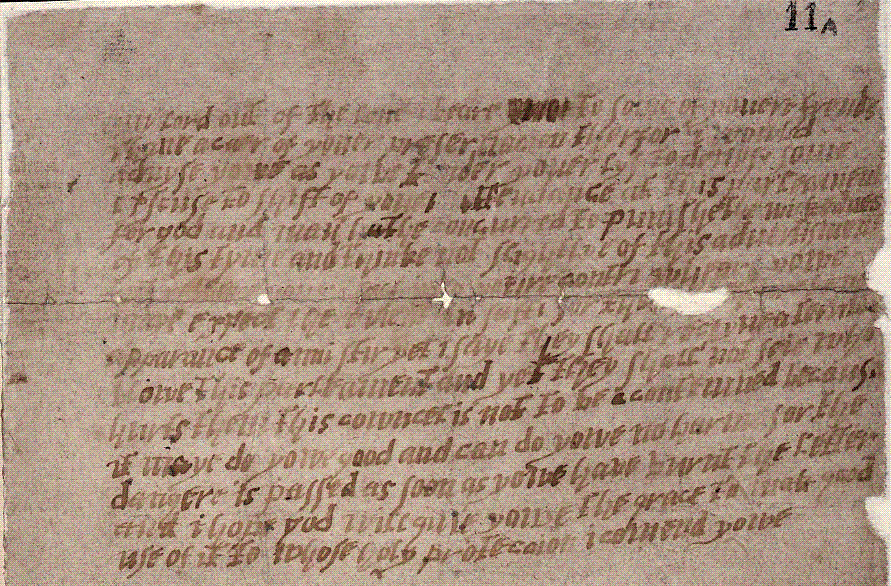
Tacitus, The Annals, Book 1, chapter 61 (written c. AD 116), translated by Alfred John Church and William Jackson Brodribb, in Complete Works of Tacitus (New York: Random House, reprinted 1942); hosted by the Perseus Digital Library, Tufts University. → An anonymous letter, October 1605: England learns that its Parliament has been sitting above a hidden magazine of powder My lord, out of the love I beare to some of youere frends, I have a care of youre preservacion, therefore I would aduyse you as you tender your life to devise some excuse to shift youer attendance at this parliament, for God and man hath concurred to punishe the wickedness of this tyme, and thinke not slightly of this advertisement, but retire yourself into your country, where you may expect the event in safety, for though there be no apparance of anni stir, yet I saye they shall receive a terrible blow this parliament and yet they shall not seie who hurts them
Anonymous letter delivered to William Parker, 4th Baron Monteagle, 26 October 1605 (the “Monteagle Letter”), original held by The National Archives, Kew, State Papers SP 14/216; transcription hosted at Wikisource. → Virgil foresees the ploughman of Philippi turning up rusted weapons in a field long since at peace Then, after length of Time, the lab'ring Swains, / Who turn the Turfs of those unhappy Plains, / Shall rusty Piles from the plough'd Furrows take, / And over empty Helmets pass the Rake. / Amaz'd at Antick Titles on the Stones, / And mighty Relicks of Gygantick Bones.
Virgil, Georgics, Book I, lines 493–497 (29 BC), translated by John Dryden, from Virgil's Pastorals, Georgics and Aeneis (London, 1709), volume 1; transcribed at Wikisource. The Latin (“exesa inveniet scabra robigine pila / aut gravibus rastris galeas pulsabit inanis”) is at Perseus, P. Vergilius Maro, Georgicon, ed. J. B. Greenough, book 1, card 466. → Thomas Hardy's dead, woken in their coffins by gunnery out at sea, mistake the noise of war for the Judgment Day That night your great guns, unawares, / Shook all our coffins as we lay, / And broke the chancel window-squares, / We thought it was the Judgment-day // And sat upright. While drearisome / Arose the howl of wakened hounds: / The mouse let fall the altar-crumb, / The worms drew back into the mounds, / … / Again the guns disturbed the hour, / Roaring their readiness to avenge, / As far inland as Stourton Tower, / And Camelot, and starlit Stonehenge.
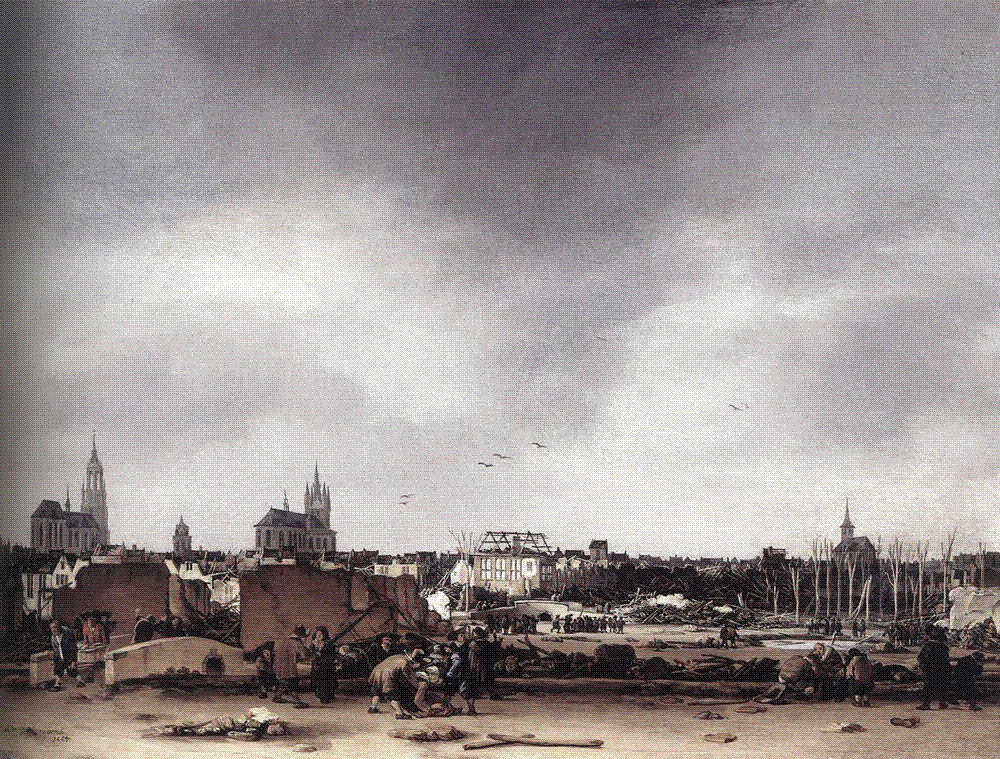
Thomas Hardy, “Channel Firing” (written April 1914; published in Satires of Circumstance, Lyrics and Reveries, London: Macmillan, 1914); full text at Wikisource. → Egbert van der Poel paints the morning after the Delft Thunderclap, when the town's own powder store went up beneath it On 12 October 1654 the gunpowder store the city of Delft kept for its own defence detonated, and van der Poel — a painter of the town, thought to have lost a daughter that day — went back to the scene again and again, leaving more than twenty versions of it. Here the foreground is a field of shattered beams and rubble under a smoke-yellowed sky, with small figures picking through it and a flooded hollow where the magazine had stood. On the horizon the Nieuwe Kerk, the town hall and the Oude Kerk still stand, their roofs stripped of tiles by the blast; the painter signed the panel with the date of the explosion itself.
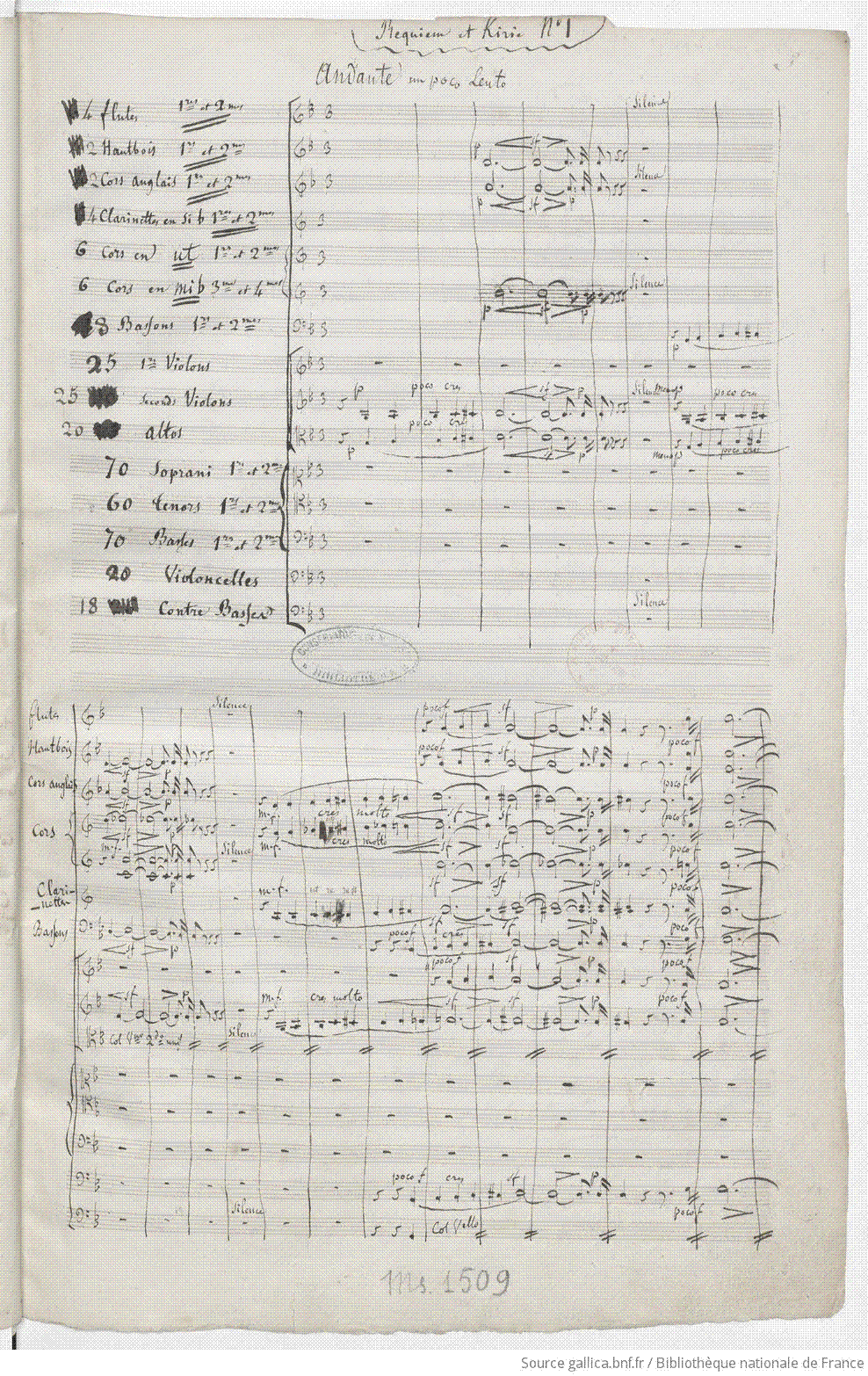
Egbert van der Poel, A View of Delft after the Explosion of 1654, oil on wood, 36.2 × 49.5 cm, inscribed with the date 12 Octob 1654; The National Gallery, London, NG1061 (Room 25). → Berlioz's Requiem, written for France's war dead, sets four brass choirs at the compass points to sound through the tombs Tuba mirum spargens sonum / Per sepulchra regionum, / Coget omnes ante thronum. — “The last loud trumpet's wond'rous sound / Shall through the rending tombs rebound, / And wake the nations under ground.”
Hector Berlioz, Grande messe des morts (Requiem), H 75 / Op. 5, composed March–29 June 1837 on a French government commission commemorating the dead of the July Revolution and the soldiers killed at Constantine; No. 2, “Dies iræ. Prose – Tuba mirum,” for tenor, chorus, orchestra and four antiphonal brass choirs placed north, east, west and south; first performed at Les Invalides, Paris, 5 December 1837 under Habeneck. Holograph manuscript (1837, Bibliothèque nationale de France) and printed scores at IMSLP / Petrucci Music Library. The Latin sequence and John Dryden's English rendering quoted here are as printed in The Catholic Prayer Book and Manual of Meditations (1883), Wikisource: https://en.wikisource.org/wiki/The_Catholic_Prayer_Book_and_Manual_of_Meditations/Dies_Irae →