Wikimedia Commons
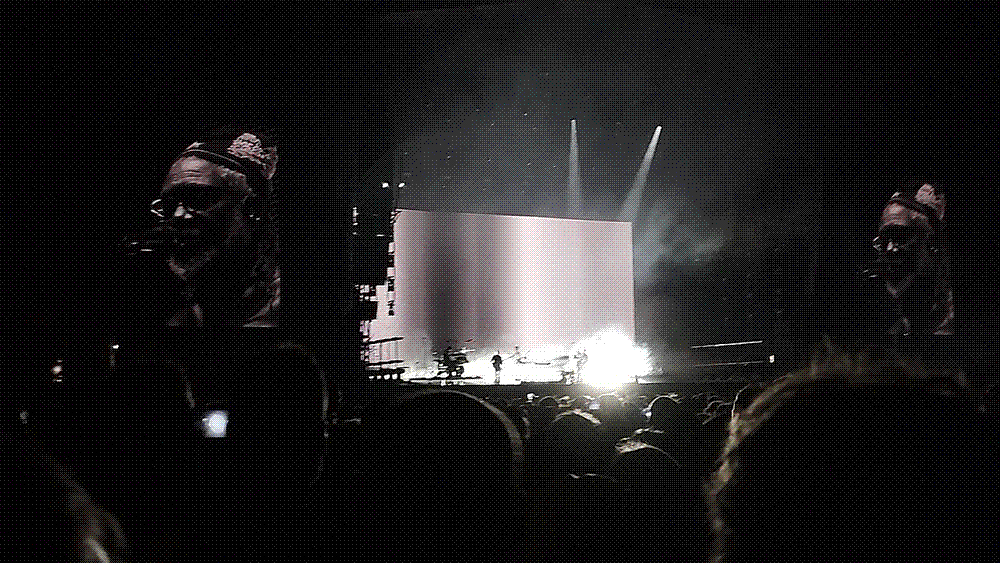
British band Massive Attack say Singapore has barred them from returning after they displayed a Palestinian flag and led 'free Palestine' chants at a 29 July concert The Bristol trip-hop duo Massive Attack said Singaporean authorities have banned them from re-entering the country after they held up a Palestinian flag and led chants of 'free Palestine' during a 29 July show. The band said members were detained, questioned separately and had passports temporarily confiscated, and issued official warnings under laws on foreign emblems and public order. Massive Attack said they were 'surprised and disappointed' by the treatment. Analogies Athens fines the poet who staged their grief The Athenians, on the other hand, showed themselves beyond measure afflicted at the fall of Miletus, in many ways expressing their sympathy, and especially by their treatment of Phrynichus. For when this poet brought out upon the stage his drama of the Capture of Miletus, the whole theatre burst into tears; and the people sentenced him to pay a fine of a thousand drachms, for recalling to them their own misfortunes. They likewise made a law that no one should ever again exhibit that piece.
Herodotus, The History of Herodotus, Book VI, ch. 21, trans. George Rawlinson (1858–60), Wikisource. → Paul Robeson, silenced by a seized passport In 1950 the U.S. State Department revoked the passport of the celebrated bass-baritone and actor Paul Robeson, freezing his international career because of his outspoken support for anti-colonial and civil-rights causes; officials offered to return it only if he pledged to make no political speeches abroad. For eight years he was effectively confined within the country, his concerts cancelled and bookings withdrawn, until the Supreme Court restored his right to travel in 1958. Like Massive Attack barred from a stage for their politics, Robeson was punished not for his art but for the dissent he voiced through it.
"The Case of Paul Robeson's Passport," Provisional Committee to Restore Paul Robeson's Passport, ca. 1951, Paul Robeson Collection, Schomburg Center for Research in Black Culture, The New York Public Library. → Antigone defies the ruler's decree Yes; for it was not Zeus that had published me that edict; not such are the laws set among men by the Justice who dwells with the gods below; nor deemed I that thy decrees were of such force, that a mortal could override the unwritten and unfailing statutes of heaven. For their life is not of to-day or yesterday, but from all time, and no man knows when they were first put forth.
Not through dread of any human pride could I answer to the gods for breaking these. Die I must,—I knew that well (how should I not?)—even without thy edicts.
Sophocles, Antigone, in The Tragedies of Sophocles, trans. Richard C. Jebb (1917), Wikisource. → Shelley's answer to a massacre: 'Ye are many' 'Rise like Lions after slumber
In unvanquishable number—
Shake your chains to earth like dew
Which in sleep had fallen on you—
Ye are many—they are few.'
Percy Bysshe Shelley, "The Mask of Anarchy" (written 1819, publ. 1832), in The Complete Poetical Works of Percy Bysshe Shelley, ed. Thomas Hutchinson (1914), Wikisource. → Daumier's massacre print, seized and destroyed Daumier's lithograph depicts the aftermath of a state atrocity: in April 1834 French troops hunting a sniper slaughtered the unarmed residents of a Paris apartment house, and the artist rendered a workman sprawled dead across the crushed body of his own child. Though the censors had first passed it, King Louis-Philippe ordered the printing stone and every unsold impression seized and destroyed. The image endures as an artist's indictment of power, answered by the state's attempt to erase the work itself.
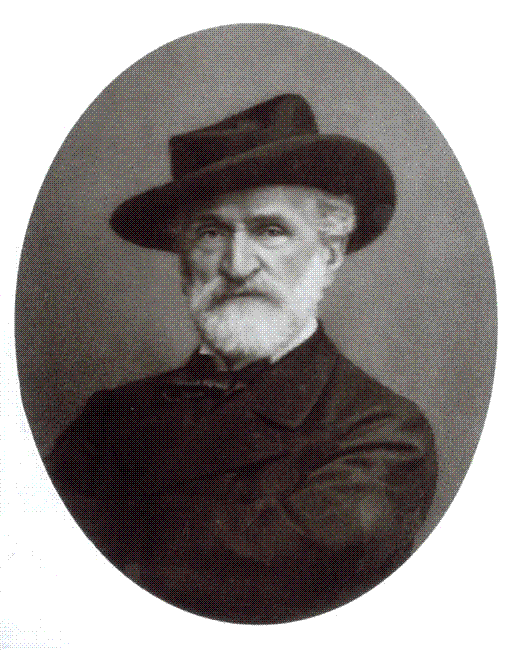
Honoré Daumier, Rue Transnonain, le 15 Avril 1834 (1834), lithograph, plate 24 of L'Association mensuelle. Public domain via Wikimedia Commons. → Verdi's chorus of exiles longing for a lost homeland Va, pensiero, sull'ali dorate;
va, ti posa sui clivi, sui colli,
ove olezzano tepide e molli
l'aure dolci del suolo natal!
Del Giordano le rive saluta,
di Sionne le torri atterrate.
O, mia patria, sì bella e perduta!
O, membranza, sì cara e fatal!
Giuseppe Verdi (music) and Temistocle Solera (libretto), "Va, pensiero" (Chorus of the Hebrew Slaves), from Nabucco (1842); full score at IMSLP. Portrait photograph by Giacomo Brogi. →