AI-generated
A $567 million New Mexico ruling opens the courts to mass child-safety claims against social platforms The legal wall around social media's youngest users broke in stages this week. On 7 August a New Mexico judge ordered Meta to pay $567 million — the largest child-safety penalty ever levied against a social media company — to fund a children's mental-health program, citing harms from Instagram, Facebook and WhatsApp. A day later the same court ordered new child-safety safeguards at the company, and the state's attorney general said openly that he hoped other jurisdictions would follow. By the 10th, they had somewhere to go: a US court ruled that Meta and other major platforms must face thousands of consolidated lawsuits alleging their products were engineered to addict. A Reuters/Ipsos poll found three in five Americans favor stronger oversight of social media companies. The industry that grew up faster than its regulators now faces the pattern that caught tobacco: one verdict becomes a doctrine, and a doctrine becomes a docket. Analogies Big Tobacco Pays: The 1998 Master Settlement In November 1998, after decades of denying what their own laboratories knew, the four largest American tobacco companies signed the biggest civil settlement in United States history with 46 state attorneys general — more than $200 billion pledged over twenty-five years to repay the states for the healthcare costs of smoking, and money that seeded the Truth Initiative to keep teenagers off cigarettes. The agreement banned cartoons in tobacco advertising, branded merchandise, and any marketing aimed at youth: an industry built on an addictive product was forced to fund the repair of the harm and to stop courting the young who sustained it.
Master Settlement Agreement, National Association of Attorneys General (1998) → The Factory Act of 1833: The State Steps Between the Mill and the Child WHEREAS it is necessary that the Hours of Labour of Children and young Persons employed in Mills and Factories should be regulated, inasmuch as there are great Numbers of Children and young Persons now employed in Mills and Factories, and their Hours of Labour are longer than is desirable, due Regard being had to their Health and Means of Education
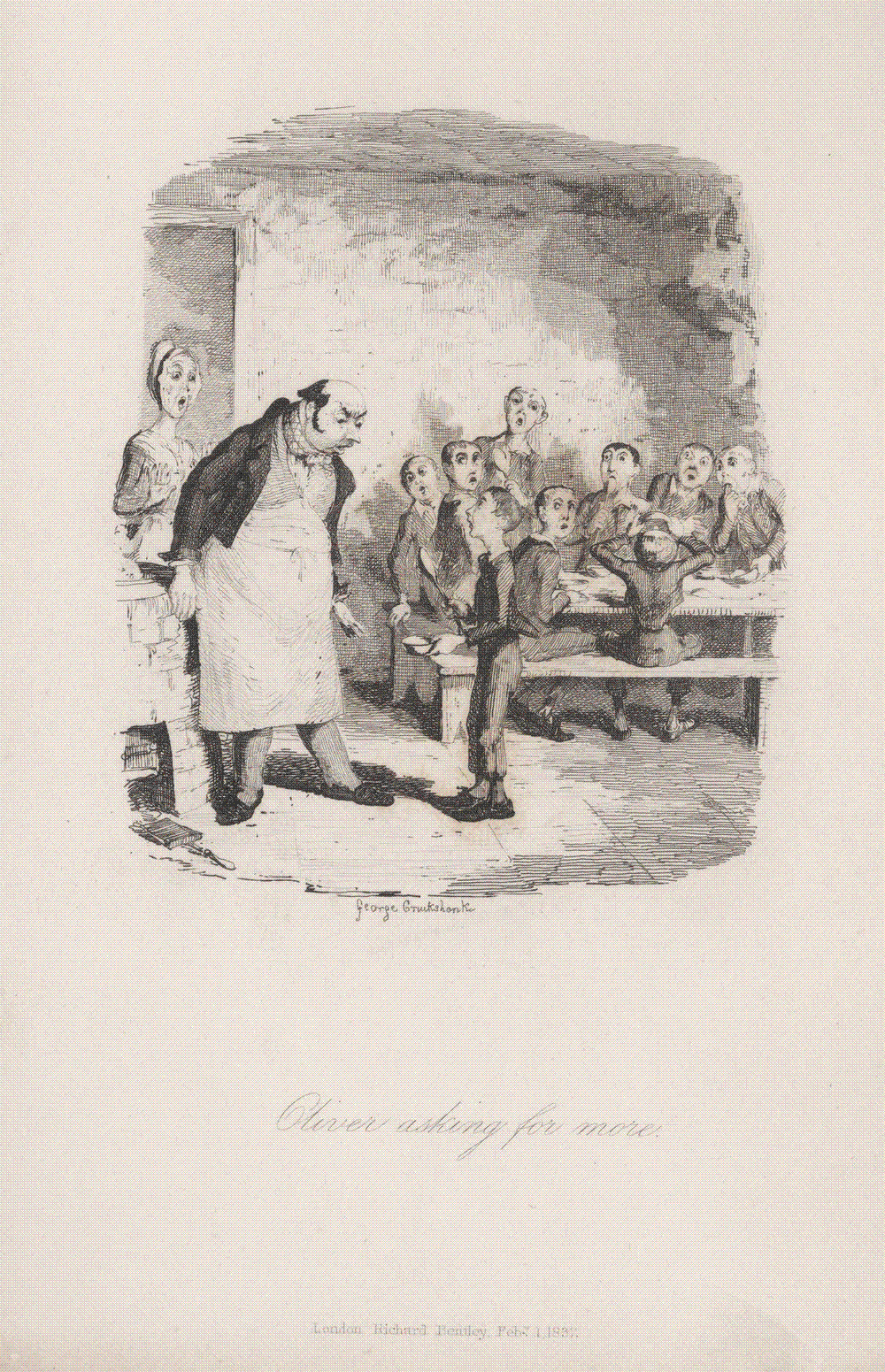
Labour of Children, etc., in Factories Act 1833 (3 & 4 Will. IV, c. 103) → Oliver Twist Asks for More Child as he was, he was desperate with hunger, and reckless with misery. He rose from the table; and advancing to the master, basin and spoon in hand, said: somewhat alarmed at his own temerity: “Please, sir, I want some more.” The master was a fat, healthy man; but he turned very pale.
Charles Dickens, Oliver Twist, Chapter II (1838), Project Gutenberg → Conditioning the Cradle: Brave New World In the Central London Hatchery's Neo-Pavlovian conditioning rooms, nurses set out books and bowls of roses before crawling infants, then meet their reaching hands with shrieking alarms and electric shock — so the babies will grow into adults who reliably want only what the economy needs them to want. Huxley imagined an industrial system so complete that it no longer waits for its consumers to grow up, but engineers them from the crib, wiring appetite and aversion into children for the sake of the machine that profits from them. It is the logic of designing products around a child's developing mind, carried to its finished, horrifying conclusion.
Aldous Huxley, Brave New World (1932) → Sadie Pfeifer, a Cotton Mill Spinner Sadie Pfeifer, 48 inches high, has worked half a year. One of the many small children at work in Lancaster Cotton Mills. Nov. 30, 1908.
Lewis Wickes Hine, National Child Labor Committee Collection, Library of Congress (1908) → Kinderszenen: Childhood from the Adult's Side of the Glass Thirteen piano miniatures composed in 1838 — not music for children but an adult's remembering of them: games of tag, a pleading child, firelight reveries, a child falling asleep, until in the final piece the poet himself speaks and the spell breaks. In Träumerei, the seventh scene, a single suspended melody keeps reaching upward and settling back, holding childhood as something the grown world can watch and cherish but never re-enter — and is therefore obliged to protect. Schumann wrote it the same decade Parliament first sent inspectors into the mills, twin recognitions that childhood is a separate country adults answer for.
Robert Schumann, Kinderszenen, Op. 15 (1838), IMSLP →