Wikimedia Commons
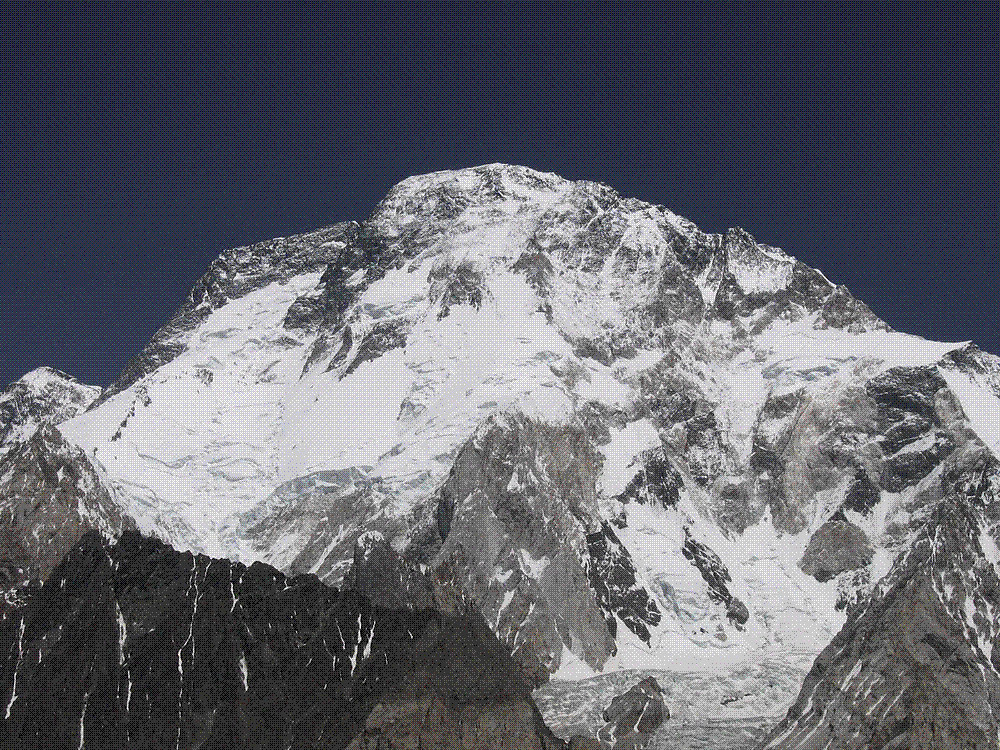
Nepal mourns record-setting mountaineer Nirmal Purja, who died at 43 in an avalanche on Pakistan's Broad Peak, with tributes gathering at his former school Tributes poured in across Nepal for Nirmal 'Nims' Purja, the celebrated mountaineer who was killed at 43 in an avalanche on Pakistan's 8,047-metre Broad Peak along with several fellow climbers. The former British Army Gurkha won global fame for climbing all 14 of the world's 8,000-metre peaks in just over six months in 2019 and for the Netflix film '14 Peaks: Nothing Is Impossible.' Mourners gathered at his old school, where staff and pupils remembered a national hero. Analogies Petrarch climbs Mont Ventoux, 1336 To-day I made the ascent of the highest mountain in this region, which is not improperly called Ventosum. My only motive was the wish to see what so great an elevation had to offer. [...] At first, owing to the unaccustomed quality of the air and the effect of the great sweep of view spread out before me, I stood like one dazed. I beheld the clouds under our feet, and what I had read of Athos and Olympus seemed less incredible as I myself witnessed the same things from a mountain of less fame.
Petrarch, letter to Dionisio da Borgo San Sepolcro, "The Ascent of Mount Ventoux" (1336), trans. James Harvey Robinson, in Petrarch, the First Modern Scholar and Man of Letters (New York: G. P. Putnam, 1898). Project Gutenberg ebook 48776. → Whymper's Matterhorn: triumph and the fatal descent, 1865 There have been joys too great to be described in words, and there have been griefs upon which I have not dared to dwell; and with these in mind I say, Climb if you will, but remember that courage and strength are nought without prudence, and that a momentary negligence may destroy the happiness of a lifetime. Do nothing in haste; look well to each step; and from the beginning think what may be the end.
Edward Whymper, The Ascent of the Matterhorn (London: John Murray, 1880), closing reflection on the 1865 first ascent, during which four of his companions fell to their deaths. Project Gutenberg ebook 38044. → Shelley, "Mont Blanc" The everlasting universe of things
Flows through the mind, and rolls its rapid waves,
Now dark—now glittering—now reflecting gloom—
Now lending splendour, where from secret springs
The source of human thought its tribute brings
Of waters,—
[...]
The secret Strength of things
Which governs thought, and to the infinite dome
Of Heaven is as a law, inhabits thee!
And what were thou, and earth, and stars, and sea,
If to the human mind's imaginings
Silence and solitude were vacancy?
Percy Bysshe Shelley, "Mont Blanc: Lines Written in the Vale of Chamouni" (composed 1816), in The Complete Poetical Works of Percy Bysshe Shelley, ed. Thomas Hutchinson (Oxford, 1914). Wikisource. → Coleridge, "Hymn before Sun-rise, in the Vale of Chamouny" Hast thou a charm to stay the Morning-Star
In his steep course? So long he seems to pause
On thy bald awful head, O sovran Blanc!
The Arve and Arveiron at thy base
Rave ceaselessly; but thou, most awful Form!
Risest from forth thy silent Sea of Pines,
How silently! Around thee and above
Deep is the air and dark, substantial, black.
An ebon mass: methinks thou piercest it,
As with a wedge! But when I look again,
It is thine own calm home, thy crystal shrine,
Thy habitation from eternity!
Samuel Taylor Coleridge, "Hymn, before Sun-rise, in the Vale of Chamouny" (1802), in Sibylline Leaves (London, 1817). Wikisource. → Friedrich, "Wanderer above the Sea of Fog" Caspar David Friedrich's lone figure stands on a rocky summit, back turned to us, gazing over a churning sea of mist from which distant peaks emerge—the very image of the human will set against the mountain sublime. It captures both the solitary heroism of the high climber and his smallness before immensity, the emotional register in which a nation mourns a mountaineer who reached the world's summits and was claimed by them.
Caspar David Friedrich, Wanderer above the Sea of Fog (Der Wanderer über dem Nebelmeer), c. 1818, oil on canvas, Hamburger Kunsthalle. → Hokusai, "Fine Wind, Clear Morning (Red Fuji)" In this woodblock print from Thirty-six Views of Mount Fuji, Hokusai reduces the sacred peak to a single triumphant red-brown pyramid, streaked with snow and crowned by streaming clouds against a clear morning sky. Where Friedrich frames the mountain as an object of Western awe, Hokusai renders it as a revered, near-divine presence—an eastern counterpart to the veneration Nepal holds for its own great peaks and for the climber who conquered them.
Katsushika Hokusai, Fine Wind, Clear Morning (Gaifū kaisei), also known as Red Fuji, from Thirty-six Views of Mount Fuji, color woodblock print, c. 1830–1832. →