Wikimedia Commons
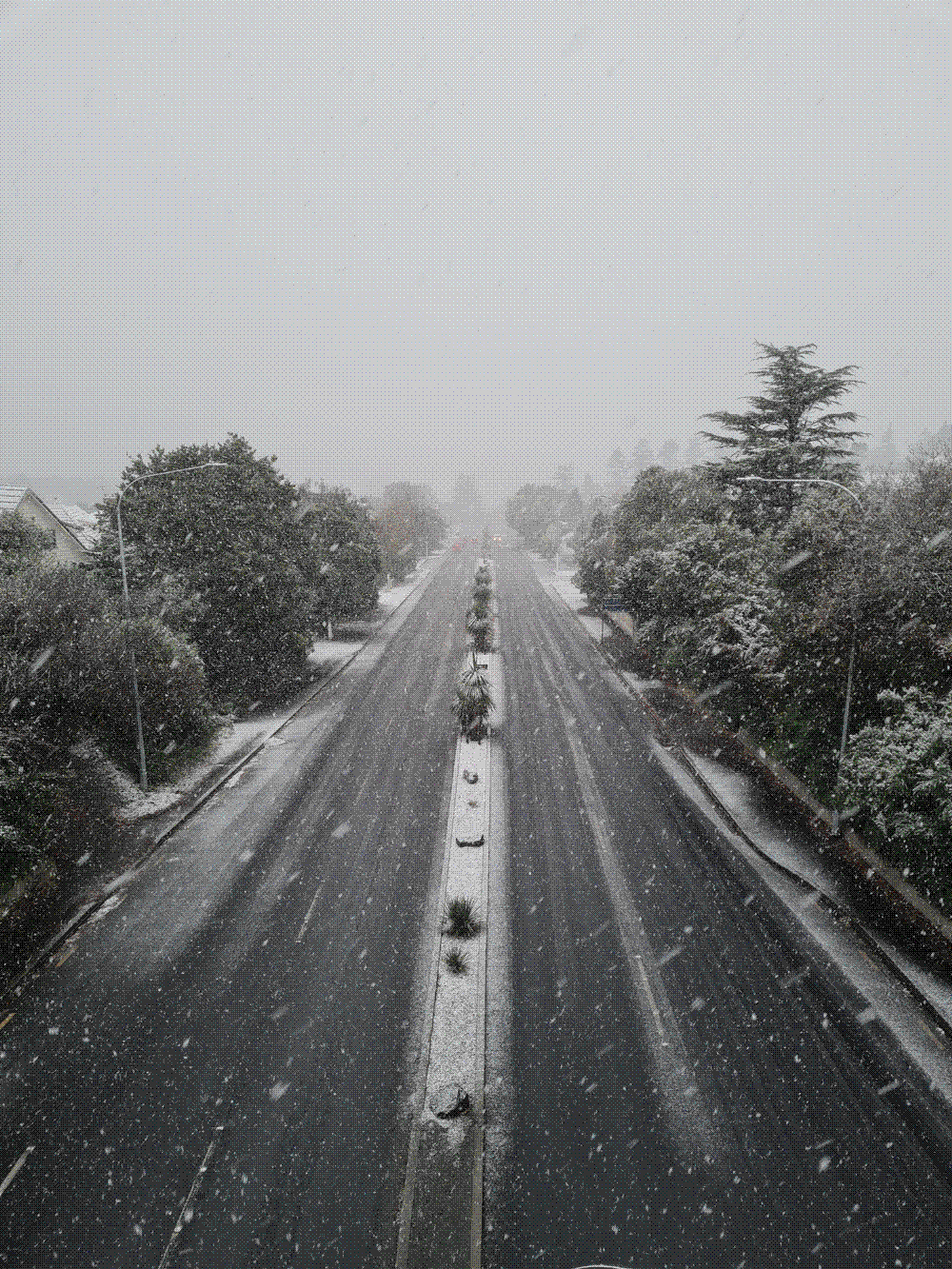
An Antarctic blast brings snow to sea level across New Zealand's South Island, closing roads and schools A polar air mass swept the island on Tuesday, blanketing Dunedin, the South Island's second-largest city, where police urged people not to travel and reported cars sliding off icy roads, though nobody was hurt. Snow reached the sand at Christchurch's New Brighton Beach. Skiers and snowboarders took the chance to ride down Dunedin's Baldwin Street, billed as the world's steepest residential street. Analogies The Anglo-Saxon Chronicle records the "strong winter" of 1046, remembered by no man then alive And in the same year, after Candlemas, came the strong winter, with frost and with snow, and with all kinds of bad weather; so that there was no man then alive who could remember so severe a winter as this was, both through loss of men and through loss of cattle; yea, fowls and fishes through much cold and hunger perished.
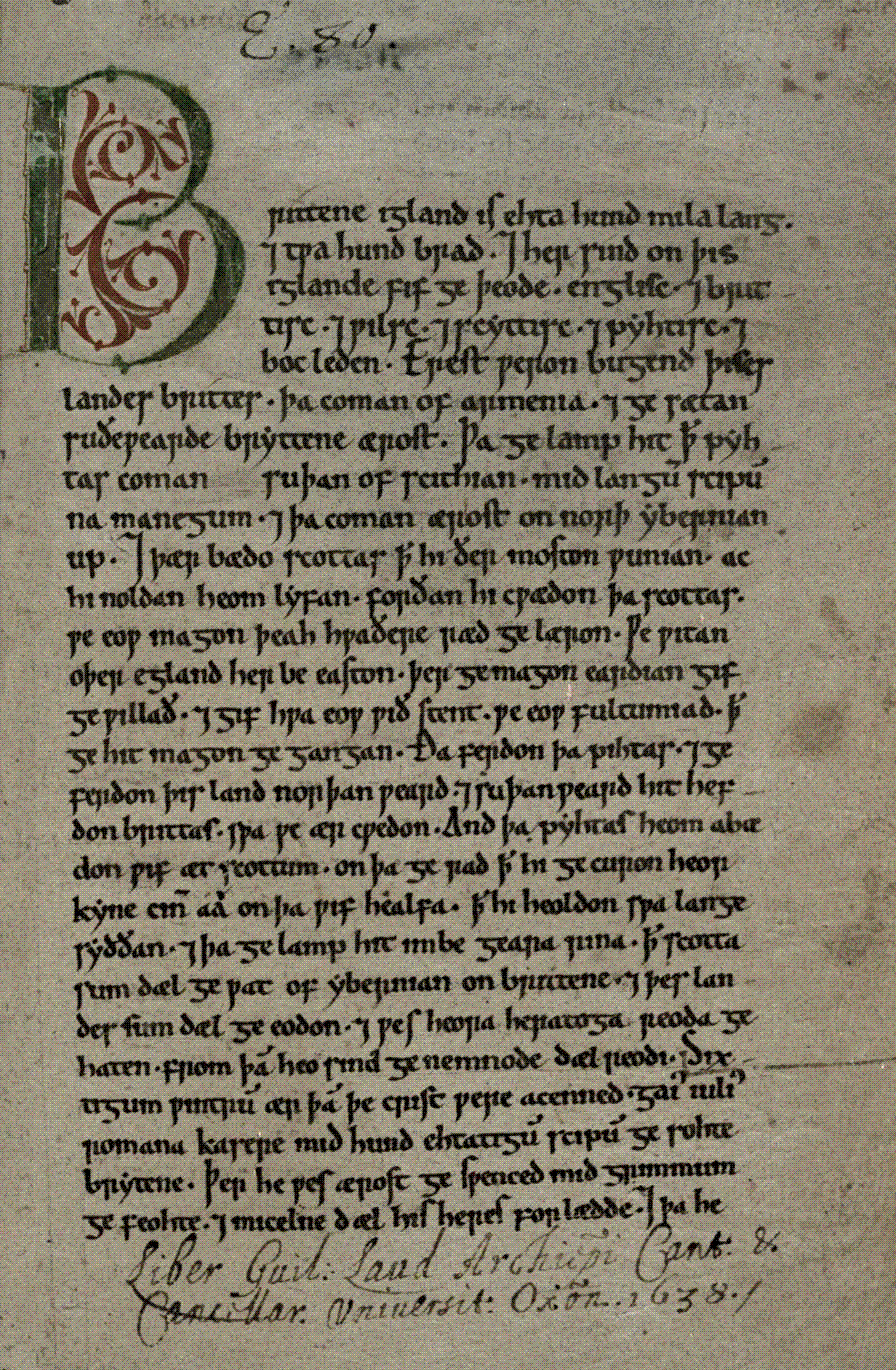
The Anglo-Saxon Chronicle, entry for A.D. 1046, translated by James Ingram and J. A. Giles; Project Gutenberg eBook #657 (release 1996, rev. 2021), hosted by Project Gutenberg → John Evelyn watches London hold a carnival on the frozen Thames, January 1684 Coaches plied from Westminster to the Temple, and from several other stairs to and fro, as in the streets, sleds, sliding with skates, a bull-baiting, horse and coach-races, puppet-plays and interludes, cooks, tippling, and other lewd places, so that it seemed to be a bacchanalian triumph, or carnival on the water, while it was a severe judgment on the land, the trees not only splitting as if the lightning struck, but men and cattle perishing in divers places, and the very seas so locked up with ice, that no vessels could stir out or come in.
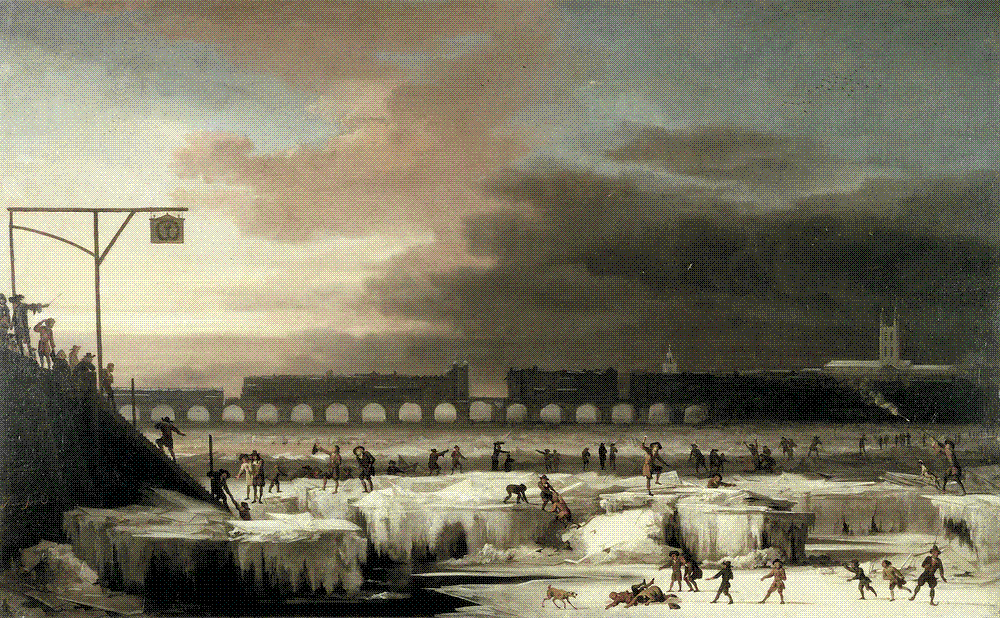
John Evelyn, diary entry for 24 January 1684, in The Diary of John Evelyn (Volume 2 of 2), ed. William Bray; Project Gutenberg eBook #42081, hosted by Project Gutenberg → Virgil's Georgics: a northern winter where wheels roll over water and wine is cut with axes Quick ice-crusts curdle on the running stream, / And iron-hooped wheels the water's back now bears, / To broad wains opened, as erewhile to ships; / Brass vessels oft asunder burst, and clothes / Stiffen upon the wearers; juicy wines / They cleave with axes; to one frozen mass / Whole pools are turned; and on their untrimmed beards / Stiff clings the jagged icicle. Meanwhile / All heaven no less is filled with falling snow
Virgil, Georgics, Book III (c. 29 BC), translated into English verse by James Rhoades; Project Gutenberg eBook #232, hosted by Project Gutenberg → Whittier's "Snow-Bound": a household wakes to a world unknown, and the boys cut a tunnel through it And, when the second morning shone, / We looked upon a world unknown, / On nothing we could call our own. / Around the glistening wonder bent / The blue walls of the firmament, / No cloud above, no earth below,— / A universe of sky and snow! / The old familiar sights of ours / Took marvellous shapes; strange domes and towers / Rose up where sty or corn-crib stood, / Or garden wall, or belt of wood; / A smooth white mound the brush-pile showed, / A fenceless drift what once was road
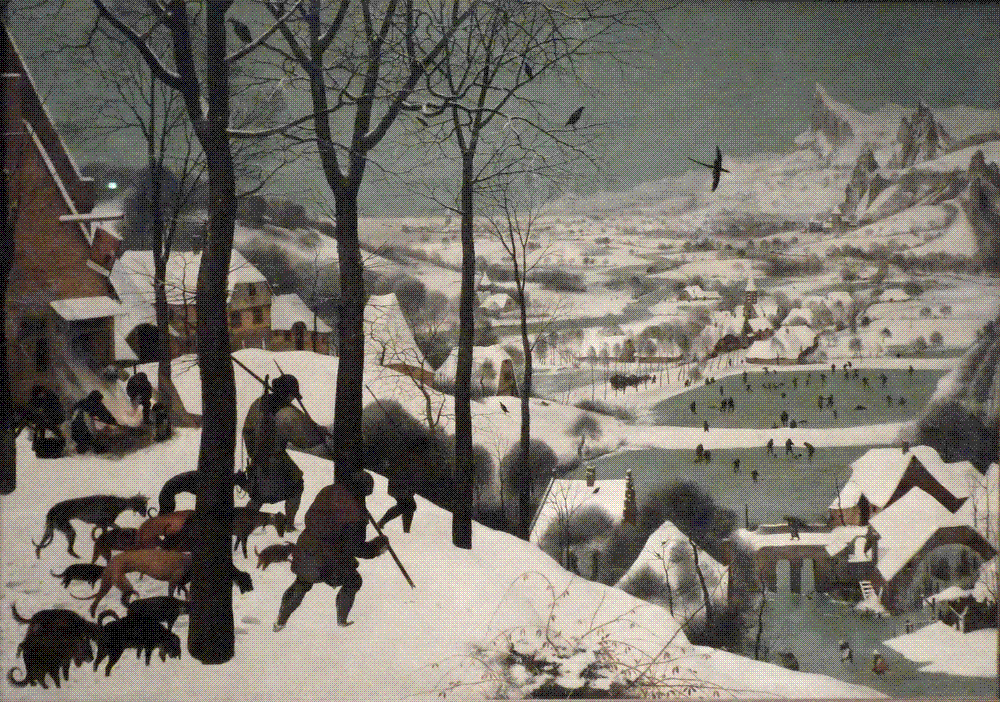
John Greenleaf Whittier, Snow-Bound: A Winter Idyl (first published 1866), illustrated edition; Project Gutenberg eBook #20226, hosted by Project Gutenberg → Bruegel's "Hunters in the Snow" (1565), painted after one of Europe's cruellest winters Three hunters trudge home over a snowbound ridge with a lean pack of dogs and a single fox to show for the day, while the village below has surrendered entirely to the cold. On the frozen ponds beyond them, tiny figures skate, sweep and play at kolf, a whole town's ordinary business converted into games on the ice. The sky is a flat green-grey, the trees are black, a bird falls across the valley, and the beauty of the scene is inseparable from its hunger.
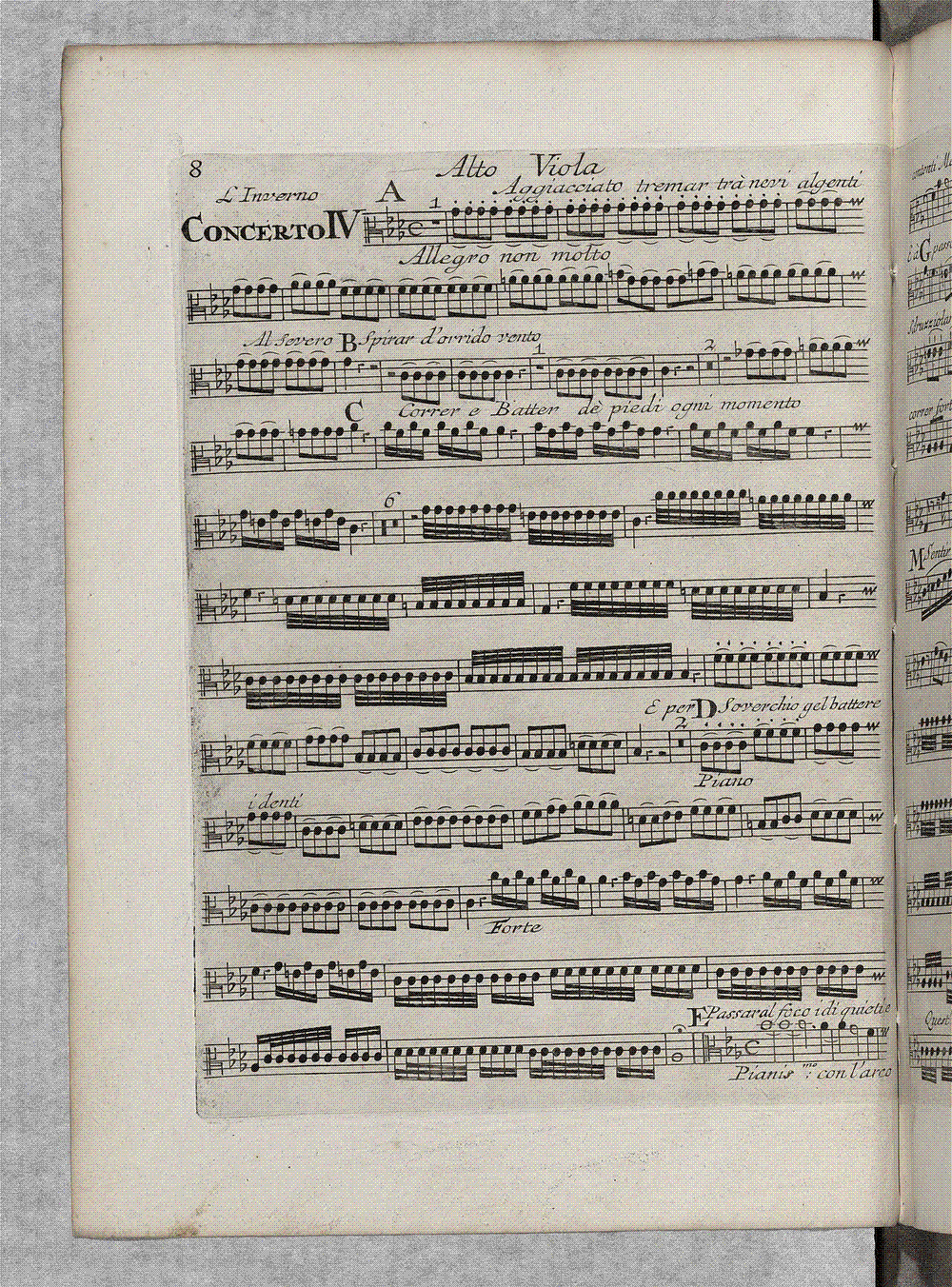
Pieter Bruegel the Elder, Hunters in the Snow (Winter), 1565, oil on panel, 116.5 x 162 cm, inv. 1838; Kunsthistorisches Museum, Vienna (museum object page) → Vivaldi's "L'Inverno", RV 297: shivering in the icy snow, and walking on the ice Aggiacciato tremar trà nevi algenti … Passar al foco i di quieti e contenti Mentre la pioggio fuor bagna ben cento … Caminar Sopra’l giaccio
Antonio Vivaldi, Violin Concerto in F minor, RV 297, "L'Inverno" (Winter), from Il cimento dell'armonia e dell'inventione, Op. 8 (Amsterdam: Michel-Charles Le Cène, 1725); sonnet mottoes printed in the score, work page and scores hosted by IMSLP / Petrucci Music Library →