Wikimedia Commons
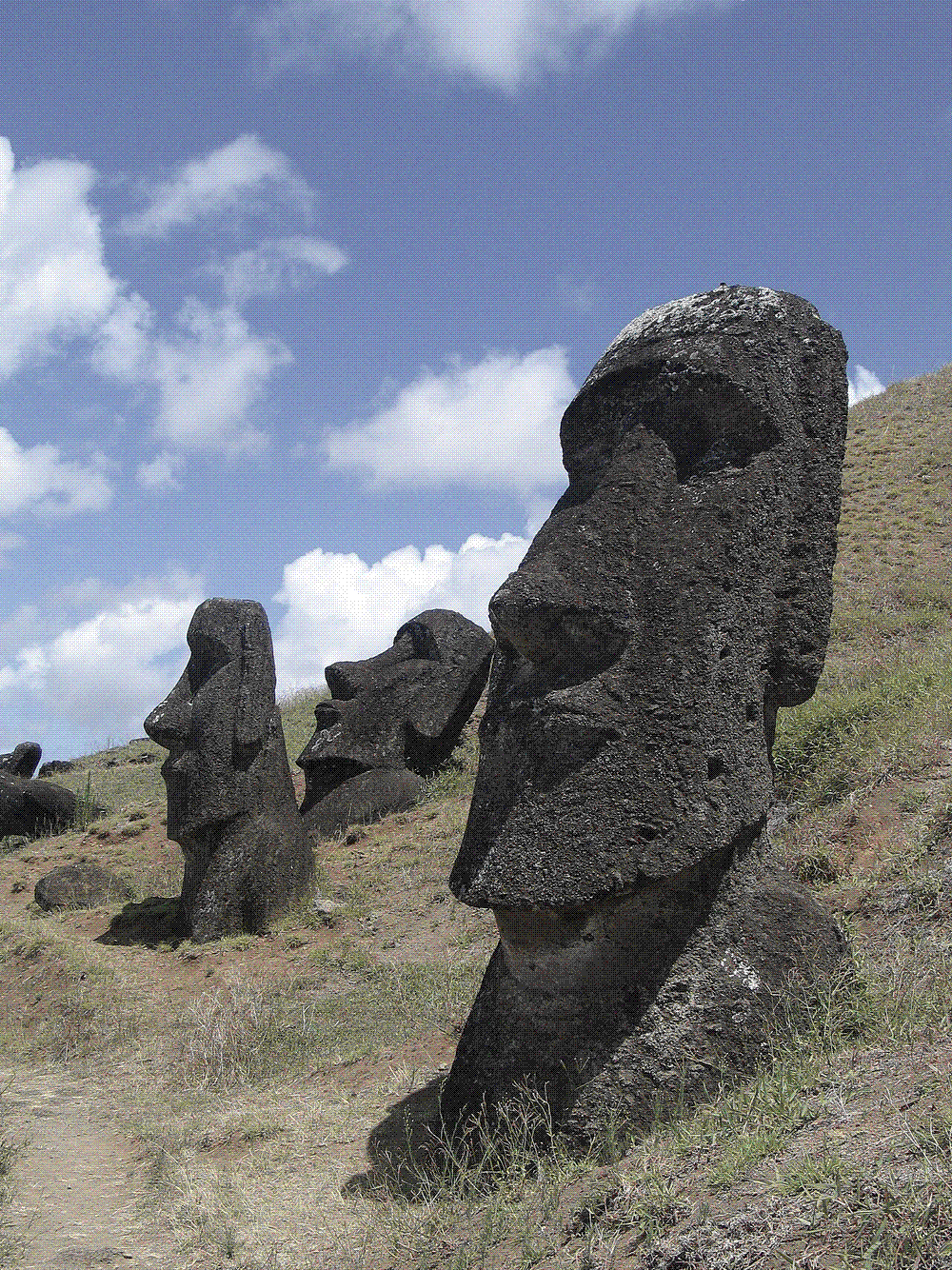
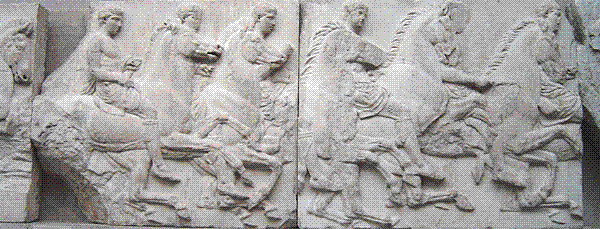
The Australian Museum returns Rapa Nui ancestral remains after 144 years The Australian Museum in Sydney returned ancestral remains to the people of Rapa Nui this week, 144 years after they were taken from sacred burial sites on the island the world calls Easter Island. A Rapa Nui delegation attended the ceremony; the remains, collected in the early 1880s at the height of the museum age, when institutions across the empire were assembling humanity into drawers, will travel home across the Pacific. The return is one act in a long correction now moving through the world's museums — the Benin Bronzes returning from Germany and America, the Parthenon Marbles still argued over two centuries on — in which the question has shifted from whether such collections were legally acquired to what they are for, and whom they serve. For the museum, the remains were specimens; for Rapa Nui, they are ancestors, and the distinction is the entire matter. What was catalogued is being mourned again, which is another way of saying it was never really a specimen at all. Analogies The Parthenon Marbles: the paradigm unreturned case Between 1801 and 1812, Lord Elgin's agents stripped roughly half the surviving sculptures from the Parthenon in Ottoman-ruled Athens; in 1816 a House of Commons select committee weighed the legality of the taking and voted to buy the marbles for the British Museum, where they remain. Greece has formally demanded them back since 1832 — the founding claim of its independent statehood, and the case every later repatriation debate is measured against. Two centuries on, the 1816 report reads as the original paperwork of an unfinished transaction: an empire auditing its own acquisition and finding it, provisionally, acceptable.
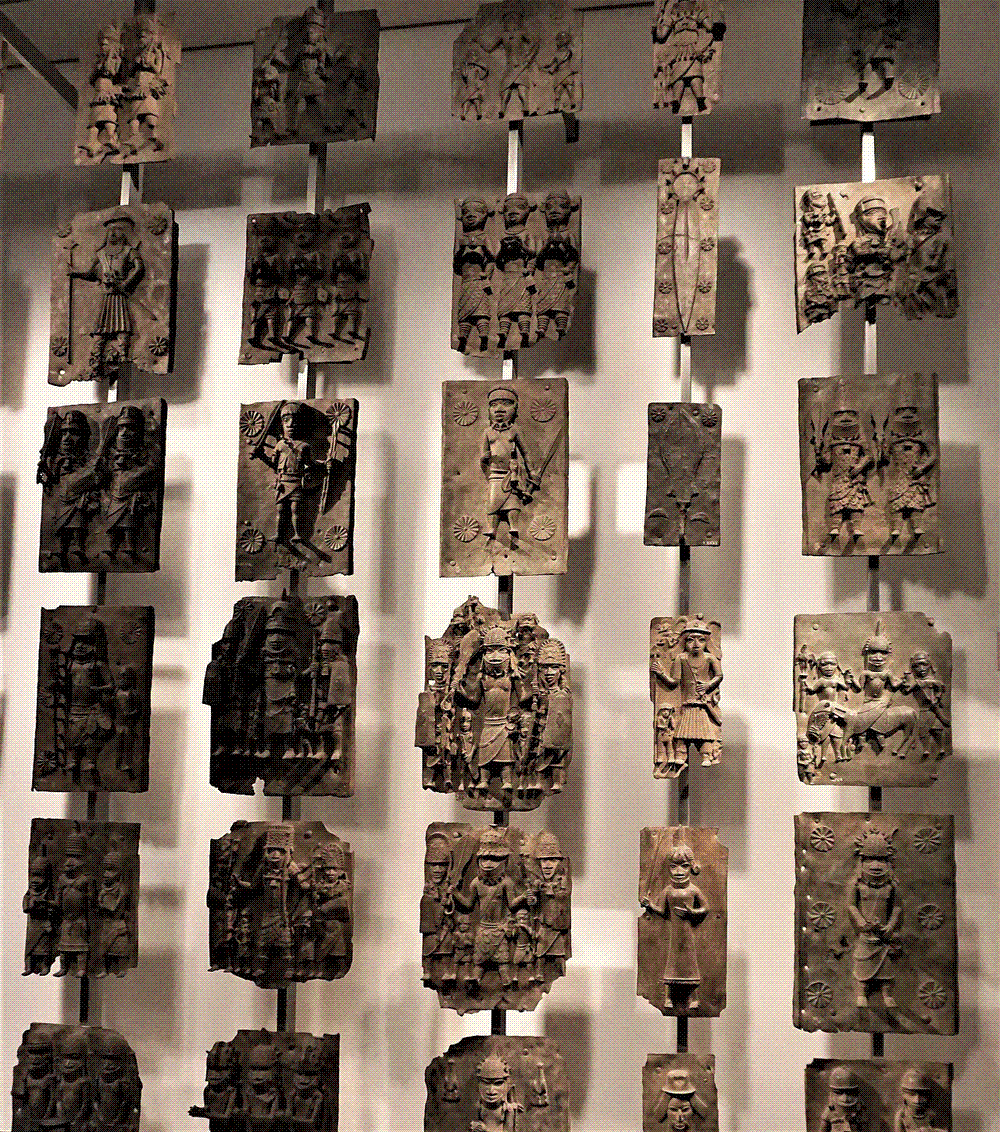
Report from the Select Committee of the House of Commons on the Earl of Elgin's Collection of Sculptured Marbles, with Canova's letter (London, 1816) → The Benin Bronzes go home: the tide turns In 1897 British forces sacked Benin City and carried off its royal bronzes; 125 years later, on October 11, 2022, the Smithsonian formally transferred ownership of 29 of them to Nigeria's National Commission for Museums and Monuments — the first act under its new ethical returns policy, with Germany signing over more than a thousand the same year. Secretary Lonnie Bunch's words at the ceremony — 'Today we right a wrong' — marked the moment Western institutions stopped treating restitution as a threat to collections and began treating collections as unsettled accounts. The Rapa Nui return walks through the door the bronzes opened.
Smithsonian Magazine, "The Smithsonian Returns a Trove of Benin Bronzes to Nigeria" (October 11, 2022) → Stevenson among the graves of the Marquesas But the house, the grave, and even the body of the dead, have been always particularly honoured by Marquesans. Until recently the corpse was sometimes kept in the family and daily oiled and sunned, until, by gradual and revolting stages, it dried into a kind of mummy. Offerings are still laid upon the grave. In Traitor’s Bay, Mr. Osbourne saw a man buy a looking-glass to lay upon his son’s. And the sentiment against the desecration of tombs, thoughtlessly ruffled in the laying down of the new roads, is a chief ingredient in the native hatred for the French.
Robert Louis Stevenson, In the South Seas (1896), Part I, Chapter IV → Walcott: the sea as the vault of the missing Walcott's poem answers the colonial taunt — where are your monuments, your archives? — by locating the Caribbean's history in the one repository empire could not catalogue: the ocean floor that holds the bones of the Middle Passage. The poem inverts the museum's logic, insisting that what was submerged and uncollected is not lost but locked up, waiting for a reckoning that turns drowned cargo back into ancestors. It is the repatriation argument in verse: the dead keep their claim, however long the vault stays shut.
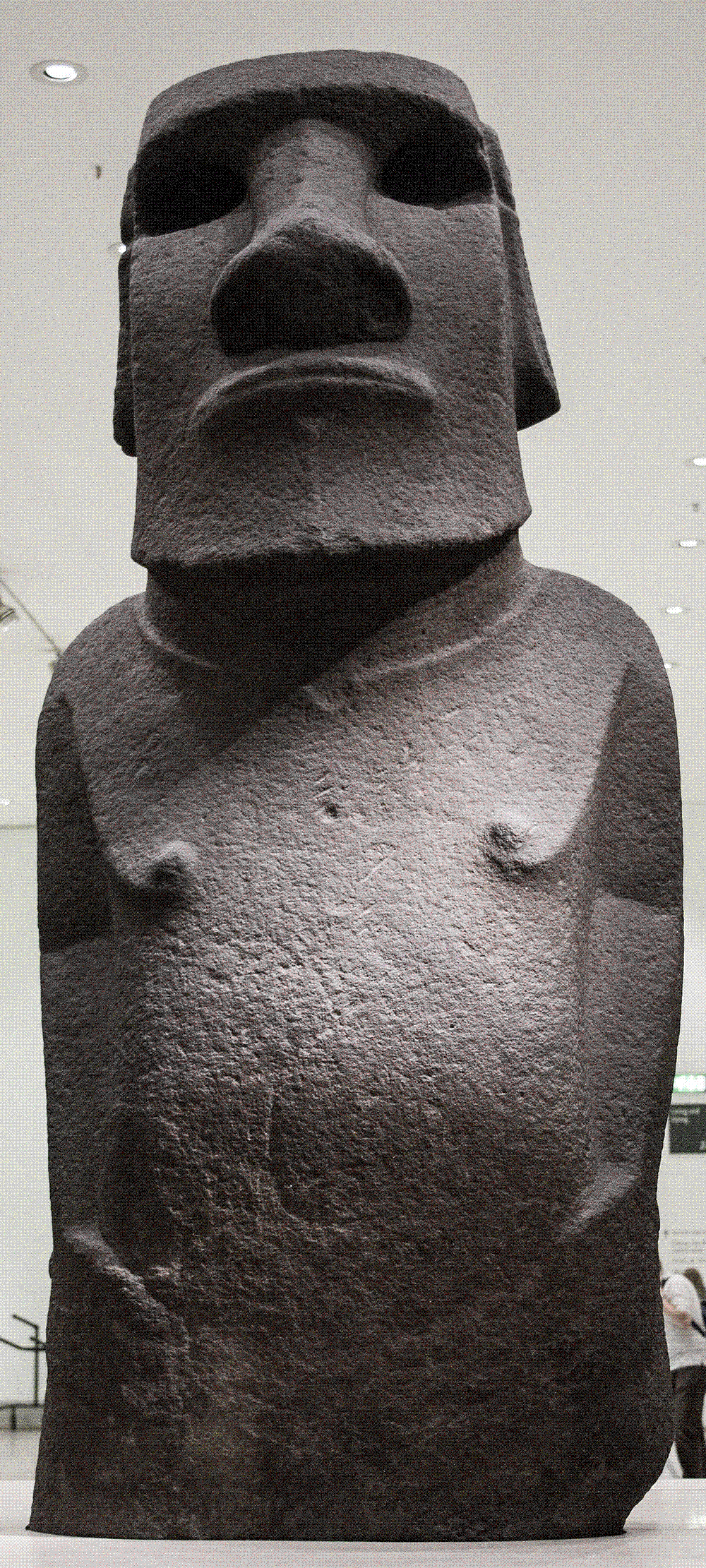
Derek Walcott, "The Sea Is History" (1979) → Hoa Hakananai'a, the stolen friend In 1868 the crew of HMS Topaze hauled this four-ton basalt ancestor figure from the ceremonial village of Orongo to the beach and rafted it to their ship; Queen Victoria passed it to the British Museum the next year. Its name is thought to mean 'stolen or hidden friend' — the object's own label confesses the theft — and Rapa Nui delegations have travelled to London since 2018 to ask for him back, arguing the moai is not a statue of an ancestor but the ancestor himself. He is the standing image of the case the Australian Museum has just answered: the same island, the same century of taking, one institution returning its dead while another still displays theirs.
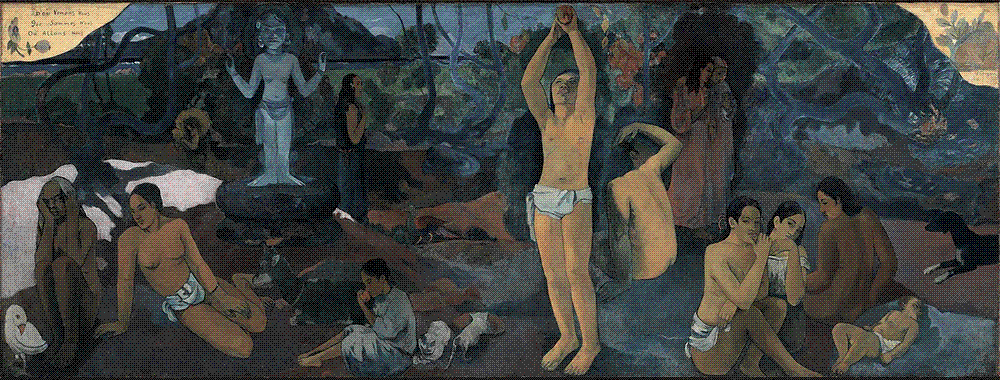
Hoa Hakananai'a, basalt moai, c. 1200, taken from Orongo, Rapa Nui, in 1868; British Museum, London → Gauguin's questions, painted on Tahiti Gauguin painted his monumental frieze of Polynesian life at the bottom of a personal collapse, inscribing its three questions in French across a Tahitian landscape he insisted on seeing as primordial paradise even as colonial administration remade it around him. The painting is the European gaze at the Pacific made permanent: islanders arranged from birth to death as props in a European's metaphysics, then shipped to Paris and finally to Boston as the masterpiece of the encounter. The repatriations now moving in the opposite direction — remains home to Rapa Nui, bronzes home to Benin — answer precisely the traffic this canvas travelled, and its title's questions turn out to be the ones museums are finally asking about their own shelves.
Paul Gauguin, Where Do We Come From? What Are We? Where Are We Going? (1897–98), oil on canvas; Museum of Fine Arts, Boston →