NOAA (public domain)
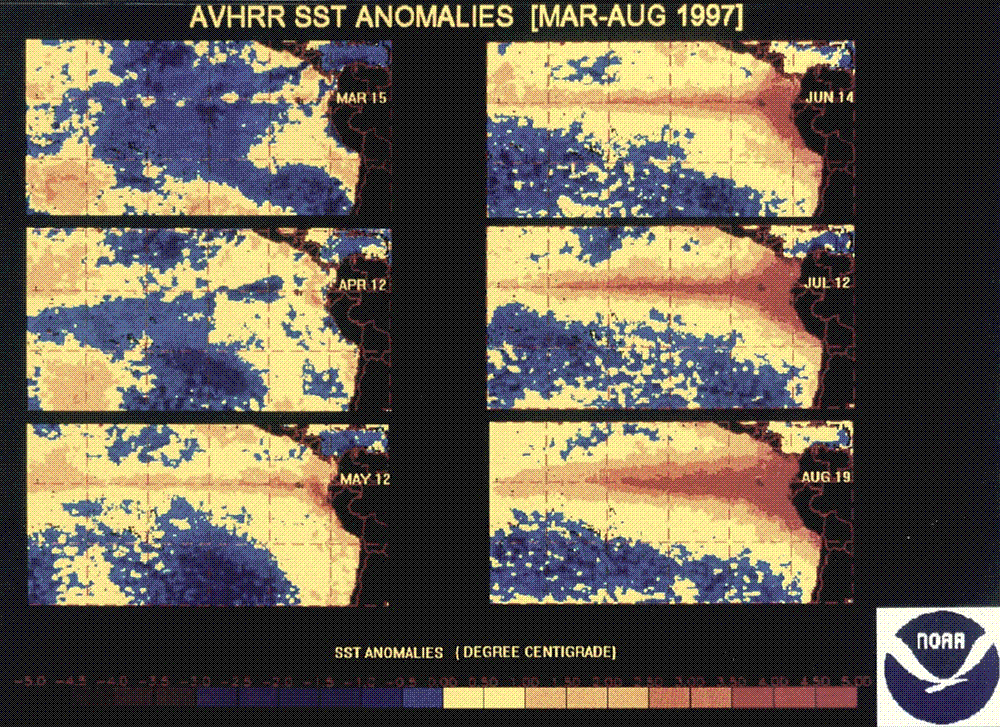
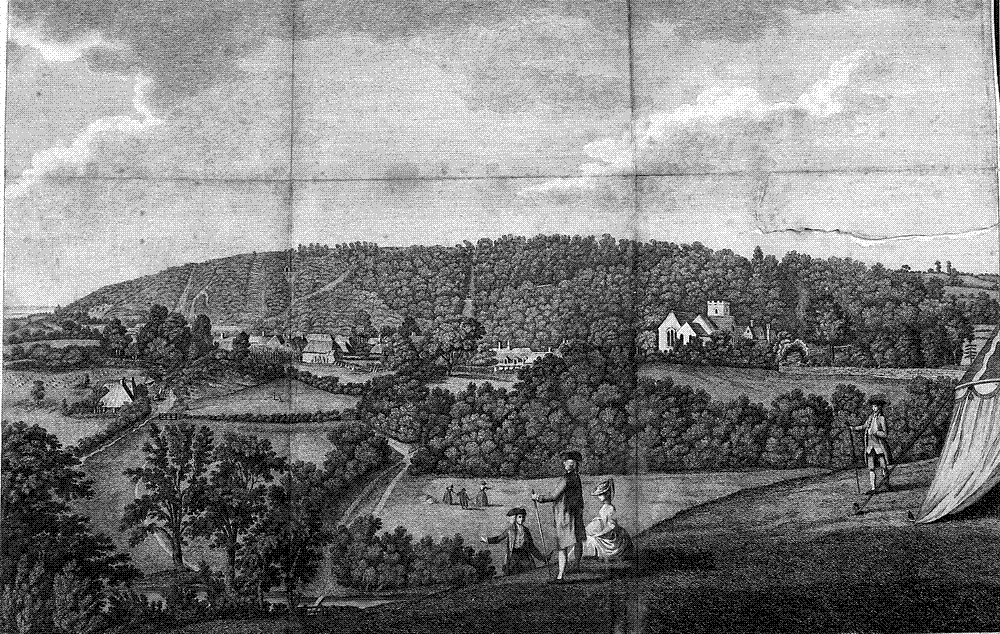
The developing El Niño becomes the strongest on record, and researchers say it could cause up to 451,000 excess deaths Scientists said on 22 September that the developing El Niño had become the strongest on record weeks before its expected peak, with effects already being felt around the world, and Asia braced for drought that could push up food prices globally. A day later researchers estimated that this 'super' El Niño could cause up to 451,000 excess deaths worldwide, and a humanitarian group said the heat it drives could cause nearly half a million additional deaths. The warnings came as haze from wildfires in Indonesia continued to sicken tens of thousands. Earlier forecasts had warned that the event would bring an unusually warm, wet autumn and disrupt the hurricane season and the ecosystems of the Galápagos. Analogies Gilbert White records the summer of 1783, when a haze from Iceland's Laki eruption hung over Europe and the sun shone 'blank as a clouded moon' The summer of the year 1783 was an amazing and portentous one, and full of horrible phaenomena; for besides the alarming meteors and tremendous thunder-storms that affrighted and distressed the different counties of this kingdom, the peculiar haze, or smokey fog, that prevailed for many weeks in this island, and in every part of Europe, and even beyond its limits, was a most extraordinary appearance, unlike anything known within the memory of man.
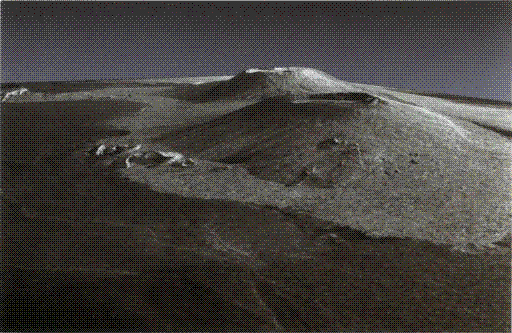
Gilbert White, The Natural History of Selborne (London, 1789), letter to Daines Barrington; Project Gutenberg ebook 1408. → Charles Darwin lands on the Galápagos in September 1835 and describes the heat of the lava fields — the islands El Niño most disrupts A broken field of black basaltic lava, thrown into the most rugged waves, and crossed by great fissures, is everywhere covered by stunted, sun-burnt brushwood, which shows little signs of life. The dry and parched surface, being heated by the noon-day sun, gave to the air a close and sultry feeling, like that from a stove
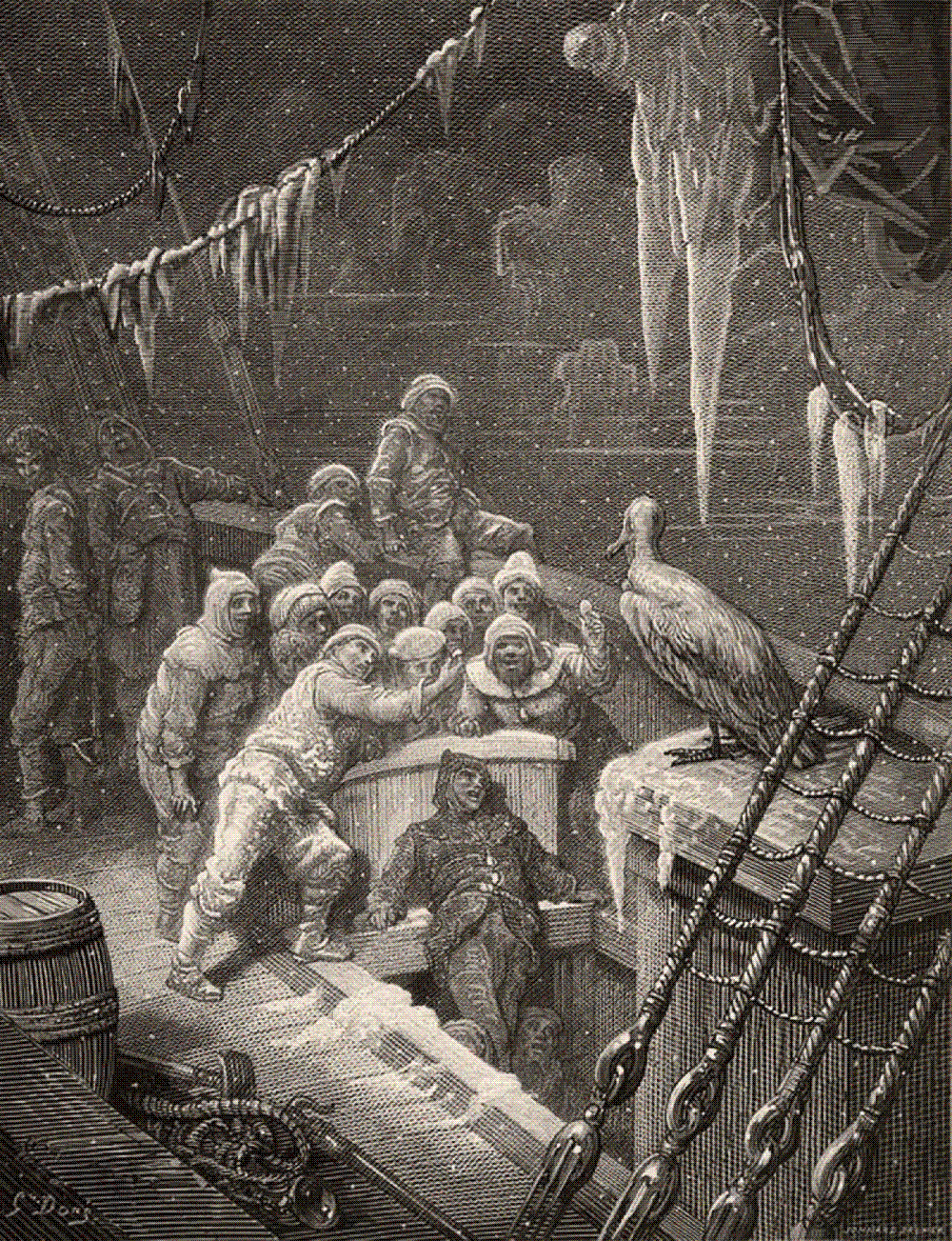
Charles Darwin, Journal of Researches ('The Voyage of the Beagle'), 2nd ed. (London: John Murray, 1845), ch. XVII, 'Galapagos Archipelago'; Project Gutenberg ebook 944. → In Coleridge's 'The Rime of the Ancient Mariner' (1798), a becalmed ship sits under a burning sun on the Pacific All in a hot and copper sky, / The bloody Sun, at noon, / Right up above the mast did stand, / No bigger than the Moon. / Day after day, day after day, / We stuck, nor breath nor motion; / As idle as a painted ship / Upon a painted ocean.
Samuel Taylor Coleridge, 'The Rime of the Ancient Mariner', part II, in Lyrical Ballads (1798; text of 1834); Project Gutenberg ebook 151. → Joseph reads Pharaoh's dream: seven good years will be followed by seven years of famine, and the only defence is to prepare And the seven thin and ill favoured kine that came up after them are seven years; and the seven empty ears blasted with the east wind shall be seven years of famine.
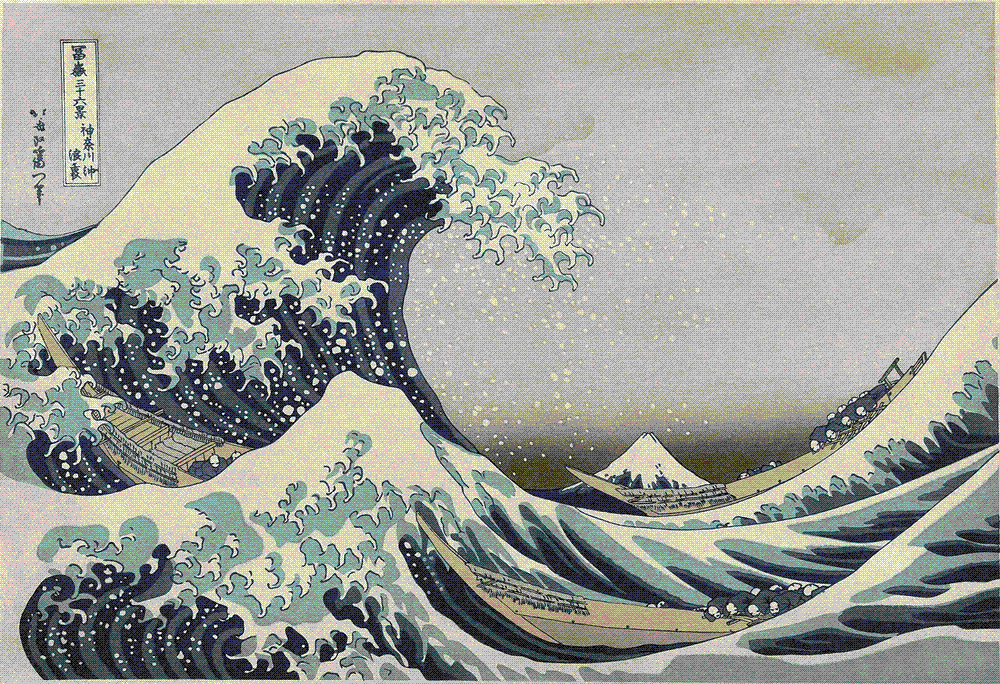
Genesis 41:27, The Holy Bible, King James Version (1611); Project Gutenberg ebook 10. → Katsushika Hokusai's 'Under the Wave off Kanagawa' (c. 1830–32) — the Pacific rising over the people who work it A wave rises from the left of the print and curls over three narrow boats, its crest breaking into claws of foam; the rowers bend low beneath it. Far behind, Mount Fuji sits small and still. Hokusai's woodblock, from his series Thirty-six Views of Mount Fuji, is the most reproduced image of the Pacific ever made — the ocean as a force whose scale dwarfs the people trying to live alongside it.
Katsushika Hokusai, Kanagawa oki nami ura (Under the Wave off Kanagawa), from Thirty-six Views of Mount Fuji, c. 1830–32, polychrome woodblock print; impression at the Metropolitan Museum of Art, JP1847. → 'Summer' from Vivaldi's 'The Four Seasons' (1725): the harsh season scorched by the sun, then the hailstorm Vivaldi printed a sonnet at the head of each of his four seasons. Summer's describes a harsh season scorched by the sun, with men and flocks languishing and the pines burning — and the music begins in exhaustion, the strings barely moving. A cuckoo calls, a breeze stirs, and then the north wind breaks in; the final movement is a hailstorm that flattens the crops. It is the first great piece of music about heat, and about how quickly heat turns into ruin.
Antonio Vivaldi, L'estate (Summer), Concerto in G minor, RV 315, from Il cimento dell'armonia e dell'inventione, Op. 8 (Amsterdam: Michel-Charles Le Cène, 1725); score at the International Music Score Library Project (IMSLP). →