AI-generated
Architecture Dezeen · Aug 12, 2026 Demolition begins on Tbilisi's never-opened Rike Concert Hall Workers in Tbilisi began stripping the scale-like metal cladding from the Rike Concert Hall this week, starting the demolition of a building that spent its entire existence waiting to open. Designed by Studio Fuksas as a pair of periscope tubes aimed across the Kura River — a landmark of the era when Georgia commissioned emphatic architecture as a statement of direction — the hall was substantially completed and then simply never inaugurated, standing for years as the city's most prominent closed door. Now the verdict has arrived by excavator. Architecture has a name for ruins, and a sentimental attachment to them, but a building demolished before its first concert belongs to a stranger category: a structure that produced no memories to mourn, only the image of intent. The demolition footage — the shining skin coming off in panels — reads as the reverse of construction time-lapse, ambition played backwards. Analogies The Demolition of Pruitt-Igoe Completed in 1956 as a 33-tower emblem of modernist public housing, Pruitt-Igoe stood less than two decades before the federal government began dynamiting it in March 1972, its second implosion broadcast on national television. The falling slabs became architecture's most famous obituary: the critic Charles Jencks later dated the death of modern architecture to the minute of the blast. A utopia was condemned not by argument but by detonation — demolition as the state's final verdict on its own promise.
U.S. Department of Housing and Urban Development photograph, St. Louis, April 1972 → The Ryugyong Hotel, Pyongyang Begun in 1987 as what was to be the world's tallest hotel, the 105-story concrete pyramid was topped out around 1992 and then simply stopped, a bare shell looming over Pyongyang for a generation. A mirrored-glass skin was applied between 2008 and 2011, but the building has never received a single guest. It is the Rike hall's standing counterpart: a skyline-defining silhouette whose interior life never began — a monument that exists only from the outside.
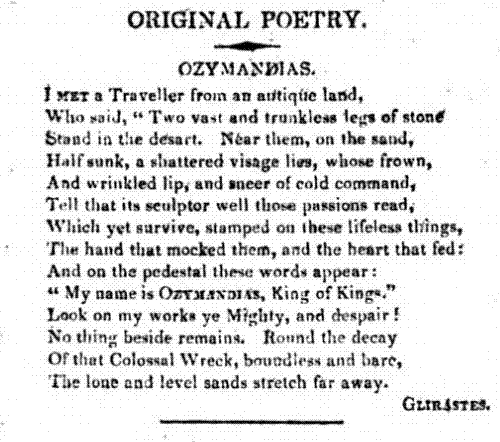
Photograph by Jan Engelhardt, 2019, Wikimedia Commons → Ozymandias And on the pedestal these words appear:
“My name is Ozymandias, King of Kings.”
Look on my works ye Mighty, and despair!
No thing beside remains. Round the decay
Of that Colossal Wreck, boundless and bare,
The lone and level sands stretch far away.
Percy Bysshe Shelley, The Examiner (London), 11 January 1818 → Invisible Cities Marco Polo sits before Kublai Khan and describes, city by city, an empire the emperor will never visit and that may not exist at all: cities suspended on stilts, cities of pure desire, cities built entirely of their own descriptions. Each is an architecture of promise rather than of stone — habitable only in the telling, uninhabited in fact. Calvino's catalog is the dream-ledger of every civic project whose renderings outlived its rooms: a city can be perfectly imagined and never once lived in.
Italo Calvino, translated by William Weaver (Harcourt Brace Jovanovich, 1974) → The Drawbridge, from Carceri d'invenzione Piranesi's imaginary prisons pile staircases onto staircases and bridges onto bridges, vast stone interiors that obey no program and could never be built. The etchings are pure architectural ambition severed from use — spaces of overwhelming grandeur with no inhabitants and no exits. They stand at the origin of a tradition the Rike hall joined: architecture that exists most fully on paper, magnificent and forever unentered.
Giovanni Battista Piranesi, etching, ca. 1749–50, The Metropolitan Museum of Art → Symphony No. 8 in B minor, D 759 (Unfinished) In 1822 Schubert completed two movements of a symphony in B minor, sketched a third, and then set the manuscript aside forever; it lay unperformed in a drawer until 1865, thirty-seven years after his death. The work the world now calls the Unfinished premiered only when its composer could no longer hear it. It is the sound of the Rike hall's fate: a grand structure that stops mid-gesture, its completion permanently deferred, its music arriving too late for its maker.
Franz Schubert, 1822, score at IMSLP (public domain) → 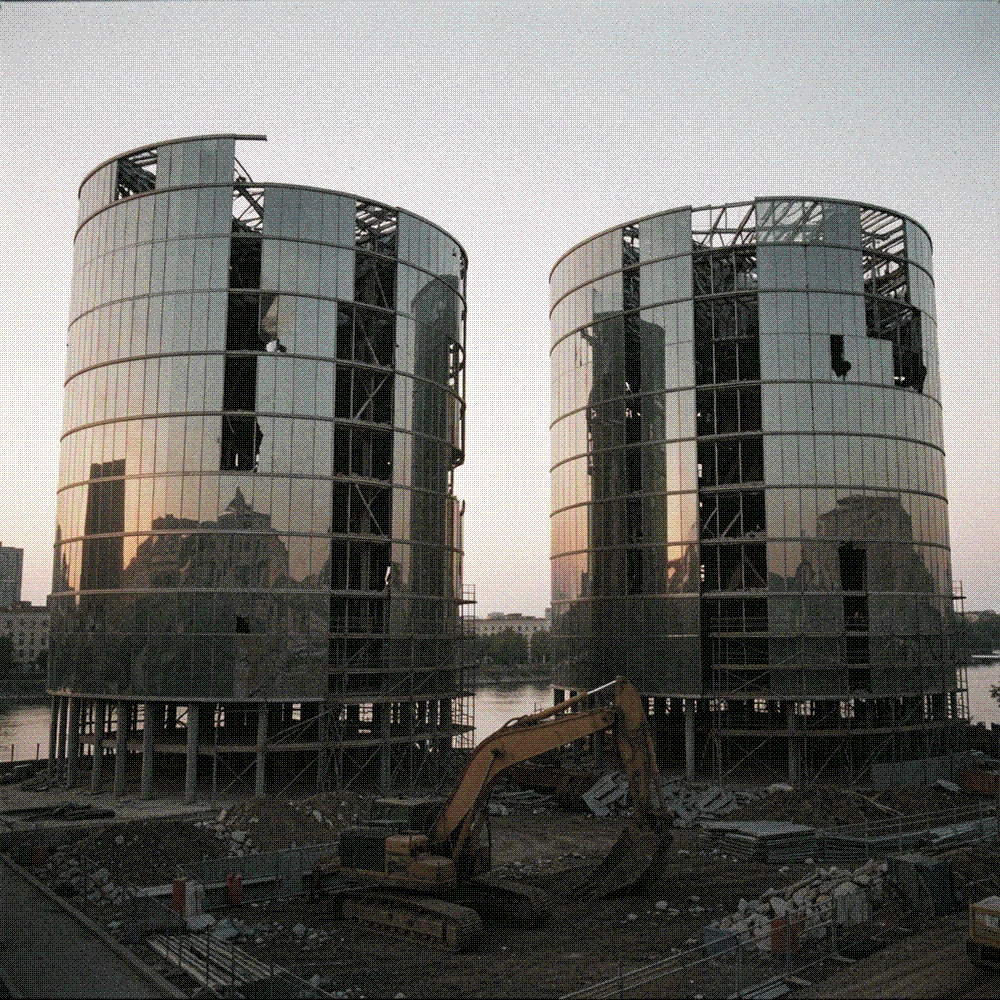


_MET_DP828200.jpg)