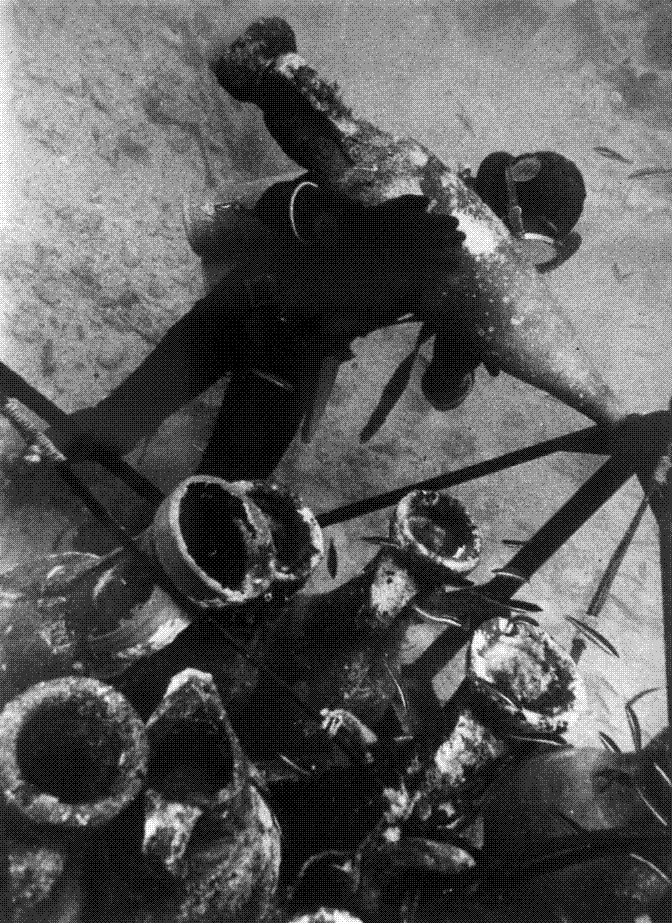
Rows of ancient amphorae lying stacked on the seabed at a Mediterranean wreck site

Wikimedia Commons

ArtBBC · Associated PressAug 12, 2026

A Roman shipwreck stacked with hundreds of amphorae is found off Sicily

Italian authorities announced the discovery of an ancient Roman shipwreck off the Sicilian coast, its cargo of hundreds of amphorae still stacked where the crew loaded them two millennia ago. Police video showed the vessel resting in the blue dark, the clay jars in rows — wine or oil or garum bound for a market that no longer exists, preserved by the accident of sinking. The culture minister called it one of the most important underwater archaeological finds in years. The find joins a particular genre of discovery in which loss is what preserves: cargo that reached port was consumed and vanished; cargo that sank became an archive. Each amphora carries data — clay origin, maker's stamps, residue — that no written source records, which is why a failed voyage can matter more to historians than a thousand successful ones. Excavation and study will take years; the ship made its delivery after all, twenty centuries late and to different recipients.
Analogies

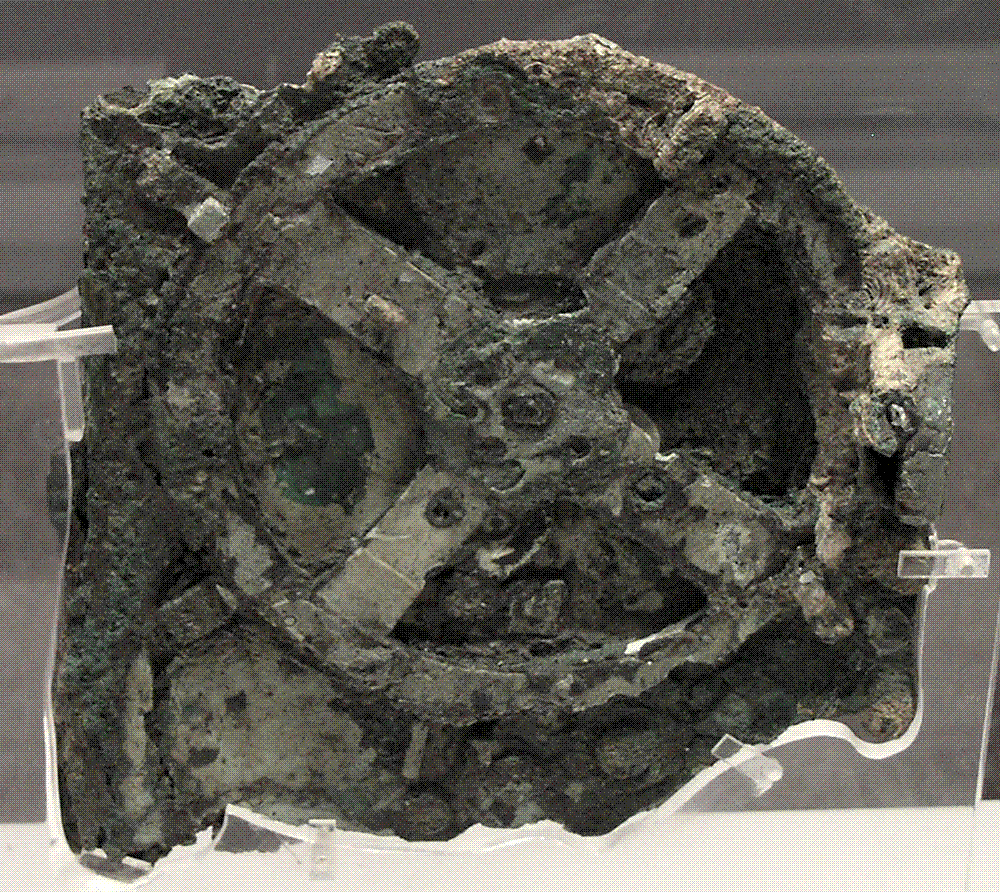
The largest surviving fragment of the Antikythera Mechanism, corroded bronze gearwork recovered from the 1900 shipwreck, in the National Archaeological Museum, Athens

The Antikythera Wreck

In 1900, Greek sponge divers blown off course found a Roman-era cargo ship that had gone down around 60 BC off Antikythera, loaded with bronzes, marbles, glassware, and coin bound for Italian markets. Among the freight lay a corroded lump of geared bronze — the Antikythera Mechanism, the most sophisticated machine to survive from the ancient world. A trading run that never arrived became the richest single time capsule of Hellenistic civilization.
Return to Antikythera project (Ephorate of Underwater Antiquities / University of Geneva)
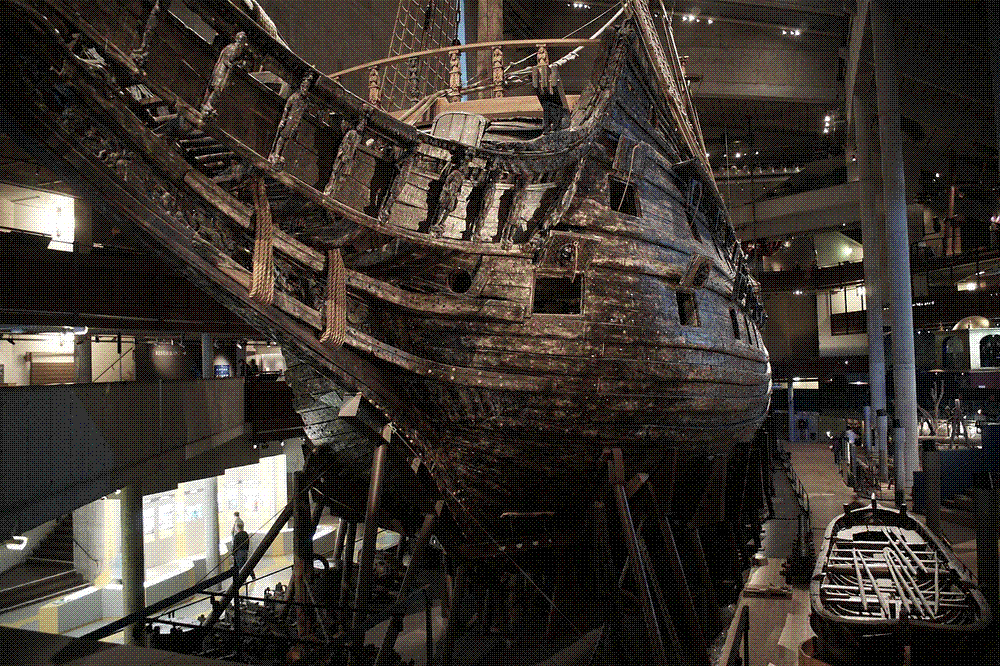
The preserved seventeenth-century warship Vasa seen from the bow inside the Vasa Museum, Stockholm

The Raising of the Vasa

The warship Vasa, pride of the Swedish crown, heeled over and sank on her maiden voyage out of Stockholm harbor in 1628, barely a mile from the quay. The cold, brackish Baltic — too fresh for the shipworm that devours wooden hulls — held her nearly whole for 333 years, until she was raised in 1961 with her carved sculptures, sailors' chests, and stores still aboard. What the sea took as a national humiliation it returned as the best-preserved seventeenth-century ship in the world.
Vasa Museum, Stockholm

Full Fathom Five

Full fathom five thy father lies. Of his bones are coral made. Those are pearls that were his eyes. Nothing of him that doth fade But doth suffer a sea-change Into something rich and strange.
William Shakespeare, The Tempest, Act I, Scene II (The Complete Works of William Shakespeare, Project Gutenberg eBook #100)

The Wreck off Thrinacia

Then Jove let fly with his thunderbolts, and the ship went round and round, and was filled with fire and brimstone as the lightning struck it. The men all fell into the sea; they were carried about in the water round the ship, looking like so many sea-gulls, but the god presently deprived them of all chance of getting home again.
Homer, The Odyssey, Book XII, translated by Samuel Butler (Project Gutenberg eBook #1727)
J. M. W. Turner's painting Ulysses Deriding Polyphemus, showing a golden sunrise over the sea as Ulysses' ship escapes the shadowed giant on the cliffs

Ulysses Deriding Polyphemus

Ulysses' galley sweeps out of the giant's bay in a blaze of sunrise, its sails and pennants crowded against a sky dissolving into gold, while the blinded Polyphemus looms above the cliffs, half rock and half storm cloud. Turner paints the Mediterranean as myth's own element, with sea-nymphs glimmering in the bow-wave like phosphorescence. These are the same waters that swallow ships and keep their stories for later ages to raise.
J. M. W. Turner, oil on canvas, 1829, National Gallery, London (NG508)

Calm Sea and Prosperous Voyage, Op. 27

Mendelssohn opens on Goethe's dead calm: long, almost motionless D major chords that hold the listener suspended in a windless sea, the stillness sailors dreaded because it meant going nowhere at all. Then the breeze stirs in the winds and strings, and the overture drives home to harbor amid trumpet fanfares. It is the ocean as suspended time — the deep holding everything still until the world is ready to move again.
Felix Mendelssohn, concert overture (1828, rev. 1833), after Goethe — IMSLP