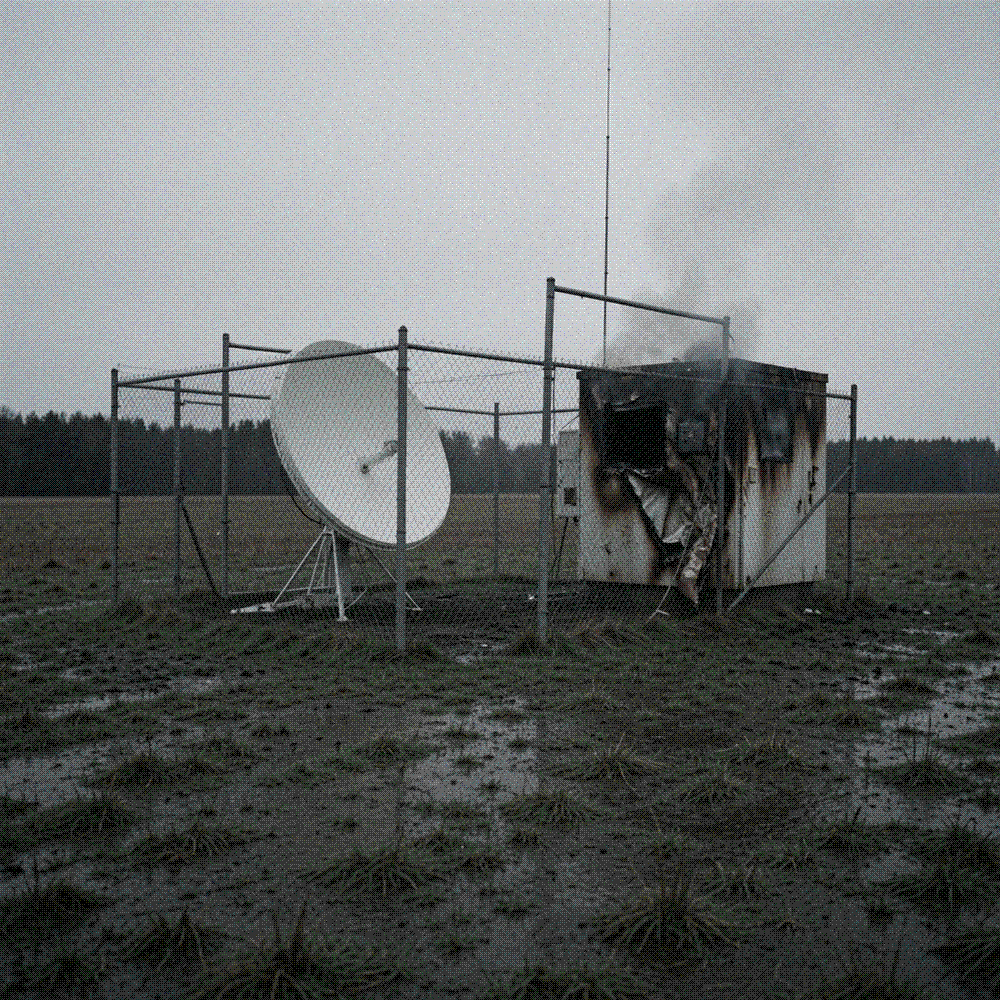
A white satellite dish behind a chain-link fence beside a burnt-out equipment cabin, thin smoke rising under a grey sky

AI-generated

ConflictBBC · Reuters · APSep 24, 2026

Poland calls a fire at a Starlink ground station sabotage as Denmark warns Russia will escalate hybrid attacks

The week's clearest picture of the war in Europe came from things that were not, formally, attacks. A Polish minister said the fire at a Starlink ground station serving Ukraine was sabotage. Denmark's intelligence service said it expects Russia to step up hybrid warfare — sabotage, drone incursions, cable and infrastructure damage — over the coming months. NATO's top commander said the alliance was increasing intelligence sharing among members, while its secretary general urged calm, and an EU defence agency told Reuters that Europe needs a 'decisive change' in its defence effort to meet the threat. Finland's president appealed publicly to Elon Musk for help letting Ukraine strike Russian missile launchers. Underneath the ambiguity, the unambiguous war continued: Russian strikes killed eight people in Ukraine and damaged a maternity clinic. The difficulty this week made plain is that the deniable half of the campaign is designed to sit below the threshold at which any alliance has agreed to respond.
Analogies

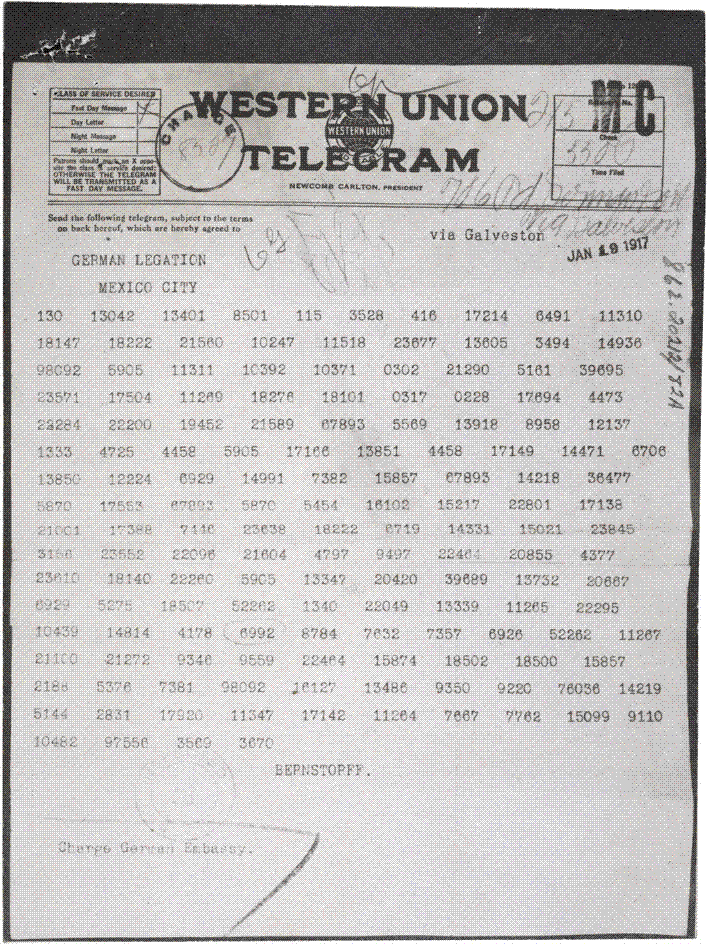
The decoded text of the 1917 Zimmermann Telegram on a typed sheet

January 1917: a telegram intercepted and decoded turns a covert manoeuvre into a public act of war

We intend to begin on the first of February unrestricted submarine warfare. We shall endeavor in spite of this to keep the United States of America neutral.
Zimmermann Telegram, Arthur Zimmermann, German Foreign Secretary, to the German Minister in Mexico, 16 January 1917, as decoded and released by the British Admiralty's Room 40. →
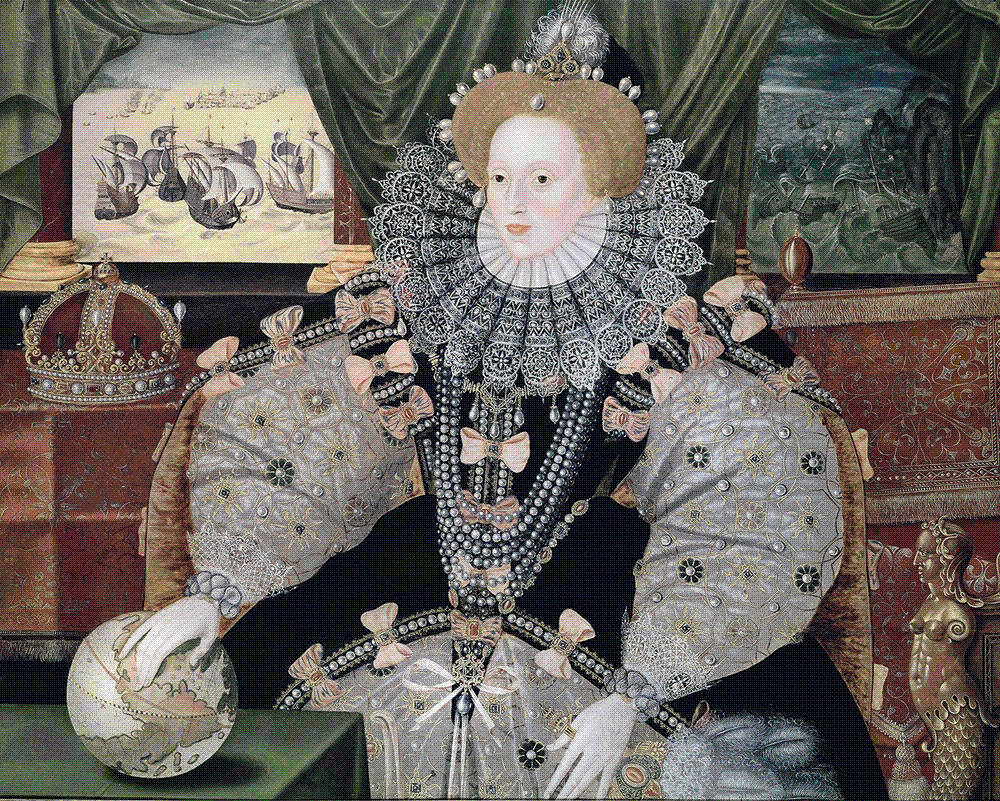
The Armada Portrait of Elizabeth I, the queen's hand resting on a globe with ships in the windows behind

1588, Tilbury: a state addresses a population that knows an attack is coming and does not know when

I know I have the body but of a weak and feeble woman; but I have the heart and stomach of a king, and of a king of England too
Elizabeth I, speech to the troops at Tilbury, 9 August 1588, as recorded by Leonel Sharp. →
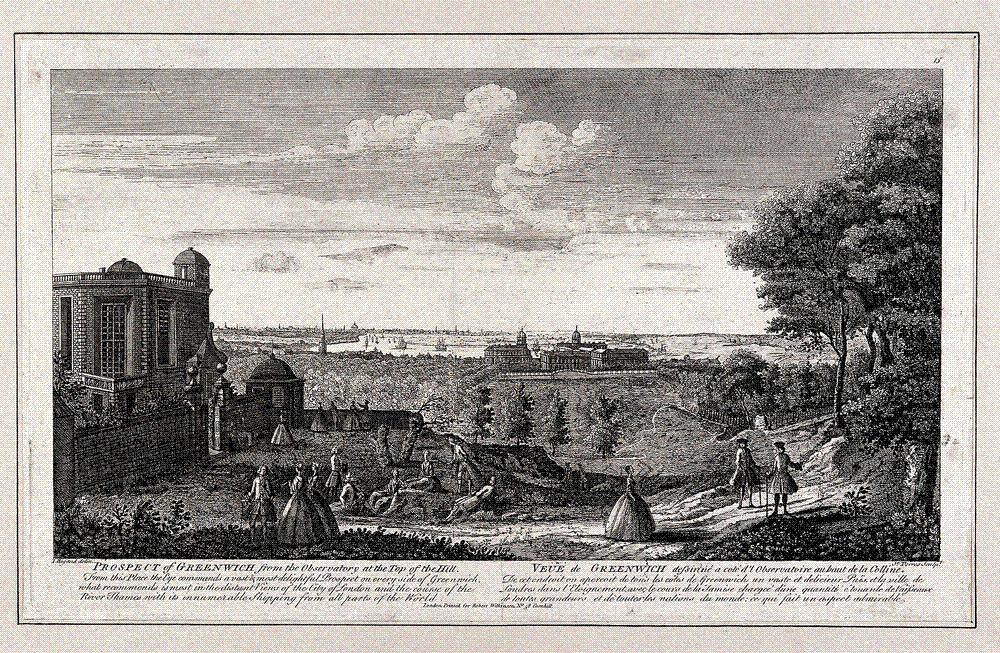
A Victorian engraving of the Royal Observatory at Greenwich on its hill

Conrad's 'The Secret Agent' (1907) sets out the logic of an outrage designed to be unattributable

A bomb outrage to have any influence on public opinion now must go beyond the intention of vengeance or terrorism. It must be purely destructive.
Joseph Conrad, The Secret Agent: A Simple Tale, ch. II (London: Methuen, 1907); Project Gutenberg ebook 974. →
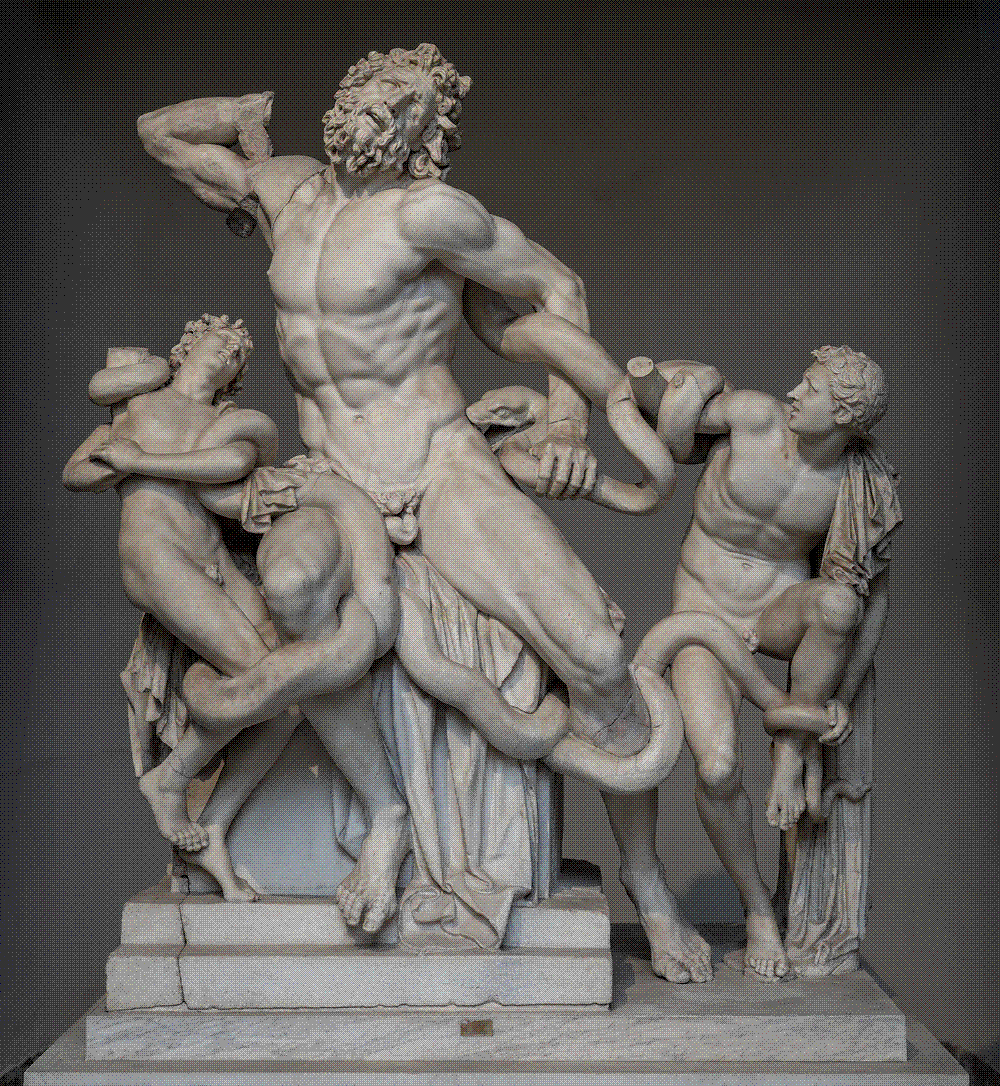
The Hellenistic marble group of Laocoön and his sons struggling with serpents

Laocoön warns the Trojans about the gift, and is not listened to in time

Somewhat is sure design'd, by fraud or force: Trust not their presents, nor admit the horse.
Virgil, The Aeneid, book II, trans. John Dryden (1697); Project Gutenberg ebook 228. →
A Goya etching from the Disasters of War showing civilians fleeing across broken ground

Goya's 'Disasters of War' (1810–20) records a war fought by people who are not in uniform

Goya etched eighty-odd plates of the Peninsular War and did not publish them; they appeared thirty-five years after his death. There are almost no battles in them. There are reprisals, a man garrotting another in a doorway, women fighting with what is to hand, bodies in ditches, and captions in the first person — 'I saw it', 'This is what happened'. It is the founding document of the idea that modern war is mostly done to civilians by people who never declared anything.
Francisco de Goya, Los desastres de la guerra, etchings with aquatint, made 1810–20, first published by the Real Academia de Bellas Artes de San Fernando, Madrid, 1863. →
Vereshchagin's painting of a pyramid of skulls in a scorched plain with crows circling

Vereshchagin's 'The Apotheosis of War' (1871) carries a dedication that covers every campaign since

A pyramid of human skulls stands in a scorched plain under a hot pale sky, crows working over it, a ruined city and dead trees behind. Vereshchagin, who had travelled with the Russian army in Turkestan and would die on a battleship at Port Arthur, inscribed the frame: dedicated to all great conquerors, past, present and to come. It was refused by officials who understood exactly what it was for.
Vasily Vereshchagin, Apofeoz voyny (The Apotheosis of War), 1871, oil on canvas, 127 × 197 cm; State Tretyakov Gallery, Moscow. →