AI-generated
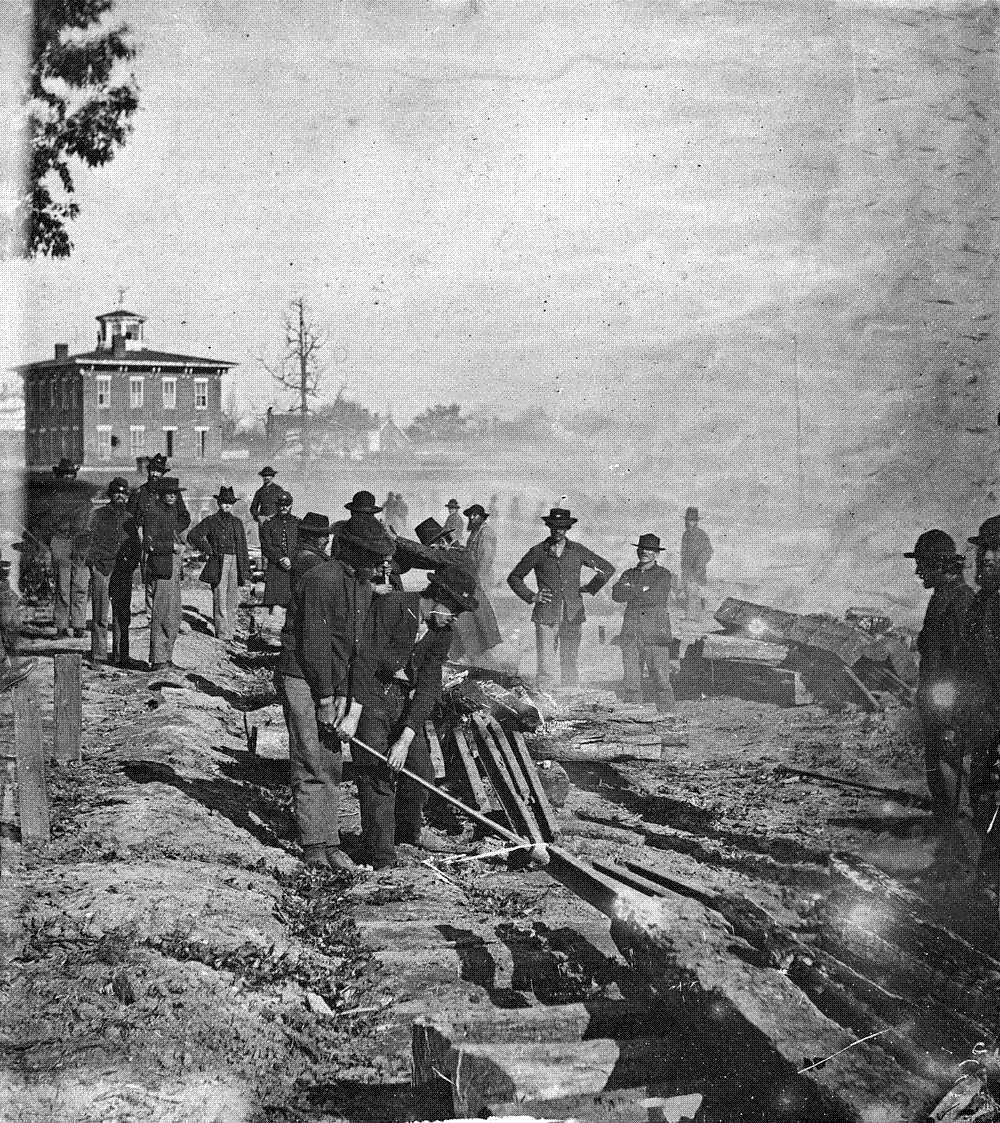
Russia and Ukraine escalate deep strikes as Kyiv warns its missile interceptors are running short The war reached deeper in both directions this week. Russia opened it with missile and drone barrages on Kyiv and other cities — fourteen killed in a single strike on 5 August, a three-year-old boy and his grandparents dead near Kyiv on the 8th — while Ukraine answered at range, striking oil refineries at Yaroslavl and Ilsky and, by the 11th, an oil hub in Nizhnekamsk and targets in Belgorod, killing more than a dozen. The shape of the exchange hardened: Russia spending missiles against civilian endurance, Ukraine spending drones against the revenue that buys them. Beneath it ran two warnings. Zelensky said interceptor deliveries have fallen sharply from 2025 levels, leaving cities more exposed with each barrage, and that Russia is now fielding North Korean missiles and troops. By week's end Kyiv had handed Washington new proposals for ending a war that, on the ground, was still finding new ways to widen. Analogies Make Georgia Howl: Choosing an Economy over Territory (1864) Until we can repopulate Georgia, it is useless for us to occupy it; but the utter destruction of its roads, houses, and people, will cripple their military resources. By attempting to hold the roads, we will lose a thousand men each month, and will gain no result. I can make this march, and make Georgia howl!
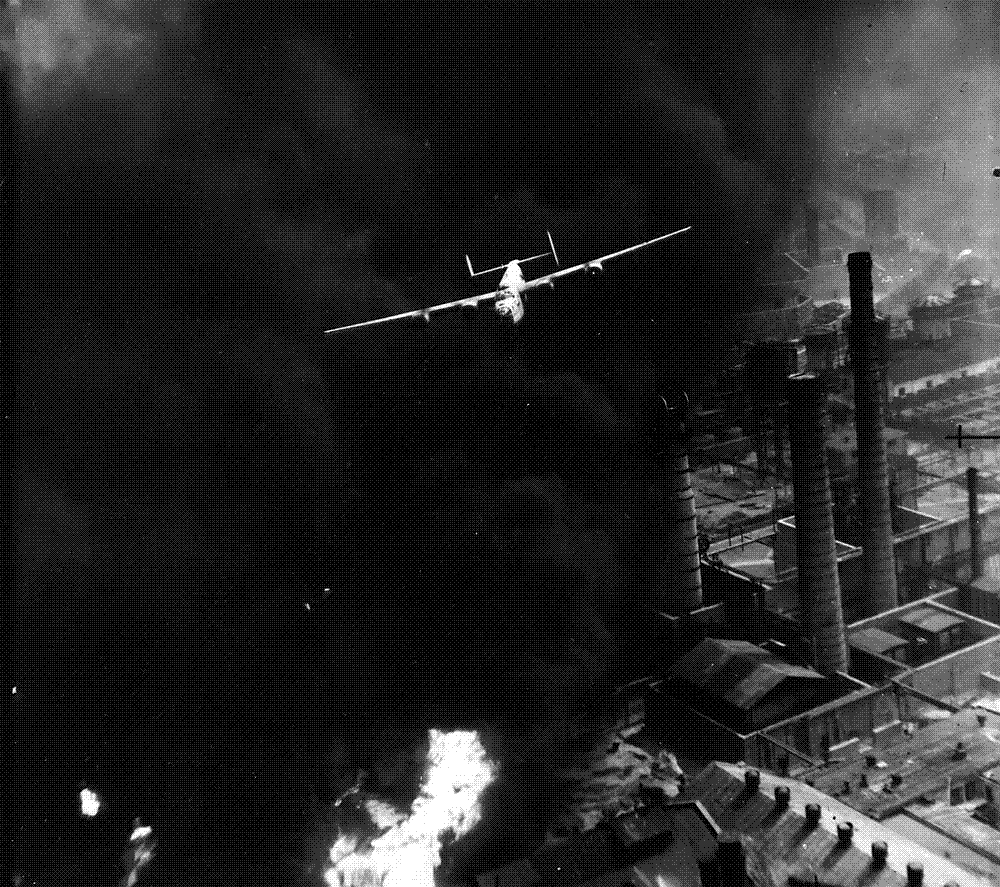
William T. Sherman, Memoirs of General William T. Sherman (1875); dispatch to Lt. Gen. U. S. Grant, October 9, 1864 — Project Gutenberg → Leuna and the Duel of Bomb versus Repair Crew (1944) The story of Leuna is illustrative. Leuna was the largest of the synthetic plants and protected by a highly effective smoke screen and the heaviest flak concentration in Europe. Air crews viewed a mission to Leuna as the most dangerous and difficult assignment of the air war. Leuna was hit on May 12 and put out of production. However, investigation of plant records and interrogation of Leuna's officials established that a force of several thousand men had it in partial operation in about 10 days. It was again hit on May 28 but resumed partial production on June 3 and reached 75 percent of capacity in early July.
United States Strategic Bombing Survey, Summary Report (European War), September 30, 1945 — HyperWar archive, ibiblio → The War That Destroys but Cannot Decide (1908) In the air all directions lead everywhere. Consequently it was impossible to end a war by any of the established methods. A, having outnumbered and overwhelmed B, hovers, a thousand airships strong, over his capital, threatening to bombard it unless B submits. B replies by wireless telegraphy that he is now in the act of bombarding the chief manufacturing city of A by means of three raider airships. A denounces B's raiders as pirates and so forth, bombards B's capital, and sets off to hunt down B's airships, while B, in a state of passionate emotion and heroic unconquerableness, sets to work amidst his ruins, making fresh airships and explosives for the benefit of A.
H. G. Wells, The War in the Air (1908) — Project Gutenberg → The Cudgel of the People's War (1869) the cudgel of the people’s war was lifted with all its menacing and majestic strength, and without consulting anyone’s tastes or rules and regardless of anything else, it rose and fell with stupid simplicity, but consistently, and belabored the French till the whole invasion had perished.
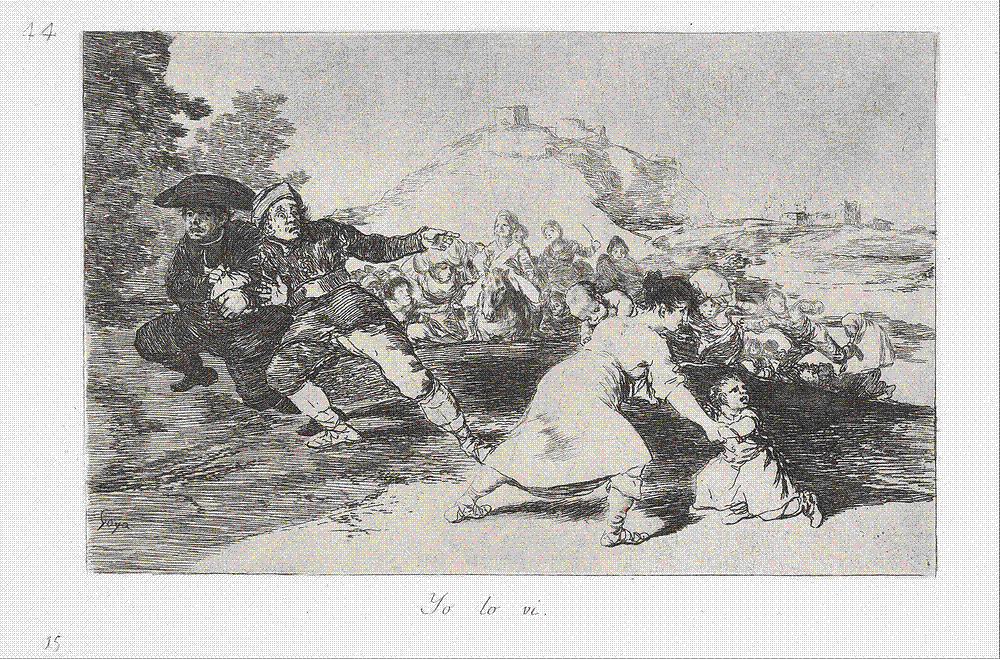
Leo Tolstoy, War and Peace (1869), trans. Louise and Aylmer Maude — Project Gutenberg → Yo lo vi: The Eyewitness Ledger of Attrition Civilians stream away from an unseen attack — a mother hauling her child by the arm, villagers bent under bundles, faces turned back toward whatever pursues them — and Goya captions the plate simply 'I saw it,' an eyewitness deposition rather than a battle scene. Made while Napoleon's armies and Spanish guerrillas bled each other through years of exhaustion, the series almost never shows a battlefield: its subject is the erosion of ordinary life, plate by plate, as the true ledger of attrition. By insisting on witness, Goya makes the record of what is done to the unarmed part of the war itself — testimony as a weapon in the contest over whose endurance breaks first.
Francisco de Goya, 'Yo lo vi' (I Saw It), plate 44 of Los Desastres de la Guerra, etched c. 1810–12, published 1863 — Bibliothèque nationale de France, Gallica → The Leningrad Symphony: Morale as Munition The first movement's 'invasion theme' is a banal little march tune repeated a dozen times over an unrelenting snare-drum ostinato, each pass louder and more mechanical, until triviality becomes a crushing machine — war rendered as repetition that grinds rather than decides. Begun in Leningrad under German bombardment in 1941, the symphony was flown back into the starving city and performed on 9 August 1942 by the emaciated survivors of the Radio Orchestra, loudspeakers carrying the music toward the German lines while Soviet counter-battery fire kept the enemy guns silent for its duration. In a siege aimed squarely at civilian endurance, the concert was itself a military act: audible proof that the besieged population's will still stood.
Dmitri Shostakovich, Symphony No. 7 in C major, Op. 60 'Leningrad' (1941) — IMSLP →