Wikimedia Commons
Shein seeks a $30 billion to $40 billion valuation for a Hong Kong listing it could launch in late August The fast-fashion group is targeting far less than the $98.2 billion valuation it reached in 2022 and the $64 billion of its private rounds in 2023 and 2024, a mark of the pressure on its business. It began pre-marketing meetings with investors last week, though the final price and the timing are not yet set. Its draft prospectus showed a $99 million quarterly loss after the United States scrapped a duty exemption on small parcels. Analogies Rome's tax-farming syndicates: "scarcely a man who is not interested" For contracts, too numerous to count, are given out by the censors in all parts of Italy for the repairs or construction of public buildings; there is also the collection of revenue from many rivers, harbours, gardens, mines, and land—everything, in a word, that comes under the control of the Roman government: and in all these the people at large are engaged; so that there is scarcely a man, so to speak, who is not interested either as a contractor or as being employed in the works.
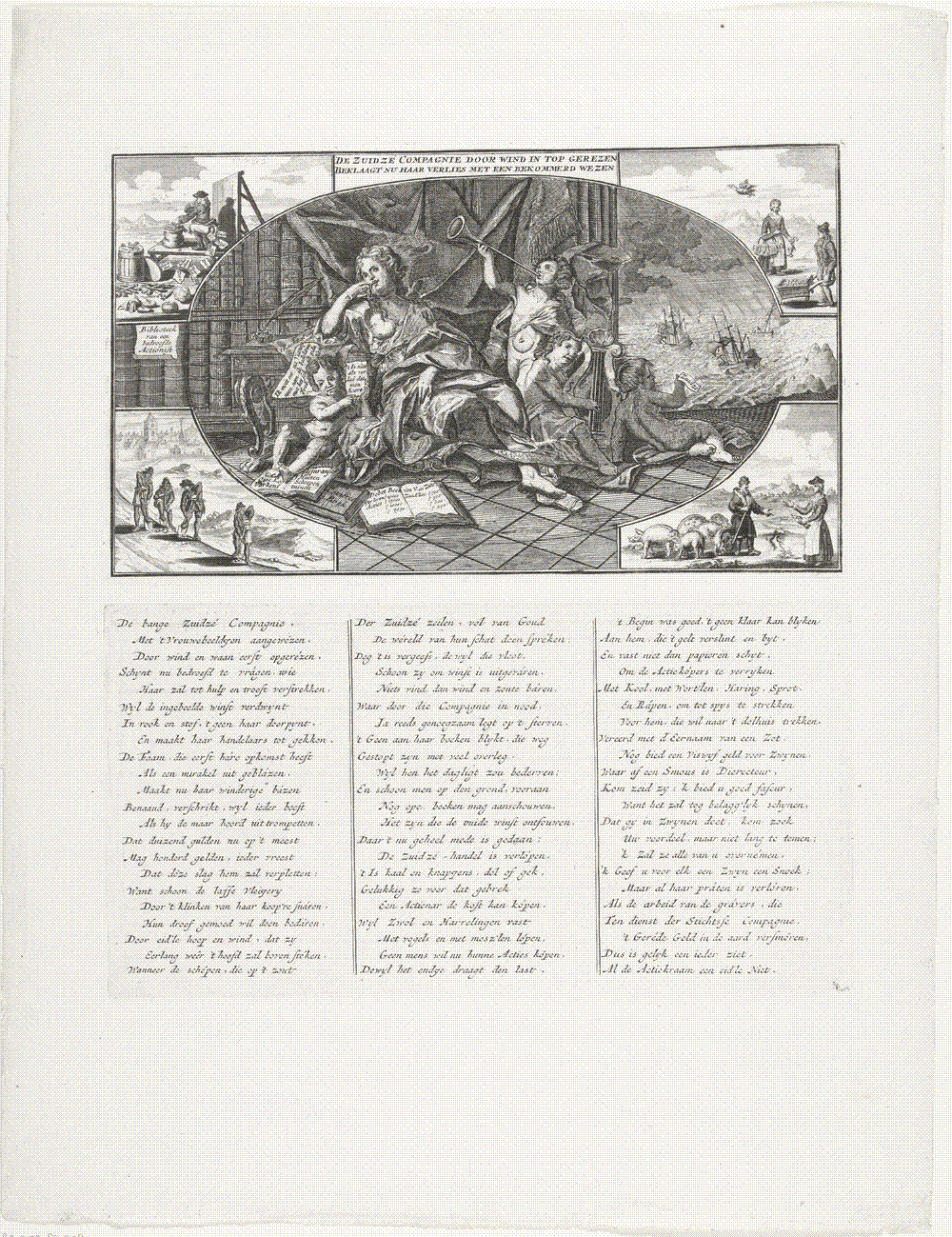
Polybius, Histories, Book 6, ch. 17 ("Powers of the Senate"), c. 140 BCE; trans. Evelyn S. Shuckburgh, London and New York: Macmillan, 1889 (repr. Bloomington 1962). Hosted by the Perseus Digital Library, Tufts University. → 1720: "A company for carrying on an undertaking of great advantage, but nobody to know what it is" But the most absurd and preposterous of all, and which shewed, more completely than any other, the utter madness of the people, was one started by an unknown adventurer, entitled “A company for carrying on an undertaking of great advantage, but nobody to know what it is.” Were not the fact stated by scores of credible witnesses, it would be impossible to believe that any person could have been duped by such a project. The man of genius who essayed this bold and successful inroad upon public credulity, merely stated in his prospectus that the required capital was half a million, in five thousand shares of 100l. each, deposit 2l. per share.
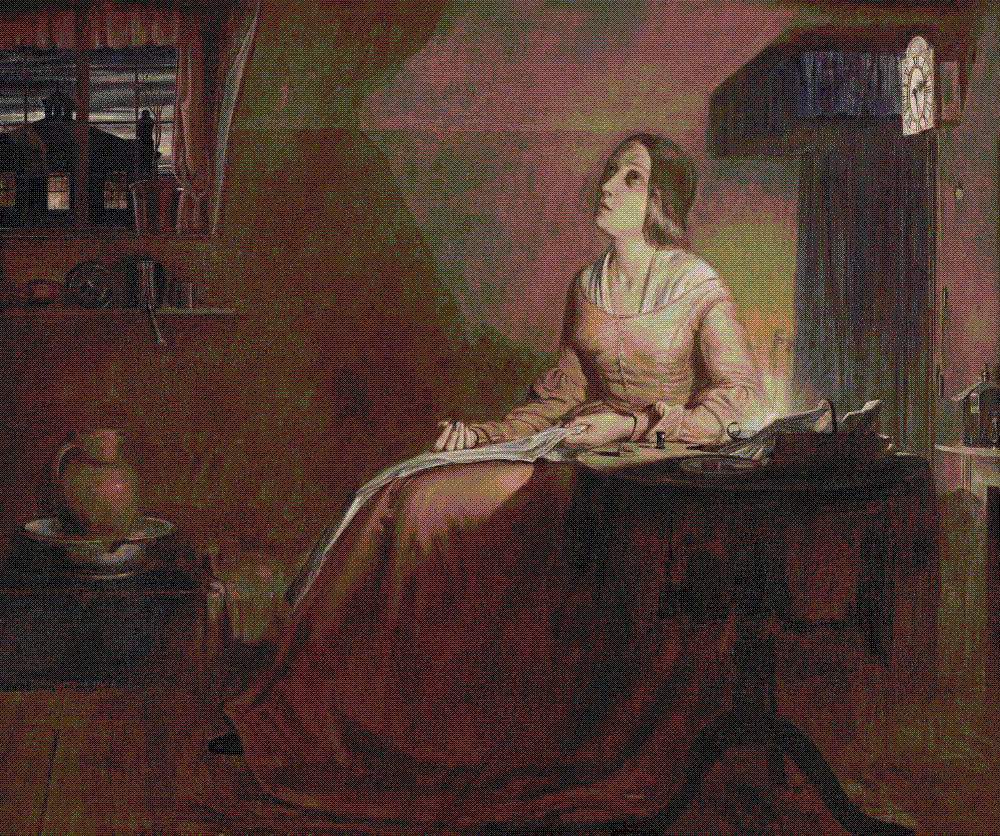
Charles Mackay, Memoirs of Extraordinary Popular Delusions and the Madness of Crowds (London: Richard Bentley, 1841), chapter on "The South-Sea Bubble." Project Gutenberg eBook #24518. → Thomas Hood counts the true cost of a cheap shirt With fingers weary and worn, / With eyelids heavy and red, / A woman sat in unwomanly rags, / Plying her needle and thread— / Stitch! stitch! stitch! / In poverty, hunger, and dirt, / And still with a voice of dolorous pitch,— / Would that its tone could reach the rich!— / She sang this "Song of the Shirt!" … O, men, with sisters dear! / O, men, with mothers and wives! / It is not linen you 're wearing out, / But human creatures' lives!
Thomas Hood, "The Song of the Shirt," first published anonymously in Punch, Christmas number, 1843; text from The Poetical Works of Thomas Hood. Hosted on Wikisource. → Trollope: the point was never the railway, it was to float a company "If you could realise all the money it wouldn't make a mile of the railway," said Paul. Mr. Fisker laughed at him. The object of Fisker, Montague, and Montague was not to make a railway to Vera Cruz, but to float a company. Paul thought that Mr. Fisker seemed to be indifferent whether the railway should ever be constructed or not. It was clearly his idea that fortunes were to be made out of the concern before a spadeful of earth had been moved.
Anthony Trollope, The Way We Live Now (London: Chapman & Hall, 1875), ch. IX, "The Great Railway to Vera Cruz." Project Gutenberg eBook #5231. → Hogarth engraves the machinery of a bubble Hogarth's first great satire turns the City of London into a fairground. A vast wooden merry-go-round spins clergymen, aristocrats, prostitutes and shopkeepers in circles beneath a barker's platform, while a devil butchers the body of Fortune and flings gobbets of her flesh to the scrambling crowd below. Off to one side Honesty is broken on a wheel and Honour flogged by Self-Interest; a queue of women waits at a raffle for husbands. The Monument in the background carries an altered inscription blaming the ruin of the city not on fire but on the South Sea speculation.
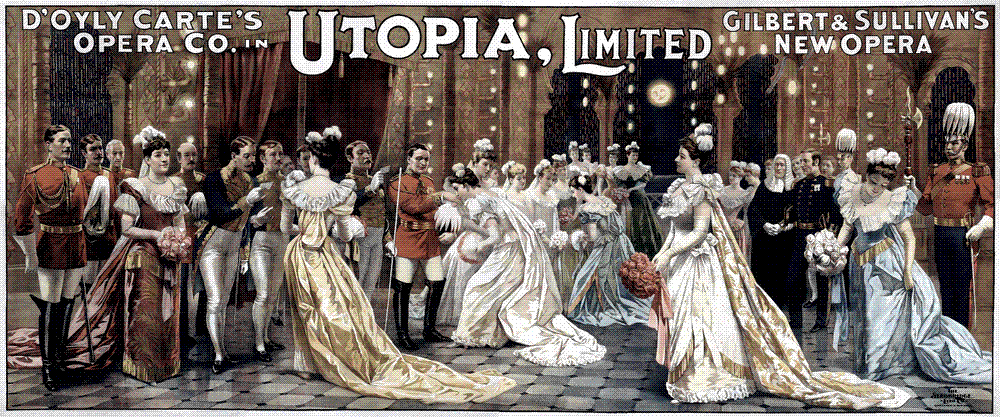
William Hogarth, The South Sea Scheme (also known as An Emblematical Print on the South Sea Scheme), etching and engraving, 1721; impression in the British Museum, London (registration no. 1841,0809.230). Object image hosted on Wikimedia Commons. → Gilbert and Sullivan set the limited-liability prospectus to music Some seven men form an Association / (If possible, all Peers and Baronets), / They start off with a public declaration / To what extent they mean to pay their debts. / That's called their Capital; if they are wary / They will not quote it at a sum immense. / The figure's immaterial—it may vary / From eighteen million down to eighteenpence. … If you succeed, your profits are stupendous— / And if you fail, pop goes your eighteenpence.
Arthur Sullivan and W. S. Gilbert, Utopia Limited; or, The Flowers of Progress, comic opera in two acts, first performed Savoy Theatre, London, 7 October 1893; vocal score first published London: Chappell & Co., 1893. Scores hosted at IMSLP / Petrucci Music Library. Libretto wording of Mr. Goldbury's Act II song verified against The Complete Plays of Gilbert and Sullivan, Project Gutenberg eBook #808. → 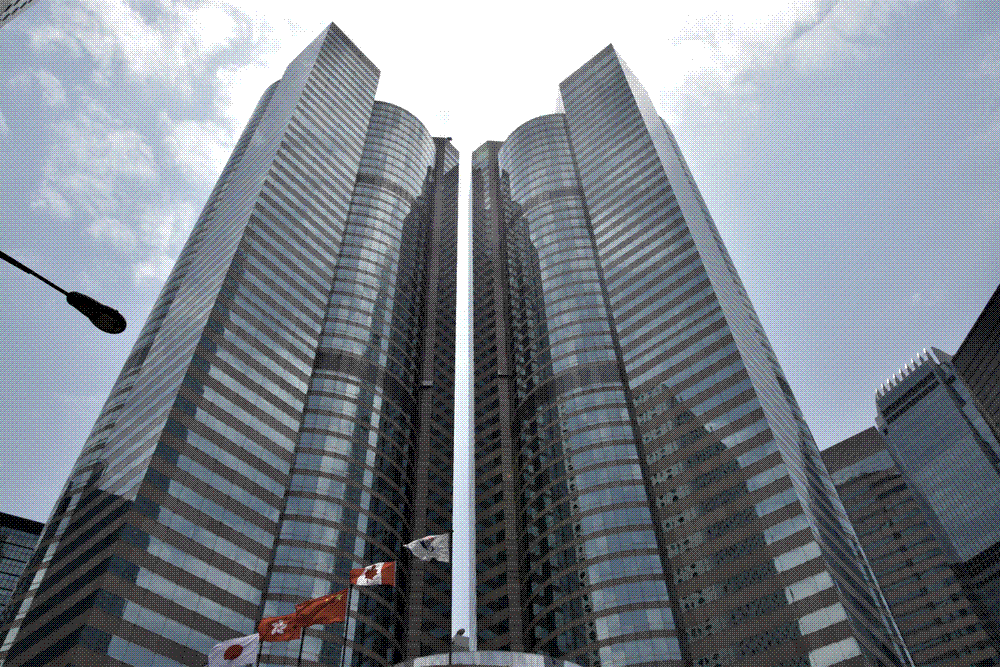
.jpg)