BBC
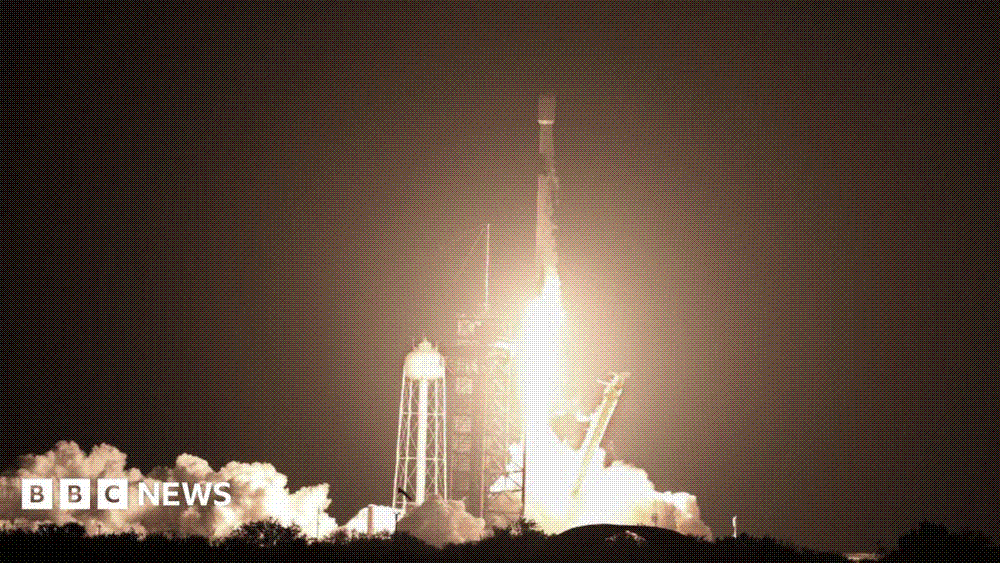
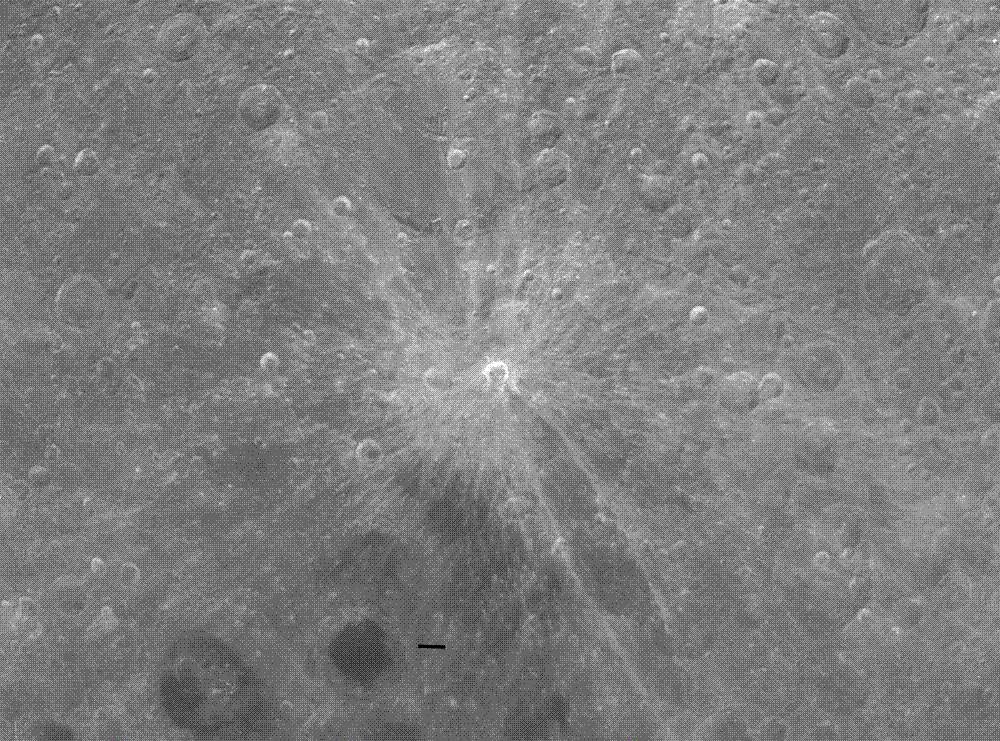
NASA says a discarded SpaceX Falcon 9 upper stage will strike the Moon on 5 August at about 5,400mph NASA's Center for Near-Earth Object Studies confirmed the spent stage, left over from a January 2025 launch that carried a pair of lunar landers, is on an accidental collision course and will hit near Einstein Crater at about 06:35 GMT on Wednesday. Astronomer Bill Gray, who first plotted the trajectory, predicts a crater more than 17 metres across and a dust plume tens of kilometres high. Telescopes across the Americas, NASA's Lunar Reconnaissance Orbiter and South Korea's Danuri probe will watch what researchers call a rare free experiment and a warning about space debris. Analogies Five men at Canterbury watch the new Moon spit fire, June 1178 Hoc anno, die Dominica ante Nativitatem Sancti Johannis Baptistæ, post solis occasum, luna prima, signum apparuit mirabile, quinque vel eo amplius viris ex adverso sedentibus... Ex hujus divisionis medio prosilivit fax ardens, flammam, carbones et scintillas longius proiciens. Corpus interim lunæ quod inferius erat torquebatur quasi anxie, et... ut percussus coluber luna palpitabat. [In this year, on the Sunday before the Nativity of St John the Baptist, after sunset, the moon being new, a marvellous sign appeared to five or more men sitting opposite it... From the middle of this division a burning torch sprang out, flinging fire, coals and sparks far and wide. Meanwhile the lower body of the moon writhed as if in anguish, and... the moon throbbed like a struck snake.]
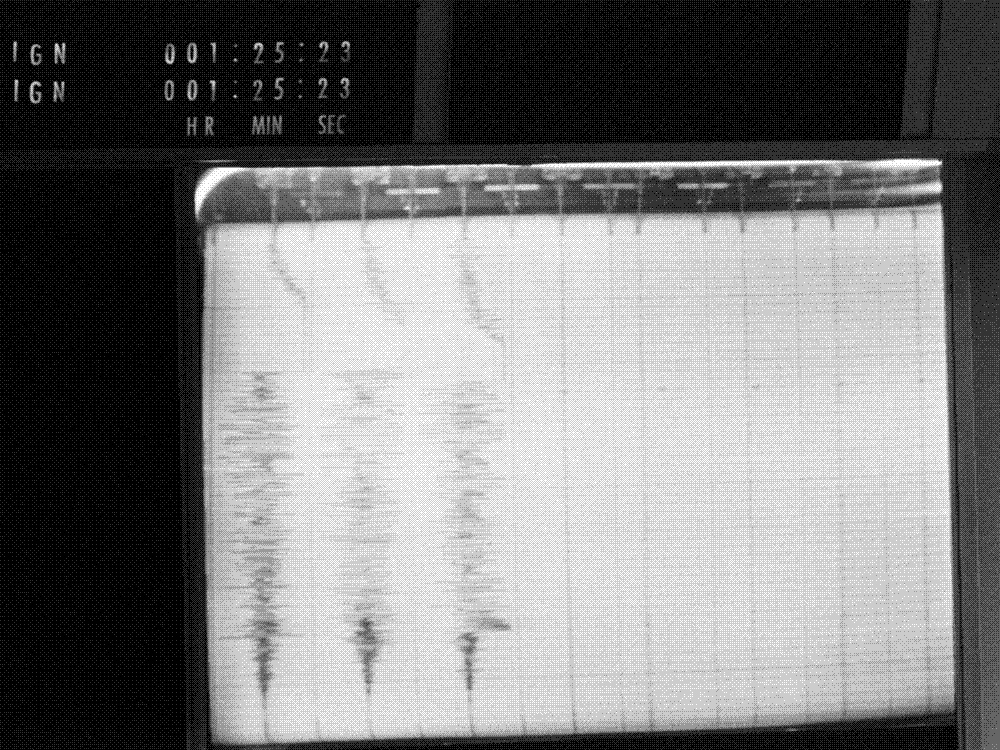
Gervase of Canterbury, Chronica, entry for A.D. 1178, in The Historical Works of Gervase of Canterbury, Vol. I, ed. William Stubbs (Rolls Series 73; London: Longman and Co., 1879), p. 276. Digitised copy hosted at the Internet Archive. → Apollo 13's discarded third stage is aimed at the Moon and hits it at 5,600 mph, 1970 The S-IVB impacted the lunar surface at 8:09:41 p.m. e.s.t., April 14, 1970, travelling at a speed of 5600 miles/hr. Stage weight at the time of impact was 30 700 pounds... The energy release from the impact was equivalent to an explosion of 7.7 tons of trinitrotoluene (TNT). Seismic signals were first recorded 28.4 seconds after impact and continued for over 4 hours. Some signals were so large that seismometer sensitivity had to be reduced by command from earth to keep the data on scale.
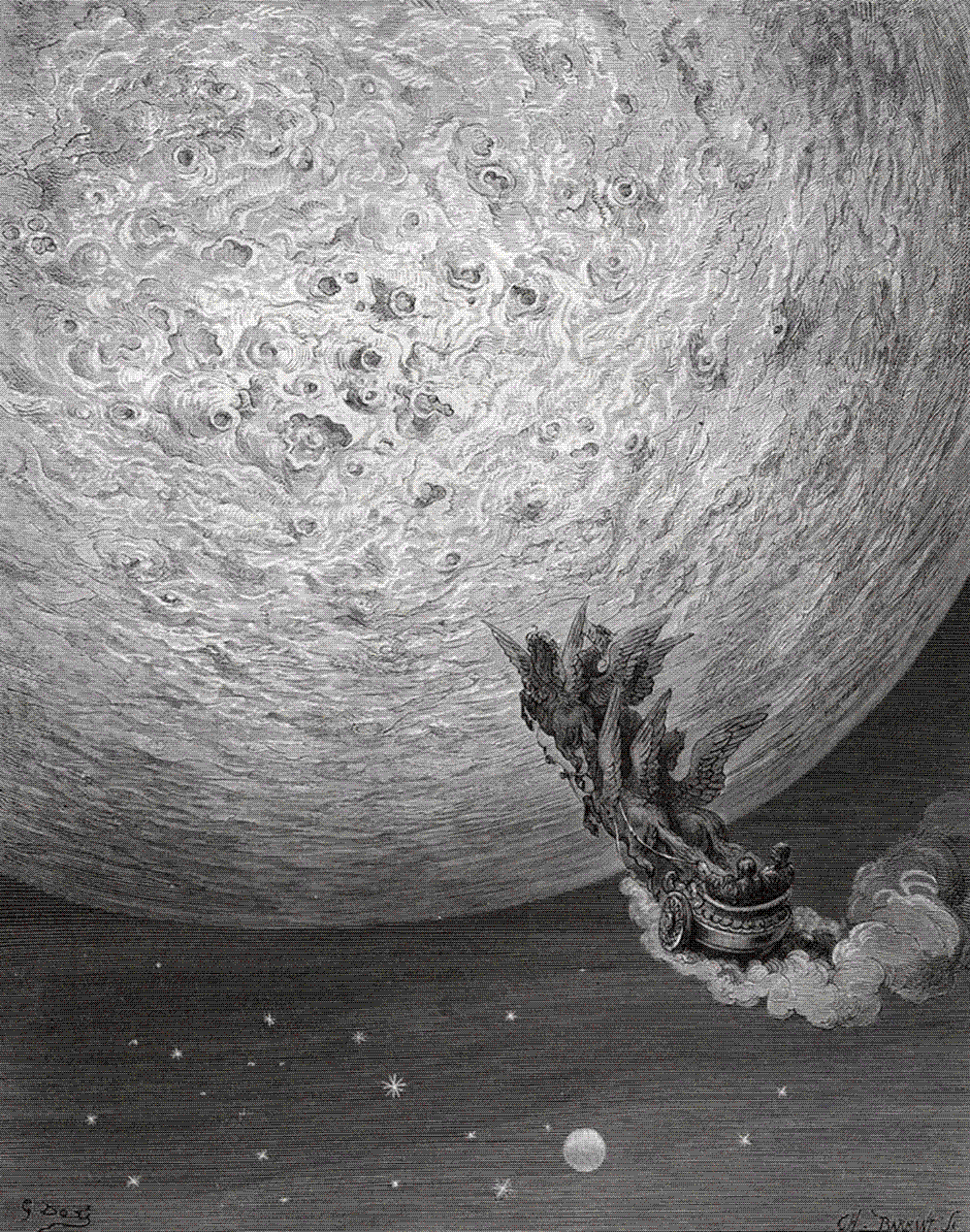
NASA, Apollo 13 Mission Report, MSC-02680 (also NASA-TM-X-66449), prepared by the Mission Evaluation Team, Manned Spacecraft Center, Houston, September 1970, section 11.3 'S-IVB impact', p. 11-10. Hosted on the NASA Technical Reports Server. → Ariosto sends a knight to the Moon, where everything Earth loses is piled up He, that with other scope had thither soared, / Pauses not all these wonder to peruse: / But led by the disciple of our Lord, / His way towards a spacious vale pursues; / A place wherein is wonderfully stored / Whatever on our earth below we lose. / Collected there are all things whatsoe'er, / Lost through time, chance, or our own folly, here... These were old crowns of the Assyrian land / And Lydian -- as that paladin was taught -- / Grecian and Persian, all of ancient fame; / And now, alas! well-nigh without a name.
Ludovico Ariosto, Orlando Furioso (1532), Canto XXXIV, stanzas 73 and 76, translated by William Stewart Rose (1823-31). Project Gutenberg eBook #615. → Verne's projectile deviates from its course from some unknown cause ...that it had deviated from its course from some unknown cause, and had not reached its destination; but that it had passed near enough to be retained by the lunar attraction; that its rectilinear movement had been changed to a circular one, and that following an elliptical orbit round the star of night it had become its satellite... It ended with the double hypothesis: either the attraction of the moon would draw it to herself, and the travelers thus attain their end; or that the projectile, held in one immutable orbit, would gravitate around the lunar disc to all eternity.
Jules Verne, From the Earth to the Moon (De la Terre à la Lune, 1865), chapter XXVIII, 'A New Star', in the anonymous English translation published as From the Earth to the moon; and, round the moon. Project Gutenberg eBook #83. → Méliès puts the capsule in the Moon's eye, 1902 A plaster Moon with a fleshy human face fills the frame, its craters modelled like blemishes on a cheek. The gunners' shell arrives from the left and buries itself in the right eye, and a splash of hand-painted red runs down from the wound while the face goes on grimacing at the audience. It is the first great image of a human machine striking another world, and it was already a joke at the expense of our aim.
Georges Méliès, Le Voyage dans la Lune (Star-Film, Paris, 1902), frame from the only surviving hand-coloured print, colouring by the Thuillier studio. Object page on Wikimedia Commons. → Offenbach's gunners load the Moon shot, Paris 1875 Act I ends at the mouth of a cannon, with the Chœur des artilleurs: 'Nous sommes les petits artilleurs, moyens artilleurs et grands artilleurs. C'est ici, ce n'est pas ailleurs qu'on trouve de vrais artilleurs' — 'We are the little gunners, middling gunners and great gunners. It is here, and nowhere else, that you find real gunners.' The finale it launches is headed in the score simply 'En route pour la lune!', and Act II opens with the travellers rattling inside their shell in the Rondo de l'obus, 'Dans un obus qui fend l'air'.
Jacques Offenbach, Le voyage dans la lune, opéra-féerie in four acts, libretto by Albert Vanloo, Eugène Leterrier and Arnold Mortier, first performed at the Théâtre de la Gaîté, Paris, 26 October 1875; vocal score, piano reduction by Léon Roques (Paris: Choudens père et fils, [1875], plate A.C.3340), scanned from the Bibliothèque nationale de France copy. Hosted at IMSLP / Petrucci Music Library. →