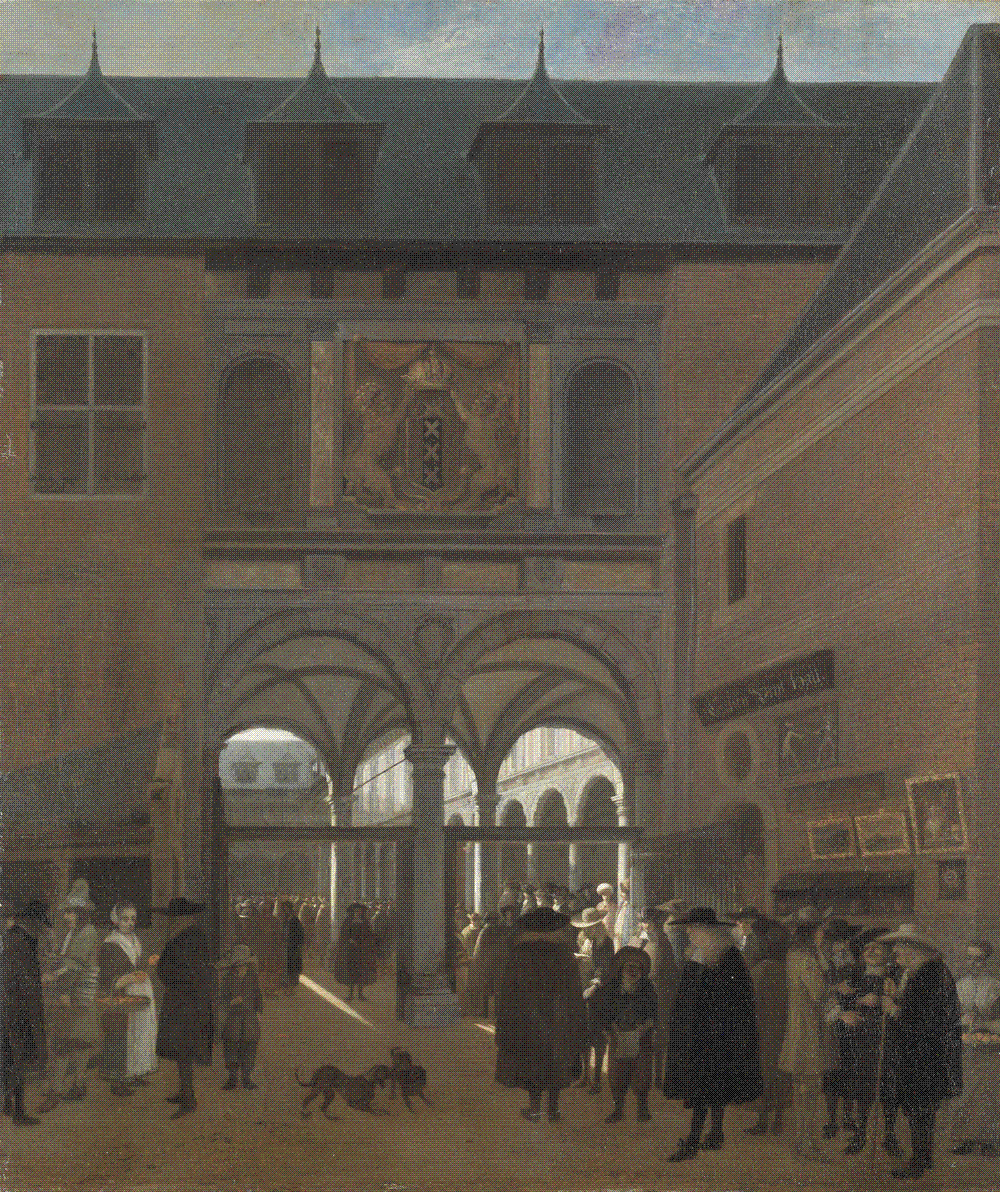
A Falcon 9 rocket climbing on a column of flame at night, carrying a batch of Starlink satellites to orbit.

U.S. Space Force via Wikimedia Commons

EconomyAP · ReutersAug 4, 2026

SpaceX reports a $541 million quarterly loss in its first results as a public company as revenue jumps more than 90% to $7.8 billion

The loss of 9 cents a share for the three months through June was less than half what analysts had expected. Revenue rose more than 90% from a year earlier, carried by the Starlink satellite business, which ended March with 10.3 million subscribers, up from 8.9 million at the end of 2025. Options traders had positioned for a swing of roughly $225 billion in the company's value around the report.
Analogies

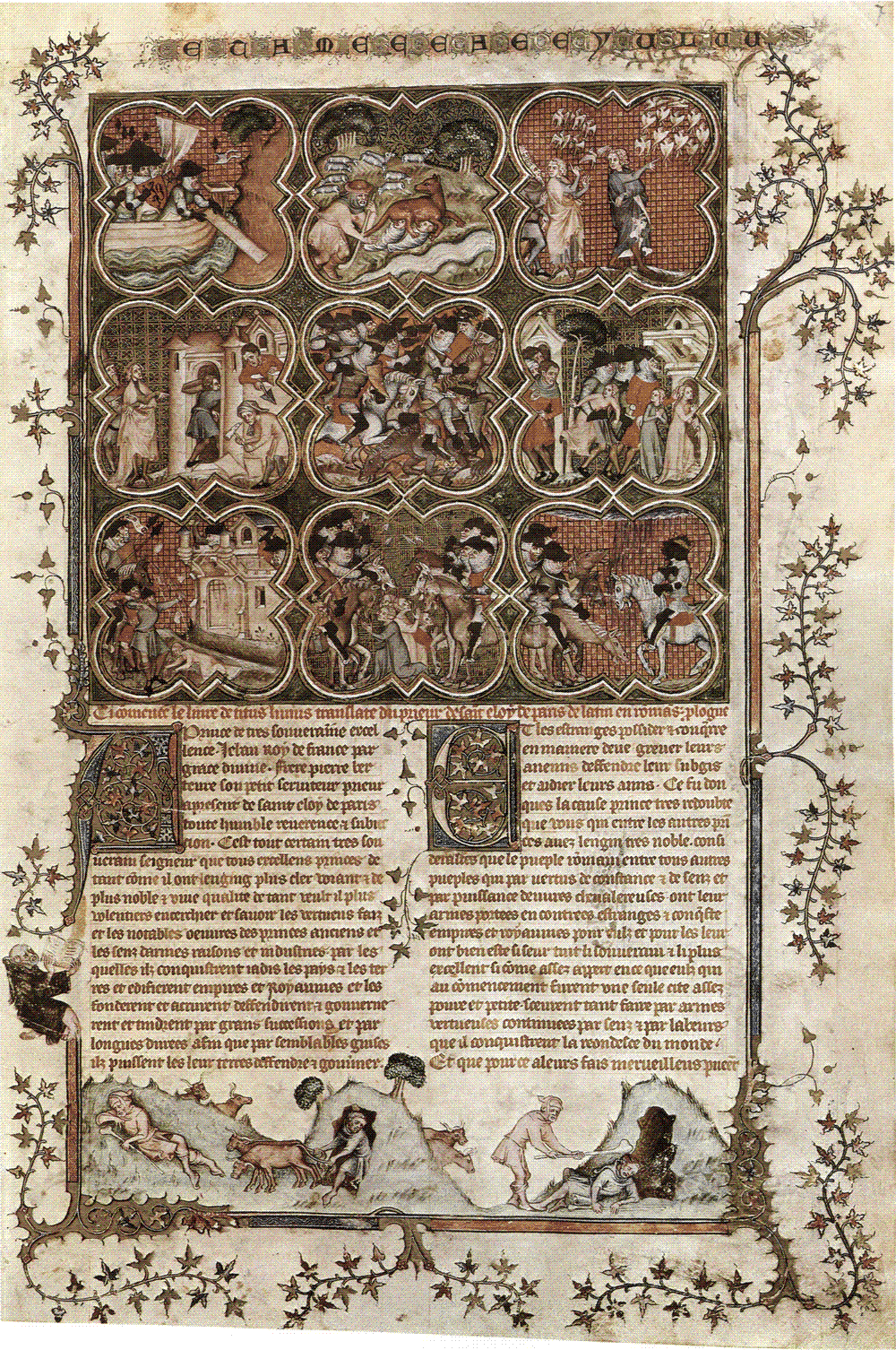
Illuminated opening page of a medieval manuscript of Livy's Ab urbe condita in Pierre Bersuire's French translation, made for Charles V of France (Paris, Bibliothèque Sainte-Geneviève, Ms. 777, fol. 7r).

In 215 BC three Roman syndicates bid to supply the armies in Spain, demanding that the State insure their cargoes against storm and capture.

On the appointed day three syndicates appeared, consisting each of nineteen members, prepared to tender for the contracts. They insisted on two conditions - one was that they should be exempt from military service whilst they were employed on this public business, and the other that the cargoes they shipped should be insured by the government against storm or capture. Both demands were conceded, and the administration of the State was carried on with private money.
Livy, Ab Urbe Condita (From the Founding of the City), Book 23, chapter 49, translated by the Rev. Canon Roberts (London: J. M. Dent & Sons, 1905); hosted by Wikisource.
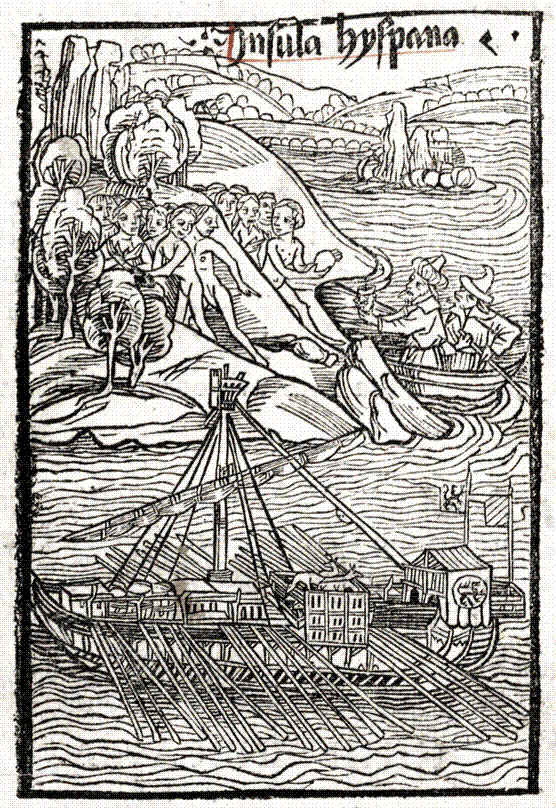
Woodcut from the Basel 1493 printing of Columbus's letter, showing his ships approaching the newly claimed islands.

Columbus's letter of 15 February 1493, addressed to the crown official who helped finance the voyage, was the first public accounting of what the venture would return.

And in conclusion, to speak only of what has been done in this voyage, which has been so hastily performed, their Highnesses may see that I shall give them as much gold as they may need, with very little aid which their Highnesses will give me; spices and cotton at once, as much as their Highnesses will order to be shipped, and as much as they shall order to be shipped of mastic,--which till now has never been found except in Greece, in the island of Xio, and the Seignory sells it for what it likes; and aloe-wood as much as they shall order to be shipped; and slaves as many as they shall order to be shipped,--and these shall be from idolaters.
Christopher Columbus, "Letter from Columbus to Luis de Santangel," dated on the caravel 15 February 1493, in Julius E. Olson and Edward Gaylord Bourne, eds., The Northmen, Columbus and Cabot, 985-1503, Original Narratives of Early American History (New York: Charles Scribner's Sons, 1906), pp. 263-272; hosted by Project Gutenberg (eBook No. 18571).
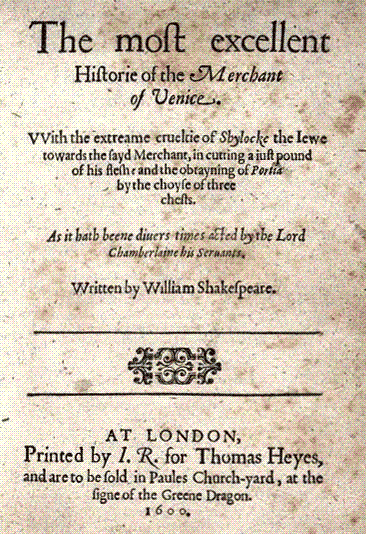
Title page of the 1600 first quarto of Shakespeare's The Merchant of Venice, printed in London for Thomas Heyes.

The Merchant of Venice opens with traders imagining a cargo worth a fortune one moment and nothing the next.

My wind cooling my broth Would blow me to an ague when I thought What harm a wind too great might do at sea. I should not see the sandy hour-glass run But I should think of shallows and of flats, And see my wealthy Andrew dock’d in sand, Vailing her high top lower than her ribs To kiss her burial. Should I go to church And see the holy edifice of stone And not bethink me straight of dangerous rocks, Which, touching but my gentle vessel’s side, Would scatter all her spices on the stream, Enrobe the roaring waters with my silks, And, in a word, but even now worth this, And now worth nothing?
William Shakespeare, The Merchant of Venice, Act I, scene i (Salarino's speech); Project Gutenberg eBook No. 1515.
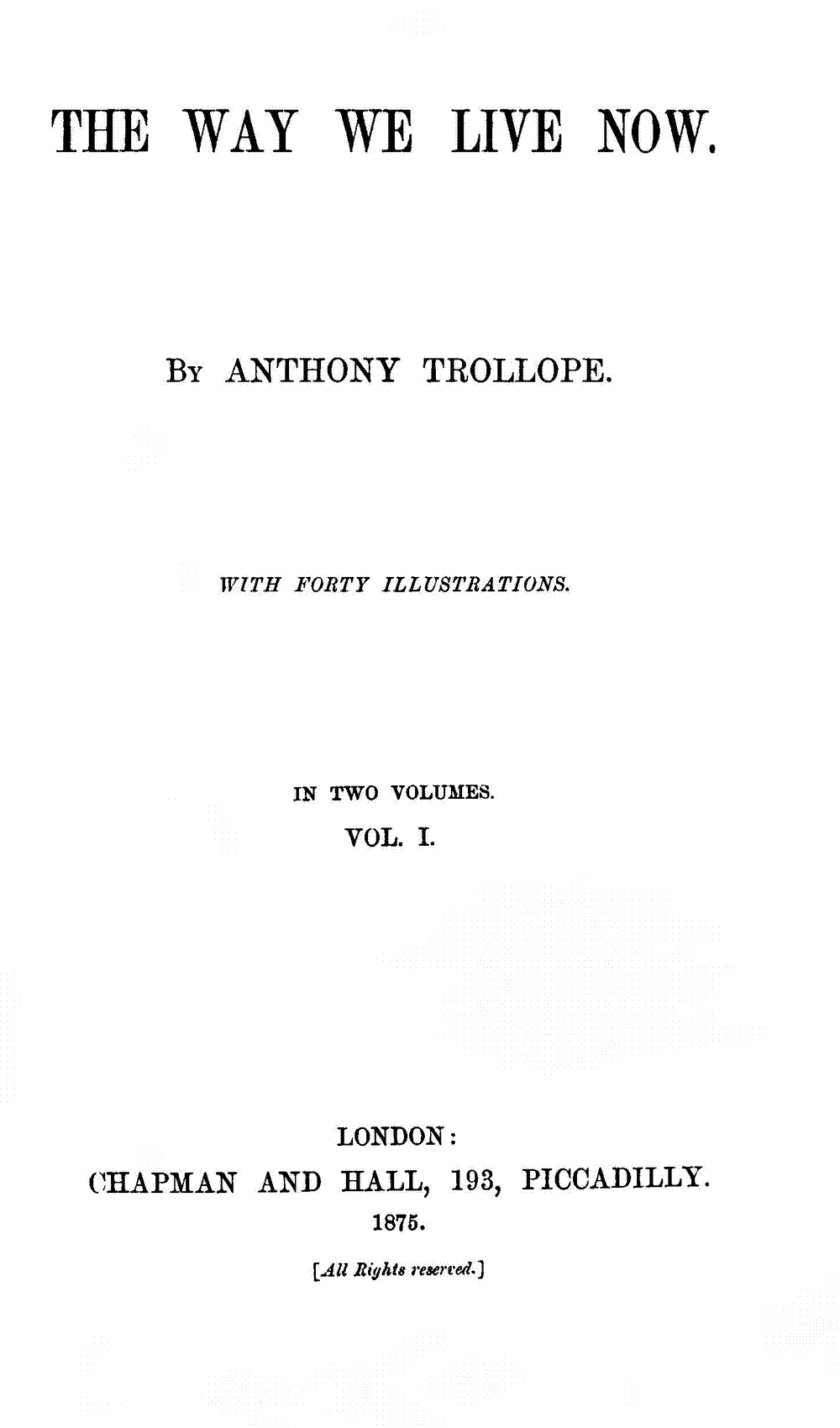
Title page of the 1875 Chapman and Hall first edition of Anthony Trollope's The Way We Live Now.

Anthony Trollope's The Way We Live Now (1875) shows a railway company whose real product is not the railway but its shares.

There was not one of them then present who had not after some fashion been given to understand that his fortune was to be made, not by the construction of the railway, but by the floating of the railway shares. They had all whispered to each other their convictions on this head. Even Montague did not beguile himself into an idea that he was really a director in a company to be employed in the making and working of a railway. People out of doors were to be advertised into buying shares, and they who were so to say indoors were to have the privilege of manufacturing the shares thus to be sold. That was to be their work, and they all knew it.
Anthony Trollope, The Way We Live Now (London: Chapman and Hall, 1875), chapter X, "Mr. Fisker's Success"; Project Gutenberg eBook No. 5231.
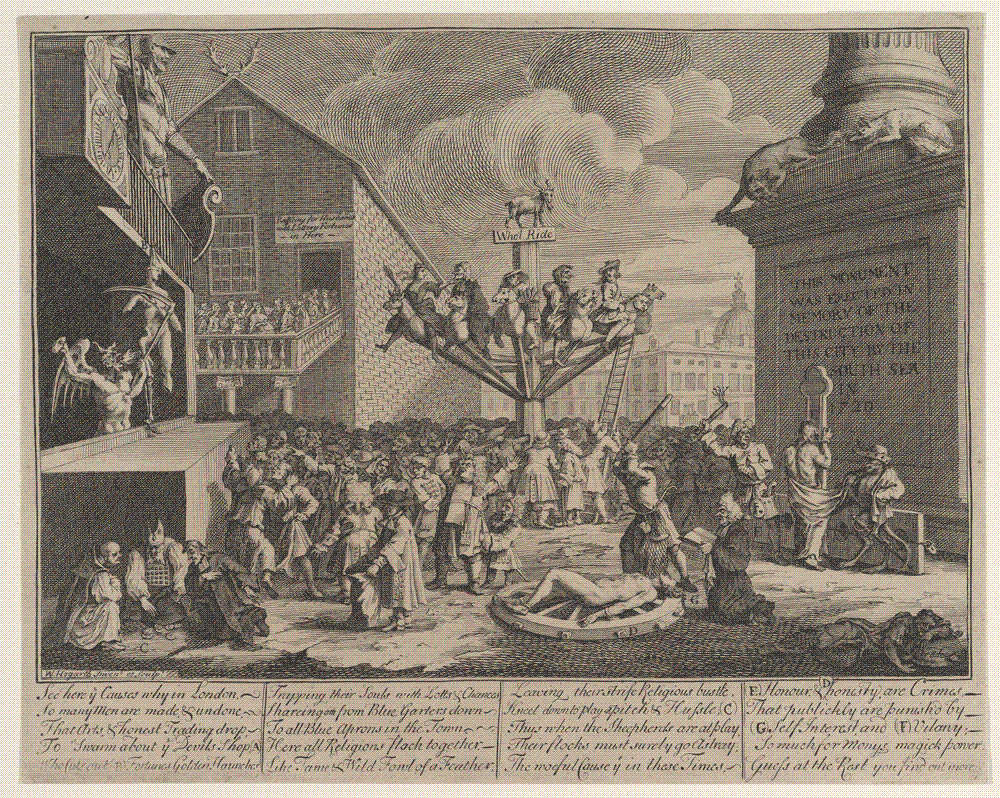
William Hogarth's satirical print The South Sea Scheme, showing speculators riding a merry-go-round while Fortune is butchered above the crowd.

William Hogarth's engraving The South Sea Scheme (1721) turns a company's reckoning into a public spectacle.

Hogarth crowds a whole city into one square: a merry-go-round of speculators spins beside a monument recording the ruin of the town, while Fortune is butchered on a balcony and Honesty is broken on a wheel. Clergymen gamble in a corner, a mob of men and women queue at a raffle for husbands, and everywhere the paper claims change hands faster than anyone can count them. It is the first great picture of a crowd assembled to watch a valuation collapse, and it was printed while the South Sea Company's books were still being audited.
William Hogarth, The South Sea Scheme, 1721 (this impression 1722), etching and engraving, seventh state of seven, sheet 26.1 x 32.8 cm; The Metropolitan Museum of Art, New York, Harris Brisbane Dick Fund, 1932, accession no. 32.35(252).
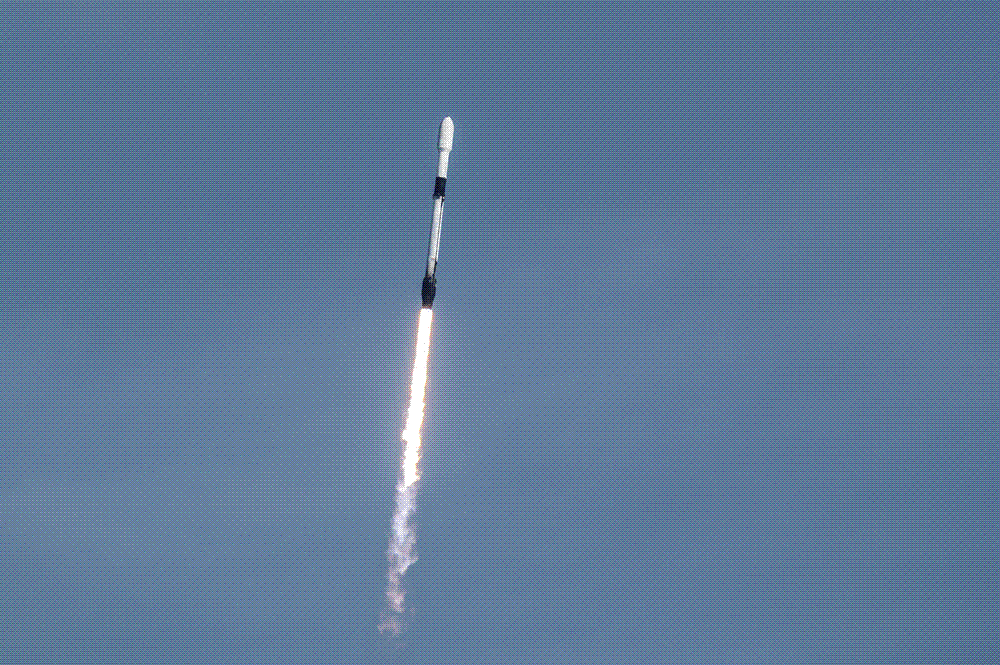
Job Berckheyde's painting of the courtyard of the Amsterdam Stock Exchange, crowded with merchants trading beneath the arcades.

Job Berckheyde's painting of the Amsterdam Bourse (c. 1675-1680) shows hundreds of merchants pricing a trading company's shares in a single courtyard.

Berckheyde paints the exchange built between 1608 and 1611 at the noon hour, when the gates opened and the whole commercial weight of the city funnelled into one arcaded courtyard. Beneath the municipal arms with their three saltires, hundreds of merchants bargain in knots of two and three, while vendors outside hawk oranges, newspapers and paintings to the traffic. This is the room in which the world's first freely traded corporate shares - those of the Dutch East India Company - were valued daily by a crowd, a market judging a distant fleet it could not see.
Job Adriaensz. Berckheyde, The Stock Exchange in Amsterdam, ca. 1675-1680, oil on canvas, 62.2 x 52.8 cm; Stadel Museum, Frankfurt am Main, inv. no. 536.