Wikimedia Commons
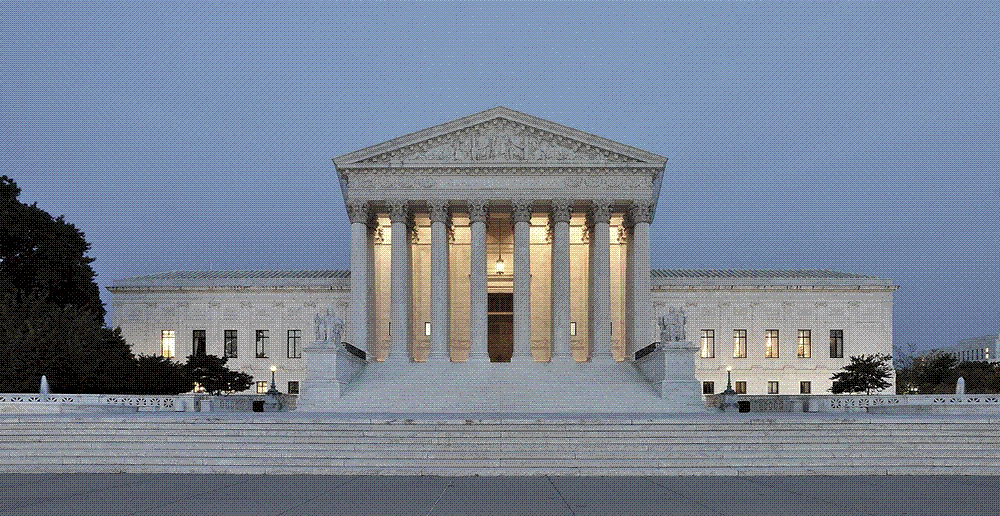
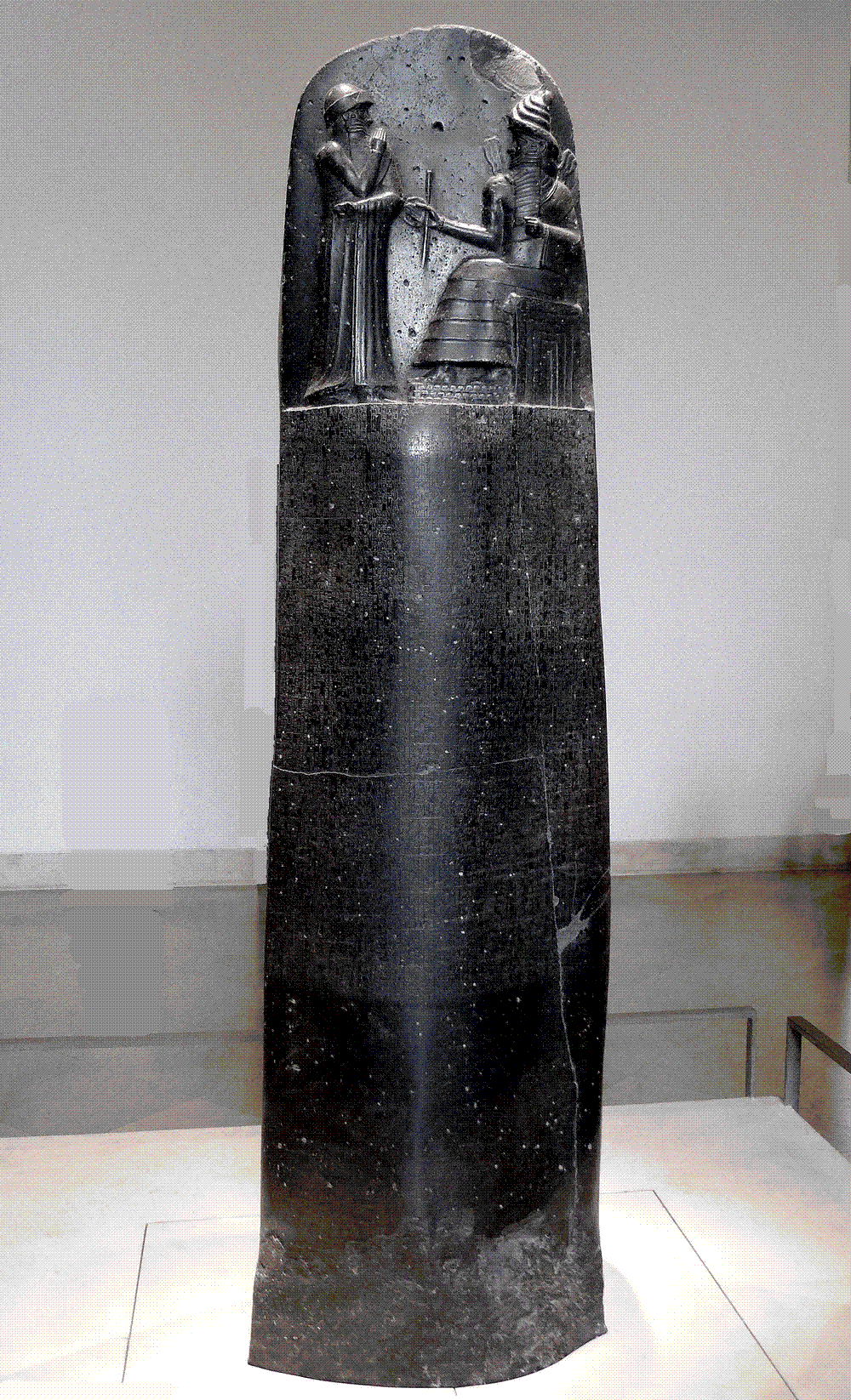
The US Supreme Court declines to halt a $655 million judgment against the PLO and Palestinian Authority over past attacks The US Supreme Court refused to block a roughly $655 million judgment against the Palestine Liberation Organization and the Palestinian Authority won by American victims of attacks abroad. The decision lets the award stand under a 2019 federal law tying the groups to US jurisdiction. Lawyers for the Palestinian bodies had argued the law violated due process. Analogies The Code of Hammurabi: a community made to pay silver for the slain If the robber is not caught, then shall he who was robbed claim under oath the amount of his loss; then shall the community, and . . . on whose ground and territory and in whose domain it was compensate him for the goods stolen. If persons are stolen, then shall the community and . . . pay one mina of silver to their relatives.
Code of Hammurabi, laws 23–24, Babylon, c. 1754 BC (trans. L.W. King); The Avalon Project, Yale Law School → The Alabama Claims: a cross-border tribunal to answer for wartime damage Now, in order to remove and adjust all complaints and claims on the part of the United States, and to provide for the speedy settlement of such claims, which are not admitted by Her Britannic Majesty's Government, the High Contracting Parties agree that all the said claims, growing out of Acts committed by the aforesaid vessels, and generically known as the Alabama Claims, shall be referred to a tribunal of arbitration to be composed of five arbitrators.
Treaty of Washington, Article I, signed 8 May 1871 (United States and Great Britain); Wikisource → Portia turns the bond against its holder Tarry a little, there is something else.
This bond doth give thee here no jot of blood.
The words expressly are "a pound of flesh":
Take then thy bond, take thou thy pound of flesh,
But in the cutting it, if thou dost shed
One drop of Christian blood, thy lands and goods
Are, by the laws of Venice, confiscate
Unto the state of Venice.
William Shakespeare, The Merchant of Venice, Act IV, Scene 1 (c. 1596–98); Project Gutenberg → Athena founds a standing court to judge bloodshed But since this matter has fallen here, I will select judges of homicide bound by oath, and I will establish this tribunal for all time. Summon your witnesses and proofs, sworn evidence to support your case; and I will return when I have chosen the best of my citizens, for them to decide this matter truly.
Aeschylus, Eumenides, lines c. 482–484 (458 BC; trans. Herbert Weir Smyth, 1926), Theoi Classical Texts Library → Justitia: the blindfold, the scales, and the sword Cranach's Justice stands almost nude but for a wisp of gauze, balancing the scales of judgment in one hand and resting a great two-edged sword against her shoulder in the other. The near-nakedness insists that Justice hides nothing and cannot be bribed by finery; the sword promises that her verdicts carry force. It is the Renaissance emblem for exactly what a court claims when it makes a defendant pay: measured judgment backed by the power to compel.
Lucas Cranach the Elder, Justitia (Justice), oil on panel, 1537; private collection (via Wikimedia Commons) → The murdered man returns to exact his reckoning The Commendatore, slain in a duel in the opera's first act, comes back as a stone statue to demand a final accounting: "Don Giovanni, a cenar teco m'invitasti, e son venuto" (Don Giovanni, you invited me to sup with you, and I have come). He orders repentance—"Pentiti, cangia vita! È l'ultimo momento!"—and when the unrepentant Don answers "No!", the dead man drags him down. It is the murdered victim, not an earthly court, seizing the debt owed for violence.
W.A. Mozart (music) & Lorenzo Da Ponte (libretto), Don Giovanni, K.527, Act II finale (1787); IMSLP →