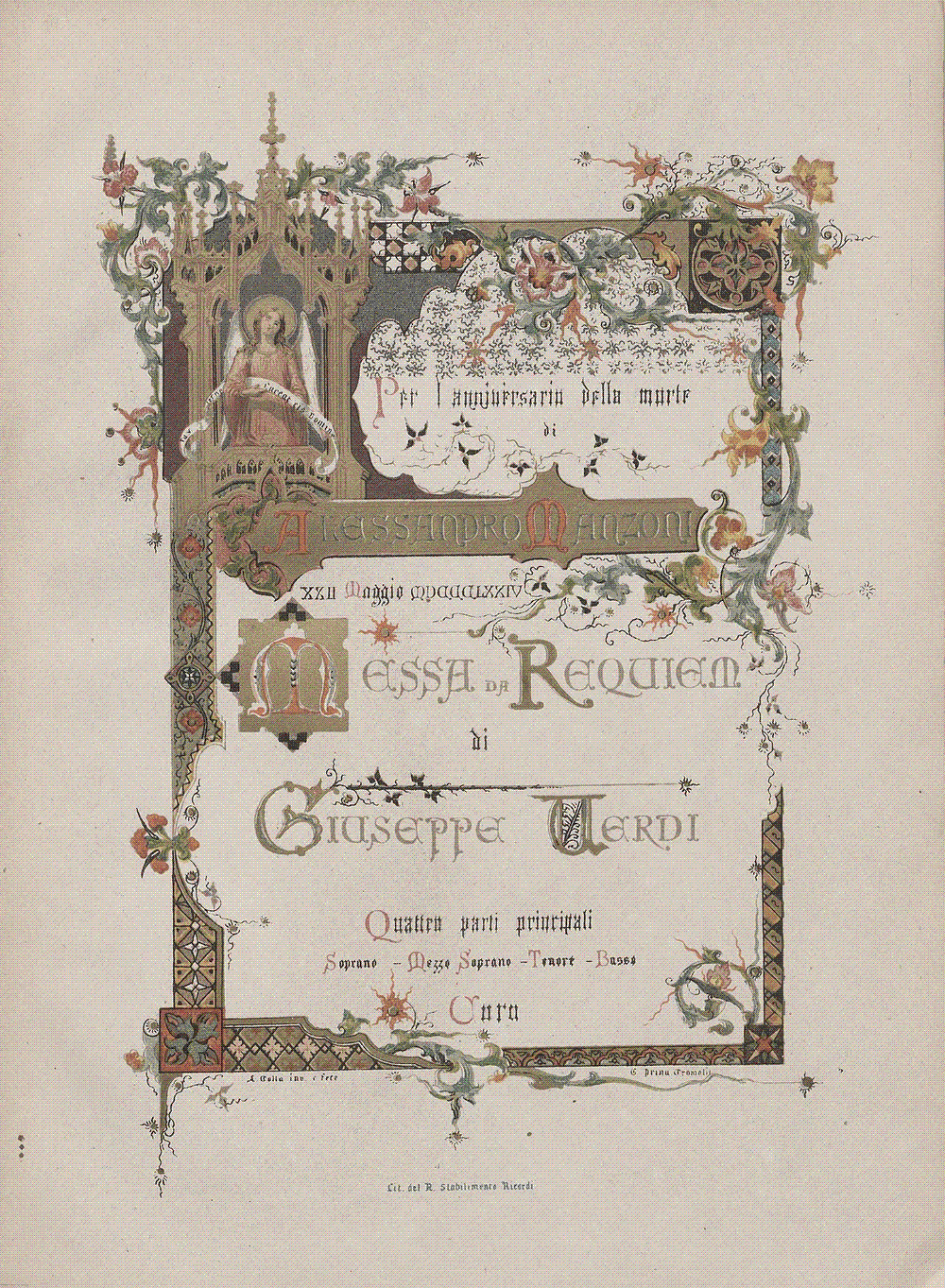
The United Nations General Assembly Hall in New York, its rows of delegate desks facing the rostrum beneath the gold UN emblem.

Basil D Soufi / Wikimedia Commons, CC BY-SA 3.0

ConflictBBC · BBC · ReutersSep 24, 2026

At the UN, Trump threatens to 'annihilate' Iran while envoys meet on the sidelines, and Iran's president vows never to 'bend the knee'

The UN General Assembly opened in New York on 23 September with the outgoing Secretary-General using his final address to call for curbs on AI and an end to the wars in Gaza and Ukraine, and with Emmanuel Macron using his farewell speech to denounce Donald Trump's Gaza diplomacy as a 'spectacle of shame'. Trump told the Assembly he could 'annihilate' Iran if there was no peace deal, even as US and Iranian officials met on the sidelines and Iran submitted conditions for reopening the Strait of Hormuz; he also said he believed a settlement would eventually be reached, and oil prices eased. The next day Iran's president, Masoud Pezeshkian, accused Trump of a 'bullying mentality' and said Iran would fight 'until our last breath' rather than surrender, and officials said the two sides remained far apart. Around them, Volodymyr Zelenskyy urged leaders to keep choking Russia's revenues, Argentina's Javier Milei renewed his country's claim to the Falklands, and diplomats described an international order fracturing into competing blocs.
Analogies

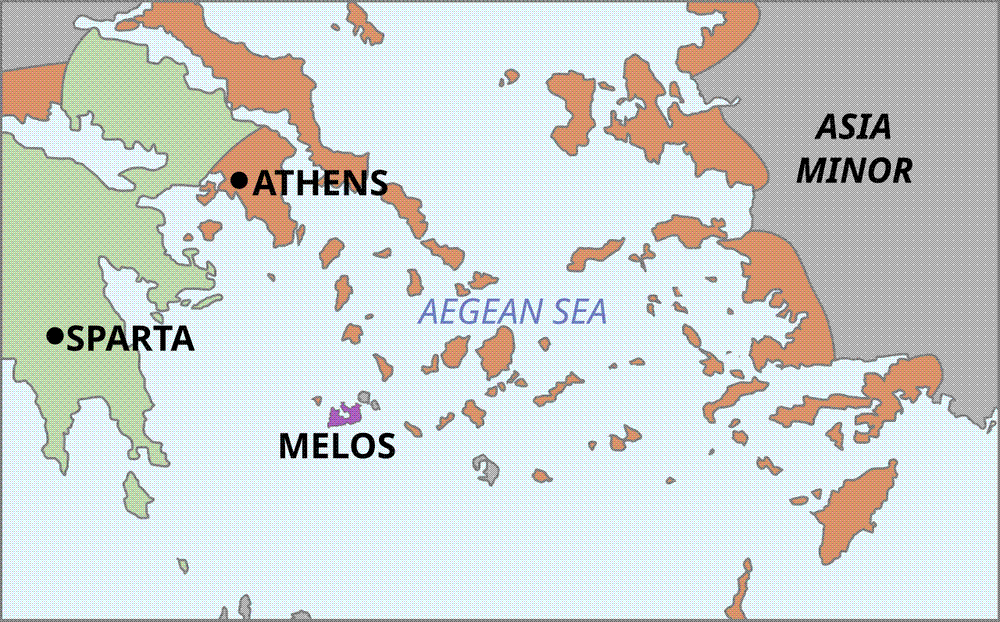
Map of the Aegean in 416 BC showing the island of Melos between Sparta and Athens

At Melos in 416 BC the Athenian envoys tell a small island that justice is a question only between equals

since you know as well as we do that right, as the world goes, is only in question between equals in power, while the strong do what they can and the weak suffer what they must.
Thucydides, History of the Peloponnesian War, 5.89, the Melian Dialogue, trans. Richard Crawley (London: J. M. Dent, 1874); Project Gutenberg ebook 7142. →
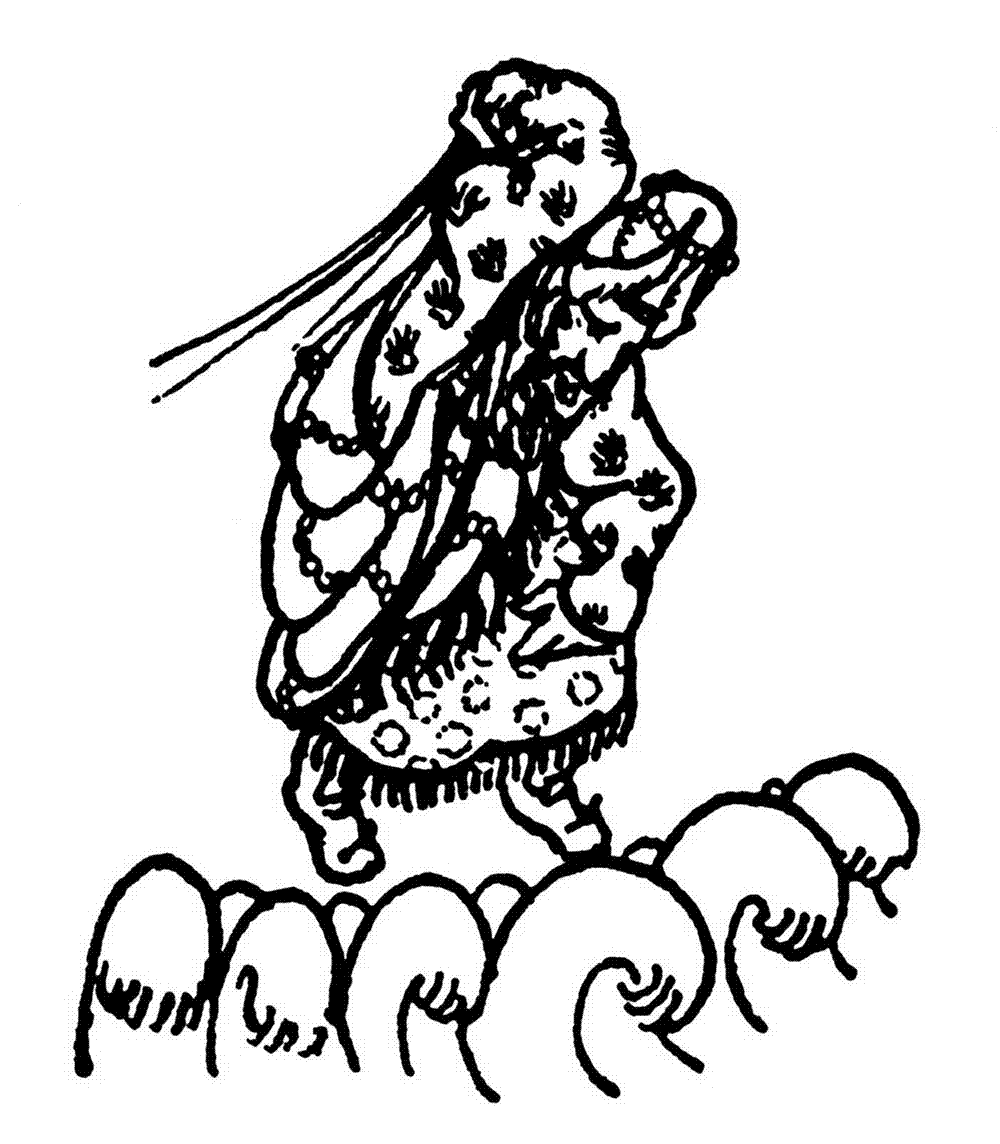
Alexandre Jacovleff's 1911 drawing of Xerxes in an elaborately patterned robe, raised above a crowd of bowed heads

Herodotus reports how Xerxes, king of Persia, answered a storm that broke his bridge over the Hellespont: he had the sea whipped

Then when Xerxes heard it he was exceedingly enraged, and bade them scourge the Hellespont with three hundred strokes of the lash and let down into the sea a pair of fetters. Nay, I have heard further that he sent branders also with them to brand the Hellespont. However this may be, he enjoined them, as they were beating, to say Barbarian and presumptuous words as follows: "Thou bitter water, thy master lays upon thee this penalty, because thou didst wrong him not having suffered any wrong from him: and Xerxes the king will pass over thee whether thou be willing or no
Herodotus, Histories, 7.35, trans. G. C. Macaulay, The History of Herodotus, vol. 2 (London: Macmillan, 1890); Project Gutenberg ebook 2456. →
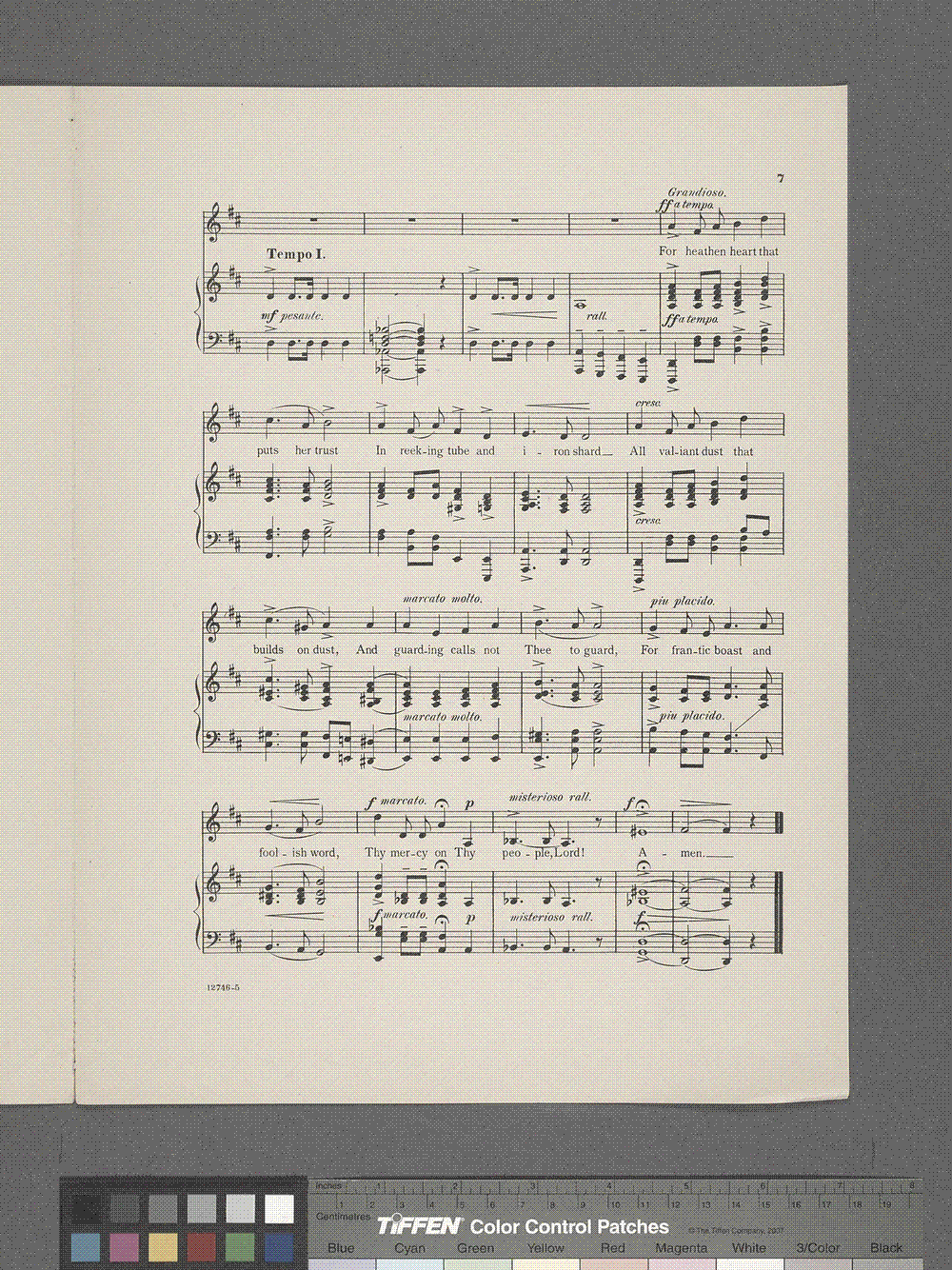
Printed sheet-music page of a musical setting of Kipling's Recessional, from the New York Public Library collections

Kipling's 'Recessional', written for Queen Victoria's Diamond Jubilee in 1897, warns a great power at the height of its reach

Far-called our navies melt away-- / On dune and headland sinks the fire-- / Lo, all our pomp of yesterday / Is one with Nineveh and Tyre! / Judge of the Nations, spare us yet, / Lest we forget--lest we forget!
Rudyard Kipling, 'Recessional', The Times, 17 July 1897; in Kipling Stories and Poems Every Child Should Know, Book II (1909); Project Gutenberg ebook 30568. →
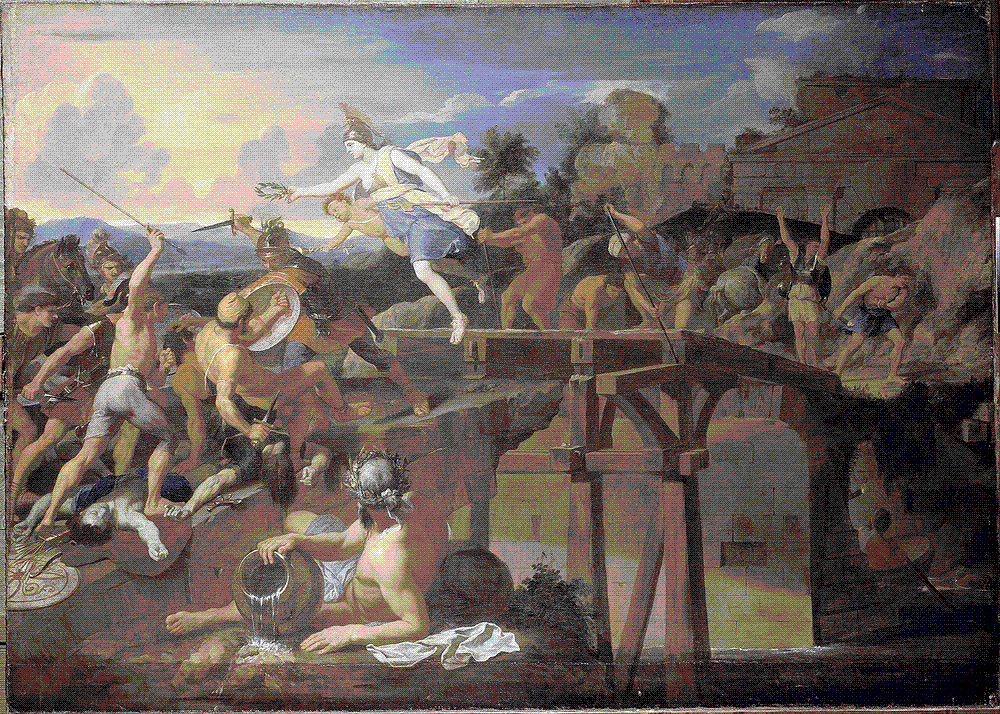
Charles Le Brun's painting of Horatius Cocles standing alone at the end of a bridge against an advancing army

In Macaulay's 'Horatius' (1842), the captain of the gate answers overwhelming force with the line Iran's president echoed: better to die facing it

Then out spake brave Horatius, / The Captain of the Gate: / "To every man upon this earth / Death cometh soon or late. / And how can man die better / Than facing fearful odds, / For the ashes of his fathers, / And the temples of his gods,
Thomas Babington Macaulay, 'Horatius', stanza XXVII, in Lays of Ancient Rome (London: Longman, Brown, Green, and Longmans, 1842); Project Gutenberg ebook 847. →
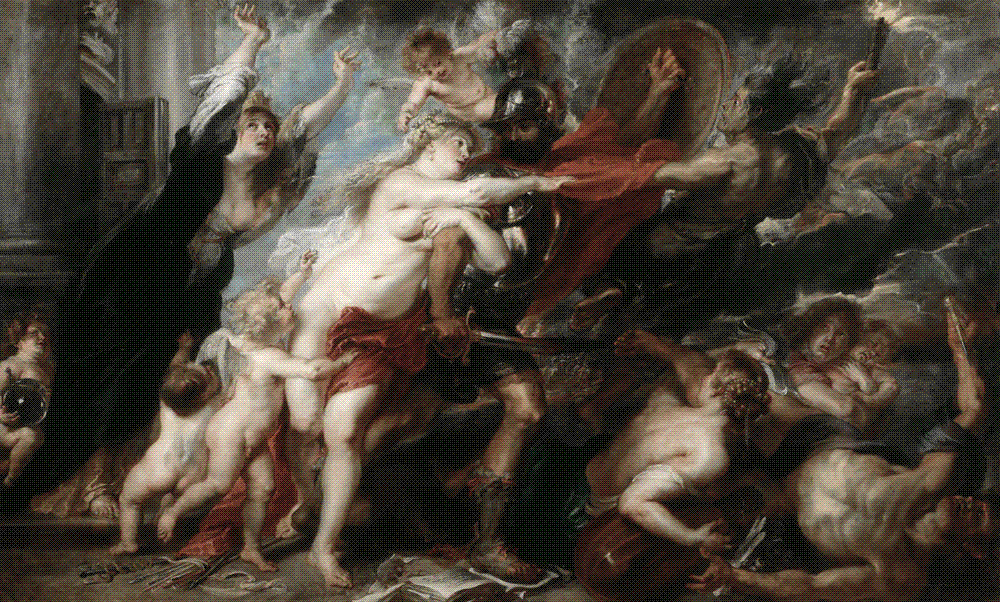
Rubens's crowded allegory of Mars breaking from Venus's embrace, pulled by a Fury, while a woman in black raises her arms in grief

Peter Paul Rubens's 'The Consequences of War' (1637–38): Mars breaks away from Venus while Europe mourns

Mars, in armour, tears himself from the arms of Venus and strides out of the open doors of the Temple of Janus, dragged forward by the Fury Alecto with her torch. At his feet lie a trampled book and drawing, a broken lute, a mother with her child. On the left, dressed in black with her arms raised, stands the figure Rubens identified, in a letter of 1638, as unhappy Europe, grieving after years of plunder and misery. It is a painting about the moment a leader decides that threat will become war.
Peter Paul Rubens, The Consequences of War, 1637–38, oil on canvas; Galleria Palatina, Palazzo Pitti, Florence. Rubens explained the allegory in a letter to Justus Sustermans of 12 March 1638. →
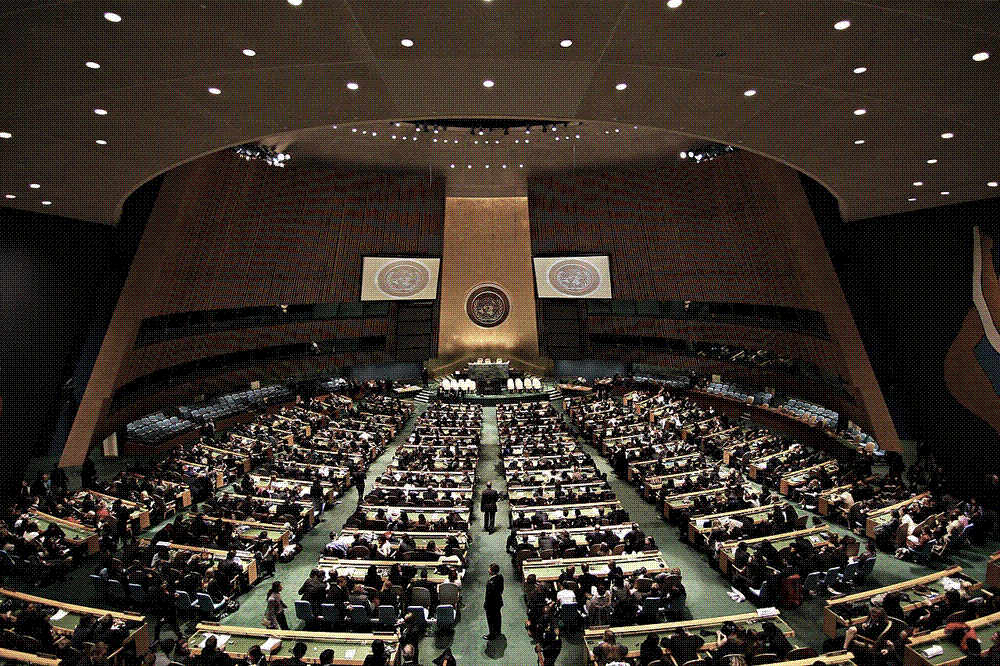
Title page of an early printed edition of Verdi's Messa da Requiem

The 'Dies irae' of Verdi's 'Messa da Requiem' (1874) — the day of wrath as four blows of the bass drum

The Dies irae of Verdi's Requiem is the most violent music in the choral repertoire: four hammer blows on the full orchestra and bass drum, then the choir hurled against a storm of strings. It returns throughout the work like a threat that has been made once and will not be withdrawn. Verdi wrote it for the first anniversary of the death of the novelist Alessandro Manzoni, and conducted the premiere in Milan in May 1874.
Giuseppe Verdi, Messa da Requiem, 1874, first performed at San Marco, Milan, 22 May 1874, in memory of Alessandro Manzoni; score at the International Music Score Library Project (IMSLP). →