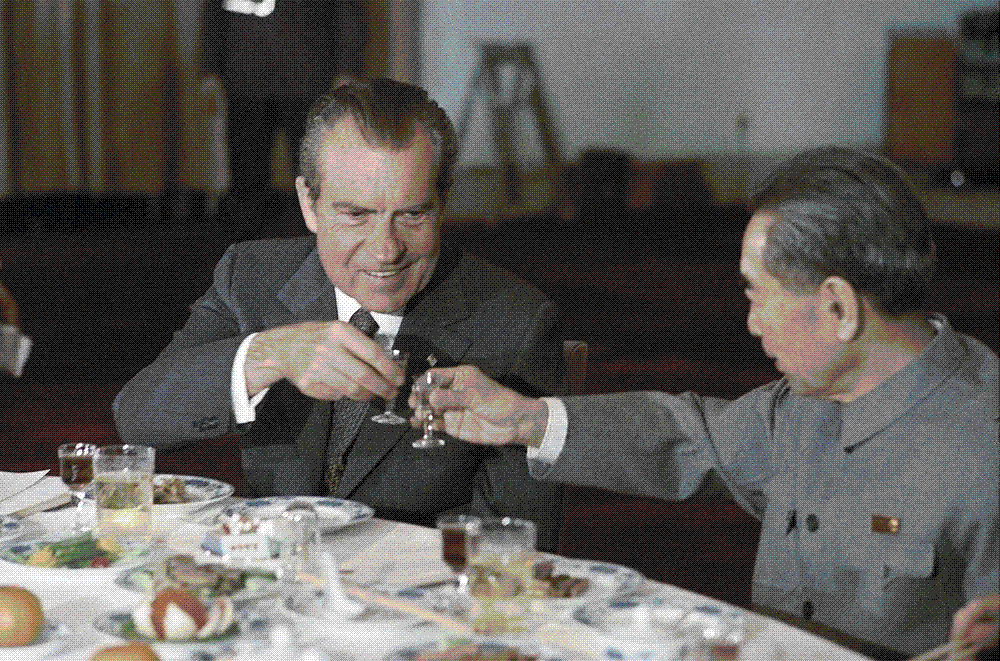
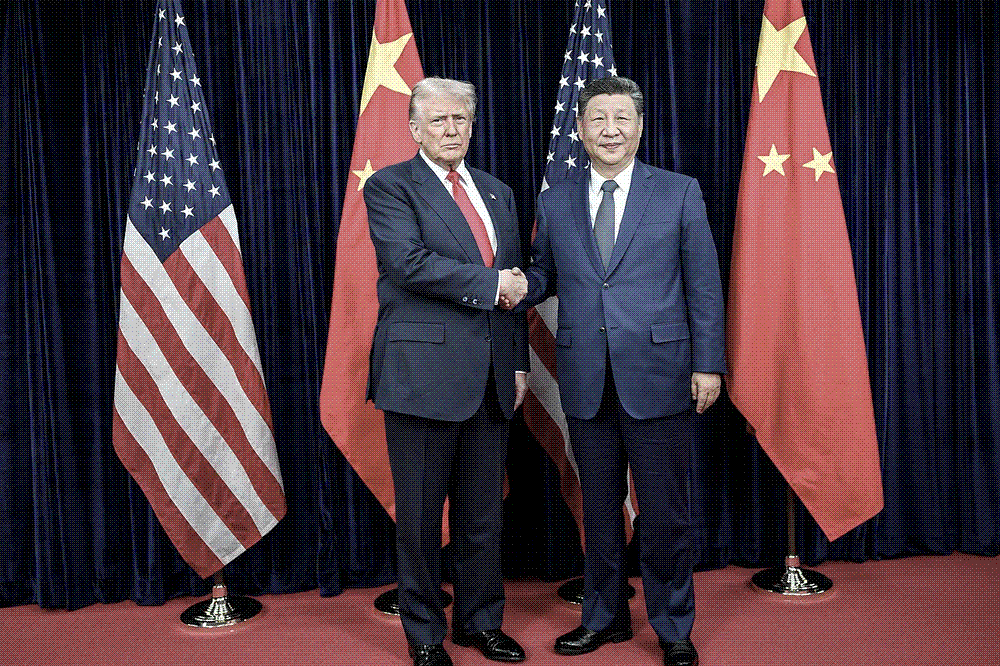
Donald Trump shakes hands with Xi Jinping in a terminal at Gimhae International Airport in Busan, South Korea, before their October 2025 meeting, flanked by the flags of both countries.

The White House (public domain)

EconomyAP · APSep 24, 2026

Trump and Xi extend their trade truce by two months at a Washington summit shadowed by AI, Taiwan and chips

The week opened with the summit agenda still being negotiated: officials from both sides worked through tariffs on liquefied natural gas, pharmaceutical licensing and rare-earth exports, while Republican lawmakers urged Donald Trump to take a hard line. In the days before the meeting, Treasury Secretary Scott Bessent proposed a US–China notification system for AI safety incidents, and senior officials met in New York to discuss it, with a further round planned in Shenzhen. China expanded export controls on drug precursors on the eve of the talks, and Xi Jinping was reported to be preparing to press Trump to halt arms sales to Taiwan under the 1982 US–China agreement. Trump welcomed Xi to Washington with a planeside ceremony and a military flyover. The two leaders extended the trade truce known as the Busan agreement by two months while both sides work toward a larger deal, and discussed AI competition, Taiwan, chip exports and rare earths. Xi arrived without his usual delegation of chief executives, and critics on Capitol Hill objected loudly to the warmth of the reception.
Analogies

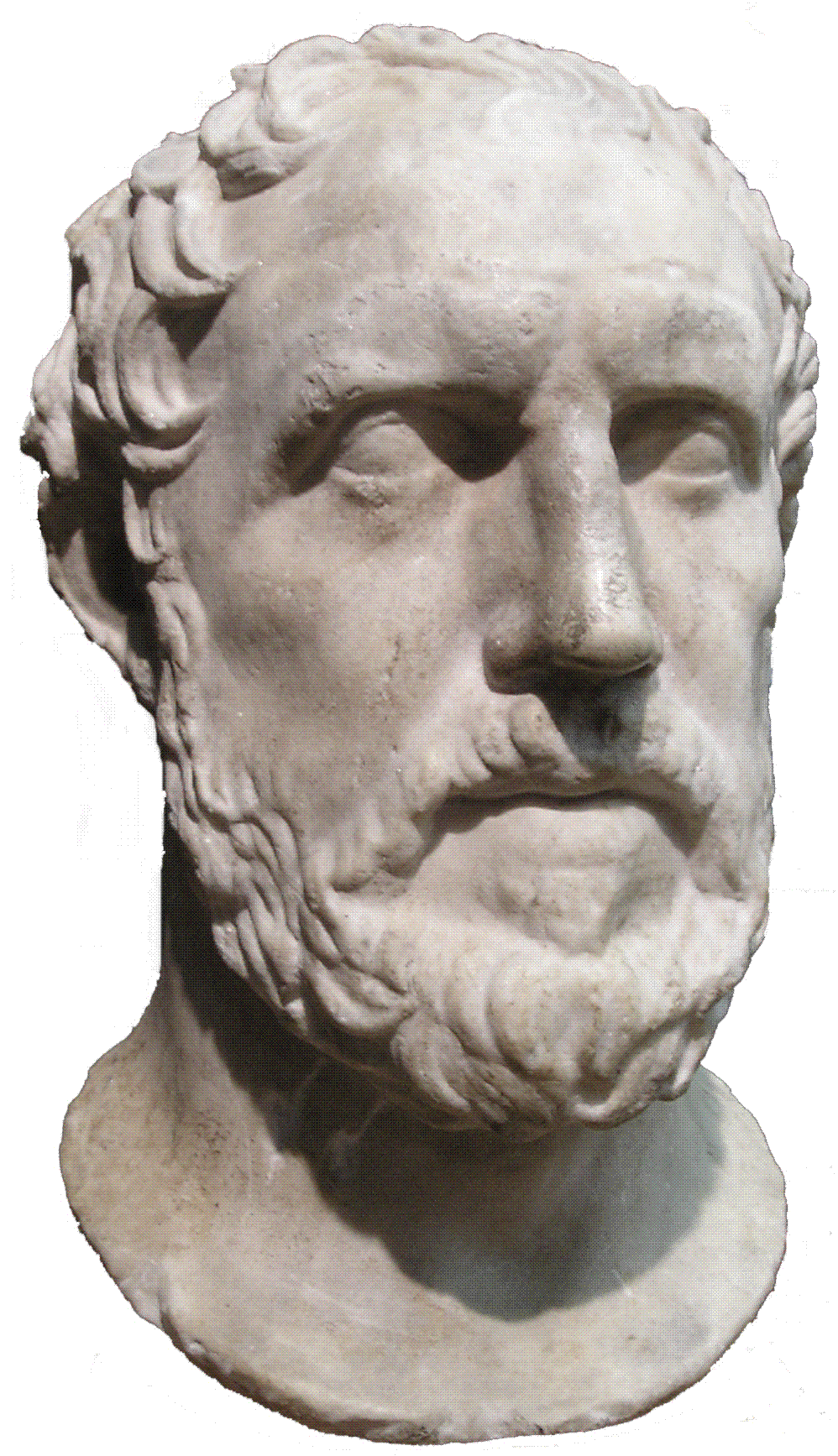
Marble bust of Thucydides, a bearded man with a calm, lined face, a Roman copy of a Greek original, shown against a plain background

Thucydides names the real cause of the Peloponnesian War: not the incidents both sides complained of, but a rising power and the fear it inspired

The real cause I consider to be the one which was formally most kept out of sight. The growth of the power of Athens, and the alarm which this inspired in Lacedaemon, made war inevitable.
Thucydides, History of the Peloponnesian War, 1.23, trans. Richard Crawley (London: J. M. Dent, 1874); Project Gutenberg ebook 7142. →
Richard Nixon and Zhou Enlai raise their glasses in a toast at a banquet in Beijing in February 1972

In the Shanghai Communiqué of 27 February 1972, the United States sets down the formula on Taiwan that every later US–China bargain has had to work around

The United States acknowledges that all Chinese on either side of the Taiwan Strait maintain there is but one China and that Taiwan is a part of China. The United States Government does not challenge that position. It reaffirms its interest in a peaceful settlement of the Taiwan question by the Chinese themselves. With this prospect in mind, it affirms the ultimate objective of the withdrawal of all U.S. forces and military installations from Taiwan. In the meantime, it will progressively reduce its forces and military installations on Taiwan as the tension in the area diminishes.
Joint Statement Following Discussions With Leaders of the People's Republic of China, Shanghai, 27 February 1972, in Foreign Relations of the United States, 1969–1976, vol. XVII, China, 1969–1972, document 203; Office of the Historian, US Department of State. →
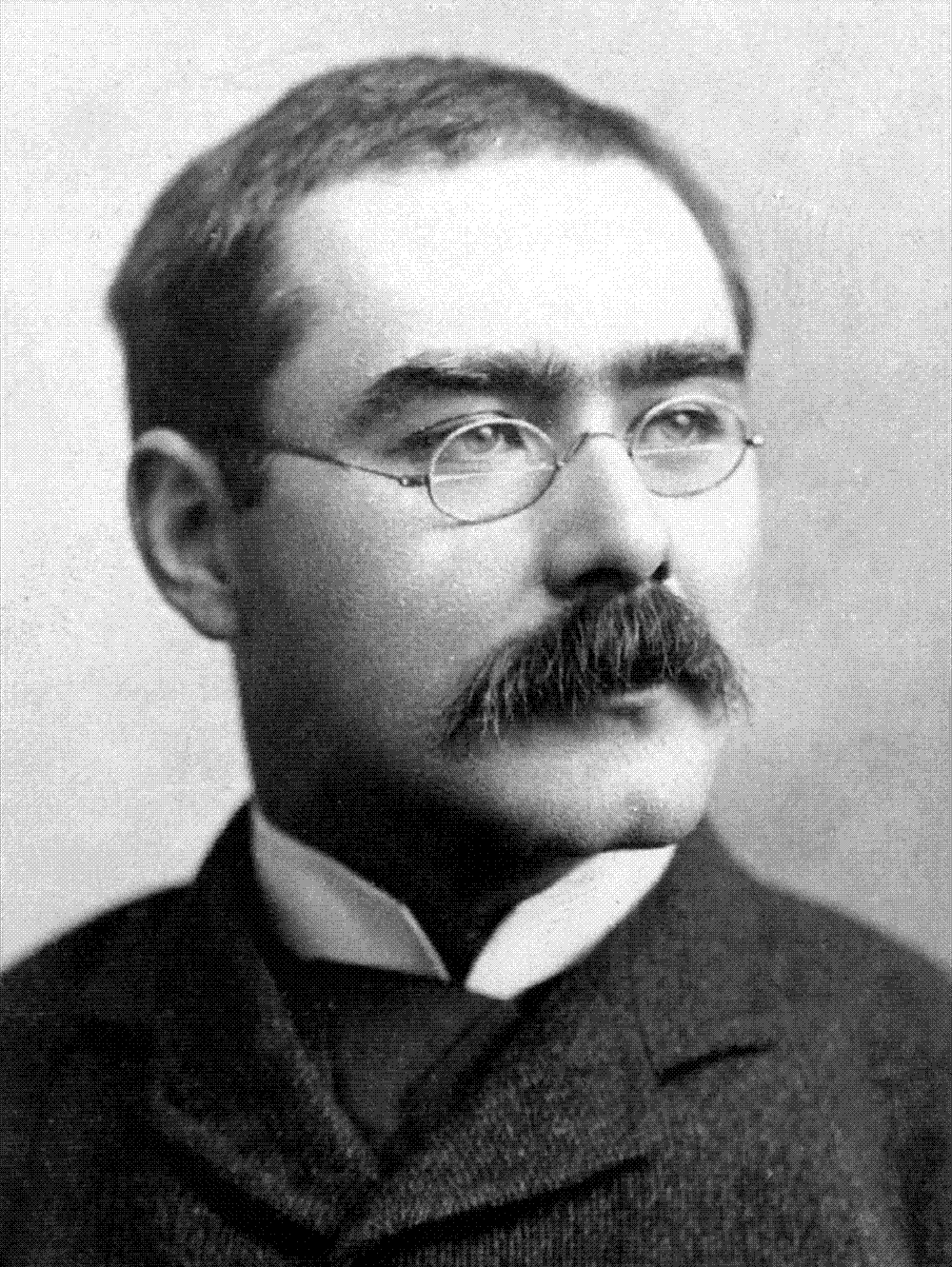
Studio photograph of Rudyard Kipling in middle age, with round spectacles and a heavy moustache

Kipling's 'The Ballad of East and West' (1889) opens with the line everyone remembers and turns, three lines later, on the one they forget

Oh, East is East, and West is West, and never the twain shall meet, / Till Earth and Sky stand presently at God's great Judgment Seat; / But there is neither East nor West, Border, nor Breed, nor Birth, / When two strong men stand face to face, / tho' they come from the ends of the earth!
Rudyard Kipling, 'The Ballad of East and West', first published in The Pioneer, 1889; in Departmental Ditties and Ballads and Barrack-Room Ballads (New York: Doubleday & McClure, 1899); Project Gutenberg ebook 7846. →

Sun Tzu's 'The Art of War' holds that the highest skill is to win without a battle — the logic of export controls, rare-earth licences and truces

Hence to fight and conquer in all your battles is not supreme excellence; supreme excellence consists in breaking the enemy’s resistance without fighting.
Sun Tzu, The Art of War, ch. III, 'Attack by Stratagem', §2, trans. Lionel Giles (London: Luzac & Co., 1910); Project Gutenberg ebook 132. →
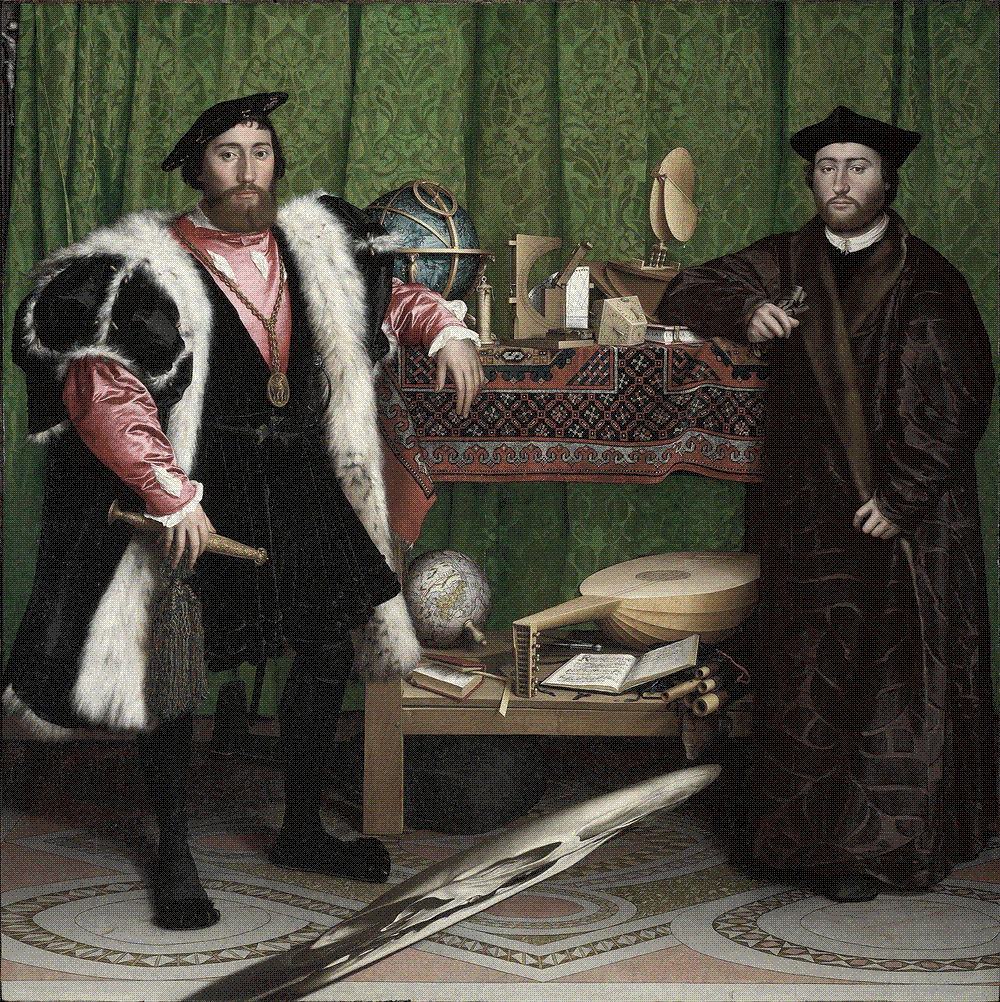
Holbein's The Ambassadors: two richly dressed men stand beside a table of globes, instruments and books, with a distorted skull stretched across the floor between them

Hans Holbein the Younger paints 'The Ambassadors' in London in 1533, two envoys surrounded by the tools of trade and knowledge

Two French envoys, Jean de Dinteville and Georges de Selve, stand at either end of a two-tier table crowded with the instruments of their age: a celestial globe and sundials above, a terrestrial globe, a merchant's arithmetic book and a lute with a snapped string below. It is a portrait of diplomacy as a display of competence and reach, painted in London in the year Henry VIII broke with Rome. Across the floor, visible only from an oblique angle, lies a distorted skull — the thing in the room that neither ambassador is looking at.
Hans Holbein the Younger, Jean de Dinteville and Georges de Selve ('The Ambassadors'), 1533, oil on oak, 207 × 209.5 cm; National Gallery, London, NG1314. →
Panoramic sixteenth-century painting of the 1520 meeting of Henry VIII and Francis I: a royal procession, a temporary palace, a wine fountain and golden tents in open fields

The Field of the Cloth of Gold, painted about 1545, records the most extravagant summit of the sixteenth century

In June 1520 Henry VIII of England and Francis I of France met in the fields near Calais for more than two weeks of banquets, jousts and pageantry, housed in a temporary palace of timber and painted canvas and in tents of gold cloth. The painting in the Royal Collection shows the whole performance at once: Henry's procession arriving, a fountain running with wine, the tiltyard, and the tents rising like a city. It was the most lavish summit of its century, staged to prove a friendship between two rivals — and within two years England and France were at war again.
British School, The Field of the Cloth of Gold, c. 1545, oil on canvas; Royal Collection Trust, RCIN 405794. →