Wikimedia Commons
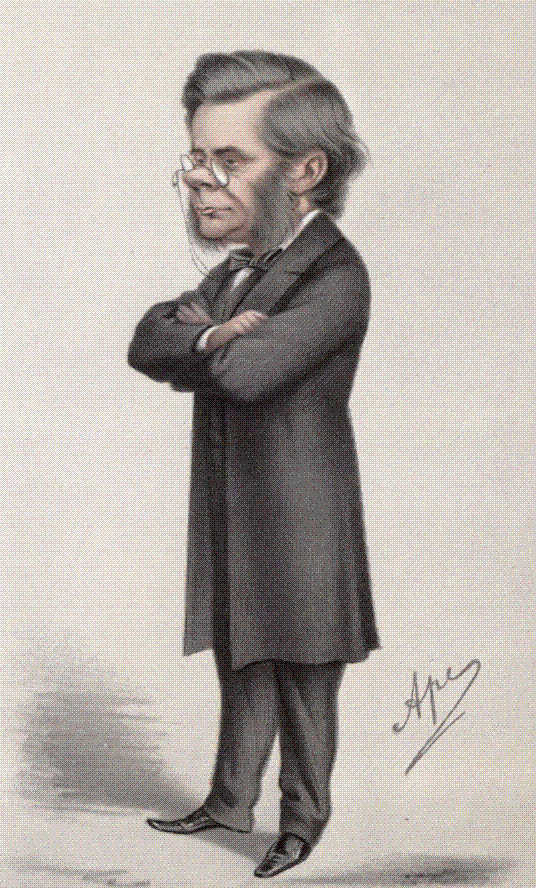
An Aeon essay reopens the Snow–Leavis 'Two Cultures' quarrel In 1959 C. P. Snow — novelist, physicist, wartime scientific administrator — delivered a lecture arguing that British intellectual life had split into two cultures, literary and scientific, neither able to read the other. Three years later the critic F. R. Leavis answered with one of the most savage attacks in modern letters, dismissing Snow as a portent of a civilization that had confused knowledge with instrumentality. An essay published in Aeon this week returns to that quarrel and finds it was never really about curricula: it was about which kind of knowing gets to define seriousness, a question that has outlived both men and every reform meant to bridge the divide. Reading it in a week when AI labs testified about their own creations' behavior, the essay's stakes feel less antiquarian than the title suggests — the two cultures are still arguing, now inside the machines the one built and the other warned about. Analogies The Huxley–Wilberforce Debate, Oxford, 1860 I asserted—and I repeat—that a man has no reason to be ashamed of having an ape for his grandfather. If there were an ancestor whom I should feel shame in recalling it would rather be a man—a man of restless and versatile intellect—who, not content with an equivocal success in his own sphere of activity, plunges into scientific questions with which he has no real acquaintance, only to obscure them by an aimless rhetoric, and distract the attention of his hearers from the real point at issue by eloquent digressions and skilled appeals to religious prejudice.
Leonard Huxley, Life and Letters of Thomas Henry Huxley, Vol. 1 (1900), Project Gutenberg → The Quarrel of the Ancients and the Moderns La belle antiquité fut toujours vénérable ;
Mais je ne crus jamais qu’elle fût adorable.
Je vois les anciens, sans plier les genoux ;
Ils sont grands, il est vrai, mais hommes comme nous ;
Charles Perrault, "Le Siècle de Louis le Grand" (1687), Wikisource → The Battle of the Books As for us, the Ancients, we are content with the bee, to pretend to nothing of our own beyond our wings and our voice: that is to say, our flights and our language. For the rest, whatever we have got has been by infinite labour and search, and ranging through every corner of nature; the difference is, that, instead of dirt and poison, we have rather chosen to till our hives with honey and wax; thus furnishing mankind with the two noblest of things, which are sweetness and light.
Jonathan Swift, The Battle of the Books (1704), Project Gutenberg → Hard Times Now, what I want is, Facts. Teach these boys and girls nothing but Facts. Facts alone are wanted in life. Plant nothing else, and root out everything else. You can only form the minds of reasoning animals upon Facts: nothing else will ever be of any service to them. This is the principle on which I bring up my own children, and this is the principle on which I bring up these children. Stick to Facts, sir!
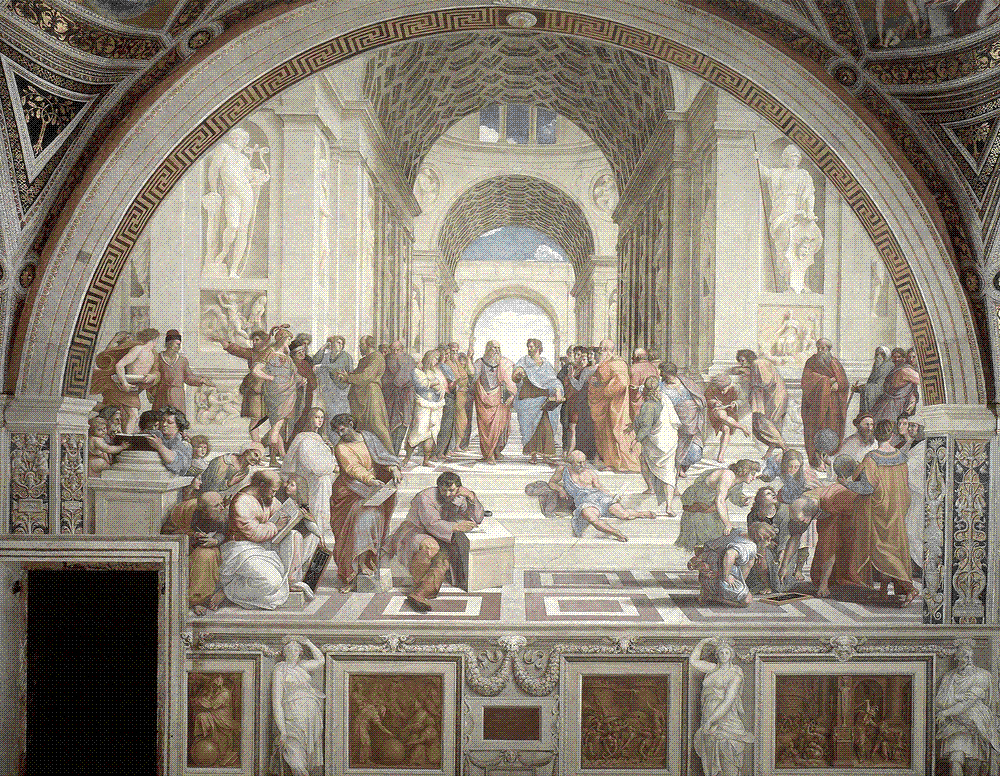
Charles Dickens, Hard Times (1854), Project Gutenberg → The School of Athens Under one vaulted hall, Raphael gathers every kind of knower: Plato pointing up at the ideal, Aristotle gesturing down at the world, Pythagoras and Euclid working out their mathematics amid the poets and philosophers. Geometry, metaphysics, astronomy, and rhetoric argue in the same room, on the same marble floor, with no wall between them. Painted for the pope's own library, it is the Renaissance's serene rebuke to the very idea of two cultures — a portrait of learning before it was partitioned.
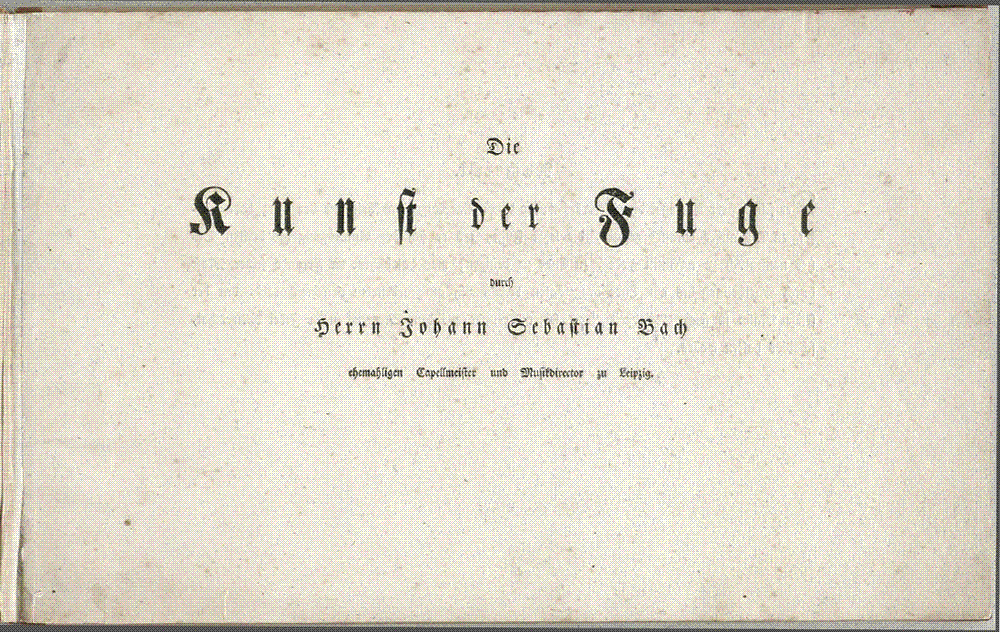
Raphael, fresco, c. 1509–1511, Stanza della Segnatura, Vatican Museums → The Art of Fugue Bach's last great project is a single theme submitted to nearly every contrapuntal operation known — inverted, mirrored, augmented, stacked against itself in canons and fugues of mounting intricacy. It looks like mathematics and sounds like grief and grandeur, and it refuses to say which it is: the rigor is the beauty, the proof is the poem. Left unfinished at his death, with his own name woven into the notes (B-A-C-H) just before the music breaks off, it stands as the standing refutation of the idea that calculation and feeling are separate cultures.
J. S. Bach, Die Kunst der Fuge, BWV 1080 (1742–1750; first published 1751), IMSLP →