Wikimedia Commons
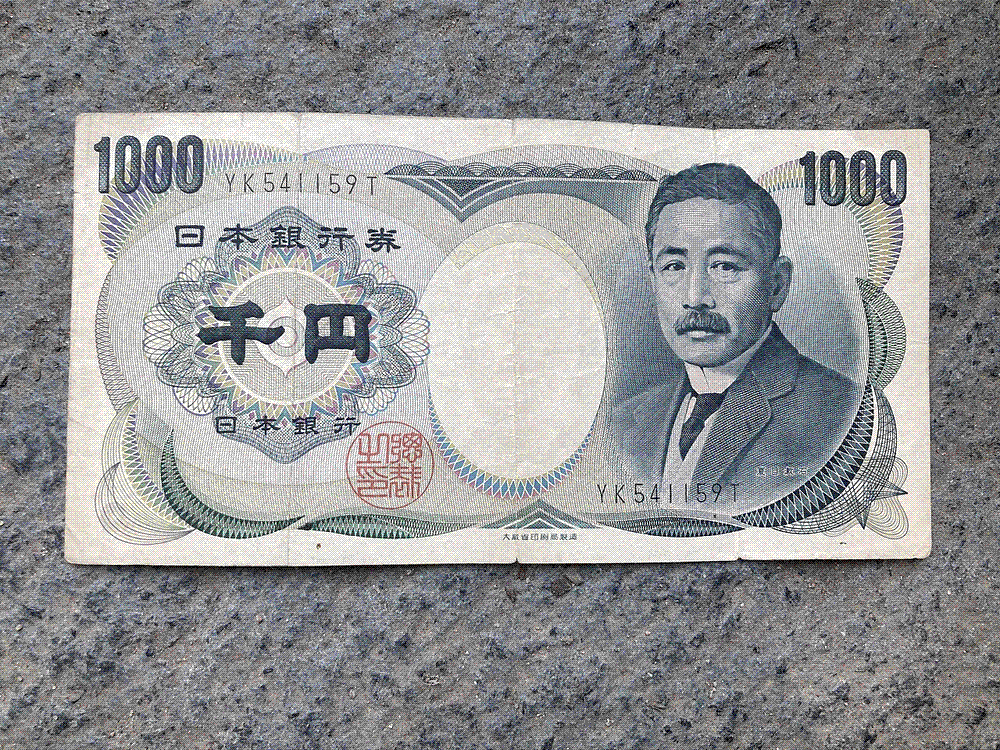
Economy BBC · AP · Aug 3, 2026 The United States and Japan jointly intervene in currency markets to support the yen, a rare coordinated move that sends the dollar sharply lower Washington and Tokyo carried out a rare joint intervention to prop up the Japanese yen, and both said they would not hesitate to act together again in the future. The dollar fell sharply against the yen after the move, which followed weeks of pressure on the currency. US Treasury Secretary Scott Bessent signaled readiness to repeat the coordinated action and urged a bigger Federal Reserve backstop. Analogies Rome manipulates the value of its coin The weight, however, of the libra of copper was diminished during the First Punic War, the republic not having means to meet its expenditure: in consequence of which, an ordinance was made that the as should in future be struck of two ounces weight. By this contrivance a saving of five-sixths was effected, and the public debt was liquidated. ... Livius Drusus, when tribune of the people, alloyed the silver with one-eighth part of copper.
Pliny the Elder, The Natural History, Book XXXIII, ch. 13, trans. John Bostock and H. T. Riley (London, 1855). Perseus Digital Library, Tufts University. → The Tripartite Agreement of 1936 The Government of the United States, after consultation with the British Government and the French Government, joins with them in affirming a common desire to foster those conditions which safeguard peace and will best contribute to the restoration of order in international economic relations... The United States Government, as also the British and French Governments, declares its intention to continue to use appropriate available resources so as to avoid as far as possible any disturbance of the basis of international exchange resulting from the proposed readjustment. It will arrange for such consultation for this purpose as may prove necessary with the other two Governments and their authorized agencies.
Declaration on currency (Tripartite Agreement), statement issued by the U.S. Treasury, September 25, 1936, reprinted in Federal Reserve Bulletin, Vol. 22, No. 10 (October 1936), pp. 759-760. FRASER, Federal Reserve Bank of St. Louis. → Ecclesiastes on the hunger for silver He that loveth silver shall not be satisfied with silver; nor he that loveth abundance with increase: this is also vanity. When goods increase, they are increased that eat them: and what good is there to the owners thereof, saving the beholding of them with their eyes? The sleep of a labouring man is sweet, whether he eat little or much: but the abundance of the rich will not suffer him to sleep.
Ecclesiastes 5:10-12, King James Version (1611; 1769 standard text). Wikisource. → Timon's yellow slave that makes black white Gold? Yellow, glittering, precious Gold?
No Gods, I am no idle Votarist,
Roots you cleere Heauens. Thus much of this will make
Blacke, white; fowle, faire; wrong, right;
Base, Noble; Old, young; Coward, valiant.
...
This yellow Slaue,
Will knit and breake Religions, blesse th' accurst,
Make the hoare Leprosie ador'd, place Theeues,
And giue them Title, knee, and approbation
With Senators on the Bench...
William Shakespeare, The Life of Timon of Athens (First Folio text, 1623), Act IV, Scene 3. Project Gutenberg, ebook no. 1132. → Reymerswaele, ‘The Banker and His Wife’ Marinus van Reymerswaele paints a banker hunched over his balance and stacked gold coins, weighing currency to the last grain while his wife looks up from an illuminated ledger. The obsessive attention to the metal’s exact worth makes money itself the true subject of the picture. It is an early portrait of a world in which the precise value of a coin—and the will to defend it—governs everything.
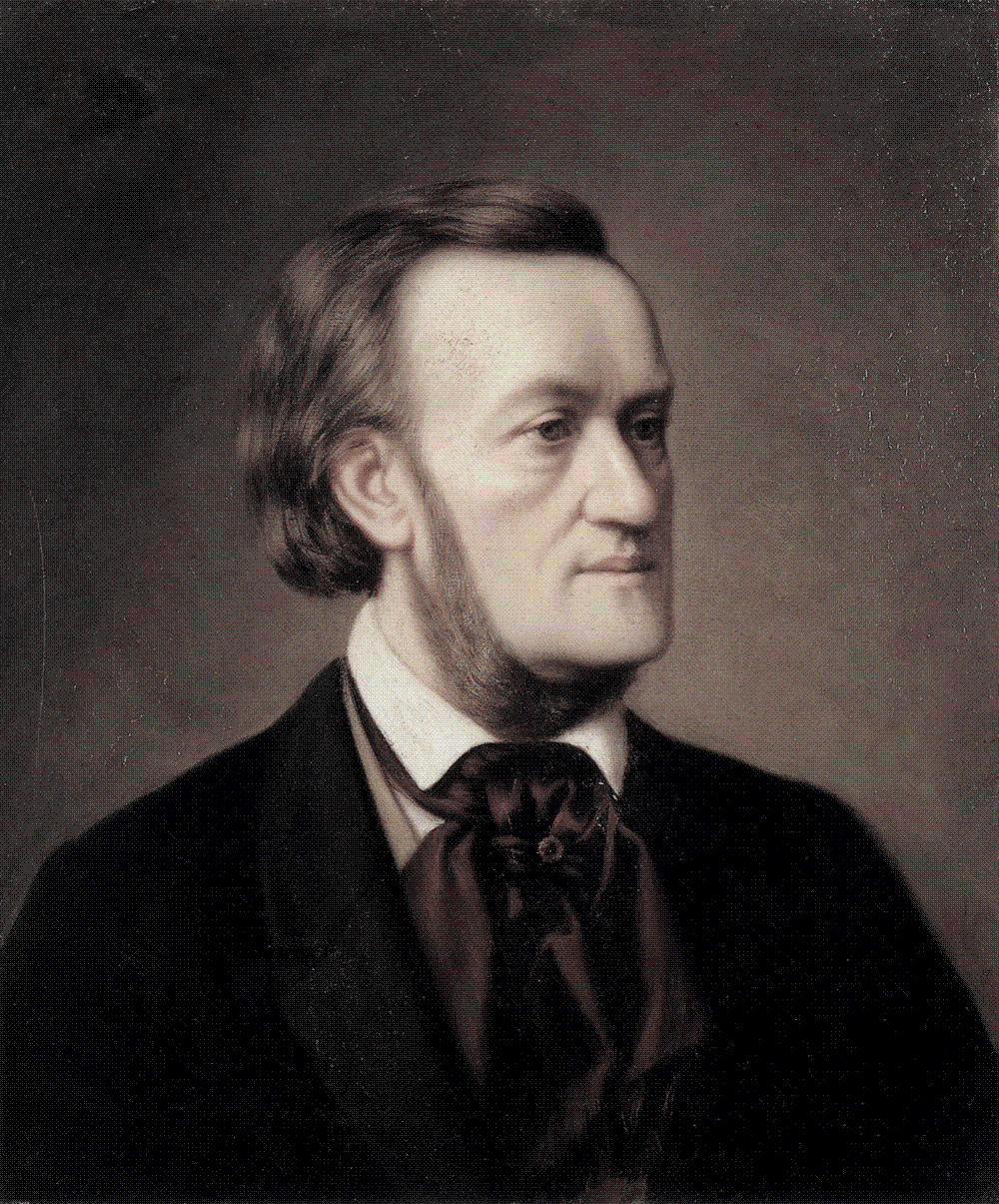
Marinus van Reymerswaele, The Banker and His Wife (c. 1538), oil on panel. Public domain via Wikimedia Commons. → Wagner's Rhinegold hoard In the opening scene of Das Rheingold the Nibelung Alberich steals the gold guarded by the Rhinemaidens and forges it into a ring that promises mastery over the world, setting gods, dwarves and giants scheming to seize and redistribute the hoard. Wagner scores this contest over gold with the shimmering, endlessly rising Rhine motif and the ominous ring theme, turning the manipulation of a single golden treasure into the engine of an entire cosmic drama. The parallel is exact: whoever controls the store of value controls the balance of power, and every party maneuvers to bend that value to its own ends.
Richard Wagner, Das Rheingold, WWV 86A (composed 1854, first performed 1869); full score at IMSLP. Portrait: Casar Willich, Portrait of Richard Wagner (c. 1862). →