AI-generated
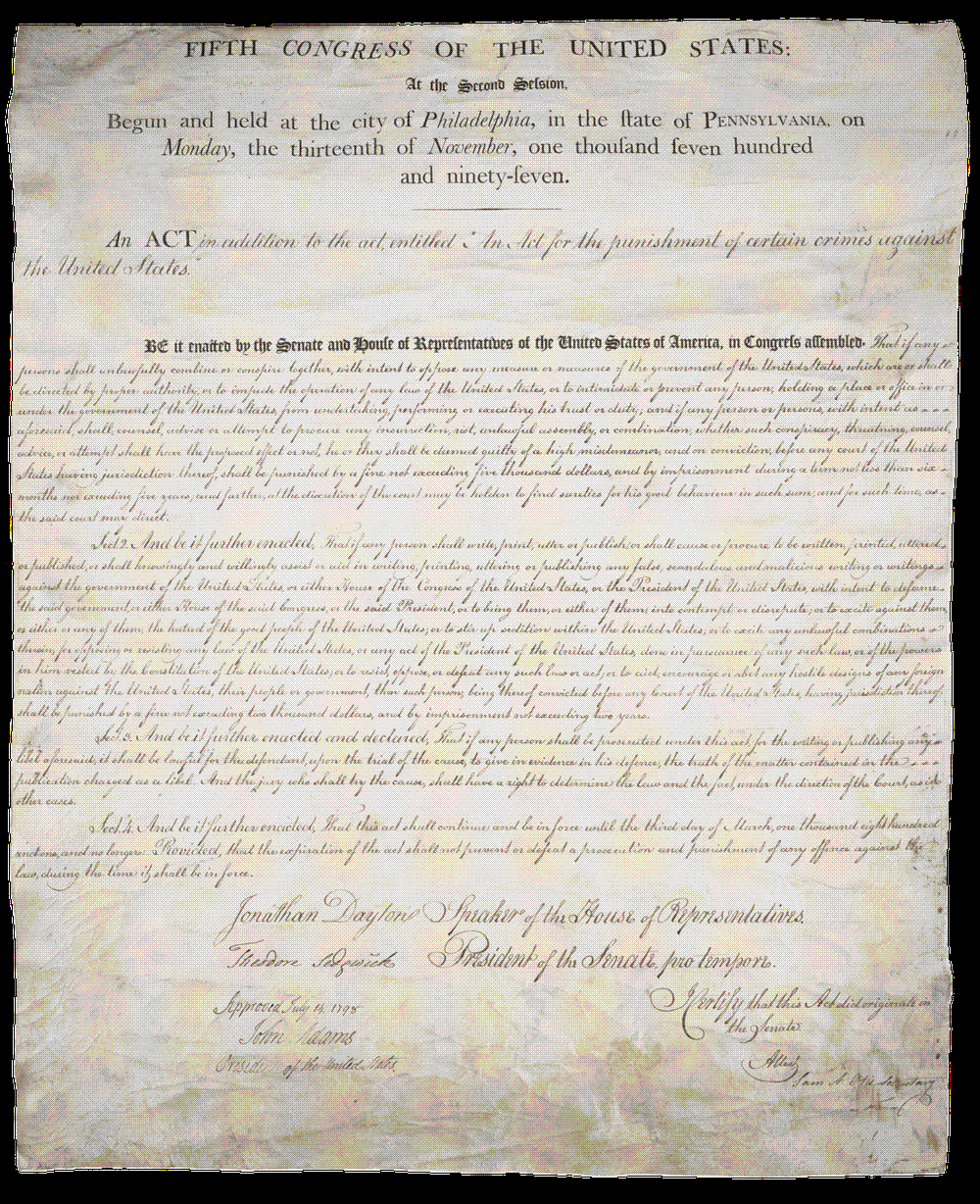
CNN, MS NOW and Politico sue after Trump bars them from the White House On 18 September Donald Trump announced that he was banning CNN, MS NOW and Politico from the White House with immediate effect, calling them 'fake news' and saying other outlets could follow. Over the weekend reporters from the three organisations had their White House press badges confiscated and were refused entry. On 22 September the outlets sued, arguing that the ban violated the First Amendment, and some major networks suspended parts of their White House coverage. The barred outlets kept covering the president at the UN General Assembly in New York, where Trump told CNN reporters 'you should not be here.' Legal experts said the ban faced long odds in court; at a hearing on 23 September a federal judge heard arguments without ruling, and was reported to be sceptical of the administration's position. Analogies The Sedition Act of 14 July 1798 made it a crime to publish 'false, scandalous and malicious' writing against the President That if any person shall write, print, utter or publish, or shall cause or procure to be written, printed, uttered or published, or shall knowingly and willingly assist or aid in writing, printing, uttering or publishing any false, scandalous and malicious writing or writings against the government of the United States, or either house of the Congress of the United States, or the President of the United States, with intent to defame the said government, or either house of the said Congress, or the said President, or to bring them, or either of them, into contempt or disrepute;
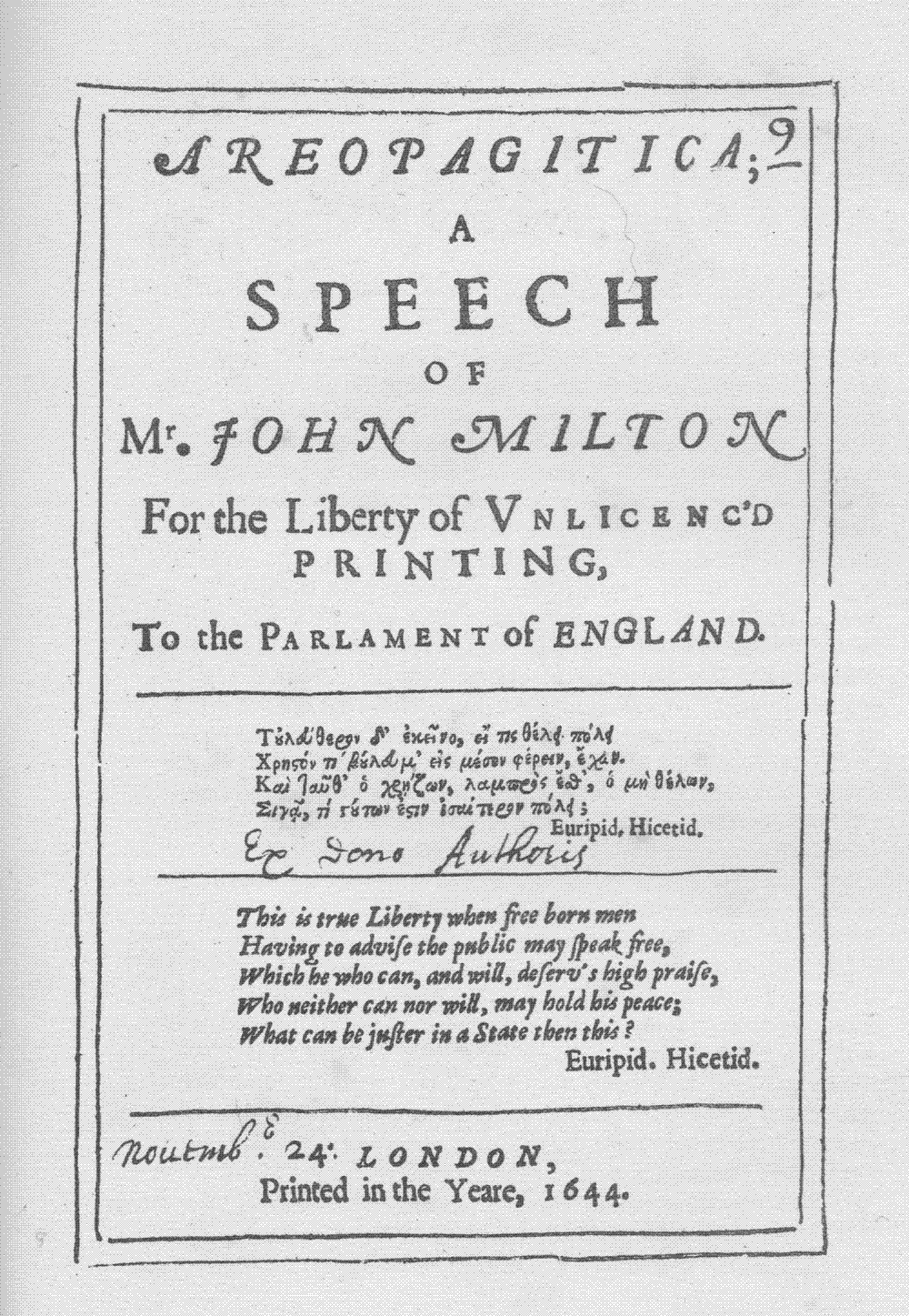
An Act in Addition to the Act, Entitled 'An Act for the Punishment of Certain Crimes Against the United States' (the Sedition Act), 5th Congress, 14 July 1798, §2; text at the Avalon Project, Yale Law School. → John Milton's 'Areopagitica' (1644), addressed to Parliament against the licensing of printers Give me the liberty to know, to utter, and to argue freely according to conscience, above all liberties.
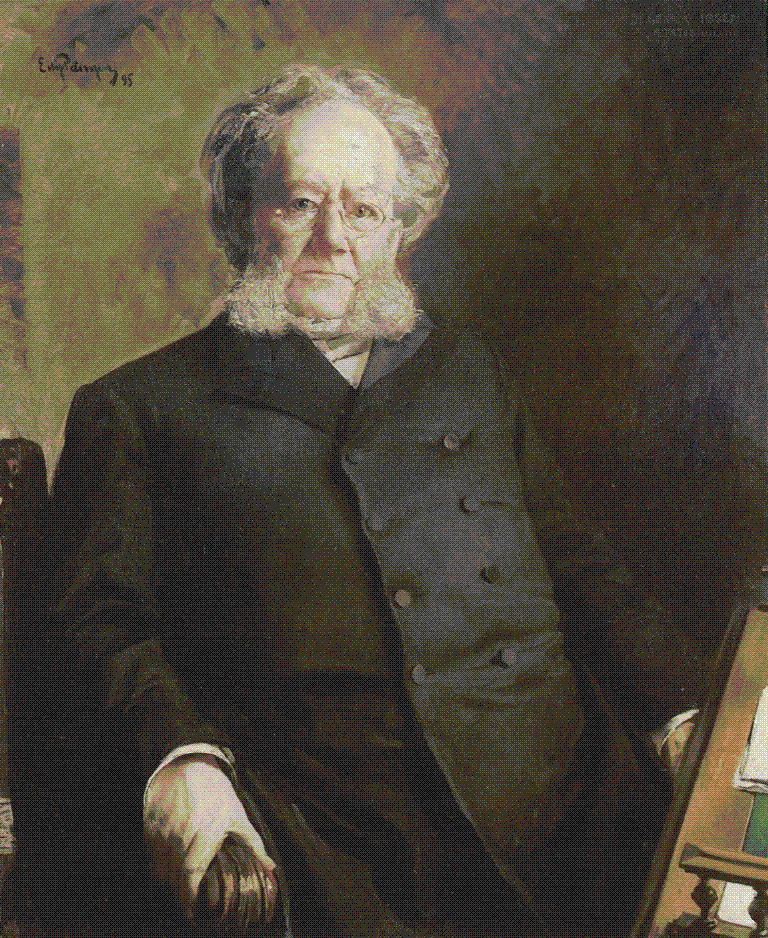
John Milton, Areopagitica: A Speech of Mr. John Milton for the Liberty of Unlicenc'd Printing, to the Parlament of England (London, 1644); Project Gutenberg ebook 608. → Ibsen's 'An Enemy of the People' (1882): Dr Stockmann, abandoned by the town's newspaper, draws his conclusion It is this, let me tell you—that the strongest man in the world is he who stands most alone.
Henrik Ibsen, An Enemy of the People, Act V, trans. R. Farquharson Sharp (London: J. M. Dent, 1911); Project Gutenberg ebook 2446. → Hans Christian Andersen's 'The Emperor's New Clothes' (1837) ends with the procession that must go on “But the Emperor has nothing at all on!” said a little child. “Listen to the voice of innocence!” exclaimed his father; and what the child had said was whispered from one to another. “But he has nothing at all on!” at last cried out all the people. The Emperor was vexed, for he knew that the people were right; but he thought the procession must go on now! And the lords of the bedchamber took greater pains than ever, to appear holding up a train, although, in reality, there was no train to hold.
Hans Christian Andersen, 'The Emperor's New Clothes', in Andersen's Fairy Tales, English translation; Project Gutenberg ebook 1597. → Honoré Daumier's 'Gargantua' (1831), the caricature of King Louis-Philippe that sent him to prison Louis-Philippe sits enthroned as the giant Gargantua, his head shaped like a pear, while a ramp runs up to his open mouth. Up it, servants carry baskets of coins taken from the ragged poor at the bottom; beneath the throne, courtiers scramble for the favours that fall from it. The lithograph was published in December 1831 and seized by the censors, and Daumier was sentenced to six months in prison for it — a sentence he began serving in August 1832.
Honoré Daumier, Gargantua, lithograph, 1831; the print was seized and Daumier was sentenced in February 1832 to six months' imprisonment. → Daumier's 'Ne vous y frottez pas!!' ('Don't meddle with it!', 1834): a printer stands guard over the freedom of the press A young printer in his work apron stands on a hilltop, sleeves rolled up and fists clenched, facing the viewer squarely. Behind him on one side the deposed Charles X lies fallen; on the other, Louis-Philippe and his ministers hang back, hesitating to come any closer. The title is his warning: don't meddle with it. Daumier drew the print in 1834 for L'Association Mensuelle, a subscription series sold to pay the fines and legal costs of the opposition press.
Honoré Daumier, Ne vous y frottez pas!! (Don't Meddle with It!!), lithograph, published in L'Association Mensuelle, plate 20, March 1834; impression at the National Gallery of Art, Washington. →