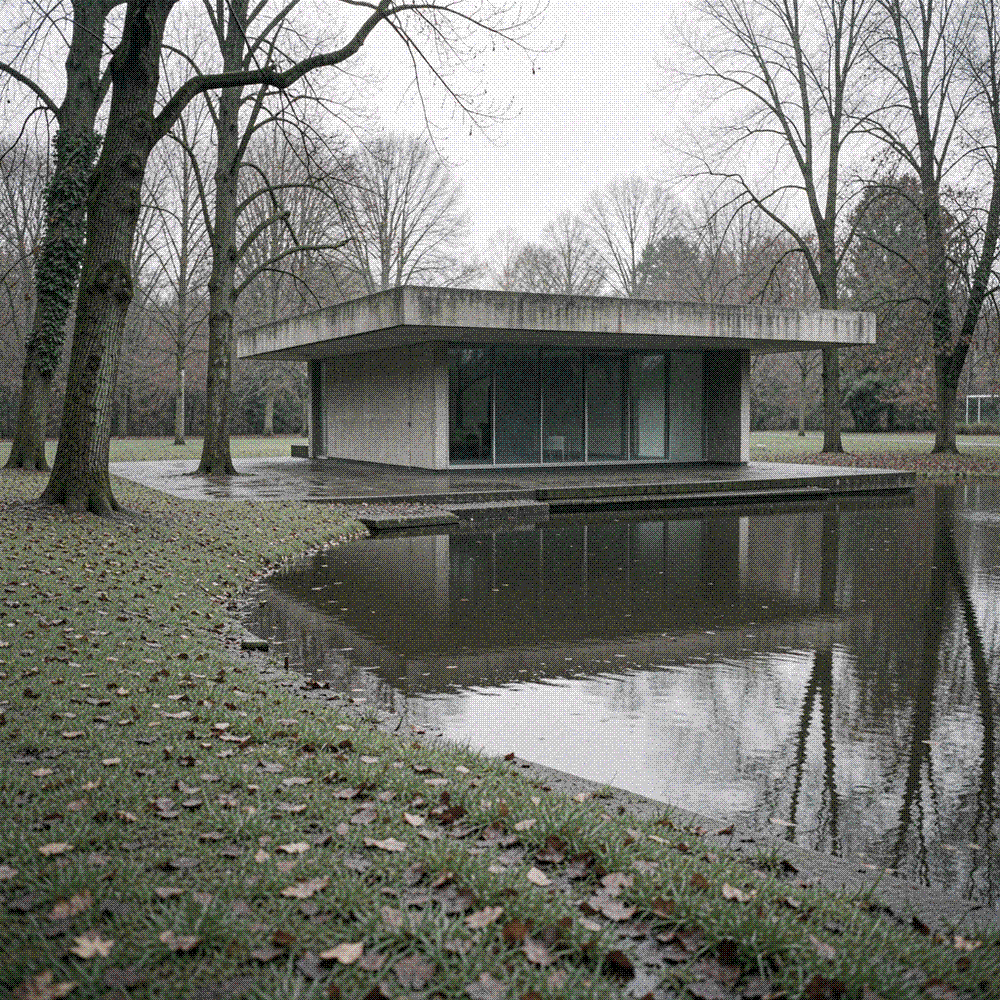
A low concrete-and-glass pavilion with a floating flat roof standing among bare trees beside a still pond

AI-generated

ArchitectureDezeen · ArtforumSep 24, 2026

Peter Zumthor unveils three new buildings for the Fondation Beyeler

The Swiss architect completed a trio of buildings this week extending the Fondation Beyeler at Riehen, outside Basel, adding roughly 108,000 square feet to a museum that has been one building since 1997. That building is Renzo Piano's, a long low gallery under a projecting roof, set in a park with lily ponds looking towards the Tüllinger hills, and any addition to it has the awkward job of not arguing with it. Zumthor's answer is three separate volumes placed into the park rather than one extension attached to the existing gallery, so the landscape stays the organising element and the new accommodation is distributed through it. Zumthor is the architect of the thermal baths at Vals and the Kolumba museum in Cologne, and works from a small office in Haldenstein; he builds rarely, slowly, and almost always in a way that makes the material and the site the argument. The reviews this week called the new buildings expressive, which for this architect is a stronger word than it sounds.
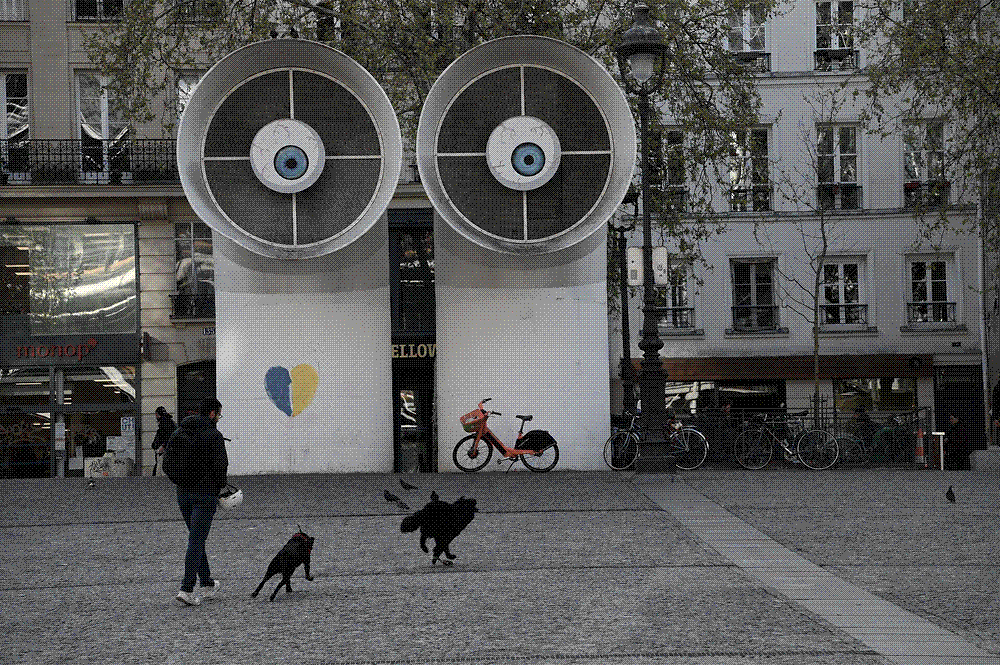
Analogies

The coloured external ventilation pipes of the Centre Pompidou in Paris

1977: Renzo Piano, who built the original Beyeler, first became famous for a museum that behaves like a machine

a creature that might have come from a Jules Verne book
The Pritzker Architecture Prize, 1998 Laureate: Renzo Piano, biography, quoting Piano on the Centre Georges Pompidou. →
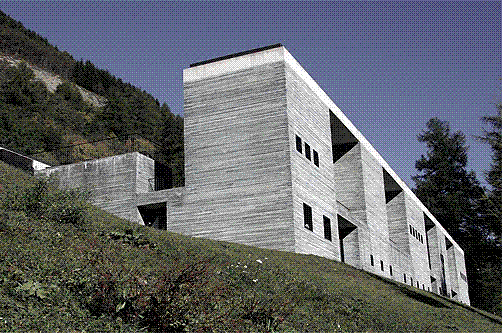
The stone facade of Peter Zumthor's thermal baths at Vals in Switzerland

2009: the Pritzker jury describes the quality that makes an extension by this architect a risk worth taking

All of Peter Zumthor's buildings have a strong, timeless presence. He has a rare talent of combining clear and rigorous thought with a truly poetic dimension
The Pritzker Architecture Prize, 2009 Laureate: Peter Zumthor, announcement quoting the jury citation. →
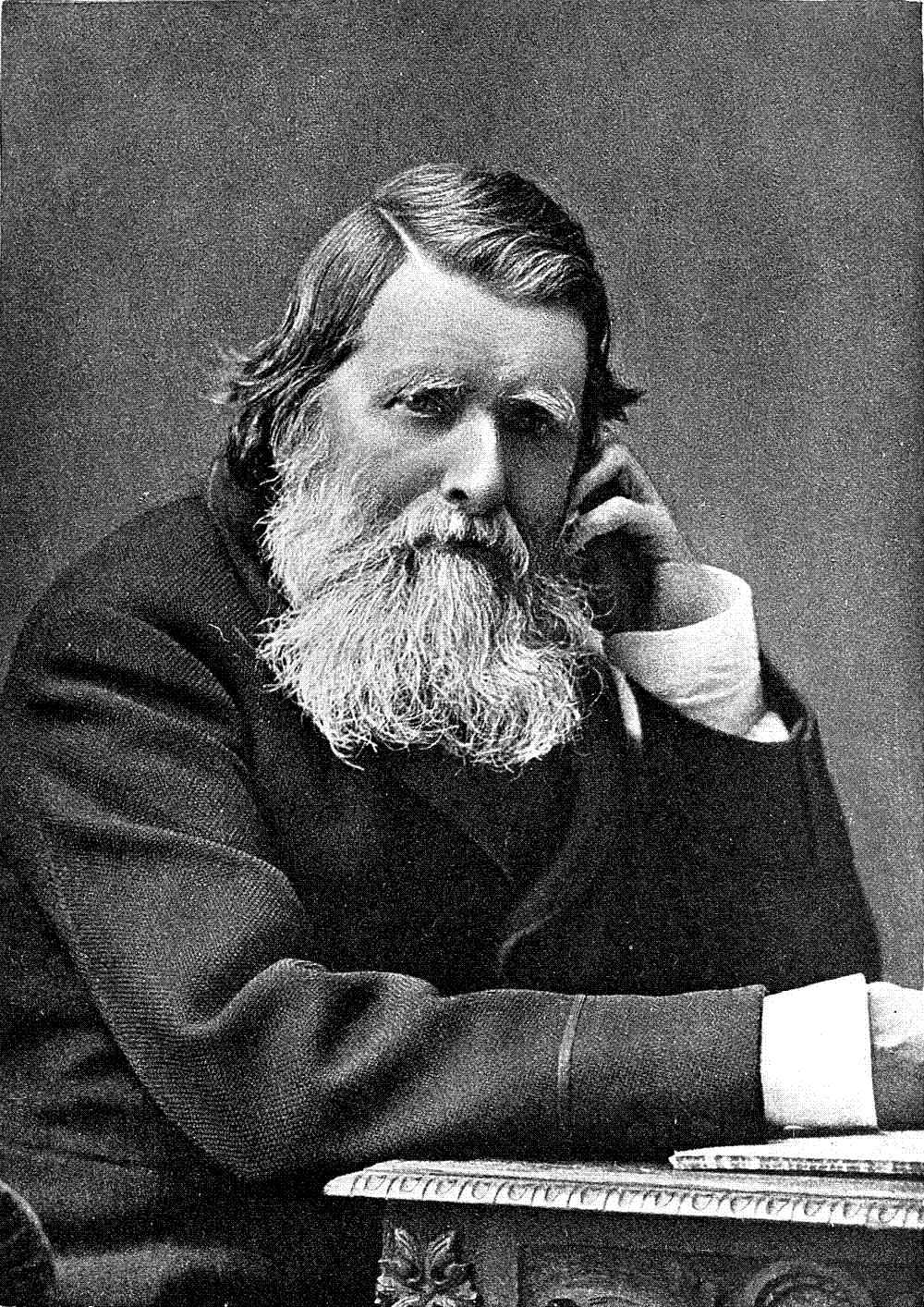
A photograph of John Ruskin in later life, bearded, seated

Ruskin, in 1849, sets the standard that a museum extension is measured against

When we build, let us think that we build for ever.
John Ruskin, The Seven Lamps of Architecture, ch. VI, 'The Lamp of Memory' (London: Smith, Elder & Co., 1849); Project Gutenberg ebook 35898. →
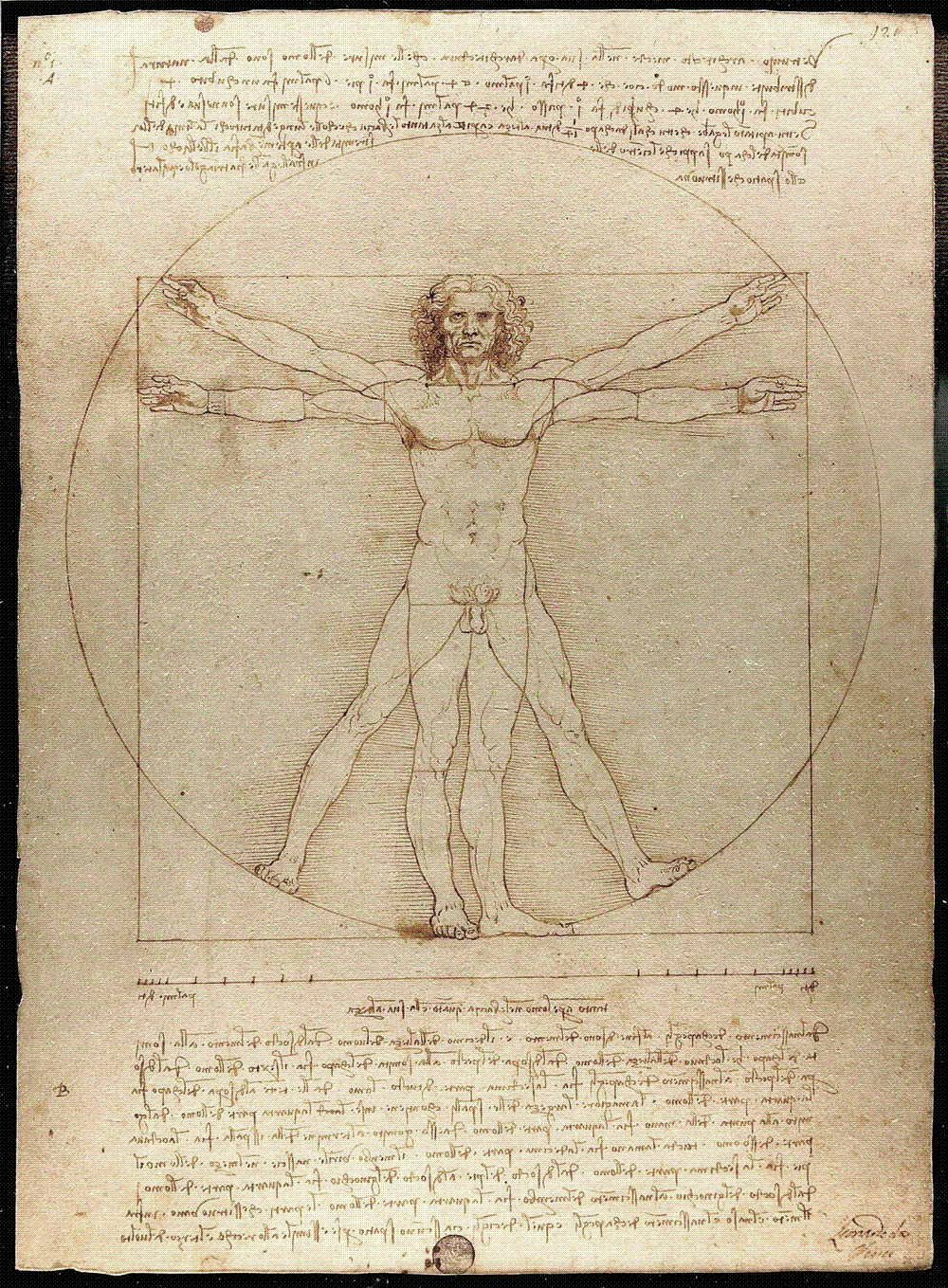
Leonardo's Vitruvian Man, a figure inscribed in a circle and a square

Vitruvius gives the three-part test that has not been improved on in two thousand years

All these must be built with due reference to durability, convenience, and beauty.
Vitruvius, The Ten Books on Architecture, book I, ch. III, trans. Morris Hicky Morgan (Cambridge, Mass.: Harvard University Press, 1914); Project Gutenberg ebook 20239. →
Friedrich's painting of a ruined Gothic abbey among bare oaks under a pale winter sky

Caspar David Friedrich's 'Abbey in the Oakwood' (1809–10) is the northern argument about buildings in landscape

A ruined Gothic choir stands in a winter oakwood under a low band of light, monks carrying a coffin through the doorway, snow and broken gravestones underfoot. Friedrich gives two-thirds of the canvas to a sky doing nothing. The building is not the subject; the relation between the building, the bare trees and the weather is the subject — which is what any architect placing volumes into a park is in fact designing.
Caspar David Friedrich, Abtei im Eichwald (Abbey in the Oakwood), 1809–10, oil on canvas, 110 × 171 cm; Alte Nationalgalerie, Berlin. →
A Monet water-lily canvas: reflections of sky and willow on still water with floating lilies

Monet's water lilies, which the Beyeler owns, were painted to be walked into rather than looked at

Monet dug the pond, diverted a stream to feed it, planted the lilies and then painted the surface of the water for thirty years — no horizon, no bank, just reflected sky, cloud and willow crossed by floating flowers. For the Orangerie he specified oval rooms so the canvases would curve round the viewer. The late paintings are effectively architecture: a designed environment in which a garden, a building and a picture are the same proposition.
Claude Monet, Nymphéas (Water Lilies), painted at Giverny from 1897 to 1926; examples in the Fondation Beyeler, Riehen, and the Musée de l'Orangerie, Paris. →